
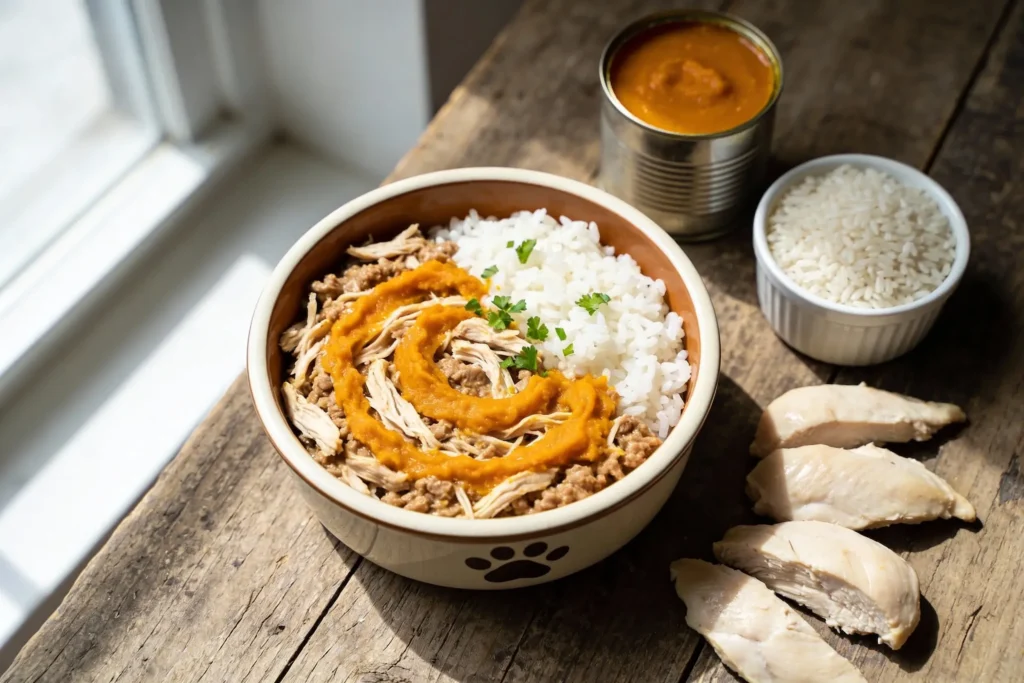
Sensitive tummy pup at home? You can absolutely help with a gentle, simple homemade meal that doesn’t send them sprinting for the yard. This chicken-and-pumpkin combo checks all the boxes: lean protein, easy-to-digest carbs, and soothing fiber. You don’t need a chef’s hat—just a pot, some patience, and a dog who approves with tail wags. Ready to cook something your vet won’t side-eye? Let’s go.
Why Chicken and Pumpkin Work for Sensitive Stomachs
Chicken gives clean, lean protein without a ton of fat. That makes it easier on the belly and less likely to trigger drama. Pumpkin brings soluble fiber, which helps firm up stools and keeps the gut happy.
– Lean chicken keeps protein levels high without excess grease.
– Pumpkin adds fiber that can calm diarrhea and support regularity.
– Rice or oats provide gentle carbs for energy without chaos.
FYI: This recipe is for short-term tummy support or as part of a balanced rotation. For a full-time homemade diet, you’ll need added calcium and other micronutrients. Your dog isn’t a wolf with a multivitamin in its pocket.
Ingredients: What You’ll Need
Base recipe (yields about 6 cups, roughly 6–8 small meals for a 20–25 lb dog):
- 1.5 lbs boneless, skinless chicken breast or thighs, trimmed of visible fat
- 1 cup canned pumpkin puree (plain, not pie filling)
- 1 cup white rice (uncooked) or 3 cups cooked rice
- 2 cups low-sodium chicken broth or water
- 1 tbsp olive oil (optional, skip if your vet says low-fat only)
- 1/4 tsp iodized salt (optional; tiny iodine bump—skip if your dog needs strict low sodium)
- 1/2 cup finely diced carrots or green beans (optional, for extra fiber and vitamins)
For long-term feeding, add:
- 1 tsp finely ground eggshell or 1,000 mg calcium carbonate per pound of cooked food for calcium-phosphorus balance
- Veterinary multivitamin/mineral formulated for home-cooked diets (follow label)
- Omega-3 fish oil per your vet’s dosing for skin/gi support
IMO, thighs taste better and stay moist. For ultra-sensitive pups, stick to breasts.
Step-by-Step Cooking Instructions
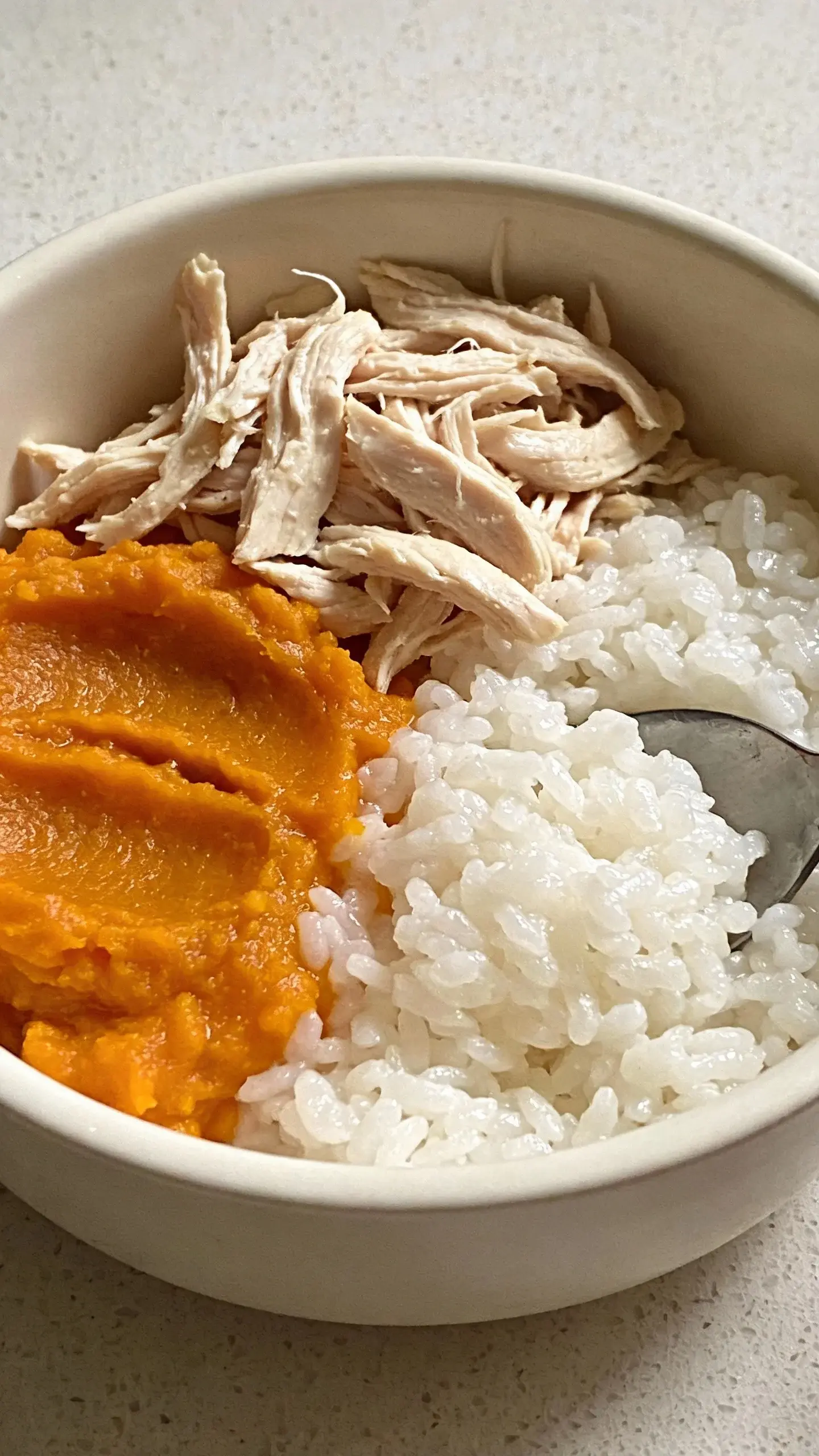
- Rinse the rice until the water runs mostly clear. Cook it in a pot with 2 cups broth or water. Simmer on low until tender, about 15 minutes for white rice.
- Chop the chicken into small, bite-size pieces. Smaller pieces digest easier and mix well.
- Poach or boil the chicken in a separate pot with just enough water to cover. Cook until no pink remains, 10–12 minutes. Drain and cool slightly.
- Steam or finely dice the carrots/green beans if using. Softer veg equals easier digestion.
- In a large bowl, combine cooked rice, chicken, pumpkin puree, and veggies. Stir in olive oil if using. Mix well.
- Portion it out. Let it cool completely before serving or storing.
Texture tip: For ultra-sensitive stomachs, pulse the mixture in a food processor a few times to make it softer.
Instant Pot or One-Pot Shortcut
– Add chicken, rinsed rice, and 2 cups water/broth to the pot. Cook on high pressure for 8 minutes, natural release 10 minutes. Fold in pumpkin and soft veggies at the end.
Portions and Serving: How Much to Feed
General guideline for short-term feeding:
- Small dogs (10 lbs): 1/2 to 3/4 cup per meal, 2 meals/day
- Medium dogs (20–30 lbs): 3/4 to 1.25 cups per meal, 2 meals/day
- Large dogs (50–70 lbs): 1.5 to 2.5 cups per meal, 2 meals/day
Start on the low end and adjust based on appetite and stool quality. If you see loose stool, cut back a bit and increase pumpkin slightly. If your pup acts hungry and maintains normal stools, bump portions slowly.
Transitioning Without Tummy Trouble
– Day 1–2: 75% old food, 25% homemade
– Day 3–4: 50/50
– Day 5–6: 25% old, 75% homemade
– Day 7: 100% homemade
Sensitive stomachs love slow changes. Your carpet does too.
Make It Balanced: When You Need Supplements
Short-term bland diets don’t need full balancing. But if you plan to feed this recipe for more than 2–3 weeks, you need to round it out.
- Calcium: Dogs need it to balance phosphorus from meat. Add 1 tsp ground eggshell (about 2,000 mg calcium) per pound of cooked food, or use calcium carbonate per your vet.
- Multivitamin/mineral: Use a vet-formulated supplement for home-cooked diets to cover zinc, copper, vitamin D, iodine, etc.
- Omega-3s: EPA/DHA from fish oil can soothe inflammation. Dose per label based on weight.
Ask your vet for exact amounts if your dog has pancreatitis, kidney issues, or food allergies. Not all bellies follow the same rules, unfortunately.
Ingredient Swaps and Flavor Tweaks
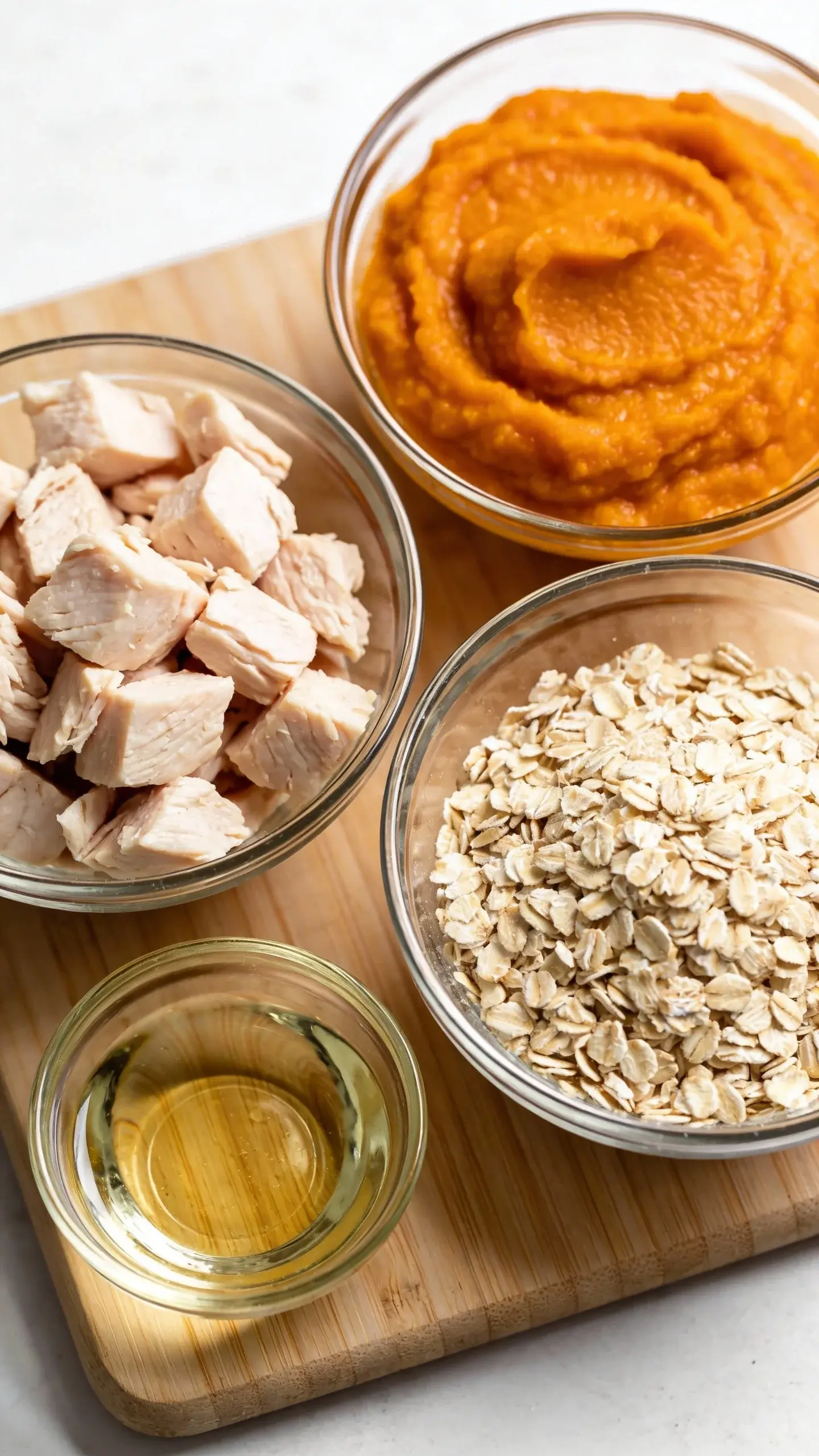
Some dogs do better with a few tweaks. Keep it simple and gut-friendly.
- Protein swap: Use ground turkey (93% lean) or white fish instead of chicken.
- Carb swap: Try oatmeal or sweet potato instead of rice if rice causes gassiness.
- Veg ideas: Add a spoon of plain kefir or a sprinkle of parsley for digestion. Keep extras minimal.
- Broth note: Use low-sodium and avoid onion/garlic. That’s a hard no for dogs.
What to Avoid
– No onions, garlic, chives, leeks
– No pumpkin pie filling (contains sugar/spices)
– No excessive fat (butter, skin, drippings)
– No heavy spices—your dog doesn’t need a chili kick
Storage, Leftovers, and Food Safety
Your dog may not judge you, but bacteria will.
- Fridge: Store in airtight containers for up to 3 days.
- Freezer: Portion into meal-sized containers and freeze for up to 2 months.
- Reheat: Warm gently to room temp—not hot. Stir and test with your finger.
- Batching: Double the recipe for a week’s worth and freeze. Future you will send gratitude snacks.
Signs It’s Working (And When to Call the Vet)
Improvement looks like better-formed stools, less gas, normal energy, and fewer tummy gurgles. You should see changes within 48–72 hours for mild upset.
Call your vet if you notice:
- Vomiting more than once or repeated diarrhea over 24–48 hours
- Blood in stool, black tarry stool, or severe lethargy
- Known conditions like pancreatitis, kidney disease, or persistent weight loss
Homemade food helps, but it doesn’t replace diagnosis. IMO, peace of mind beats guessing.
FAQ
How much pumpkin can I safely give my dog?
Most dogs do well with 1 tsp per 10 lbs of body weight per meal. Large dogs can handle a couple tablespoons. Too much can cause loose stools, so start small.
Can I use rotisserie chicken?
I get the temptation, but skip it. Rotisserie chicken often carries skin, fat, salt, and seasoning—none of which help sensitive stomachs. Use plain, boiled or poached chicken instead.
Is brown rice better than white rice?
For sensitive stomachs, white rice wins. It digests easier and causes fewer fiber-related upsets. Brown rice can work once your dog stabilizes.
Can I use fresh pumpkin instead of canned?
Yes—steam and mash it until smooth. Measure the same amount. Just keep it plain with no spices or sugar. Canned is easier and consistent, though.
How long can I feed this bland diet?
Use it for a few days to a couple weeks while your dog recovers. For long-term feeding, add calcium and a complete supplement or rotate with a balanced commercial diet. Your vet can tailor a plan.
What if my dog has chicken allergies?
Swap chicken for turkey or white fish and keep everything else the same. If you suspect true allergies, talk to your vet about an elimination diet.
Conclusion
Chicken and pumpkin make a gentle, dog-approved duo that supports sensitive stomachs without turning dinner into a chemistry project. Cook it simple, portion smart, and watch your pup’s gut chill out. Add supplements if you go long-term, and loop in your vet if anything seems off. Your dog gets comfort food, you get fewer messes—win-win, IMO.
About the Author

David
Blogger/YouTuber
A guitar nerd, the myth, the legend.