
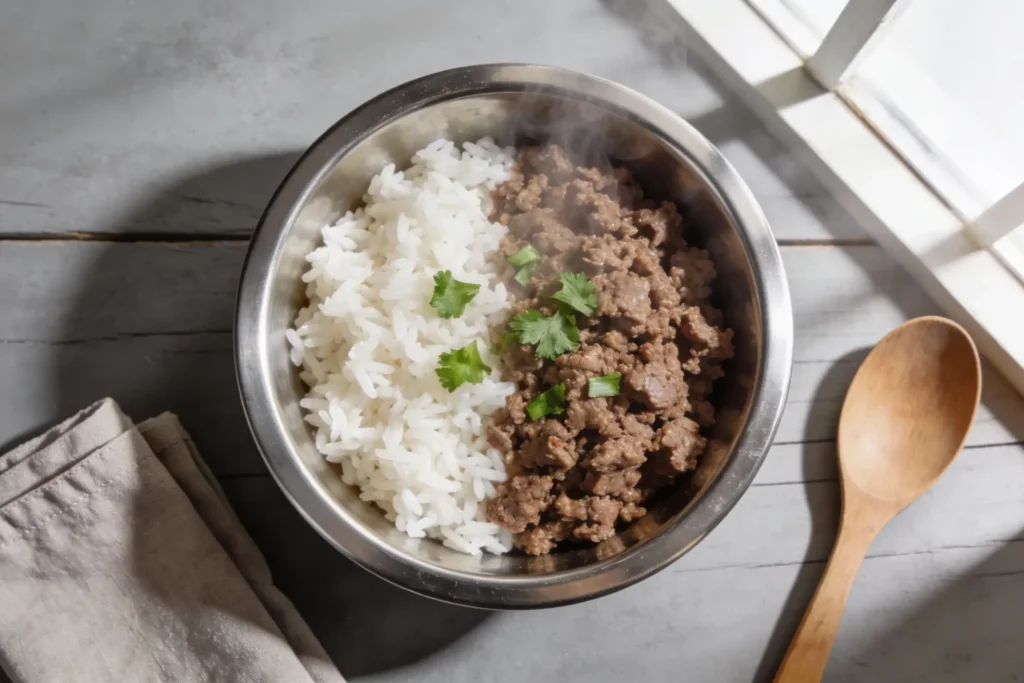
Your dog’s stomach threw a tantrum again? Been there. When pups get gassy, loose, or just “off,” a simple beef-and-rice meal can calm the chaos and keep tails wagging. This recipe is gentle, affordable, and super easy to cook. And yes, your dog will probably lick the bowl so clean you’ll wonder if you even fed them.
Why Beef and Rice Works for Sensitive Tummies
Beef and rice keep things simple. Fewer ingredients mean fewer chances to irritate a sensitive gut. Rice gives easy-to-digest carbs, while lean beef brings protein without a lot of fuss.
Plus, you control everything. No mystery fillers. No artificial stuff. Just clean, basic nutrition that makes digestion easier while your dog’s system resets.
What Kind of Beef Should You Use?
Aim for lean. Fatty beef can trigger upset stomachs and diarrhea, and nobody wants that clean-up job.
- Best options: 90–95% lean ground beef, stew meat trimmed of fat, or sirloin cut small
- Avoid: High-fat ground beef (70–80%), seasoned meats, processed meats
- Pro tip: If your beef looks oily after cooking, drain and rinse it briefly with warm water
Rice: White or Brown?
White rice wins for sensitive stomachs. It cooks fast, sits light, and digests easily. Brown rice contains more fiber, which can be great for long-term meals but not ideal during tummy trouble. For recovery meals, choose plain white long-grain rice.
Simple Beef and Rice Dog Food Recipe
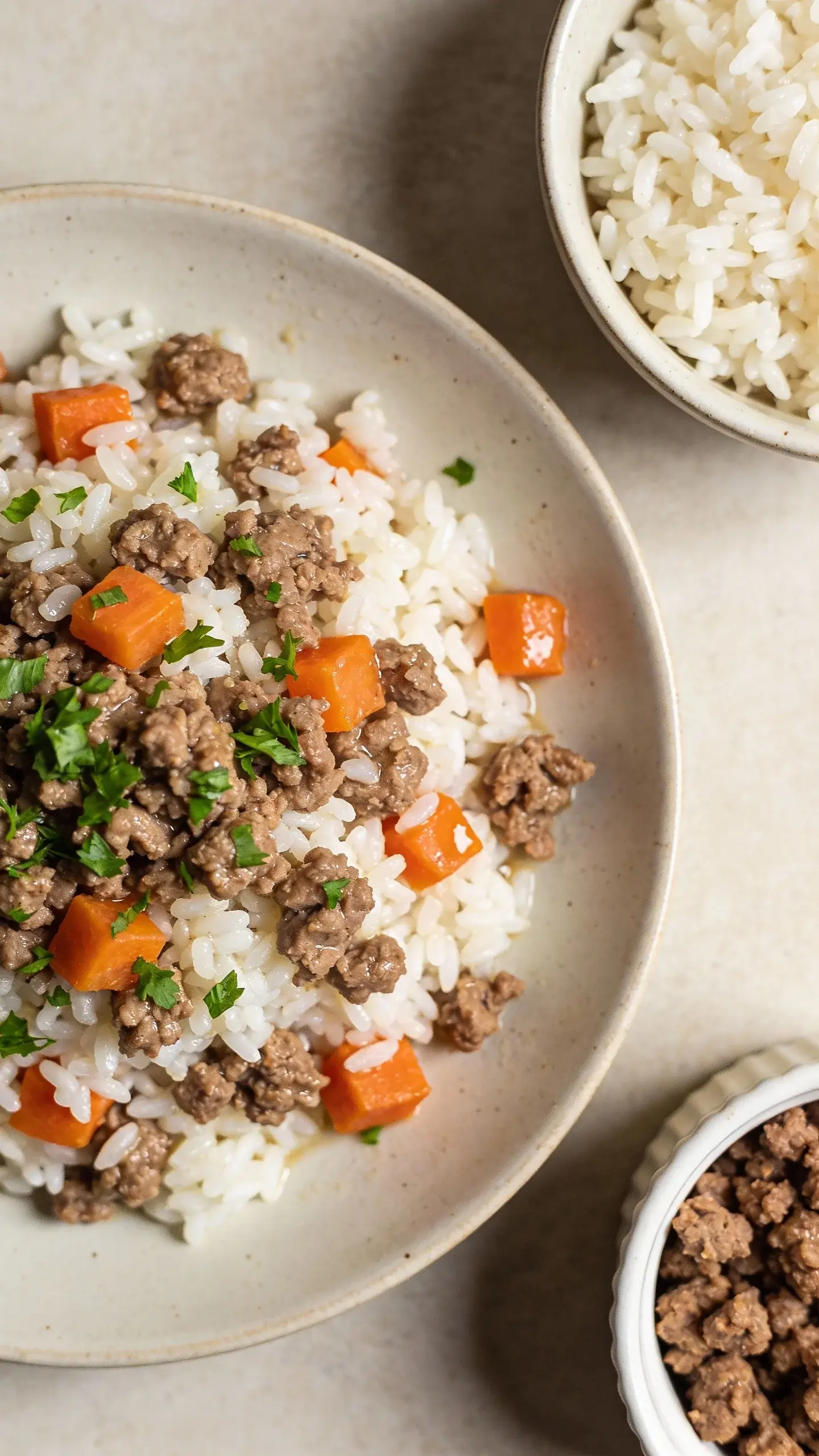
This makes about 6 cups of food—enough for a medium dog for a couple of days, depending on size and activity.
Ingredients
- 1 lb (450 g) lean ground beef (90–95% lean)
- 1 cup uncooked white rice (long-grain or jasmine)
- 3 cups water or low-sodium beef broth (no onions, garlic, or xylitol—check labels)
- 1 tbsp olive oil (optional, for very lean dogs—skip if stools are loose)
- 1/2 cup finely chopped carrots (optional, for a little fiber)
- 1/2 cup frozen peas (optional, add at the end)
Instructions
- Cook the rice: Rinse the rice until the water runs clear. Add rice and water/broth to a pot. Bring to a boil, then cover and simmer for 15–18 minutes until tender.
- Cook the beef: In a separate pan, brown the ground beef over medium heat. Break it up into small crumbles. Drain excess fat. Rinse briefly if needed.
- Combine: Stir the cooked beef into the rice. If using carrots, steam or simmer them until soft and add them in. Fold in peas at the end so they don’t get mushy.
- Cool completely: Let it cool to room temperature before serving. Dogs burn their mouths too—ask me how I know.
Portion Guidelines
Every dog is different, but here’s a starting point for short-term feeding:
- 10–20 lb dog: 1/2–1 cup per meal, 2 meals/day
- 20–50 lb dog: 1–2 cups per meal, 2 meals/day
- 50–90 lb dog: 2–3 cups per meal, 2 meals/day
Adjust based on appetite, stool quality, and energy. When in doubt, ask your vet—especially if your dog has a health condition.
How Long Should You Feed This?
Use this as a short-term, gentle diet during tummy upset or recovery—usually 2–5 days. Once stools firm up and your dog acts normal, transition back to their regular food.
Transition Plan Back to Regular Food
- Day 1: 75% beef/rice + 25% regular food
- Day 2: 50/50
- Day 3: 25% beef/rice + 75% regular food
- Day 4: 100% regular food
If stools get loose again, slow down the transition or consult your vet. IMO, slow and steady wins here.
Make It More Balanced for Longer-Term Feeding
If you want to feed homemade more often, you’ll need more than beef and rice. Great short-term? Absolutely. Balanced long-term? Not without tweaks.
What to Add for Better Balance
- Calcium: Dogs need it. If you’re not feeding bones, use a vet-approved calcium supplement or ground eggshell powder (about 1 tsp per pound of meat).
- Omega-3s: Add fish oil for skin, coat, and anti-inflammatory benefits. Follow label dosing.
- Fiber/veggies: Cooked pumpkin, green beans, zucchini, or spinach (chopped and cooked) in small amounts.
- Organ meats: Tiny amounts of cooked beef liver (think 5% of the recipe) add vitamins, but go slow—it’s rich.
- Multivitamin for dogs: If feeding homemade regularly, use a supplement designed for balancing home-cooked diets.
FYI: Always check with your vet or a board-certified veterinary nutritionist before long-term homemade diets. Balance matters.
Safety Tips You’ll Actually Use
- No onions or garlic, ever. They’re toxic to dogs.
- Skip salt and seasonings. Your dog won’t miss them.
- Cook everything thoroughly. No pink beef. Gentle on the gut = fully cooked.
- Cool before serving. Hot rice holds heat like lava.
- Storage: Refrigerate within an hour. Store in airtight containers for up to 3 days or freeze up to 2 months.
- Hydration: Add a splash of warm water or broth to meals to boost moisture.
When to Call the Vet
Homemade beef and rice helps with mild tummy issues. But if your dog shows red flags, don’t DIY it.
- Vomiting more than 24 hours, blood in stool, black tarry stool
- Lethargy, fever, dehydration, severe abdominal pain
- Puppies, seniors, or dogs with diabetes, kidney, or liver disease
If something feels off, trust your gut and get professional advice. IMO, better safe than sorry.
FAQ
Can I use ground turkey or chicken instead of beef?
Yes. Lean turkey or chicken works great and often sits even lighter. Just make sure you cook it fully and skip the skin and extra fat. If your dog has a known protein sensitivity, stick with what they tolerate best.
Is brown rice okay?
Brown rice is fine for healthy dogs, but it’s higher in fiber and can be tougher on upset stomachs. For sensitive days, white rice is easier. Once your dog stabilizes, you can try brown rice in small amounts.
How much should I feed per day?
Start with roughly 2–3% of your dog’s body weight per day in food, split into two meals. Example: a 30 lb dog may eat about 0.6–0.9 lb of food daily (roughly 2.5–3.5 cups of this recipe). Adjust based on hunger, weight, and stool quality.
Can I add yogurt or pumpkin?
Plain canned pumpkin (not pie filling) can help firm things up—start with 1 tsp per 10 lb body weight. Plain, unsweetened yogurt works for some dogs, but dairy can upset others. Try a small amount and watch for gas or loose stools.
How long can I feed beef and rice?
Use it for a few days to settle the stomach. Long-term feeding without added calcium, omega-3s, and vitamins can create deficiencies. If you want to cook for your dog regularly, work with your vet to balance the diet.
My dog still has diarrhea. What now?
Stop treats, switch to small frequent meals, and keep water available. If diarrhea lasts over 24–48 hours, or you see blood, call your vet. Dehydration sneaks up fast, especially in small dogs and puppies.
Conclusion
Simple beef and rice gives your dog a gentle reset when their gut goes rogue. Keep it lean, keep it plain, and keep portions sensible. Use it short-term, transition slowly, and loop in your vet if symptoms stick around. With a calm belly and a full bowl, your pup will be back to zoomies in no time.
About the Author

David
Blogger/YouTuber
A guitar nerd, the myth, the legend.