
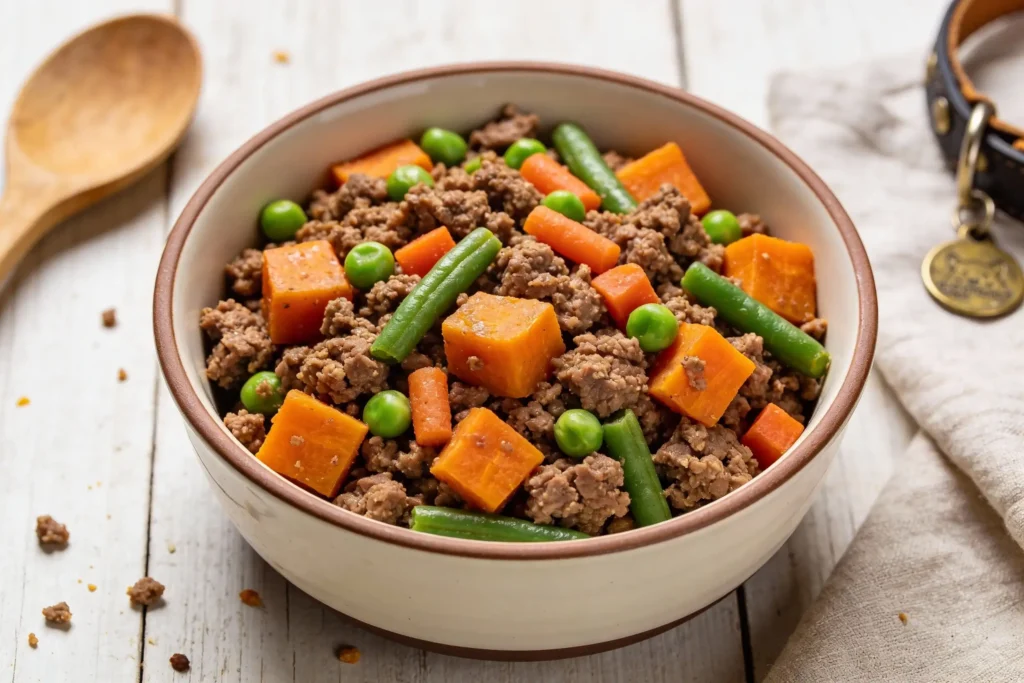
Your dog turns their nose up at dinner like a tiny four-legged food critic? Been there. Picky eaters can make mealtime feel like a negotiation you didn’t sign up for. This beef-and-sweet-potato combo changes the game—super tasty, easy on sensitive tummies, and packed with nutrients. Let’s make a bowl your dog actually runs to, not away from.
Why Beef and Sweet Potato Work for Picky Eaters
Beef brings big flavor and complete protein, which picky pups actually want to eat. Sweet potatoes add natural sweetness and creamy texture that feels like comfort food for dogs.
Together they hit the trifecta: highly palatable, gentle on digestion, and nutritionally balanced when prepared right. And yes, you can make it at home without turning your kitchen into a dog-food lab.
The Recipe: Beef Dog Food with Sweet Potato
This batch makes about 8 cups (roughly 6–8 meals for a 20–25 lb dog). Adjust portions based on your dog’s size and calorie needs. IMO, start small and see how they do.
Ingredients
- 2 lbs lean ground beef (90–93% lean is ideal)
- 2 medium sweet potatoes (about 1.5 lbs), peeled and cubed
- 1 cup carrots, finely diced or shredded
- 1/2 cup green beans, chopped (fresh or frozen)
- 1/2 cup peas (optional, frozen is fine)
- 1 tablespoon olive oil (for omega-9s and flavor)
- 1/2 teaspoon ground turmeric (optional, anti-inflammatory)
- 1/2 teaspoon dried parsley (optional, breath helper)
- 1–2 cups low-sodium beef bone broth or water
- Dog-safe vitamin/mineral supplement formulated for homemade diets
Important: For a fully balanced long-term diet, you need a canine multivitamin/mineral blend and added calcium if you use boneless meat. If your supplement doesn’t include calcium, add finely ground eggshell (about 1 teaspoon per pound of meat) or a vet-recommended calcium source.
Instructions
- Boil the sweet potatoes until fork-tender, 10–12 minutes. Drain and mash lightly.
- In a large skillet or pot, cook the ground beef over medium heat. Break it up as it browns. Drain excess fat if needed.
- Add carrots, green beans, and peas to the beef. Stir 3–4 minutes to soften.
- Stir in olive oil, turmeric, and parsley. Add 1 cup broth/water to loosen and keep it moist.
- Fold in the mashed sweet potatoes until well combined. Add more broth as needed for a soft, scoopable texture.
- Let cool to room temperature. Then stir in the vitamin/mineral supplement per label directions.
- Portion and store: 3 days in the fridge, up to 2 months in the freezer.
Texture Tips for Picky Dogs
Some dogs prefer a smoother, stew-like consistency. Add extra broth and mash it slightly. Others like chunks they can “hunt.” Keep the veggies a bit larger and skip extra mashing. Test and see what your furry critic prefers.
Nutritional Highlights (In Plain English)
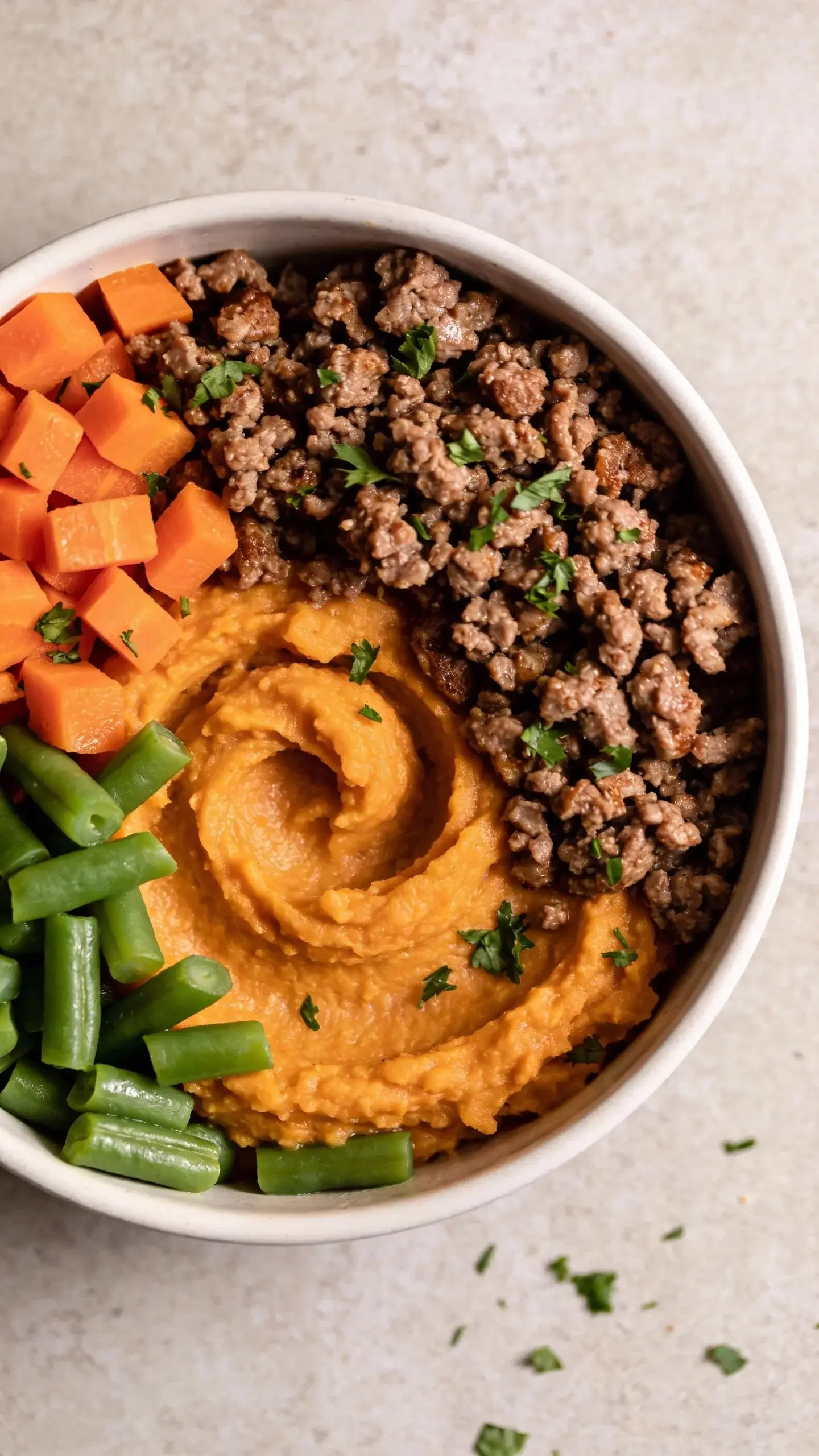
No need to decode a textbook. Here’s what your dog actually gets:
- High-quality protein from beef for muscles and immune health.
- Digestible carbs from sweet potato for steady energy (no sugar crash vibes).
- Fiber to help stool quality—less chaos on walks, FYI.
- Beta-carotene from sweet potatoes for eye and skin health.
- Healthy fats from olive oil for coat shine and flavor.
If your dog needs more healthy fats or omega-3s, add fish oil per your vet’s dosage. It boosts skin/coat and ups palatability even more.
Portion Guide and Feeding Schedule
General daily starting point:
- 5–10 lb dog: 1/2–3/4 cup
- 10–20 lb dog: 3/4–1.5 cups
- 20–40 lb dog: 1.5–2.5 cups
- 40–60 lb dog: 2.5–3.5 cups
- 60–80 lb dog: 3.5–4.5 cups
Split into two meals. Watch your dog’s body condition over 2–3 weeks and adjust up or down by 10–15%. Every dog burns calories differently—zoomies count as cardio.
How to Transition Without Tummy Drama
Follow a 5–7 day transition:
- Day 1–2: 25% new, 75% old
- Day 3–4: 50/50
- Day 5–6: 75% new, 25% old
- Day 7: 100% new
If your dog has a sensitive stomach, stretch it to 10 days and keep portions smaller at first.
Flavor Boosters for the Ultimatum Givers
Some dogs still demand “chef’s kiss” level food. Try:
- Warm it up slightly to release aroma.
- Bone broth drizzle (low sodium) for savory goodness.
- Crumbled freeze-dried beef liver as a topper—dogs go wild.
- Fish oil for shine and flavor (also great for joints).
Avoid onion, garlic, too much salt, and random “human seasonings.” Your dog doesn’t need your chili powder flex.
Storage, Safety, and Batch Cooking
You can batch-cook like a pro:
- Cool fast after cooking to keep it safe—shallow containers help.
- Refrigerate up to 3 days. Freeze up to 2 months.
- Label portions with date and size. Future you will say thank you.
- Thaw in the fridge overnight or gently warm from frozen with a splash of water.
If it smells off or looks slimy, it’s a no. Dogs deserve fresh food too.
Customization for Different Dogs
For Sensitive Stomachs
Use 93% lean beef, skip peas, and go heavier on sweet potato and green beans. Keep spices minimal. Start with small meals.
For Active or Underweight Dogs
Add an extra tablespoon of olive oil per pound of beef or include a small amount of cooked quinoa for more calories.
For Senior Dogs
Mash well for easy chewing. Consider adding joint support like fish oil or a vet-approved glucosamine supplement.
FAQs
Can I use a different protein instead of beef?
Yes. Turkey, chicken, or venison work well with sweet potatoes. Choose lean cuts and cook thoroughly. If you switch proteins regularly, keep the rest of the recipe consistent to avoid tummy upsets.
Do I really need a supplement?
Yes, if you feed homemade long-term. A balanced canine vitamin/mineral mix ensures adequate calcium, zinc, iodine, vitamin D, and more. Without it, deficiencies can sneak up over months.
Is this okay for dogs with allergies?
Many dogs with grain sensitivities do well with this recipe. If your dog has a known beef allergy, swap the protein. Always introduce new foods slowly and talk to your vet if your dog has a history of GI issues or allergies.
Can I feed this to a puppy?
Puppies have different nutrient needs, especially calcium and phosphorus. If you want to feed homemade to a puppy, work with your vet or a board-certified veterinary nutritionist to ensure proper growth.
How do I know how much to feed my specific dog?
Start with the portion guide, then adjust based on your dog’s body condition. You should feel ribs easily but not see them. Energy level, age, and activity all matter. When in doubt, ask your vet for a target calorie range.
What if my dog still refuses it?
Warm it, add a spoon of bone broth, or crumble a high-value topper like freeze-dried liver. Also check stress, dental pain, or nausea—picky eating sometimes signals something else. If the refusal continues, call your vet.
Final Thoughts
Picky dogs don’t need culinary magic—they need food that smells amazing, tastes great, and sits well. This beef and sweet potato recipe checks every box, and it’s easy to tweak for your dog’s quirks. Try a small batch, add a few flavor boosters, and watch your little critic turn into a member of the clean-bowl club, FYI. IMO, this one’s a keeper.
About the Author

David
Blogger/YouTuber
A guitar nerd, the myth, the legend.