
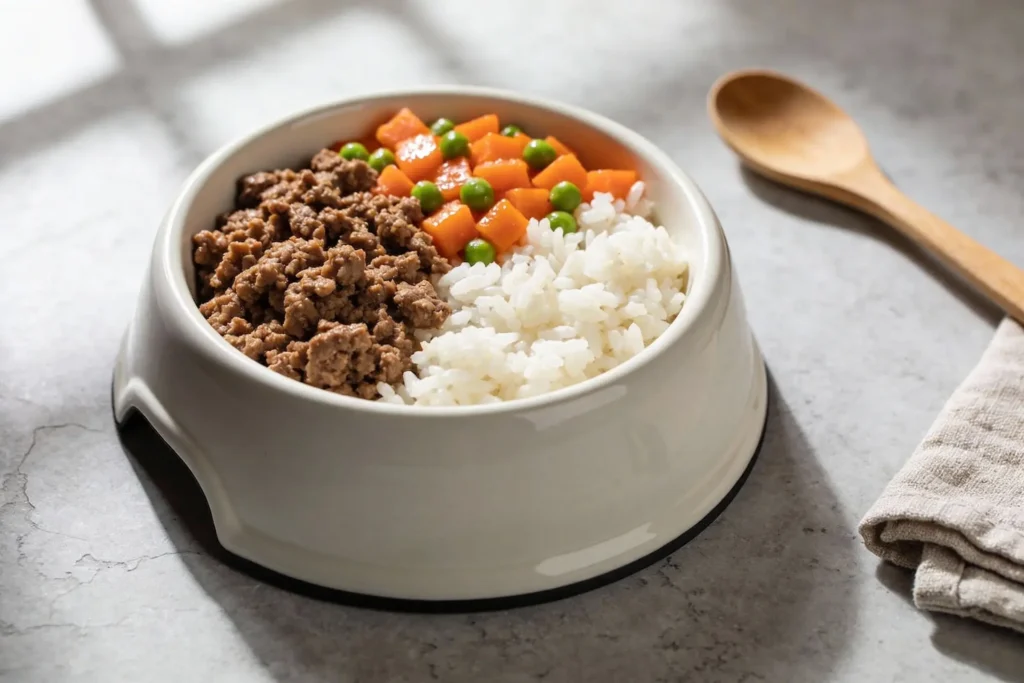
Your dog loves beef. Your carpet does not love the aftermath. If your pup has a sensitive stomach, store-bought food can feel like roulette—sometimes fine, sometimes… well, grab the paper towels. Let’s fix that with a simple, gentle beef dog food you can make at home. We’ll keep it balanced, tasty, and easy so your dog can eat happily and your floors can breathe easy.
Why Homemade Beef Works for Sensitive Stomachs
Homemade food lets you control ingredients and avoid common triggers like fillers, excess fat, and mystery “meat by-products.” You cook it plain and predictable, which sensitive guts adore. Plus, you can tweak texture and add-ons to match your dog’s needs. FYI, not every dog tolerates beef, but when they do, it’s a rock-solid protein that’s easy to prep.
Safe Cooking Principles (So You Don’t Accidentally Upset the Tummy)
You want gentle, low-fat, and consistent. That’s the whole vibe. Follow these basics:
- Choose lean cuts: Aim for 90–95% lean ground beef or trimmed stew meat.
- Keep seasonings out: No garlic, onion, salt, pepper, herbs, or oils. Dogs don’t need the flair.
- Cook thoroughly: Brown beef until no pink remains and drain fat.
- Go soft on carbs: Pick easy options like white rice or well-cooked oats.
- Steam veggies: Cook until very soft and mashable.
- Cool completely: Warm food can trigger scarfing, which equals gas city.
The Gentle Beef Dog Food Recipe
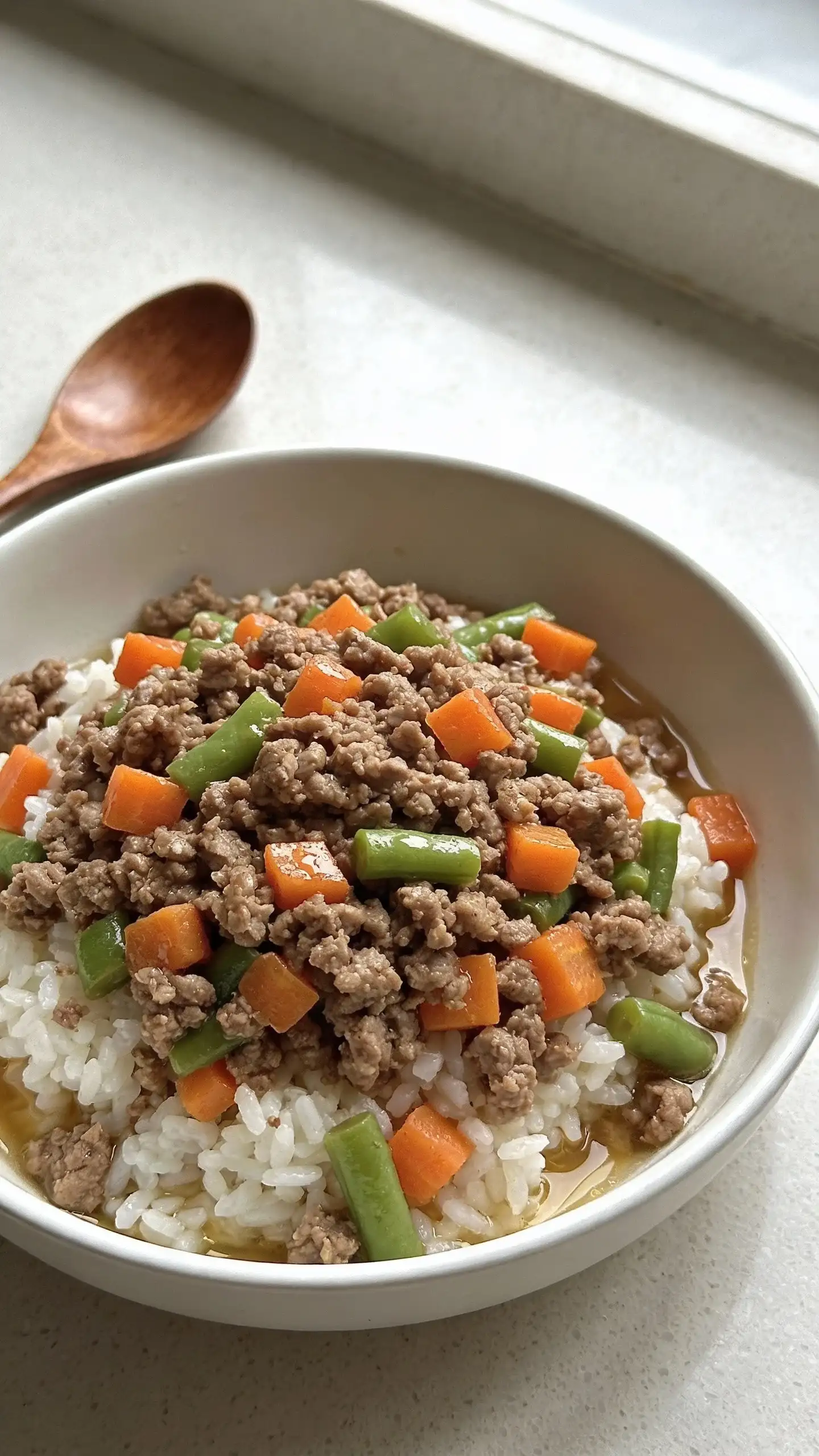
This yields about 6–8 cups, enough for several meals for a medium dog. Adjust portions per your dog’s size and your vet’s advice.
Ingredients
- 2 lb (900 g) lean ground beef (90–95% lean)
- 2 cups cooked white rice (about 1 cup uncooked)
- 1 cup finely chopped carrots (steamed until very soft)
- 1 cup finely chopped green beans (steamed until very soft)
- 1/2 cup canned pumpkin (plain, not pie filling)
- 1 tbsp olive oil (optional for very lean diets; skip if your dog struggles with fat)
- 1/2 tsp ground eggshell or canine calcium supplement (follow supplement label; calcium matters)
- Water or low-sodium bone broth as needed to thin
Instructions
- Brown the beef in a large skillet over medium heat. Break it up as it cooks. Drain excess fat thoroughly.
- Cook white rice until very soft. Think “overcooked.” Gentle on tummies = win.
- Steam carrots and green beans until they mash easily with a fork.
- Combine beef, rice, veggies, and pumpkin in a big bowl. Stir in a splash of water or broth until moist.
- Add olive oil if using, then mix in calcium supplement. Let everything cool completely.
- Portion into daily containers. Refrigerate up to 3 days or freeze up to 2 months.
Portion Guidelines (General)
Every dog is different, but as a rough starting point:
- Toy (5–10 lb): 1/2–3/4 cup per day, split into 2 meals
- Small (10–20 lb): 3/4–1 1/2 cups per day
- Medium (20–50 lb): 1 1/2–3 cups per day
- Large (50–80 lb): 3–4 1/2 cups per day
Adjust based on body condition, activity, and your vet’s input. IMO, weighing your dog monthly keeps you honest.
Customizing for Ultra-Sensitive Dogs
Some pups need extra TLC. No problem.
Swap-Friendly Ingredients
- Carbs: White rice, overcooked pasta, or rolled oats (cooked until soft). Avoid quinoa and brown rice at first—they can be harder to digest.
- Veggies: Carrots, green beans, zucchini, or peeled sweet potato (well-cooked). Skip cruciferous veggies if gas becomes… musical.
- Fats: Keep total fat low. If your dog tolerates it, add 1 tsp salmon oil per 20 lb body weight daily for omega-3s.
- Texture: Purée the final mix for dogs who inhale their food or have GI flare-ups.
Flavor Without Drama
- Use a little low-sodium bone broth for scent and moisture.
- Stir in plain kefir or plain yogurt (1–2 tsp) for probiotics if tolerated.
- Add a tiny amount of pumpkin for fiber balance. Start with 1 tsp per meal.
Nutritional Balance: The Important Stuff People Skip
Homemade meals can miss key nutrients if you wing it. Let’s not do that.
- Calcium: Dogs need a proper calcium-to-phosphorus ratio. Use a veterinary multivitamin with calcium or add ground eggshell (about 1/2 tsp per pound of food) or a canine calcium supplement per label.
- Essential fatty acids: Consider fish oil (check EPA/DHA dose per label). Great for skin and gut.
- Micronutrients: A complete canine multivitamin/mineral designed for homemade diets keeps the bases covered.
- Fiber: Pumpkin, green beans, and carrots bring gentle fiber. Too much fiber can backfire—start small and observe.
FYI: For long-term feeding, ask your vet or a board-certified veterinary nutritionist to review your recipe. One-time consults can save you from guesswork.
Transitioning Without Tummy Turmoil
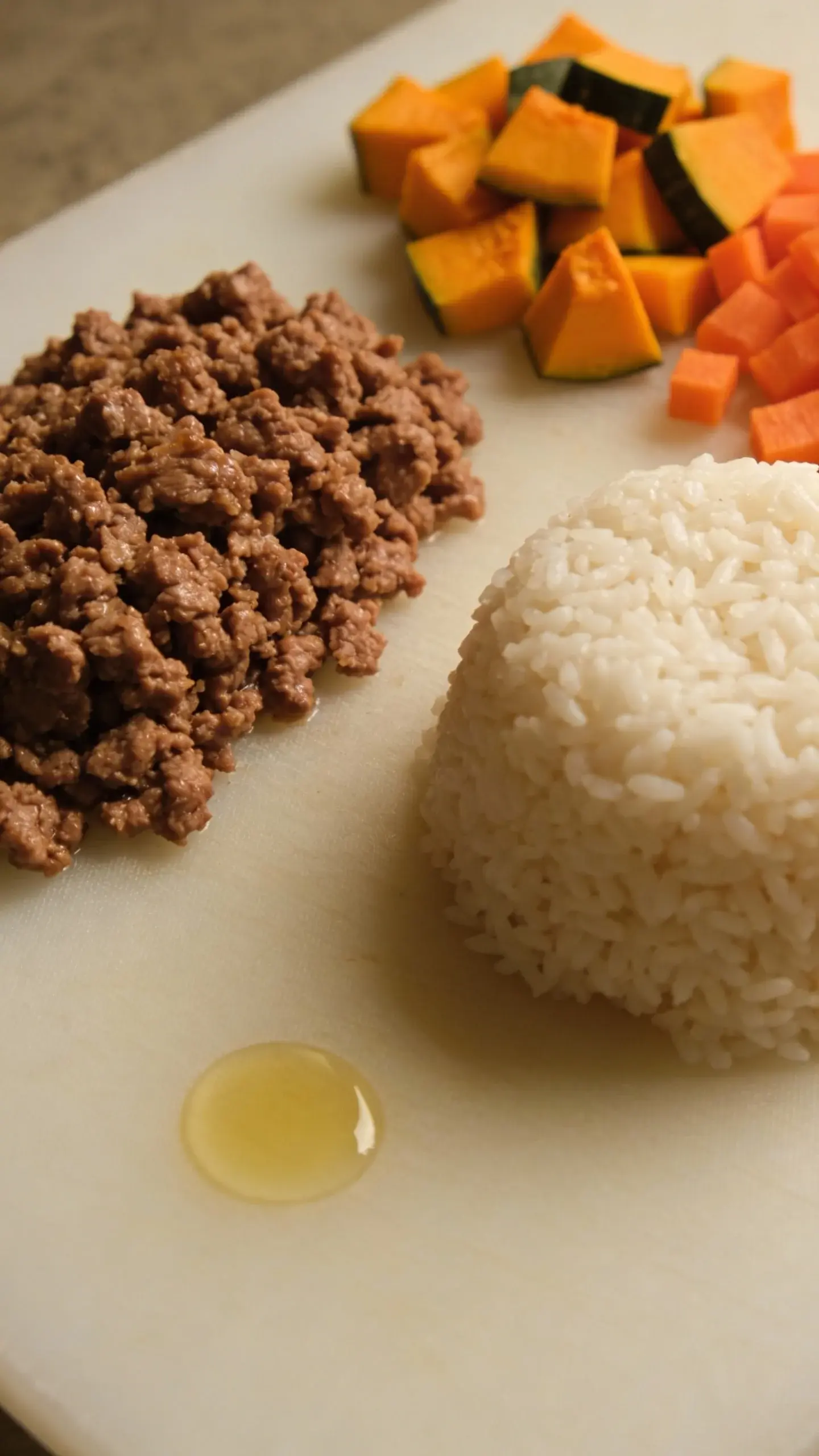
Switching foods too fast equals chaos. Take it slow over 5–7 days:
- Day 1–2: 25% new food, 75% old food
- Day 3–4: 50% new, 50% old
- Day 5–6: 75% new, 25% old
- Day 7: 100% new
If your dog gets soft stools, pause at the current step for a day. Add a little extra pumpkin and water. Keep walks calm until the gut settles (your rugs will thank you).
When to Call the Vet (Don’t “Wait and See” This Stuff)
- Blood, black tarry stools, or repeated vomiting
- Lethargy, fever, or belly pain (tight abdomen, whimpering)
- Weight loss despite normal appetite
- Food allergies or chronic skin/ear issues alongside GI problems
Persistent issues might mean beef isn’t the protein for your dog. Try turkey or pork loin under vet guidance.
FAQ
Can I use raw beef for sensitive stomachs?
I wouldn’t. Raw diets can upset sensitive guts and carry bacteria that make things worse. Cook the beef thoroughly and keep it simple. If you’re passionate about raw, chat with your vet first.
What if my dog can’t handle rice?
Use well-cooked oats, peeled and mashed sweet potato, or overcooked pasta. Start small and watch stools for 48 hours. If gassiness spikes, adjust fiber down and add more water.
Do I need supplements if I rotate ingredients?
Yes. Rotating helps variety, but it doesn’t guarantee complete nutrition. A canine multivitamin/mineral and a calcium source keep the diet balanced, especially for long-term feeding.
Is pumpkin always safe?
Pumpkin helps many dogs, but too much can cause loose stools. Start with 1 tsp per meal for small dogs and 1 tbsp for large dogs, then adjust. If stools loosen, dial it back.
How long does homemade dog food keep?
Refrigerate for up to 3 days in airtight containers. Freeze portions for up to 2 months. Thaw in the fridge, not on the counter. Reheat gently or serve at room temp.
Can I add probiotics?
Absolutely. Use a dog-specific probiotic per label instructions or small amounts of plain kefir/yogurt if dairy sits well. Introduce slowly to avoid extra bloating.
Final Thoughts
Sensitive stomachs don’t need complicated fixes—they need calm, clean, and consistent food. This beef recipe checks those boxes while staying tasty enough for picky pups. Try it for a week, track how your dog feels, and tweak as you go. With a little patience (and a very clean skillet), you’ll have a happier dog and way fewer emergency carpet cleanups—IMO, that’s a massive win.
About the Author

David
Blogger/YouTuber
A guitar nerd, the myth, the legend.