Beagles don’t just walk into a room—they bounce into it like caffeinated toddlers with detective badges. If your Beagle vibrates at 200% energy and treats every scent like a breaking news alert, you’re in the right place. Let’s channel that chaos into smart training that works with their brains, not against them. You’ll get a calmer Beagle and keep your sanity intact. Win-win.
Know the Beagle Brain: Nose First, Ears Later
Beagles are scent hounds. They follow smells like it’s their full-time job, because, historically, it was. If you train them as if they’re herding dogs or lap dogs, you’ll both get frustrated fast.
Key takeaways:
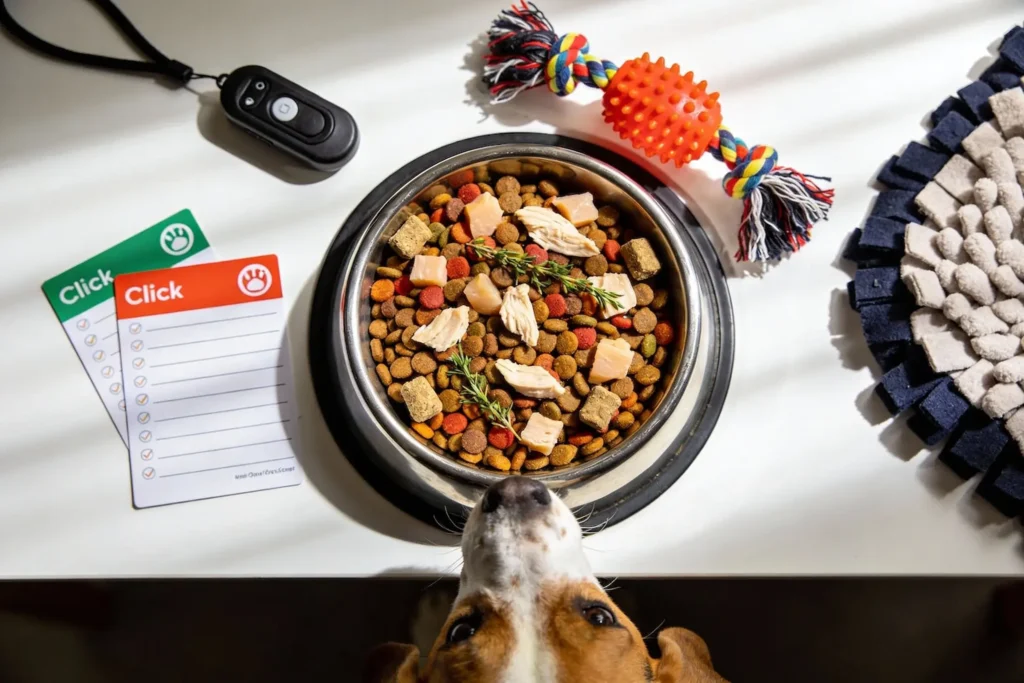
- Motivation = scent + food. Use smelly treats and nose-driven games to keep their focus.
- Short sessions work best. Go 5–10 minutes, multiple times a day.
- Consistency beats intensity. Daily habits beat marathon training sessions.
Breed quirks you can use
- They love to chase—so play structured fetch or tug instead of letting them chase squirrels (and your neighbors).
- They adore puzzles—use snuffle mats and scent games to train their brain while they “hunt.”
- They’re social—train around mild distractions early to prevent selective hearing later.
Exercise Like You Mean It (But Smart)
You won’t “walk the energy out” of a Beagle with one long stroll. You need a mix of physical and mental work. IMO, 60–90 minutes of activity per day works great when you break it up.
Daily rhythm idea:
- Morning: 20–30 minutes brisk walk + 5 minutes scent work.
- Midday: 10-minute training session + puzzle feeder.
- Evening: 20–30 minutes fetch/tug + 5 minutes calm training (settle on mat).
Energy outlets that actually help
- Scent walks: Let them sniff intentionally. Pick a route and say “go sniff.” It’s enrichment, not laziness.
- Structured fetch: Ask for a sit before the throw. Build impulse control without them realizing it.
- Recall games: Two people calling the dog back and forth with treats. Keep it upbeat and short.
Recall That Works (Even When They Smell a Hot Dog Three Blocks Away)
Beagles can ghost you when their nose locks in. So you build recall like a bank account—lots of small deposits of success before you make big withdrawals in distracting places.
- Pick a special cue: Use a unique word or whistle just for emergencies. Do not waste it.
- Pay big: High-value treats only (cheese, hot dog, dehydrated liver). Party-level praise.
- Start indoors: Call once, reward like you mean it, then release back to whatever they were doing.
- Increase distraction slowly: Backyard → quiet park → busier areas, always on a long line at first.
- Never punish recall: If you call them and then clip the leash and go home every time, they notice. Sometimes call, reward, and let them go back to sniffing.
Long-line setup
- Use a 20–30 ft biothane long line and a back-clip harness.
- Practice “check-ins”: reward when they look back at you on their own.
- Say “let’s go” and change direction; reward when they follow.
Loose Leash Walking Without the Sled Team Vibes
Beagles pull because the world smells like a buffet. You’ll fix this with clarity and rewards, not arm strength.
Step-by-step game plan:
- Warm-up: Two minutes of heel/reward indoors or on the driveway. Set the tone.
- Pay position: Treat when their shoulder stays near your leg. Rapid-fire at first.
- Be a tree: If they pull, stop. Don’t yank. Wait for slack, mark it (“yes!”), then move again.
- Use sniff breaks: Say “go sniff” as a reward after 10–20 steps of good walking.
- Short reps: Do 5-minute training walks, then let them have a proper sniff walk.
Tools that help (FYI: no magic wands)
- Front-clip harness: Reduces pulling without pain.
- Treat pouch + clicker or marker word: Speed up learning and timing.
- No prong or shock collars: Beagles shut down or get sneaky. Teach, don’t scare.
Harness the Nose: Scent Games to Tire the Brain
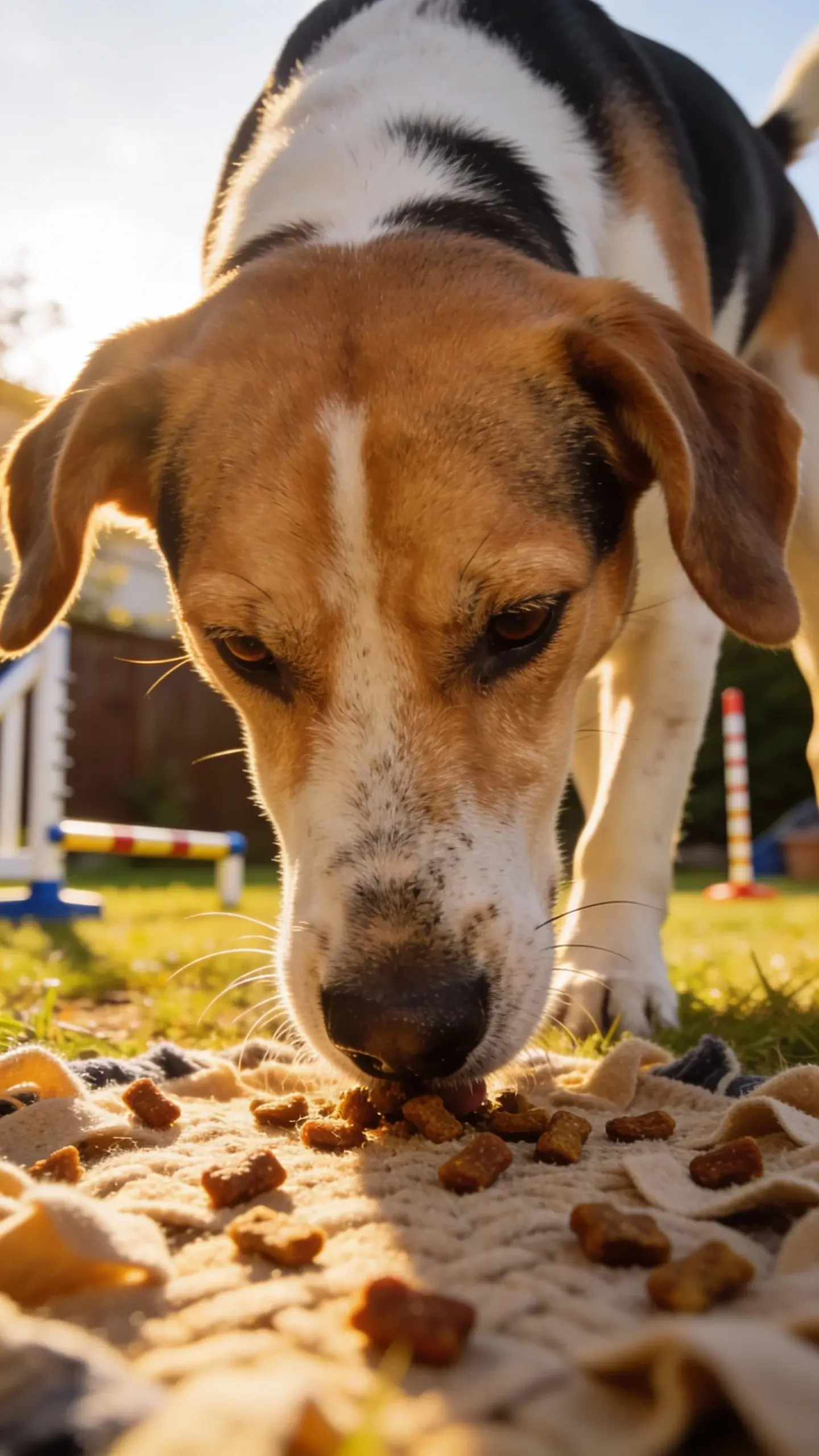
If you don’t give that nose a job, it will freelance (trash raiding, counter surfing, backyard excavations). Channel it.
Easy indoor games
- Find It: Toss a treat, say “find it,” then scatter several. Increase difficulty by hiding them under cups or in another room.
- Snuffle mat: Feed a portion of meals here. Slows eating and satisfies foraging instincts.
- Muffin tin puzzle: Treats in cups covered with tennis balls. Simple, effective, adorable.
Level up outdoors
- Track a drag scent: Rub a treat on a rag, drag it across the yard, hide the treat at the end. Release with “track.”
- Shell game: Three cups, one treat, shuffle slowly at first, then faster.
- DIY nosework boxes: Cardboard boxes with vent holes and a treat in one. Let them indicate by pawing or freezing.
Impulse Control Without Crushing Their Spirit
High-energy Beagles need brakes. You’ll build self-control with quick games, not lectures.
Core skills
- Wait at doors: Hand on the handle, ask for sit, open a crack, close if they move, open wider when they wait. Release with “okay.”
- Leave it: Show treat in closed fist. When they back off, mark and reward from the other hand. Progress to floor treats and dropped food.
- Settle on a mat: Toss a treat onto a mat. When they step on it, reward. Build to downs, then duration. Use this during dinner or TV time.
Zoomies protocol
- Offer a quick tug session to vent steam, then ask for a sit or down to re-engage the brain.
- Redirect to a chew (bully stick, frozen Kong) to lower arousal.
- Short crate nap if they can’t self-regulate yet. Calm entry, calm exit.
Food, Chews, and Training Rewards
Beagles usually worship snacks. Use that gift wisely.
- Training treats: Pea-sized, soft, and fast to eat. Mix high-value (cheese) with regular kibble to stretch calories.
- Meal planning: Deduct training treats from daily food to avoid weight creep. Beagles will pretend they’re starving. They’re lying.
- Chews for sanity: Frozen Kongs, braided chews, or rubber toys. Chewing reduces arousal and buys you a Zoom-free evening.
Social Life and Distraction-Proofing
You want a Beagle who can ignore the pizza slice on the sidewalk and the jogger with bacon aura. Train for real life.
Distraction ladder
- Level 1: Quiet room with no distractions.
- Level 2: Backyard or driveway.
- Level 3: Quiet park with distance from action.
- Level 4: Closer to people/dogs/food carts.
- Level 5: Busy sidewalks, markets, trails.
Move up only when your Beagle succeeds 80% of the time. If they fail, no drama—drop a level. FYI, that’s normal.
FAQ
How much exercise does a high-energy Beagle really need?
Aim for 60–90 minutes total daily, split into multiple sessions. Mix physical work (walks, fetch) with mental games (nosework, puzzles). A tired brain equals a polite Beagle, IMO.
Can I ever trust my Beagle off-leash?
Some Beagles earn it in controlled areas after serious recall training. Many never become 100% reliable around wildlife scents. Use long lines and fenced spaces. Safety beats wishful thinking.
What treats work best for training?
Soft, smelly, and tiny. Think cheese, turkey, or store-bought training bites. Rotate flavors to keep interest high, and cut calories from meals to balance it out.
How do I stop my Beagle from barking at everything?
Identify the trigger (boredom, outside noises, frustration). Increase exercise and enrichment, teach “quiet” with a reward-based approach, and use white noise or window film to reduce visual triggers. Training plus management does the trick.
Is crate training good for Beagles?
Yes, when you introduce it positively. Feed meals in the crate, offer special chews there, and never use it as punishment. Crates help with naps, travel, and preventing chaos while you’re out.
My Beagle ignores me outside. Help?
That’s the nose talking. Go back to basics with a long line, use higher-value rewards, and train at the edge of distractions before moving closer. Keep sessions short and end on success.
Conclusion
High-energy Beagles aren’t stubborn—they’re busy professionals with a scent-based agenda. When you give that nose a job, teach impulse control through games, and pay well for good choices, everything clicks. Build routines, train in quick bursts, and laugh at the occasional gremlin moment. You’ll end up with a Beagle who listens, zooms appropriately, and naps like a champion—IMO, the perfect combo.
About the Author

David
Blogger/YouTuber
A guitar nerd, the myth, the legend.