
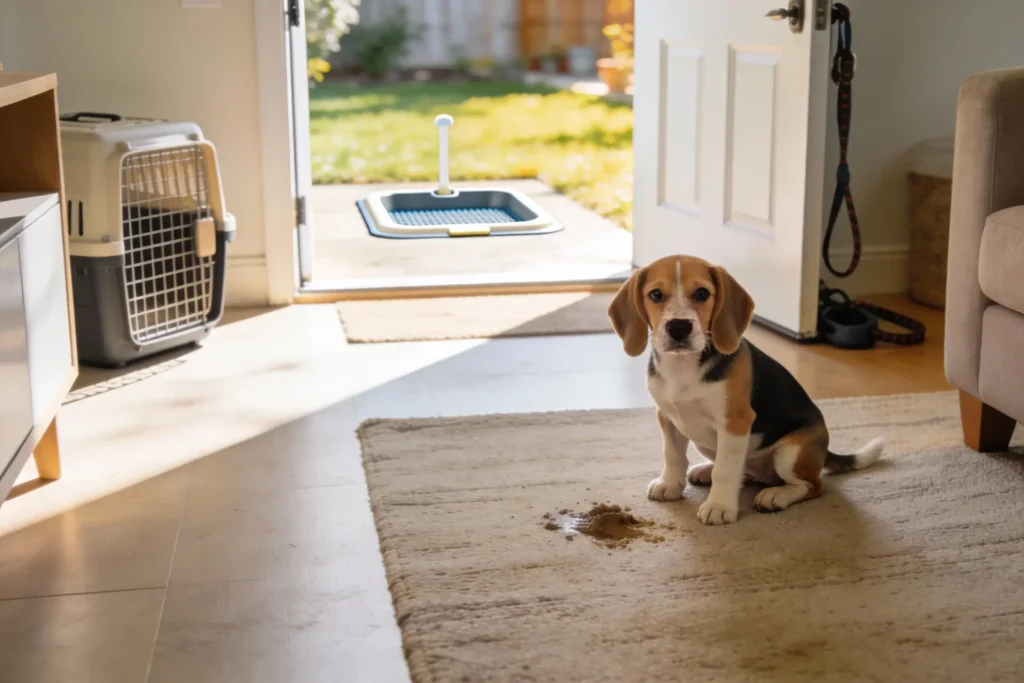
Beagles are adorable, stubborn, food-driven little geniuses who can sniff out a crumb from 200 yards but somehow “forget” where the potty spot is. If your new Beagle keeps treating your rug like a restroom, you’re not alone. Potty training a Beagle takes strategy, humor, and a whole lot of consistency. Let’s talk about the most common mistakes new owners make—and how to fix them before your mop files for overtime.
Expecting Too Much, Too Soon
We love Beagles because they’re smart and curious. But guess what? That nose-heavy curiosity means distractions everywhere. New owners often assume their pup “gets it” after two days. Nope.
Beagles need time and repetition. A reliable potty routine typically takes weeks, sometimes months. If your Beagle nails it for three days, don’t celebrate like it’s graduation day. Keep the structure tight.
What “too soon” looks like
- Removing the crate after a few dry nights
- Giving full house access immediately
- Stopping frequent potty breaks because “he seems fine”
Inconsistent Schedules (AKA the Silent Saboteur)
Beagles thrive on routine. If you sleep in and skip the morning potty break, your Beagle will find a new spot. Spoiler: you won’t like it.
Stick to a simple, boring schedule:
- First thing in the morning
- After meals
- After playtime
- After naps
- Before bed
Does that sound like a lot? It is. But it works. IMO, consistency beats every fancy training gadget.
The “magic windows” after meals
Most Beagles need to poop 10–30 minutes after eating. Set a timer. Don’t guess. Don’t “just check your phone real quick.” Beagle digestion waits for no one.
Missing the Signs (Because Sniffing Is Not Just Sniffing)
Beagles sniff constantly—it’s their job. But during potty training, sniffing ramps up just before they go. You’ll see more intense circling, a sudden focus on corners, or wandering toward previous “crime scenes.”
When you see those signs:
- Interrupt calmly (“let’s go!”)
- Leash up and head to the potty spot
- Wait quietly, then reward like they just solved world peace
FYI: If your Beagle suddenly disappears, assume they’re finding a spot. Silence can be suspicious.
Using the Wrong Rewards
Beagles do everything for food. Love and praise help, but treats seal the deal. The mistake? Offering boring treats or rewarding too late.
Make rewards irresistible and immediate.
- Use high-value treats: tiny bits of chicken, cheese, or soft training bites
- Deliver within 2 seconds of finishing
- Party-level praise: “YES! Good potty!”
If you wait until you get back inside to reward, your Beagle thinks you’re celebrating… coming indoors. You trained the wrong behavior. Oops.
What about potty bells?
They can work, but only if you consistently take your Beagle out the moment they ring, for potty—not play. If you let bell time become sniffari time, congrats, you trained a butler.
Letting Sniffing Time Turn Into Playtime
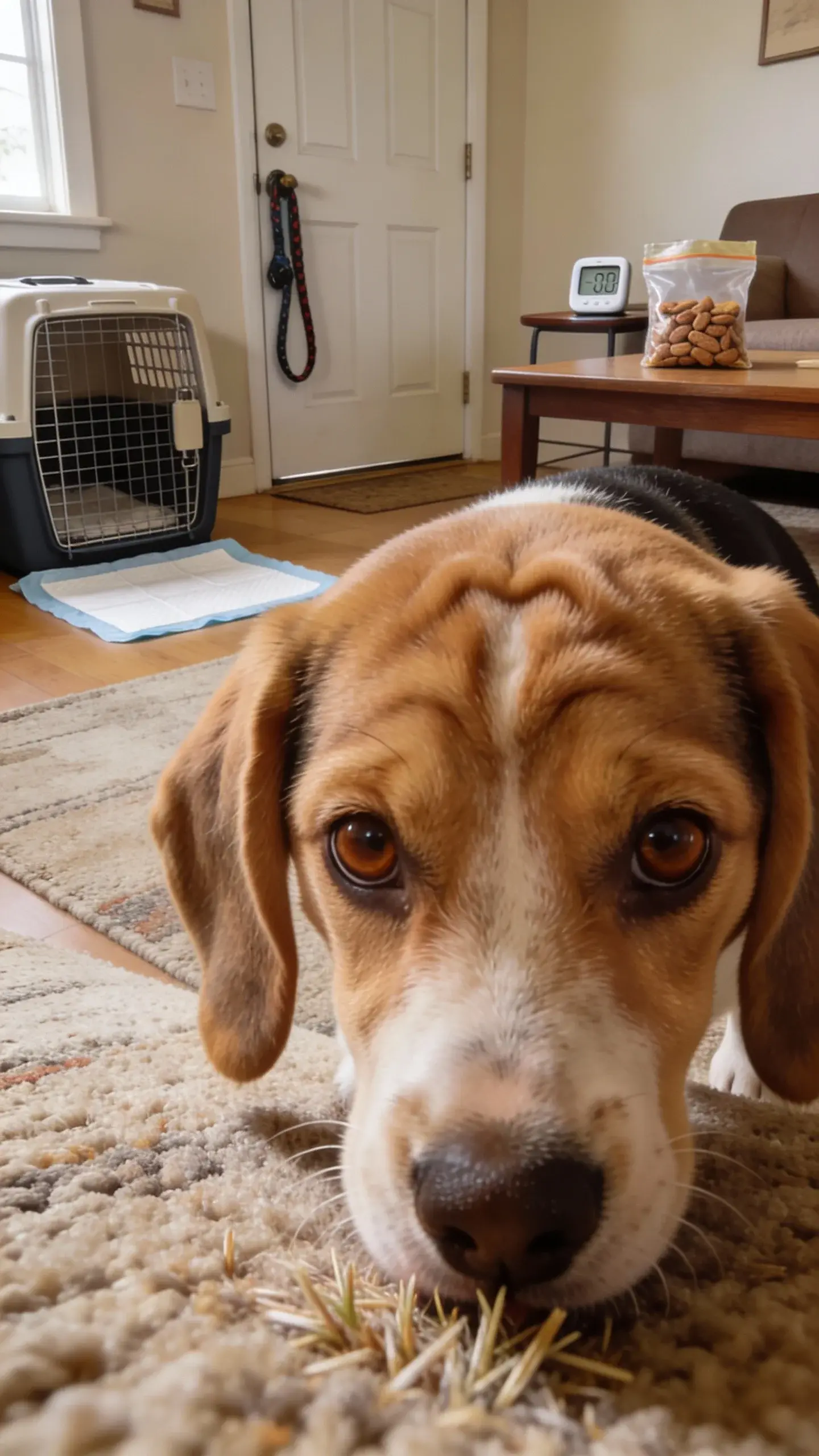
Beagles love to turn potty breaks into scavenger hunts. You go out for business; they go out for vibes. Big mistake.
Use a “business first” structure:
- Leash on
- Go to the same potty spot
- Say your cue (“go potty”) once
- Wait quietly for 3–5 minutes
- If they go: reward, then offer a short sniff walk
- If they don’t: back inside, crate or tether, try again in 10 minutes
This keeps things clear: potty earns freedom. Wandering aimlessly does not.
Too Much Freedom, Too Soon
Beagles + unsupervised freedom = indoor accidents and secret pee corners. You can’t out-clean a Beagle’s nose.
Manage the environment:
- Use a crate sized so your Beagle can stand, turn, and lie down comfortably
- Tether to you with a leash during free time
- Block off rooms with baby gates
- Keep rugs up for now—they’re plush pee magnets
IMO, house freedom is earned in small chunks: 15 minutes, then 30, then an hour, all after successful potty trips.
Crate training isn’t “mean”
Used right, crates feel like dens. Beagles often love them. Crates prevent accidents, protect your stuff, and build good habits faster than any “no pee” spray on earth.
Punishing Accidents (It Backfires. Always.)
Scolding or rubbing noses in it? Please no. Your Beagle learns to hide it from you, not to stop. You’ll just find pee behind the couch.
Do this instead:
- Interrupt calmly if you catch them mid-accident: “Outside!”
- Take them out immediately and reward if they finish outside
- Clean the mess with an enzyme cleaner to erase odor cues
Beagles don’t feel “guilty.” They feel nervous around angry humans. Keep it low-drama.
Ignoring Water Timing and Feeding Habits
Free-feeding and random water access make potty timing unpredictable. You don’t need to ration water all day, but structure helps.
Simple guidelines:
- Feed at set times, not free-choice
- Offer water regularly but remove it 2–3 hours before bedtime
- Take out right after drinking, especially in the evening
Also, big play sessions trigger peeing. Post-play potty trips save carpets.
Skipping the Vet When Accidents Keep Happening
If your Beagle suddenly regresses or pees small amounts frequently, call the vet. UTIs, GI upset, or parasites can derail training. Rule out medical issues before you double down on training tweaks.
FAQ
How long does potty training a Beagle usually take?
Expect 4–12 weeks for solid consistency, with occasional hiccups. Puppies have tiny bladders, and Beagles get distracted easily. Stay structured, and don’t measure progress by days—measure by routines that stick.
Should I use pee pads with a Beagle?
You can, but I don’t recommend it unless you live in a high-rise or have mobility issues. Pee pads can confuse scent-driven dogs. If you use them, transition outside quickly by moving the pad toward the door, then outside.
What’s the best cleaner for accidents?
Use an enzyme-based cleaner every time. Regular cleaners don’t break down the odor markers your Beagle’s supernose detects. If they can smell it, they’ll revisit the scene like a true detective.
My Beagle won’t go when it’s raining. Help?
Welcome to the club. Use a covered potty area if possible, keep a designated spot, and go out with them. Short leash, quick cue, massive reward. A raincoat helps, but honestly, your enthusiasm helps more.
How do I handle nighttime accidents?
Limit water a few hours before bed, take them out right before sleep, and set an alarm for a middle-of-the-night trip for young pups. Crate near your bed so you hear stirring. Stretch the time gradually as they mature.
Can adult rescue Beagles learn this too?
Absolutely. Treat them like puppies at first: structure, management, and rewards. Many rescues catch on faster because they can hold it longer, but they still need clear rules and a daily rhythm.
Conclusion
Potty training a Beagle doesn’t require magic—just a plan, patience, and treats your dog would trade state secrets for. Keep the schedule boring, the rewards exciting, and the freedom limited until they earn it. If you mess up (you will), reset and move on. With consistency, your Beagle will figure it out—and your floors will forgive you. FYI: that first accident-free week? Throw a party. You both earned it.
About the Author

David
Blogger/YouTuber
A guitar nerd, the myth, the legend.