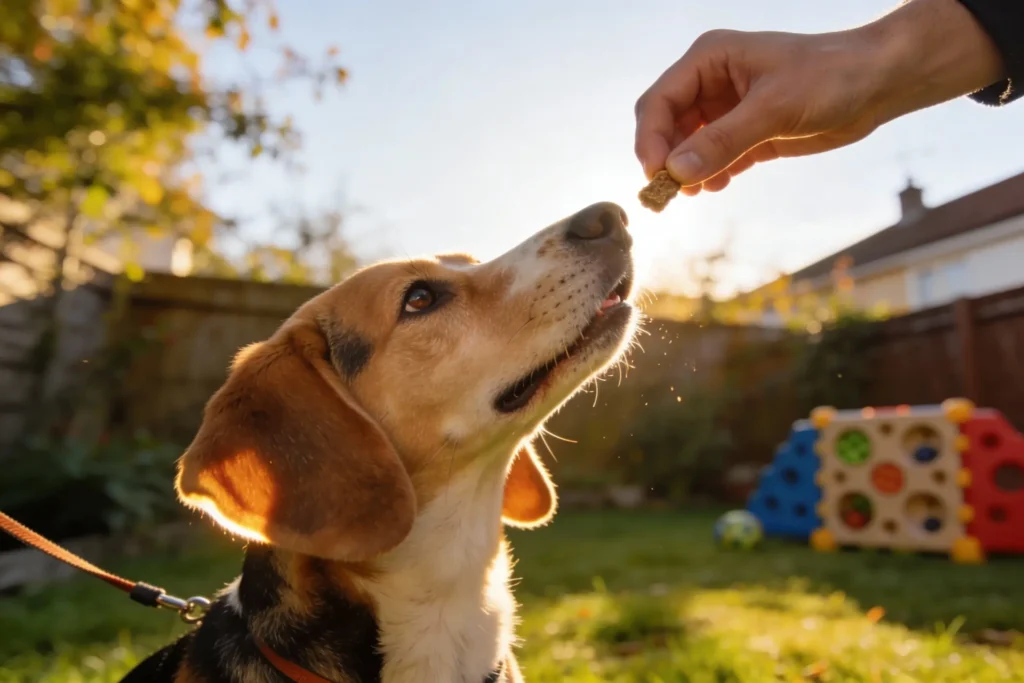
Beagles are brilliant, hilarious, and stubborn enough to make you question every life choice. You ask for “sit,” they counter with “I smell a squirrel 3 blocks away.” Good news: that stubborn streak isn’t defiance—it’s independence bred for tracking. You can train a beagle well; you just need the right methods, the right rewards, and a bit of patience… plus treats. Lots of treats.
Understand the Beagle Brain
Beagles chase smell like it’s their full-time job. Because it is. They follow scent over your voice every time, so you must work with their instincts instead of fighting them. That means short, snack-fueled, scent-friendly sessions.
Key mindset shifts:
- Reinforce what you want, don’t scold what you don’t. Beagles tune out nagging.
- Reward fast and big. Deliver treats within 1-2 seconds of the behavior.
- Keep sessions short (3-7 minutes). End on a win.
Motivation Hierarchy
Not all rewards are equal. Beagles adore:
- High-value food (tiny bits of chicken, cheese, freeze-dried liver)
- Scent games (sniffing as a reward)
- Freedom (release to roam a safe area after a good recall)
IMO, if your beagle won’t work for the treat, the treat isn’t good enough.
Nail the Basics with Micro-Training
You don’t need marathon training blocks. You need micro-sessions sprinkled through the day. Think 60-90 seconds while the coffee brews.
Core commands to teach early:
- Name Game: Say the name once. When your dog glances at you, mark (“Yes!”) and treat.
- Sit: Lure nose up with a treat, mark and reward the instant the butt hits the floor.
- Down: Lure from sit to the ground slowly. Don’t push; beagles protest pressure.
- Leave It: Present treat in fist. When your dog stops pawing/sniffing, mark and reward from the other hand.
Marker Training 101
A marker word (“Yes!”) or clicker tells your beagle “That! That earns the paycheck.” Charge the marker first: say “Yes!” and deliver a treat 10 times in a row. Now you can capture good behavior in real time.
Use Scent to Your Advantage
You’ll never out-shout a scent trail, so make scent your ally. Build obedience through nose work.
Easy scent-based games:
- Find It: Toss a treat in short grass. Add distance and hiding spots as your dog learns.
- Sniff Breaks: After a solid “heel” for 10-15 steps, release with “Go sniff!” This turns sniffing into a reward you control.
- Trail Me: Drag a treat along a short path at home, then let your beagle track to the jackpot.
Why This Works
Beagles crave purpose. When obedience leads to scent work, your dog thinks, “I do the thing, then I get to do MY thing.” That flips stubborn into cooperation.
Recall: Make Coming Back Irresistible
Stubborn beagles often “forget” recall. You need to make returning the best party in town. Also, use a long line for months—FYI, off-leash freedom without proofed recall is how beagles write their memoirs.
Recall plan:
- Pick a special cue: “Here!” or a whistle. Never poison it by yelling.
- Start indoors: Say the cue once, then run backward, cheer, pay big.
- Level up: Move to yard on a 20-30 ft long line. Add mild distractions.
- Jackpot randomly: Sometimes pay with a handful of treats, a tug, or release to sniff.
- Never punish recall: If coming to you ends the fun every time, your beagle will do the math.
Emergency Recall
Teach a separate nuclear recall (e.g., a whistle trill). Pair it with ridiculous rewards—rotisserie chicken, a mini game, then freedom again. Use sparingly so it stays magical.
Leash Manners Without the Tug-of-War
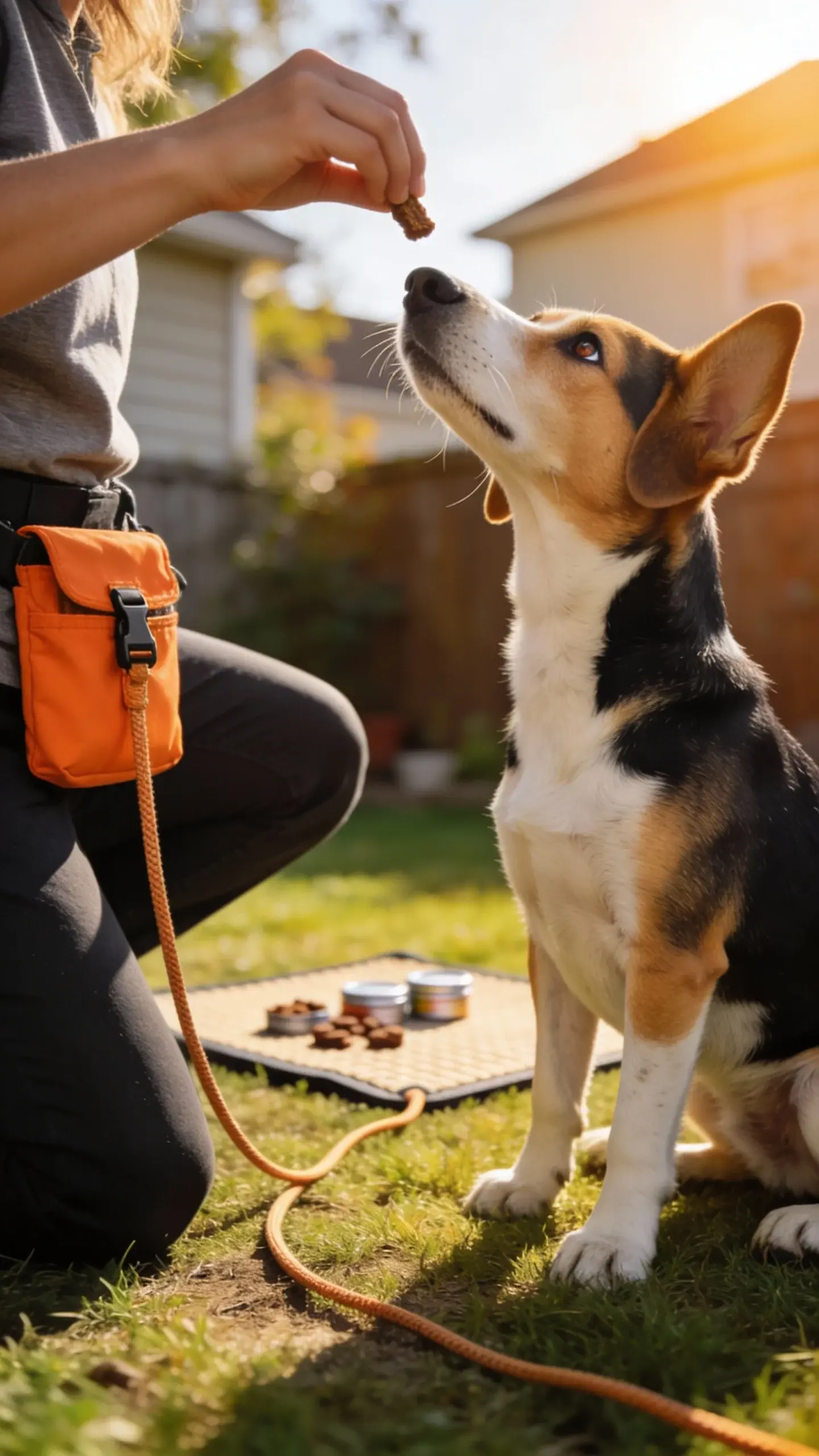
Beagles pull because the nose pulls. You can fix it with structure, not force.
Two methods that work:
- Red Light, Green Light: When the leash tightens, stop. When your dog checks in or the leash loosens, move. Consistent and boring—perfect.
- Reinforce Position: Reward your beagle for walking at your side every 3-5 steps at first. Gradually increase the number of steps between rewards.
Gear That Helps
- No-pull harness with a front clip (reduces leverage)
- Long line for sniffy training walks
- Treat pouch so you can pay fast
Skip harsh tools. Beagles shut down or pull harder. Soft control wins.
Crate and Alone-Time Training (Save Your Sanity)
Beagles bond hard and hate boredom. Crates teach calm, prevent chaos, and keep your shoes alive.
Crate training basics:
- Feed meals in the crate with the door open at first.
- Toss in a stuffed Kong and close the door for a few minutes.
- Gradually extend time. Keep exits calm—no big fanfare.
Beat Boredom Smartly
Rotate enrichment: snuffle mats, lick mats, puzzle toys, frozen Kongs. Use two or three daily and swap them to keep novelty high. A tired nose equals a tired beagle.
Consistency, Boundaries, and Fair Rules
Beagles respect rules when they make sense and stay consistent. If “no couch” means “except on Sundays,” your beagle hears “couch forever.”
Make rules stick with:
- Clear cues: One word per behavior. Don’t say “Come here, buddy, right now, let’s go.” Pick one.
- House routines: Potty, play, train, rest—repeat daily.
- Management: Baby gates, closed doors, and leashes prevent bad habits from forming.
IMO, management is 50% of “training.” Don’t try to out-discipline a hound’s nose; out-manage it.
Common Mistakes to Avoid
- Over-long sessions: You’ll lose your dog’s brain after 5-7 minutes.
- Under-paying: Kibble rarely beats a squirrel. Upgrade your treats.
- Inconsistent cues: Family members must use the same words and rules.
- Too-fast progression: Proof behaviors room by room, yard, quiet street, then park.
- Off-leash too soon: Long line until recall is bombproof. No exceptions.
FAQs
Are beagles actually trainable, or am I doomed?
Totally trainable. They’re independent, not disobedient. Use high-value rewards, short sessions, and scent-based games. Beagles thrive when training feels like a job they enjoy.
How often should I train my beagle?
Aim for 3-6 micro-sessions daily, 1-5 minutes each. Sprinkle them before meals, on walks, and during play. Consistency beats length every time.
What treats work best for stubborn beagles?
Moist, smelly, tiny pieces: chicken, turkey, cheese, or commercial soft training bites. Rotate flavors to avoid boredom. For recalls, use a jackpot—think several pieces or a special treat like sardines.
Why does my beagle ignore me outside?
Distractions overload them. You likely skipped steps between living room and park. Go back to basics with a long line, start in a quiet area, and slowly add distractions while paying well for focus.
Can I ever trust my beagle off-leash?
Some beagles earn reliable off-leash privileges after months of training and proofing. Many never do in unfenced areas. Use your emergency recall, long lines, fenced fields, and common sense. Safety first, FYI.
Is a clicker necessary?
Not necessary, but helpful. A clicker or crisp “Yes!” marks behaviors precisely, which speeds learning. Choose whichever you’ll use consistently.
Conclusion
You don’t fix beagle stubbornness—you reroute it. Make training short, rewarding, and nose-friendly, and your hound will choose you over chaos more often than not. Build recall like it’s sacred, pay generously, and manage the environment. Do that, and your “stubborn” beagle becomes your sharp, hilarious co-pilot—just with a slightly louder nose.
About the Author

David
Blogger/YouTuber
A guitar nerd, the myth, the legend.