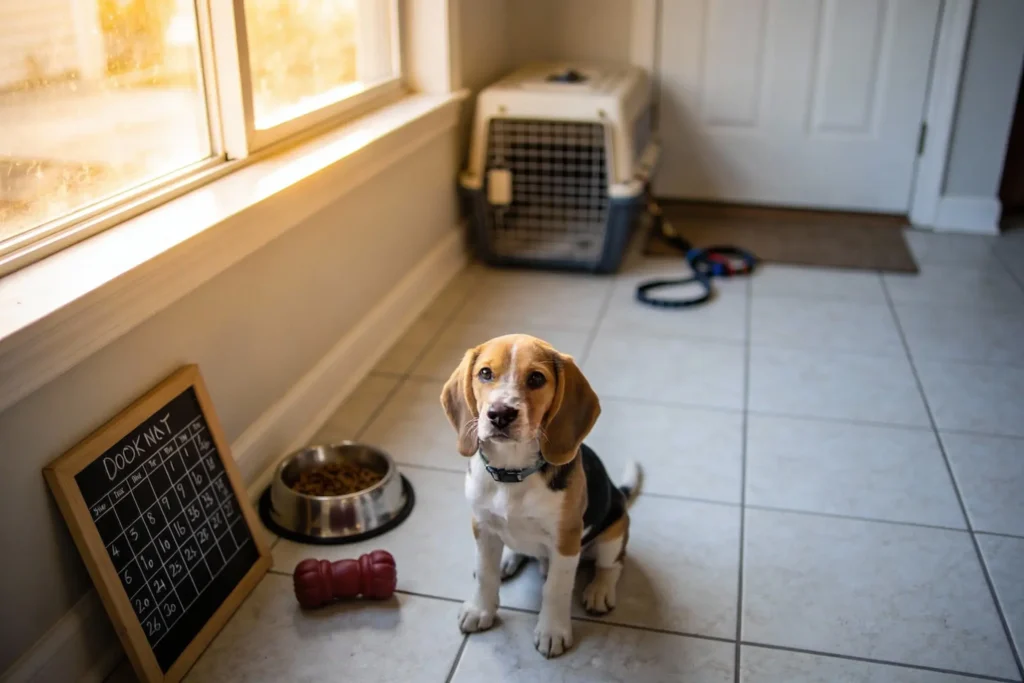
Beagle puppies are adorable chaos. One minute they’re snoozing like angels, the next they’re following a scent straight into your laundry basket. You don’t need a perfect schedule—you need a realistic one that fits how beagles think: nose first, brain later. Let’s build a daily rhythm for training, feeding, and sleep that keeps your pup happy, healthy, and (mostly) out of trouble.
Know Your Beagle: Energy, Nose, and Naps
Beagles are scent hounds with big appetites and bigger personalities. They learn fast—when you make it fun and rewarding. They also burn energy in bursts, then crash hard.
Key mindset: short, frequent sessions beat long marathons. Keep structure, but expect detours. If your puppy gets the zoomies after dinner, that’s not them being “bad”—that’s just beagle.
Daily Schedule Overview (8–16 Weeks)
Want a baseline? Here’s a sample day you can tweak. Adjust times to your life, but keep the order and spacing consistent.
- 6:30 am: Potty break
- 6:40 am: Breakfast + brief training (sit, name, hand target)
- 7:00 am: Short play or sniff walk (5–10 min), then nap
- 9:00 am: Potty + chew time (stuffed Kong) + crate nap
- 11:30 am: Potty + lunch + 3–5 min training (come, leash work)
- 12:00 pm: Calm play or gentle socialization + nap
- 2:30 pm: Potty + play/sniff walk (10–15 min)
- 4:30 pm: Potty + dinner + training (leave it, drop it)
- 6:00 pm: Quiet time, chew, cuddles
- 8:30 pm: Potty + short play
- 10:00 pm: Final potty + bedtime in crate
FYI: Expect 1–2 overnight potty breaks until about 12–14 weeks. Annoying? Yes. Worth it? Also yes.
Feeding: What, When, and How Much
Beagle pups will act starving 24/7. Don’t fall for it. Feed on a schedule so their stomach (and poop schedule) stays predictable.
Meals and Portions
- 8–12 weeks: 3–4 small meals per day
- 3–6 months: 3 meals per day
- 6+ months: 2 meals per day
Follow your food’s package guide for weight/age, but adjust by look/feel. You should feel ribs easily without seeing them. If your beagle looks like a loaf of bread, reduce portions a little. IMO, using a kitchen scale beats eyeballing scoops.
Smart Feeding Tips
- Use meals for training. Hand-feed part of breakfast for focus and bonding.
- Puzzle feeders slow inhaling. Bowls with ridges or snuffle mats help.
- Track treats. Keep treats under 10% of daily calories.
- Fresh water always. But pick up the water bowl 1–2 hours before bedtime.
Potty Training Without Tears
Puppies can “hold it” for roughly their age in months plus one (in hours). So a 10-week pup? About 3 hours max. Don’t push it.
Potty Routine That Works
Take them out:
- Right after waking
- After eating or drinking
- After play or training
- Every 2–3 hours, minimum
Pick one potty spot and go there on leash. Stand still and boring. Praise and treat immediately after they finish (outside, not inside the doorway). If nothing happens in 5 minutes, go back in, crate or supervise, and try again in 15–20 minutes.
Accidents? Clean with enzymatic cleaner. No scolding—beagles remember vibes, not lectures.
Training: Short, Sweet, and Scent-Fueled
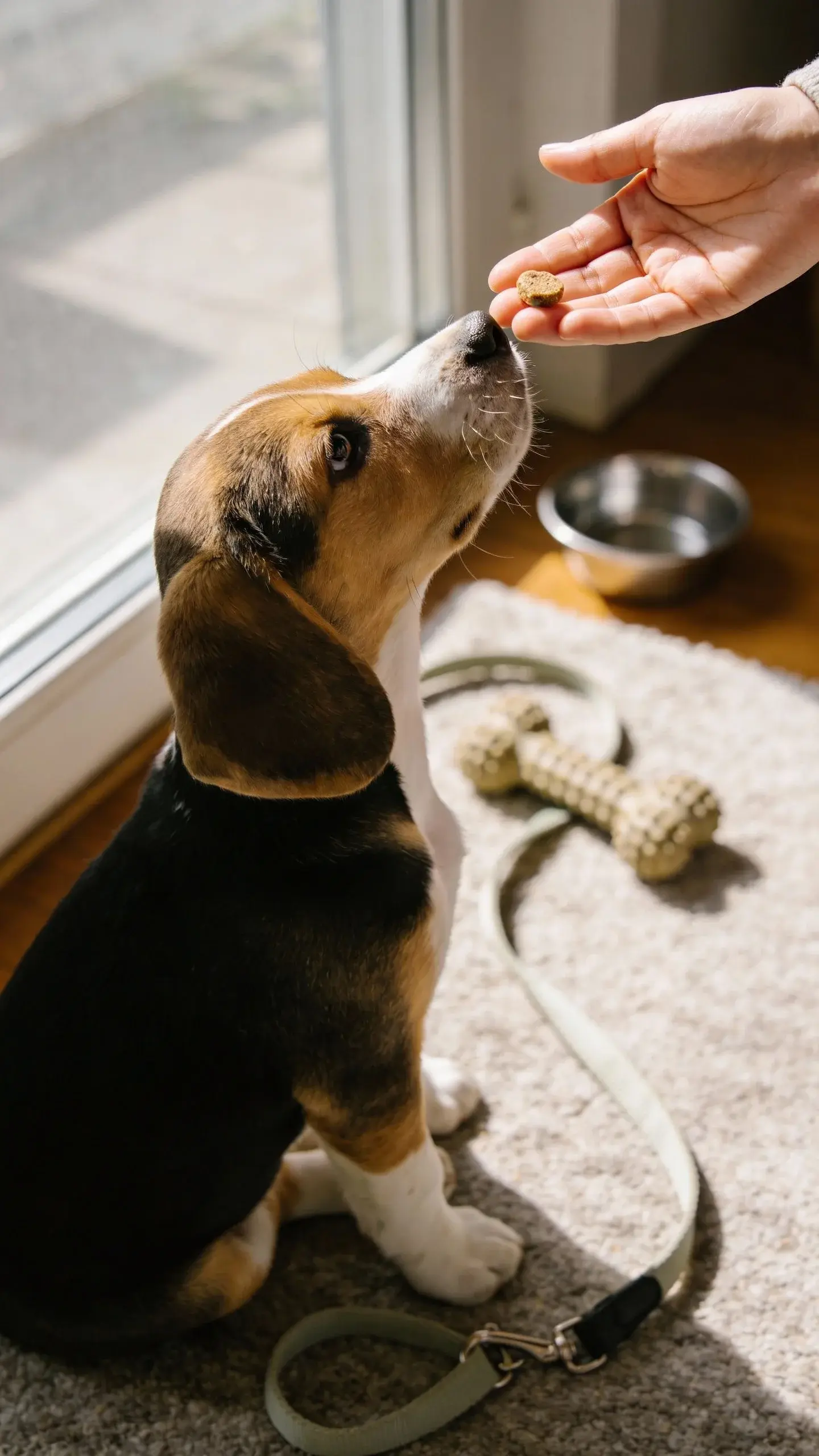
Keep sessions 3–5 minutes, 2–5 times per day. End on a win. If your pup checks out, you went too long.
Core Skills by Priority
- Name recognition and check-ins: Say name once, reward eye contact. Build that attention muscle.
- Come (recall): Start indoors with a happy tone. Reward with high-value treats or a quick game. Never call them to end fun—go get them instead.
- Leave it / Drop it: Beagles pick up everything. Trade up with tastier treats.
- Leash basics: Reward walking near you. Sniff breaks = earned reward, not a constant pull-fest.
- Crate training: Feed in the crate; toss treats in randomly. The crate should feel like a snack bar, not jail.
Make Training Beagle-Friendly
- Use scent games: Scatter a few kibble pieces and let them “find it.”
- Keep variety: Mix food rewards with short play and praise.
- End early: Quit while they still want more. It boosts their enthusiasm.
Sleep: How Much and How to Get It
Puppies sleep a ton: 18–20 hours per day isn’t weird. If your beagle turns into a land shark, they need a nap, not another toy.
Healthy Sleep Habits
- Crate near your bed for the first weeks. They settle faster when they know you’re close.
- Use nap cues: After play and potty, guide them to a calm crate or pen with a chew.
- Calm evenings: Dim lights, soft play, and a short potty before bed.
- White noise helps with night whining. So does a warm blanket.
Night wakings: Keep it boring. Out, potty, back in. No party, no play. You want “sleep mode,” not “2 am zoomies.”
Exercise and Enrichment (Without Overdoing It)
Beagle pups need mental work more than long walks. Their joints are still growing, so skip endurance stuff.
Daily Movement Guide
- Short sniff walks: 5–15 minutes, a few times per day.
- Training + sniff games: 10–20 minutes total, split into tiny chunks.
- Free play: Gentle fetch, tug with rules (start/stop on cue), or puppy playdates with calm pups.
Red flags of over-exercise: stubbornness spikes, puppy biting escalates, or they crash super hard then wake wired. Dial it back.
Socialization: The World Tour (Safely)
A confident beagle = less barking, less anxiety, and a better walker. Expose them to sights, sounds, textures, and people before 16 weeks, but do it smart.
Safe Socializing
- Carry them in busy areas until vaccinations progress.
- Invite friends over with hats, sunglasses, different voices—reward calm curiosity.
- Play soundscapes (traffic, fireworks) at low volume while they chew.
- Handle paws, ears, mouth daily with treats to prep for vet/groomer life.
IMO: One positive, short meetup beats five chaotic outings.
Sample Week at a Glance
Want variety without chaos? Rotate focus areas.
- Mon: Recall games + name recognition
- Tue: Leash basics + sniff walk
- Wed: Leave it / Drop it + trading games
- Thu: Crate training + calm settle on mat
- Fri: Socialization field trip (car ride, store parking lot)
- Sat: Puppy class or playdate with vetted dogs
- Sun: Easy day—puzzle feeders, extra naps
FAQ
How often should a beagle puppy pee?
A lot. Plan every 2–3 hours during the day, plus after sleep, meals, and play. Overnight, expect one or two potty breaks until about 12–14 weeks. If accidents spike, shorten intervals or review meals and water timing.
When can I switch from three meals to two?
Around 6 months for most beagles. If your pup gets hangry or starts scavenging harder, stick with three a bit longer. Growth spurts happen; adjust by body condition, not just age.
My beagle pulls like a tiny sled dog. Help?
Reward any slack leash moments. Stop when they pull, move forward when they come back to you. Use a front-clip harness and plan sniff breaks as rewards. Consistency beats strength every time.
What treats work best for training?
Small, soft, and smelly. Think pea-sized chicken, cheese, or commercial training bites. Mix values: regular kibble for easy stuff, jackpot treats for recalls and tough distractions.
How much should my beagle puppy sleep?
Expect 18–20 hours daily in the early months. If your pup gets mouthy or wild, schedule a nap. Calm routines and a cozy crate make a huge difference.
When do I start puppy classes?
As soon as your vet says your pup is on track with vaccines—usually after the first round. Early social learning pays off for years. A good class helps you more than YouTube ever will, IMO.
Conclusion
You don’t need a flawless schedule—you need a rhythm that fits your beagle’s brain: sniff, snack, snooze, repeat. Keep training short and fun, feed on a timetable, and protect sleep like it’s sacred (because it is). Do that, and your adorable chaos goblin turns into a well-mannered sidekick faster than you think. Now grab the treats and a snuffle mat—you’ve got this.
About the Author

David
Blogger/YouTuber
A guitar nerd, the myth, the legend.