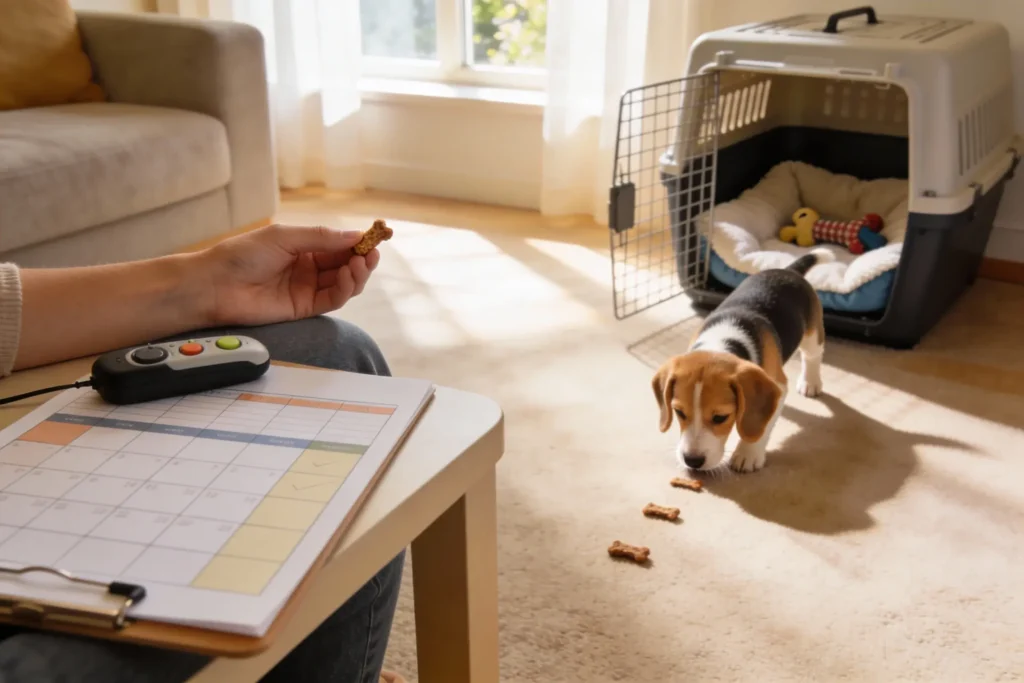
Beagle puppies come with turbo-charged noses, bottomless stomachs, and ears that could probably pick up radio signals. They’re smart, stubborn, and hilarious. You’ll either train that nose, or the nose will train you. The first six months set the tone, so let’s stack the deck in your favor.
Know Your Beagle: Nose First, Brain Second
Beagles follow scent like it’s their full-time job. That’s adorable until your puppy ignores you because the neighbor’s grill smells like destiny. Expect distraction. Plan for it.
Here’s the deal: your beagle isn’t “defiant.” The scent just outranks you. You’ll win with motivation, not muscle. Think treats, toys, and timing.
Set Realistic Expectations
You won’t get a robot dog by six months. You’ll get a goofy buddy who understands the basics and chooses to listen when you make it worth their while. Progress looks like “fewer chewed shoes” and “fewer escape attempts,” not perfection.
Crate, Schedule, Sanity
Crate training and a steady rhythm turn chaos into something manageable. Beagles love routine almost as much as they love snacks.
Crate essentials:
- Pick the right size: big enough to stand, turn, and lie down; not big enough to party.
- Make it cozy: bed, safe chew, maybe a blanket over the top for a den vibe.
- Use it for naps and overnights; never for punishment.
Daily schedule staples:
- Potty breaks: first thing in the morning, after meals, after naps, after play, and before bed.
- Meals: 3 times/day until 5-6 months, then you can shift to 2.
- Training bursts: 5-7 minutes, 3-5 times/day. Short and sweet.
House-Training Without Tears
- Take your pup to the same potty spot. Smell = cue.
- Reward within 2 seconds of finishing. Yes, seconds. Timing matters.
- Accident? Clean with enzymatic cleaner and move on. No drama, no scolding.
Socialization: 3-16 Weeks Is Gold
Beagles grow into confident, friendly dogs when they collect tons of positive experiences early. This window matters more than perfect obedience, IMO.
Your socialization checklist:
- People: different ages, sizes, hats, glasses, wheelchairs.
- Dogs: vaccinated, friendly dogs only; aim for calm greetings over chaotic play.
- Surfaces and sounds: tile, grass, gravel, stairs, vacuum, traffic, thunder (play gently at low volume).
- Handling: paws, ears, mouth, collar grabs. Reward for staying calm.
Puppy Classes: Worth It
Find a positive-reinforcement class. You get structured social time, coaching for you (the human who actually needs the training, FYI), and homework to keep you consistent.
Core Cues: Teach the “Big Five”
You don’t need circus tricks. You need reliable basics that make daily life easy.
1) Name Response
- Say the name once. Pup looks at you? Treat party.
- Practice everywhere. Add mild distractions slowly.
2) Sit/Down
- Lure with a treat, mark (“Yes!”), reward. Fade the lure over time.
- Use these as default manners before meals, doors, and leashing.
3) Leave It
- Show treat in closed fist. Pup sniffs/paws? Wait. Pup backs off? Mark and reward from the other hand.
- Level up to floor drops and moving objects. Safety first.
4) Drop It
- Trade up. Offer higher-value treat for the item. Mark when the mouth opens.
- Prevent chase games by staying calm. Movement = “wheee, new game!”
5) Recall (“Come”)
- Start indoors on a long line. Say “Come” once, crouch, cheer, feed a jackpot.
- Never call to end fun or for punishment. You’ll nuke your recall fast.
Leash Skills for a Scent-Driven Pup
Beagles pull because the world smells like a buffet. Train a “Let’s go” cue with treats delivered at your knee while moving. If the nose locks on a scent and the leash goes tight, stop and be a tree. When the leash loosens, move again. Consistency beats biceps.
Manage the Mouth: Chewing, Nipping, and Sniff Crimes
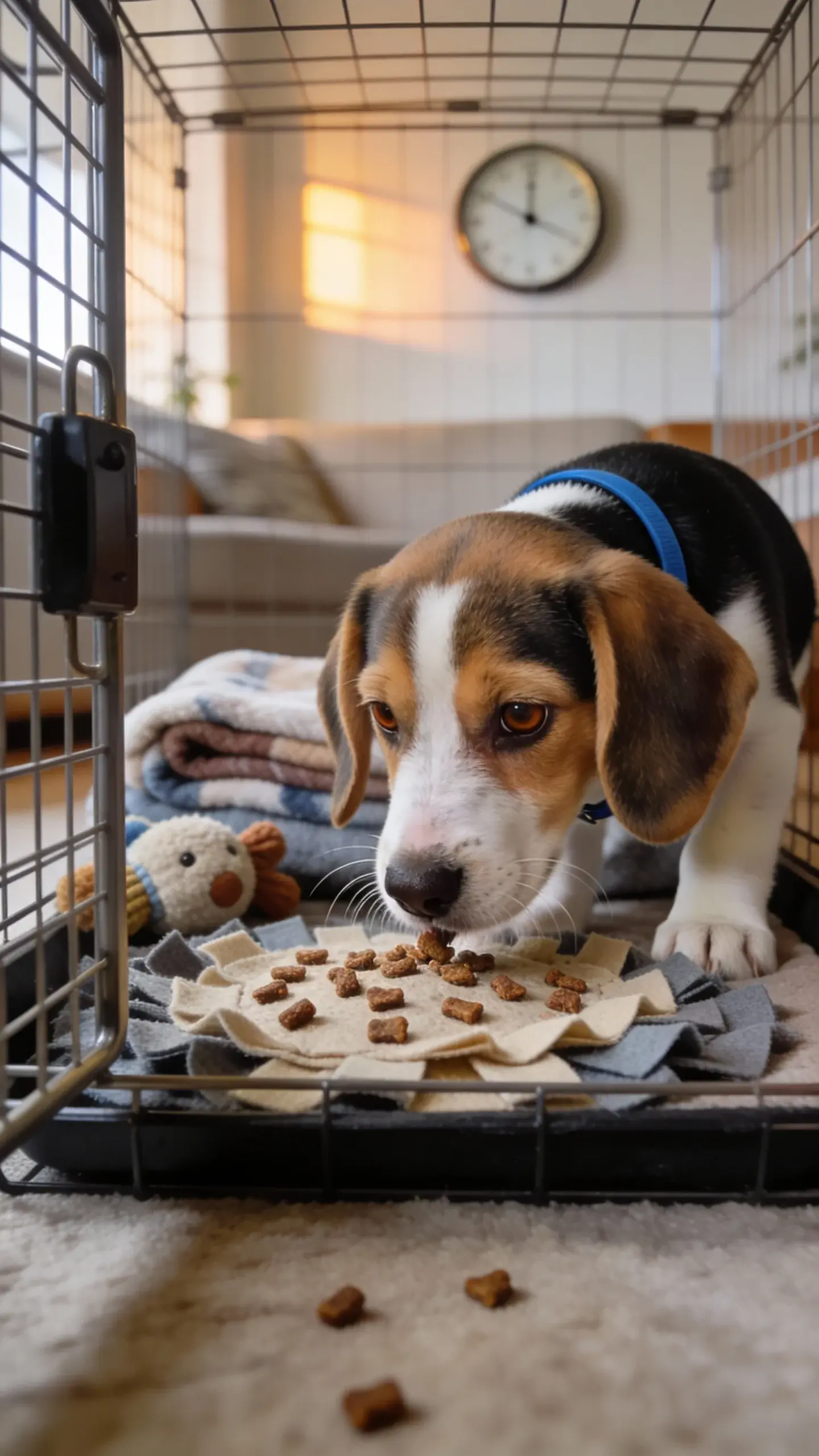
Puppies explore with their mouths. Beagles add extra “but what if I ate it?” energy. Management + redirection saves your stuff.
Prevent disaster:
- Puppy-proof like you’re baby-proofing for a raccoon. Cords, shoes, trash, plants—elevate or block.
- Use baby gates and exercise pens. Freedom is earned.
Channel the chew:
- Offer 3-4 safe chews daily: rubber toys, frozen Kongs, braided treats.
- Rotate toys to keep novelty high.
Fix nipping:
- When teeth touch skin, freeze and disengage for 10-20 seconds. No yelling.
- Resume play with a toy. Reward gentle mouth.
Sniff Breaks: Budget for the Nose
Build sniff time into walks. Use a “Go sniff” cue to allow 30-60 seconds of exploring, then “Let’s go” and move on. It’s mental enrichment that makes training stick. You can’t out-stubborn a beagle, but you can out-plan one.
Energy Outlets: Brain Over Brawn
You don’t need marathon runs. You need smart, structured activity that tires their brain.
Great options:
- Food puzzles and snuffle mats. Meals become nose work sessions.
- Hide-and-seek with treats or toys. Start easy; gradually hide better.
- Short fetch or tug with rules: “Sit,” “Take it,” “Drop,” repeat.
- Mini scent games: 3 cups, one treat; shuffle and let them find it.
Daily rhythm sample:
- Morning: potty, 10-minute sniff walk, breakfast in a puzzle, nap.
- Midday: training burst + play, potty, crate nap.
- Evening: leash practice, socialization field trip, dinner in a Kong, calm chew, bed.
Health, Growth, and Grooming Habits
Healthy puppies learn faster and behave better. Tired and itchy = spicy gremlin.
Vet and nutrition:
- Follow your vaccination and deworming schedule. Ask about flea/tick preventatives.
- Feed a high-quality puppy food; monitor body condition. Beagles gain weight if you blink.
Grooming routine:
- Ears: check and wipe weekly. Those floppy satellites trap moisture.
- Nails: clip or grind every 1-2 weeks. Pair each nail with a treat.
- Teeth: brush 3-4 times/week. Start now; future you will high-five present you.
Prevent Resource Guarding Early
Teach “good things happen when humans approach.” Toss treats as you pass while your pup eats. Trade up for chews, then return the chew. Handle politely, never snatch. You’ll build trust, not tension.
Common Pitfalls (and How to Dodge Them)
Inconsistent rules
- Decide house rules now: couch or no couch, bed or no bed. Stick to them.
Overuse of punishment
- Punishment shuts down learning and can create fear. Reward what you want; manage what you don’t.
Too much freedom too soon
- Earned zones beat free roam. Close doors, use gates, supervise like a hawk.
Underestimating recall practice
- Recall needs hundreds of reps, varied places, and top-tier rewards. Hot dogs > dry kibble, IMO.
FAQ
When can I start training my beagle puppy?
Right away. Start with name response, sit, and gentle handling on day one. Keep sessions short and fun. Your puppy learns constantly, so you might as well guide the process.
How much exercise does a beagle puppy need?
Aim for several short play and training bursts plus 2-3 mini walks with sniff time. Avoid long runs and high-impact jumping while joints develop. Mental work tires them better than endless fetch.
My beagle ignores me outside. Help?
Lower distractions and use a long line. Practice recalls at an easy distance with high-value rewards. Add difficulty slowly. If the environment wins, you leveled up too fast.
What treats work best for training?
Use small, soft, smelly treats: chicken, cheese, tiny liver bits. Mix values: everyday kibble indoors, “jackpot” treats for recalls and tough cues. Keep pieces pea-sized to protect the waistline.
Is crate training cruel?
Not when you do it right. The crate becomes a safe den, not a jail cell. Pair it with good stuff—meals, chews, and naps—and your puppy will choose it on their own.
Can I trust a beagle off-leash?
Many owners can’t, and that’s okay. Beagles follow scent over common sense. Build a rock-solid recall and use secure areas. If you feel unsure, stick to long lines and fenced spaces.
Conclusion
You won’t out-stubborn a beagle, but you’ll outsmart one with structure, rewards, and a sense of humor. Nail the basics, feed the nose with legit sniff time, and keep sessions short and upbeat. In six months, you’ll have a curious, confident sidekick who listens—at least most of the time. And honestly, that’s the charm.
About the Author

David
Blogger/YouTuber
A guitar nerd, the myth, the legend.