
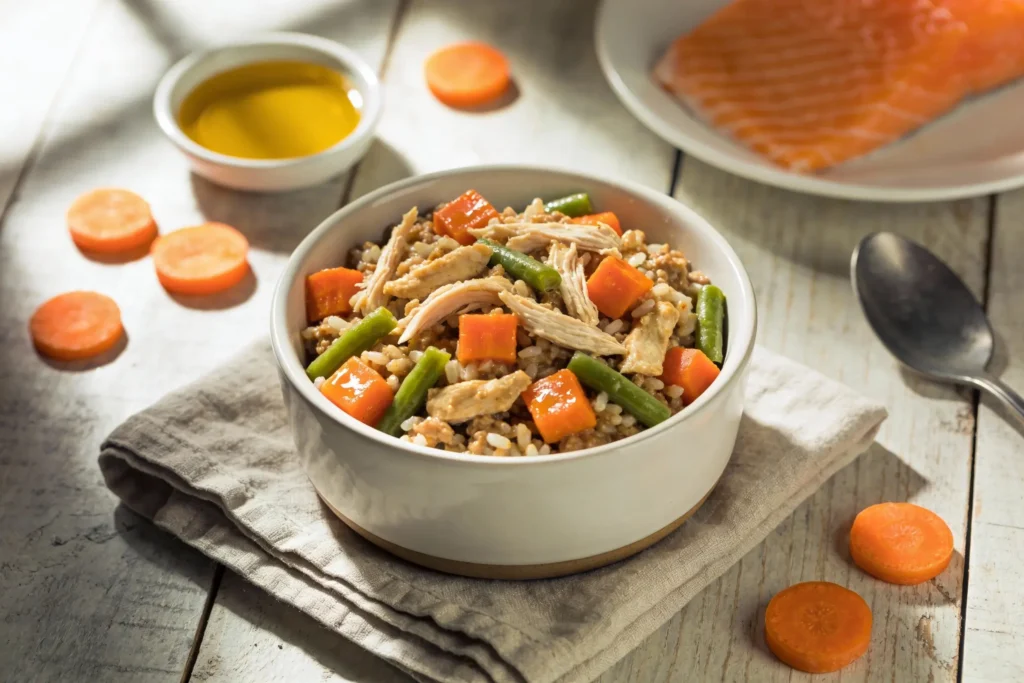
Chicken, carrots, and a tail wag you can hear from the next room—sound good? If you want a simple, wholesome dog food recipe you can actually pronounce, you’re in the right spot. We’ll cook a batch you can prep on a weeknight, store easily, and serve with confidence. Bonus: it smells pretty good, so your dog will lurk by the stove like a tiny, furry sous-chef.
Why Chicken and Carrots Make a Winning Combo
Chicken gives dogs lean protein without weighing them down. Carrots bring fiber, crunch, and beta-carotene for eye health. Together they create a balanced base you can tweak for your pup’s needs. And yes, it’s budget-friendly, which means more money for chew toys. Priorities, right?
The Simple Chicken and Carrot Dog Food Recipe
Yield: About 8 cups (roughly 6–10 servings depending on dog size)
Time: 35–40 minutes
Ingredients
- 2 pounds boneless, skinless chicken thighs or breasts (thighs = more flavor and fat)
- 1 cup carrots, finely chopped or shredded
- 1 cup green beans, chopped (fresh or frozen)
- 1 cup pumpkin puree (plain, not pie filling) or 1 small sweet potato, cooked and mashed
- 1.5 cups white rice or 1 cup brown rice (white is easier on sensitive stomachs)
- 3 cups low-sodium chicken broth or water (more as needed)
- 2 tablespoons olive oil or salmon oil
- Optional: 1/2 cup peas, 1 tablespoon finely chopped parsley
- Optional but recommended: vet-approved canine multivitamin/mineral and fish oil (follow label dosage)
Instructions
- Rinse the rice. Add it to a pot with broth or water. Bring to a boil, then simmer until tender. Set aside.
- Dice the chicken into small, bite-size pieces. Heat oil in a large skillet or pot over medium heat.
- Cook chicken until fully done and no pink remains. Break up larger pieces with a spatula.
- Add carrots and green beans. Sauté 5–7 minutes until tender-crisp. If using peas, add in the last 2 minutes.
- Stir in pumpkin or mashed sweet potato. Add cooked rice. Splash in a bit more broth or water if it looks dry.
- Cool the mixture to room temp. Stir in supplements once the food is cool (heat can degrade nutrients).
- Serve appropriate portions and store the rest.
Safety note: No onions, garlic, salt, butter, or seasoning. Keep it dog-safe and simple.
Portion Sizes: How Much Should You Feed?
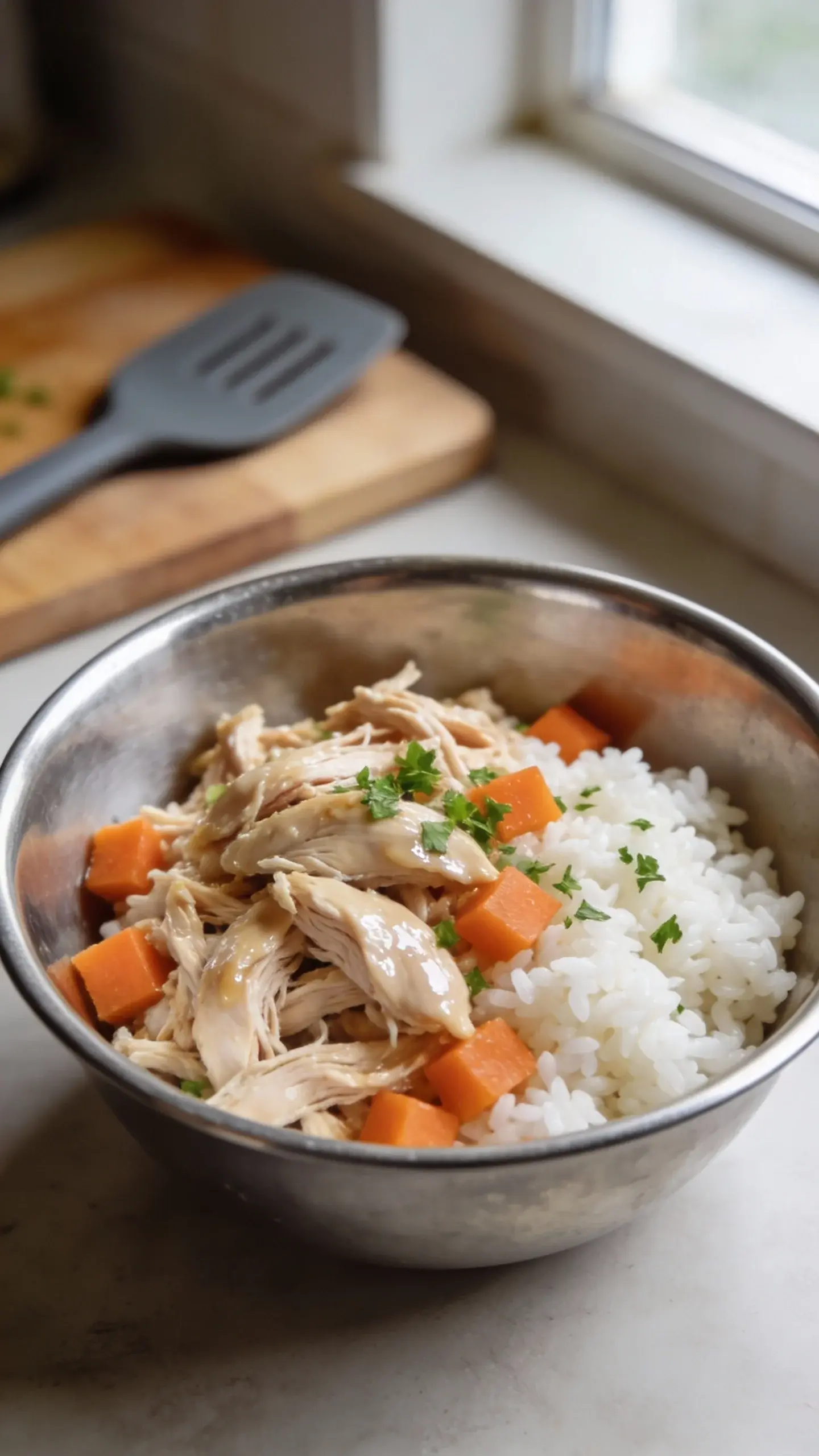
Every dog burns calories differently. Use this as a starting point and adjust based on weight and activity.
- Small dogs (10–20 lbs): 3/4 to 1.5 cups per day, split into 2 meals
- Medium dogs (20–50 lbs): 1.5 to 3 cups per day, split into 2 meals
- Large dogs (50–80 lbs): 3 to 4.5 cups per day, split into 2 meals
- XL dogs (80+ lbs): 4.5 to 6 cups per day, split into 2 meals
Watch your dog’s body condition. Ribs should be easy to feel but not sticking out. If your pup starts to look like a sausage, reduce portions. If you can count ribs from across the room, increase portions. Simple.
Nutrition Notes You Actually Need
You want balanced, not just “homemade.” Chicken and carrots cover protein and fiber, but dogs also need essential fatty acids, vitamins, and minerals.
- Calcium and phosphorus: Boneless meat lacks calcium. Add a vet-approved supplement or use a complete canine multivitamin/mineral designed for homemade diets.
- Fat: A little oil helps skin, coat, and energy. Salmon oil boosts omega-3s.
- Fiber: Pumpkin and carrots aid digestion and firm up stools. FYI, too much can cause constipation.
Easy Add-Ins (Optional)
- 1–2 eggs, scrambled (cooked, not raw) for extra protein
- 1/2 cup plain, unsweetened yogurt for probiotics
- Blueberries as training treats on the side
Prep Once, Feed All Week
Batch cooking will save your sanity.
- Refrigerator: Store in airtight containers for up to 4 days.
- Freezer: Portion into freezer bags or silicone cups. Freeze up to 2–3 months.
- Thawing: Overnight in the fridge. Add a splash of warm water to serve slightly warm. Dogs appreciate that “freshly cooked” vibe.
Consistency Tips
- Keep vegetable pieces small to prevent picky eaters from sorting them out like tiny culinary critics.
- Stick to low-sodium broth and zero seasonings. Your dog won’t miss the salt—promise.
- Introduce new foods gradually over 3–5 days to avoid tummy drama.
When to Call Your Vet (Because You’re Responsible, IMO)
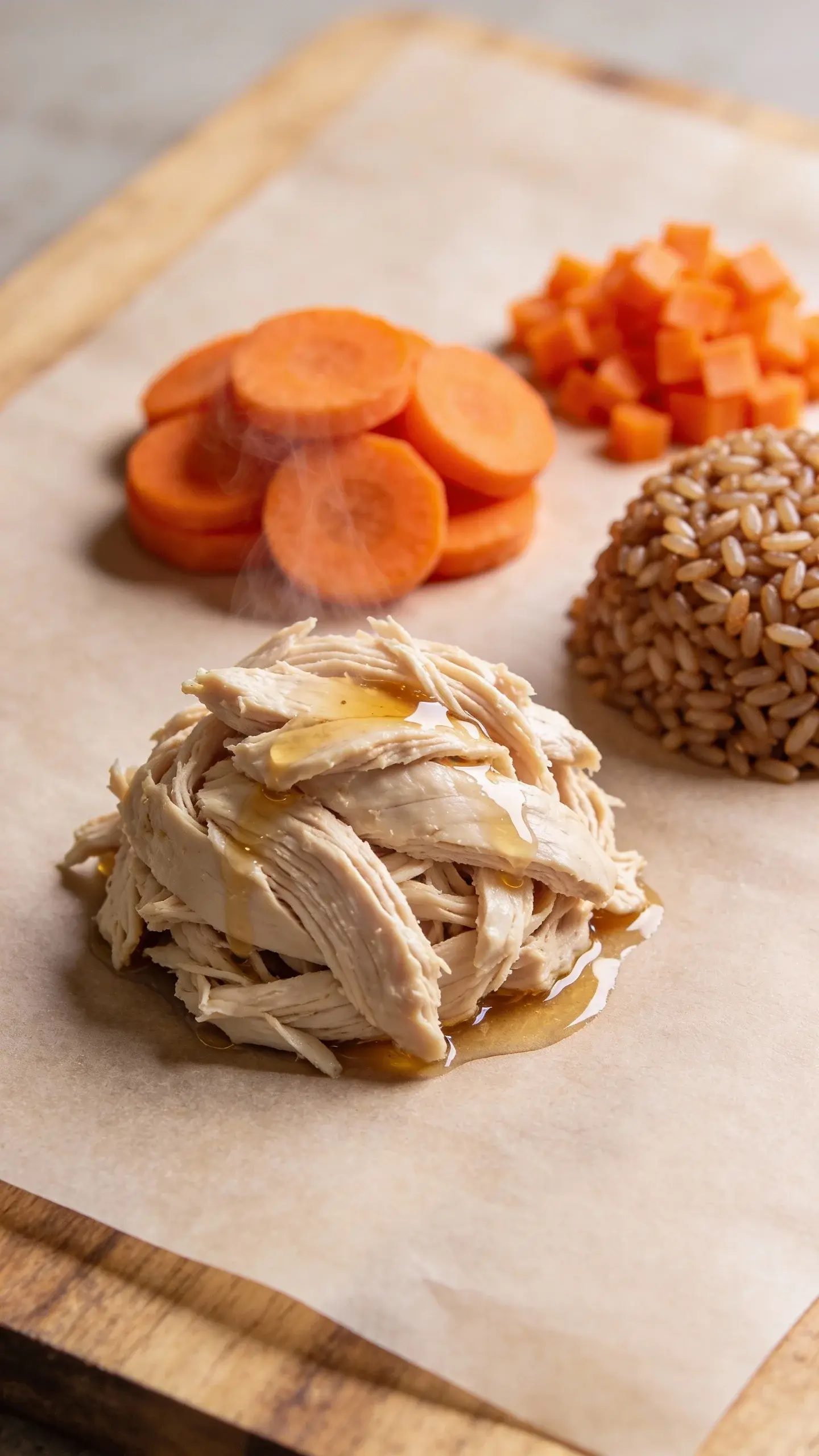
Homemade diets can be fantastic, but your dog’s health comes first. Check in with your vet if your dog has allergies, pancreatitis, kidney issues, or a history of GI problems. Puppies and pregnant or nursing dogs need very specific nutrient ratios—don’t wing it. If your dog scratches like a DJ or has loose stools after switching, ask your vet to tweak the plan.
Variations Your Dog Will Love
Because variety keeps meals interesting, even for dogs who would eat the same thing forever.
- Turkey swap: Use ground turkey instead of chicken. Brown thoroughly, drain excess fat.
- Rice alternatives: Try quinoa or oatmeal if rice doesn’t agree with your pup.
- Veggie rotation: Zucchini, spinach, or broccoli (chopped very small). Steam first if needed.
- For sensitive tummies: Stick with white rice, chicken, carrots, and pumpkin. Keep it bland, add probiotics.
FAQ
Can I use chicken with bones?
No. Cooked bones splinter and can cause choking or internal injuries. If you want the calcium benefits of bones, use a vet-approved calcium supplement or a complete canine multivitamin/mineral made for homemade diets.
Is this recipe complete and balanced long-term?
Not by itself. It’s a great base. Add a canine multivitamin/mineral and omega-3s to cover nutrients like calcium, vitamin D, and trace minerals. For long-term feeding, ask your vet or a board-certified nutritionist to review your recipe. FYI, balance matters more over time than in a single meal.
Can I feed this to my puppy?
Only with veterinary guidance. Puppies need specific calcium-to-phosphorus ratios and higher energy density. This recipe can be adapted, but don’t guess. Growing bones are not the place for improvisation.
What if my dog has diarrhea after switching?
Transition slowly. Mix 25% new food with 75% old for 2 days, then 50/50 for 2 days, then 75/25 for 2 days. You can add a spoonful of pumpkin and a probiotic. If diarrhea lasts more than 48 hours or you see lethargy or blood, call your vet.
Can I season it for flavor?
Your dog doesn’t need salt, onions, garlic, or spices. Those can cause issues or be toxic. If you want extra appeal, add a bit of warm water or a drizzle of salmon oil. Nose = convinced.
How do I know if the portion is right?
Monitor body condition, energy, and stool quality. If your dog gains weight, reduce by 10–15%. If they seem hungry and lean, increase by 10%. It’s not rocket science; it’s observation and small tweaks.
Conclusion
You don’t need a culinary degree to make healthy dog food—just good ingredients and a plan. This chicken and carrot recipe checks all the boxes: simple, affordable, and dog-approved. Add the right supplements, portion smart, and you’ll have a happy pup and a cleaner ingredient list than most kibble bags. IMO, that’s a win for both of you. Now go enjoy the tail wags.