
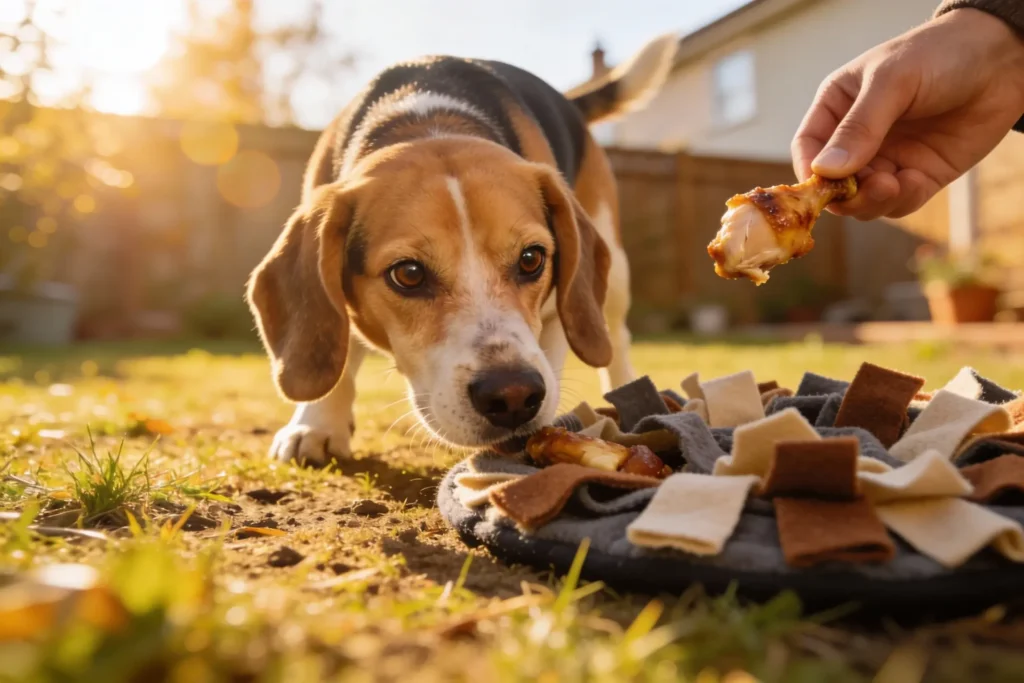
Beagles don’t read training books. They sniff them, steal them, and then nap on them. If you’ve got a floppy-eared detective who ignores you the second a smell hits the breeze, welcome to the club. The good news? You can absolutely train a beagle. You just need to work with that nose, not against it.
Understand the Nose: Motivation Starts with Scent
Beagles run on scent like we run on coffee. That nose will always win a staring contest with your “sit” command. So use it.
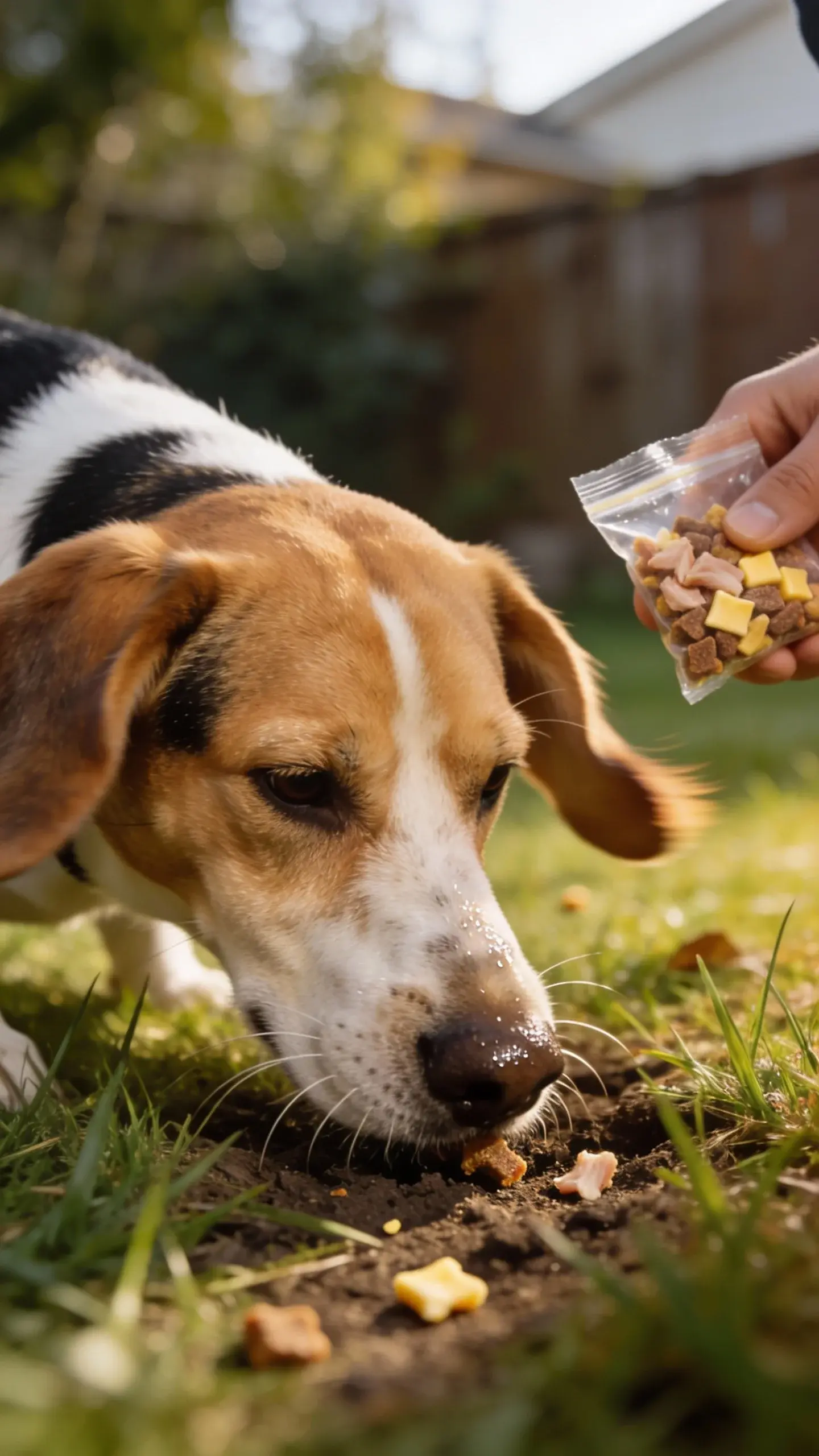
- Train with high-value rewards: Tiny bits of roast chicken, cheese, or freeze-dried liver beat kibble every time.
- Keep treats varied: Switch rewards so your beagle never gets bored. Predictable treats = predictable disinterest.
- Use scent games as rewards: After a great recall, let your dog sniff a patch of grass as the jackpot. Sniffing is currency.
Quick Scent Game to Burn Energy
Hide 5-10 treats around one room. Say “Find it!” and let your beagle hunt. Increase difficulty with boxes or snuffle mats. Boom: training + enrichment + tired beagle.
Nail the Basics with Micro-Sessions
Keep sessions short and snappy—like 3-5 minutes. Beagles tune out long lectures. (Honestly, same.)
- Start indoors with zero distractions and build up slowly.
- Use a marker word like “Yes!” right when your beagle does the behavior, then treat.
- End on a win: Finish with an easy cue and a jackpot. Keep the vibe happy.
Priority Cues That Actually Matter
- Name recognition: Say their name once. When they glance, “Yes!” + treat. That attention fuels everything else.
- Hand target (“Touch”): Present your palm. When nose hits hand, mark and treat. Use it to guide them away from chaos later.
- Mat work (“Place”): Teach them to chill on a mat. It’s a portable off-switch for doorbells and dinner time.
Recall That Cuts Through the Sniffs
Recall with a beagle isn’t about yelling louder. It’s about making “come” pay better than dirt smells.
- Pick a “special” recall word like “Here!” and never use it casually. It’s sacred.
- Start on a long line (20-30 feet) in low-distraction areas. Safety first, ego second.
- Reward like a maniac when they come: party voice, multiple treats, then release to sniff again. The release is the secret sauce.
Recall Game: Ping-Pong People
Two humans, 15 feet apart. Call your beagle back and forth. Always reward, sometimes release to sniff, sometimes play a quick tug. Keep it unpredictable and fun.
Leash Manners Without the Tug-of-War
Beagles pull because the world smells like a buffet. You won’t “battle” that nose; you’ll outsmart it.
- Use a front-clip harness to reduce pulling leverage. Save your shoulders.
- Be a tree when they pull: Stop. Wait for slack. Move forward only when the leash loosens. Consistency = clarity.
- Reinforce position: Treat for walking near your hip. Feed often at first, then randomly.
- Build a “Let’s sniff!” cue as a reward for nice walking. Walk nicely = sniff time. IMO that’s the real training hack.
Channel the Energy: Jobs for a Working Nose
A bored beagle becomes a creative beagle, and not the cute kind. Give them a job or they’ll invent one involving your trash can.
- Sniff walks: Slow, meandering, sniff-heavy strolls. Think “nose-led meditations.”
- Food puzzles and snuffle mats: Ditch the bowl 3-4 days a week.
- Beginner nose work: Hide a scented cotton ball (like birch oil) in boxes and let them search.
- Scatter feeding in the yard: Toss kibble in grass and let them forage.
Weekly Enrichment Blueprint
- 2-3 short training sessions daily (3-5 minutes each)
- 1-2 sniff walks per day (10-20 minutes focused on scenting)
- Daily puzzle toy or hide-and-seek game
- One new environment per week (new park, new trail, new sniffs)
Socialization and Confidence Without Overwhelm
Beagles love people, but they still need structured socialization. The goal isn’t “meet everyone.” It’s “stay calm around anything.”
- Expose them gradually to bikes, strollers, vets, groomers, loud trucks—at a comfortable distance.
- Pair new stuff with treats so curiosity beats fear.
- Practice calm greetings with a sit before saying hi. No sit, no greet. Simple rules, happy chaos.
Home Alone Skills
Teach independence early. Give a stuffed Kong, cue “Place,” and step out for a minute. Return calmly. Increase time slowly. FYI, prevention beats fixing separation drama later.
Consistency, Not Perfection
You won’t win every battle. Your beagle will occasionally ignore you for a suspiciously fascinating leaf. That’s normal.
- Set simple house rules and stick to them: no counter-surfing, sit for meals, wait at doors.
- Manage the environment: Trash cans with lids, baby gates, food out of reach. Management saves training hours.
- Track progress: Jot down wins and flops. Patterns help you adjust.
When to Call in a Pro
If you see resource guarding, intense anxiety, or reactivity that escalates, bring in a qualified force-free trainer. Faster results, fewer headaches. IMO it’s money very well spent.
FAQ
How long does it take to train a beagle?
You’ll see small wins in a week if you stay consistent, but reliable recall and leash manners usually take a few months. Beagles mature slowly, so keep sessions short and regular. Think marathon, not sprint.
Can beagles ever be off-leash?
Some can, in safe, fenced areas or after extensive recall training with a long line. Many owners choose long lines permanently because scent drives are powerful. Safety beats wishful thinking every time.
What treats work best?
Use soft, smelly, pea-sized bites: chicken, cheese, hot dog coins, or commercial soft training treats. Rotate flavors to keep motivation high. Dry kibble rarely cuts it outdoors.
How do I stop excessive barking?
Identify the trigger (boredom, alerting, frustration) and give an alternative behavior. Teach “Quiet” by marking brief pauses, reward calm, and add enrichment to reduce pent-up energy. Also, close curtains and use white noise to manage triggers.
My beagle ignores me outside. Help?
Lower the difficulty. Start with name recognition and hand targets in your yard on a long line. Use higher-value rewards, shorten sessions, and reward with sniff breaks. Build up from “easy sniff areas” to busier spots.
Are beagles stubborn or just smart?
They’re smart, independent, and very scent-driven. If you pay well and keep training fun, they cooperate. If you don’t, the nose union goes on strike. Simple as that.
Conclusion
You won’t out-muscle a beagle’s instincts, but you can out-design them. Pay with great treats, reward with sniffing, keep sessions short, and give that nose a job. Do that consistently and you’ll get a beagle who listens—even when the wind carries 57 different smells of distraction. And yes, you’ll still lose a few battles to squirrels. Cost of doing business.