

Some dogs bounce off the walls and burn through calories like tiny furry athletes. Others slim down too fast, or can’t keep muscle on. If your pup needs a protein bump, beef-based dog food can help—without turning your kitchen into a science lab. Let’s talk about when beef shines, how to use it smartly, and yes, how to cook a drool-worthy high-protein recipe your dog will love.
Why Beef Works for Protein-Hungry Dogs
Beef packs a solid punch of complete protein and essential amino acids. That means it supports lean muscle, recovery after activity, and healthy skin and coat. Dogs that work hard (agility, hiking, herding), growing pups, and some seniors often need a little more oomph in the protein department.
You also get iron, zinc, and B vitamins from beef, which help energy metabolism. And let’s be honest: most dogs go wild for beef. If your picky eater refuses everything else, beef often breaks the hunger strike.
How to Tell If Your Dog Needs More Protein
You can’t just eyeball it. You should consider a few signs and chat with your vet. But here’s what many owners notice:
- Muscle loss: Thighs look flatter, spine/hip bones show more, or reduced strength.
- Low stamina: Your dog tires quicker during normal play or training.
- Dull coat: Less shine, more shedding, or flaky skin.
- Picky eating or weight loss: Especially when activity ramps up.
FYI, chronic issues like kidney disease may require the opposite approach (moderating protein). Always confirm with your vet before making big changes.
Beef 101: Cuts, Percentages, and What Actually Matters
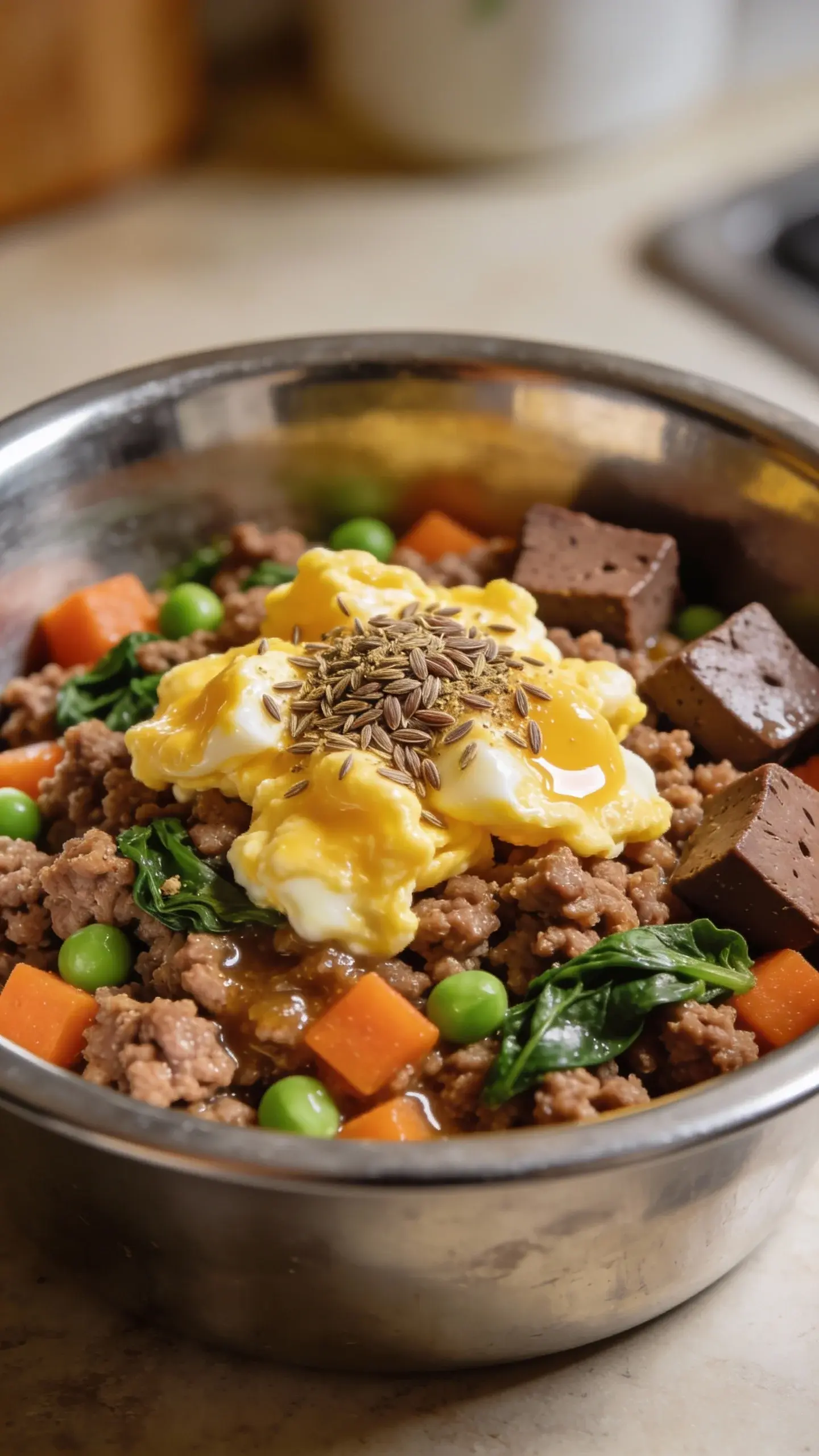
Not all beef lands the same way in a bowl. You want enough protein without flooding your dog with fat.
- Lean ground beef (90–95% lean): Great default for high-protein meals. Easier on digestion.
- 85% lean: Tasty and still fine, but watch total calories for couch potato pups.
- Organ meats: Beef liver, heart, kidney—nutrient gold mines. Use sparingly. Liver especially packs vitamins A and copper.
- Raw vs. cooked: Cooked reduces risk for pathogens. Raw diets can work but require careful food safety and balanced formulations. IMO, cooked is simpler and safer for most homes.
What About Bones?
Skip cooked bones (they splinter) and be cautious with raw bones. They can chip teeth or cause blockages. If you want the dental benefits, talk to your vet about safe options or use a quality dental chew instead.
A Balanced High-Protein Beef Recipe You Can Make at Home
You want protein-heavy, sure—but you also need micronutrients, fiber, and the right calcium-to-phosphorus ratio. This recipe leans high-protein, moderate fat, and includes a calcium source, omega-3s, and fiber. Always transition slowly and adjust portions based on your dog’s size and activity.
Yield: About 6 cups (roughly 6–8 servings for a 25–35 lb moderately active dog; adjust per your dog’s needs)
Ingredients:
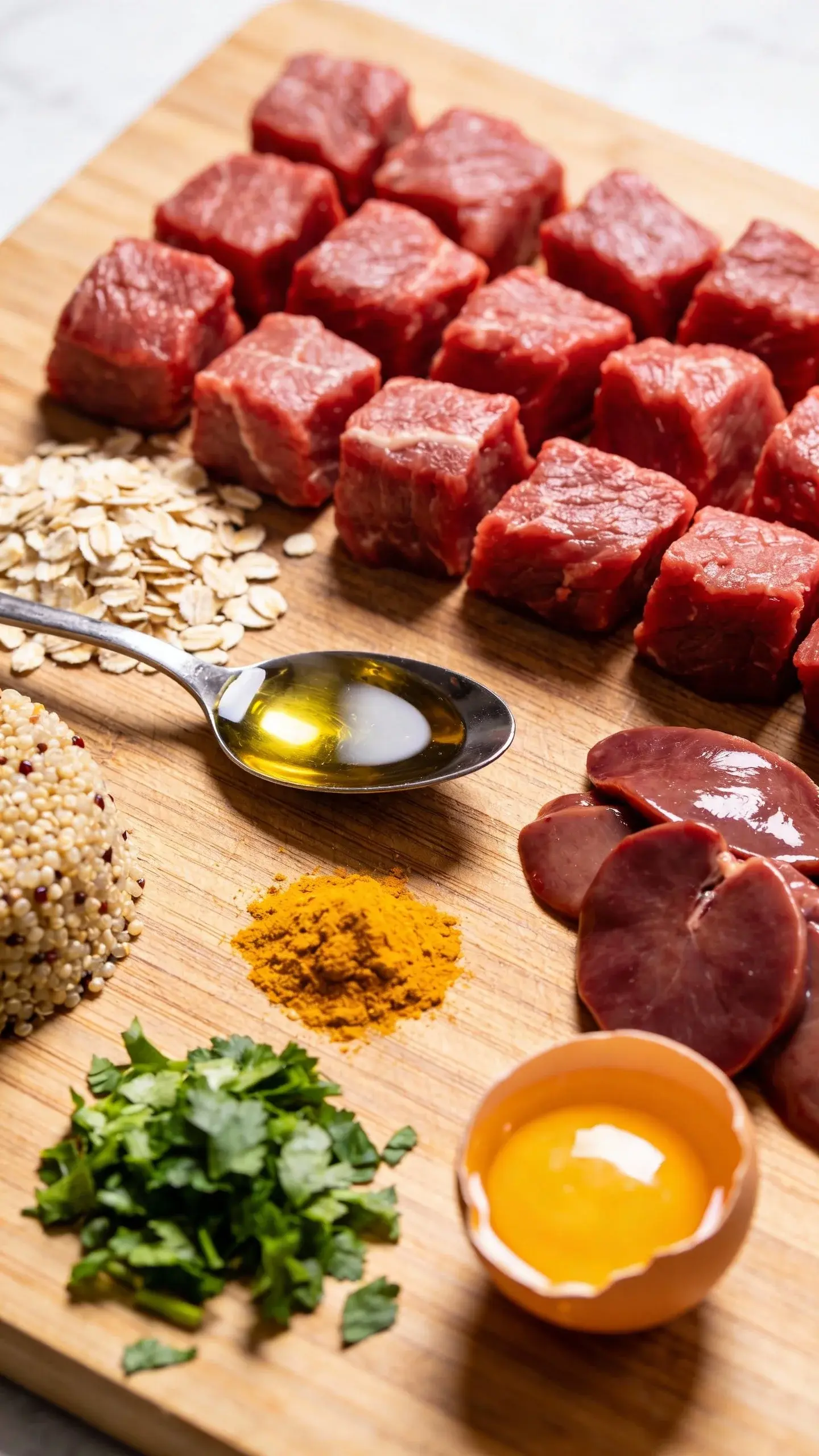
- 2 lb (900 g) lean ground beef (90–95% lean)
- 1 cup finely chopped beef heart (optional for extra taurine and CoQ10; sub with more beef if unavailable)
- 1 cup cooked quinoa (rinsed before cooking) or white rice for sensitive tummies
- 1 medium zucchini, finely chopped
- 1 cup finely chopped spinach or kale (stems removed)
- 1/2 cup finely grated carrot
- 2 large eggs, lightly beaten
- 2 tbsp olive oil or beef tallow (omit if using 85% lean beef)
- 1 tsp iodized salt (yes, dogs need iodine—don’t skip unless your vet says so)
- 1/2 tsp turmeric + pinch black pepper (optional anti-inflammatory duo)
- 1,000 mg fish oil (or 1 tsp salmon oil) for omega-3s
- 1 1/2 tsp ground eggshell or 1,200 mg calcium carbonate (crucial for balance)
Directions:
- Cook the quinoa or rice and set aside.
- In a large skillet, brown the ground beef and heart over medium heat. Drain excess fat if needed.
- Add zucchini, spinach, and carrot. Sauté 3–4 minutes until softened.
- Stir in cooked quinoa/rice. Remove from heat. Let it cool slightly.
- Mix in eggs, oil, salt, turmeric/pepper, fish oil, and calcium. Combine thoroughly.
- Cool completely, portion into containers, and refrigerate up to 3 days or freeze up to 2 months.
Portion guide:
- Start at roughly 2–3% of your dog’s body weight per day for active adults. For a 30 lb dog, that’s about 9–14 oz total food daily, split into meals.
- Monitor weight and energy. Adjust up or down by 10–15% as needed.
Why This Recipe Works
– High-quality protein from lean beef and egg supports muscle maintenance.
– Balanced minerals via calcium adds the crucial bone-support your dog needs when you feed meat-heavy recipes.
– Omega-3s from fish oil help skin, coat, and joints—especially if you use beef, which skews omega-6 heavy.
– Gentle fiber from veggies and quinoa keeps digestion steady without stealing the protein spotlight.
Commercial Options: What to Look For on the Label
Not into home-cooking every week? Same. Plenty of commercial foods focus on higher protein. Here’s how to shop smart:
- Protein percentage: Look for 28–36% protein on a dry matter basis for kibble; higher for freeze-dried/air-dried. Canned naturally runs higher moisture—check dry matter if possible.
- Named meats first: “Beef” or “Beef meal” at the front. Avoid vague “meat by-product” as the sole protein source.
- AAFCO statement: Ensure it says “complete and balanced” for your dog’s life stage.
- Healthy fats: Bonus points for salmon oil or flaxseed for omega-3s.
- Digestibility: If poop looks like a soft-serve disaster, switch formulas. Your dog votes with their butt, IMO.
How to Safely Add More Protein Without Upsetting Tummies
You don’t need to overhaul everything overnight. Tweak gently and watch your dog like a hawk for a week or two.
- Transition slowly: Mix 25% new with 75% old for 2–3 days, then 50/50, then 75/25, then full switch.
- Keep hydration up: Protein metabolism needs water. Use a splash of warm water or low-sodium bone broth to entice drinking.
- Track stool quality: Firm, moist, easy-to-pick-up logs mean you’re on the right track. Diarrhea = slow down or adjust fat.
- Don’t forget fiber: A spoon of canned pumpkin or a little psyllium can smooth transitions.
Special Cases: Puppies, Seniors, and Sport Dogs
– Puppies: They need higher protein and specific calcium/phosphorus ratios. Keep any homemade feeding under a vet or nutritionist’s guidance.
– Seniors: Healthy seniors often benefit from more protein to fight muscle loss. Just check kidney values with your vet.
– Sport/working dogs: Up the protein and calories. Consider rotating beef with turkey, chicken, and fish for a broader nutrient spread.
Common Mistakes to Avoid
We all want the gains. But don’t chase protein at the expense of balance.
- Skipping calcium: Meat-only diets create dangerous mineral imbalances over time.
- Ignoring fat content: Super-fatty beef can trigger GI upset or pancreatitis in sensitive dogs.
- Overdoing liver: Keep liver to about 5% of the total recipe. Too much vitamin A = problems.
- No omega-3s: Add fish oil if beef is your main protein. Skin and joints will thank you.
- Changing everything at once: Switch one variable at a time so you can actually see what helps.
FAQ
How much protein does my dog actually need?
Most adult dogs do great with 22–30% protein on a dry matter basis. Active, working, or underweight dogs may thrive at 28–36%. The sweet spot depends on age, activity, and health. Your vet can help nail it down.
Can I feed beef every day?
Yes, but variety still wins. Rotate proteins like turkey, chicken, and fish to cover different amino acids, fats, and micronutrients. Beef can be your star, but give it co-stars.
Is raw beef safe for dogs?
Raw can work for some households, but it carries pathogen risks (Salmonella, E. coli) and demands strict hygiene and balanced formulations. Cooked beef offers similar benefits with fewer headaches. If you go raw, work with a pro and source carefully.
What if my dog has a sensitive stomach?
Choose leaner beef (93–95%), cook it thoroughly, and pair it with a gentle carb like white rice. Start with small amounts and add a bit of pumpkin or psyllium for fiber. If symptoms persist, talk to your vet and consider a limited-ingredient diet.
Can I just add beef to my dog’s current kibble?
Totally. Add up to 10–20% of total calories as plain cooked beef to boost protein and palatability. Don’t forget to reduce kibble a bit so you don’t overfeed.
Do I need supplements if I home-cook?
Usually yes. At minimum, add calcium when you cook meat-heavy meals. Fish oil helps balance omega-3s. A canine multivitamin/mineral designed for home-prepared diets can fill the remaining gaps.
Conclusion
Beef can supercharge your dog’s protein intake, support lean muscle, and make mealtime exciting again. Use lean cuts, balance the minerals, and add omega-3s. Start with the recipe above or pick a high-protein commercial option, transition slowly, and watch your dog’s energy and coat glow up. Strong muscles, happy tummy, wagging tail—that’s the goal.