
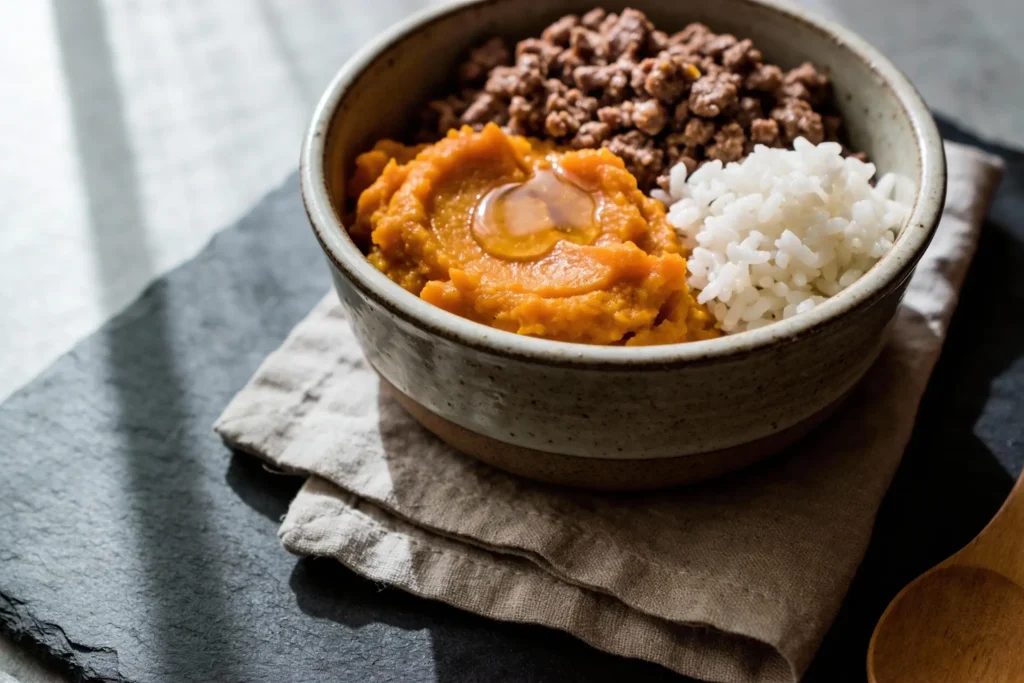
Your dog’s tummy throws a tantrum, and suddenly you’re scrubbing carpets at 2 a.m. Sound familiar? Good news: beef and pumpkin can tag-team those tummy troubles and actually taste great to most pups. Let’s talk about a simple, nutritious way to support digestion without turning your kitchen into a science lab. Spoiler: you’ll probably have the ingredients already.
Why Pumpkin Helps (And Why Beef Plays Nice)
Pumpkin isn’t just a fall vibe—it’s a digestion hero. It’s rich in soluble fiber, which helps firm up loose stools, and it’s gentle on sensitive bellies. Plus, it packs vitamins like A and C and a bunch of potassium.
Beef brings the protein your dog needs to feel full and maintain muscle. Choose lean beef so you support the stomach without piling on grease. Pair them together and you get a balanced, tasty bowl that most dogs demolish in seconds.
What Kind of Pumpkin and Beef Should You Use?
Let’s keep it simple and safe:
- Use plain canned pumpkin (100% pumpkin). Avoid pumpkin pie mix. That stuff’s loaded with sugar and spices dogs don’t need.
- Choose lean ground beef (90% lean or higher). You can also use boiled beef chunks, but ground beef cooks faster and more evenly.
- Optional tummy-friendly add-ins: bone broth (low sodium), plain white rice, or a spoonful of plain Greek yogurt for probiotics.
FYI: If your dog struggles with beef, swap in turkey or chicken. Same idea, different protein.
Single-Pot Beef & Pumpkin Digestive Support Recipe
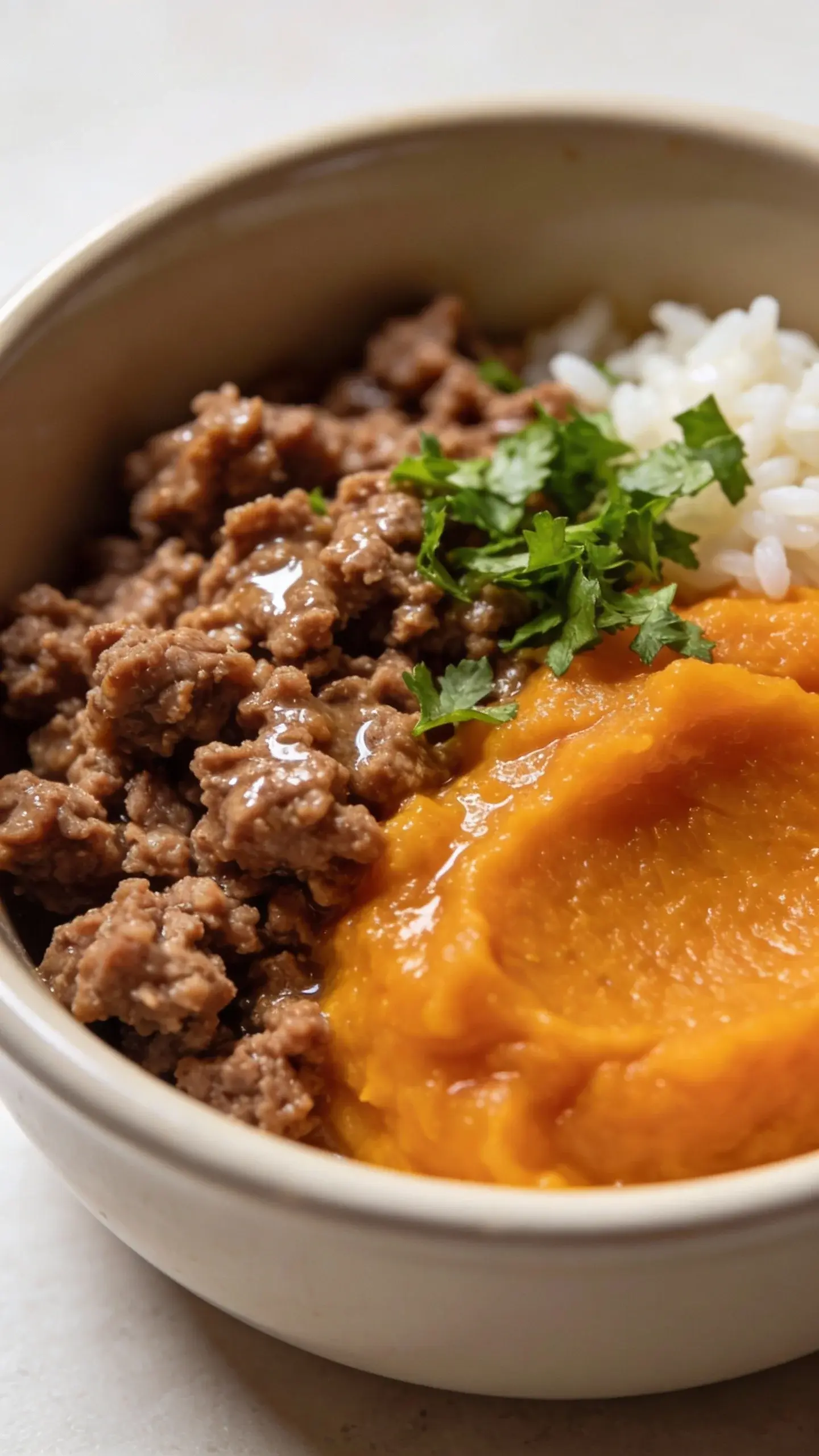
This recipe makes roughly 5–6 cups, which covers 4–6 meals for a 20–30 lb dog as a temporary diet. Adjust portions based on your dog’s size and your vet’s advice.
Ingredients
- 1 lb lean ground beef (90–93% lean)
- 1 cup canned pumpkin (plain, unsweetened)
- 1 cup cooked white rice (optional but helpful for extra binding)
- 1 cup low-sodium beef or chicken bone broth (or water)
- 1 tbsp olive oil (if using extra-lean beef; skip if your dog needs low fat)
- 1 tsp finely minced fresh parsley (optional breath freshener)
- 1/2 tsp powdered ginger (optional, for nausea)
Directions
- Heat a large skillet over medium. Add olive oil if using.
- Add the ground beef. Cook and stir until fully browned. Drain off fat using a colander. This matters for sensitive stomachs.
- Return beef to the pan. Stir in pumpkin, broth, and ginger. Simmer for 5–7 minutes until creamy and well combined.
- Fold in cooked white rice if using. Warm through for 2 minutes.
- Cool to lukewarm. Stir in parsley. Serve.
Storage: Refrigerate in airtight containers for up to 3 days or freeze in meal-sized portions for up to 2 months. Thaw in the fridge, then reheat gently with a splash of water.
Portion guide (general):
- 10–15 lb dog: 1/2 to 3/4 cup per meal
- 20–30 lb dog: 3/4 to 1 1/4 cups per meal
- 40–60 lb dog: 1 1/2 to 2 cups per meal
Start small on day one to test tolerance. If all systems “go”—as in, not too go—continue.
When to Use This Recipe (And When Not To)
This recipe works best for:
- Mild diarrhea or loose stools
- Post-upset recovery after dietary indiscretion (aka trash buffet)
- Transition meals when switching kibbles
Don’t use it as your dog’s forever diet without guidance. It’s supportive, but it’s not fully balanced for long-term feeding. Dogs need calcium, omega-3s, and micronutrients beyond what’s in this mix.
Red Flags: Call the Vet
- Blood in stool, black/tarry stool, or repeated vomiting
- Severe lethargy, refusal to drink, or signs of dehydration
- Symptoms last more than 48 hours despite bland diet
IMO, trusting your gut beats Googling at 3 a.m. when your dog looks miserable.
Make It Balanced (If You Want to Serve Longer-Term)
If your dog thrives on homemade and you want to keep it going, add the missing pieces. A board-certified veterinary nutritionist can build a plan, but here’s a basic framework.
Key Additions for Balance
- Calcium: Add ground eggshell powder (1/2 tsp per pound of meat) or a vet-approved calcium supplement.
- Omega-3s: Fish oil or tinned sardines in water (1–2 tsp oil for a medium dog). Supports skin, joints, and gut inflammation.
- Fiber variety: A spoon of cooked mashed sweet potato or a sprinkle of psyllium husk (1/4 tsp for small dogs, 1/2 tsp medium, 3/4 tsp large) if stools need more structure.
- Probiotics: Dog-specific probiotic powder or plain Greek yogurt (1–2 tsp for small dogs, 1–2 tbsp for large).
- Micronutrients: A complete canine multivitamin/mineral made for home-prepped diets.
Always add new supplements slowly. Your dog’s gut likes change about as much as your Wi-Fi likes thunderstorms.
Variations Your Dog Will Love
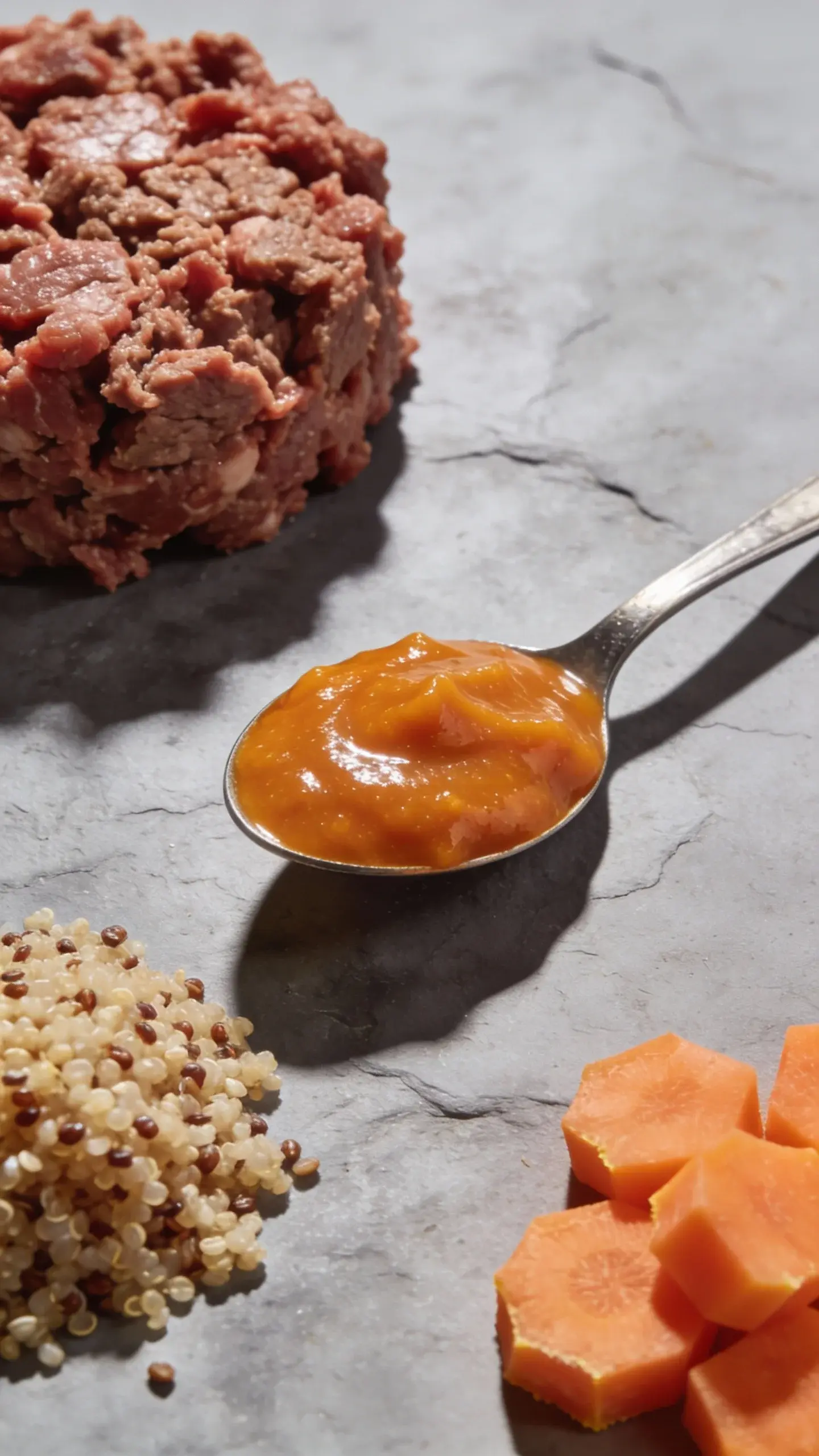
Want to keep it interesting? Try these simple twists:
- Beef + Pumpkin + Quinoa: Higher protein grain, great texture.
- Beef + Pumpkin + Green Beans: Low-calorie bulk for pups watching their waistline.
- Beef + Pumpkin + Oatmeal: Oats soothe sensitive tummies; cook them soft.
- Bone Broth Cubes: Freeze low-sodium broth in ice trays and melt into meals for extra hydration.
Keep seasonings minimal. No onion, garlic, nutmeg, or high-salt sauces. Your dog does not need your secret chili blend, promise.
Store-Bought Options: What to Look For
Not in a cooking mood? Totally fair. When buying commercial beef-and-pumpkin formulas:
- Short ingredients list with named meats (beef, beef liver), pumpkin listed high.
- No artificial colors or sweeteners. Definitely no xylitol.
- AAFCO statement for complete and balanced nutrition if feeding daily.
- Moderate fat if your dog has a sensitive stomach (aim for 10–15% on dry matter basis).
Rotating between a few gut-friendly canned foods can help picky eaters and reduce boredom.
FAQ
How much pumpkin can I give my dog?
For most dogs, 1 teaspoon per 10 pounds of body weight per meal works well. Small dogs do great with 1–2 teaspoons. Medium dogs can handle 1–2 tablespoons. Large dogs can take 2–4 tablespoons. Start low and adjust based on stool quality.
Can I use fresh pumpkin instead of canned?
Yes. Roast peeled chunks until soft, then mash. Skip oil and spices. Measure the same volume as canned. Fresh can be slightly more watery, so reduce broth if the mixture looks soupy.
Is beef too rich for sensitive stomachs?
It depends. Lean beef usually sits well, but some dogs tolerate turkey or chicken better. If your dog gets greasy stool, try leaner meat, drain fat thoroughly, and avoid oils. You can also split meals into smaller portions throughout the day.
How long should I feed this if my dog has diarrhea?
Feed the bland beef-pumpkin mix for 24–48 hours. If stools normalize, slowly transition back to your regular food over 2–3 days by mixing increasing amounts of the usual diet. If diarrhea persists or you see blood, call your vet ASAP.
Can I add eggs?
Totally. Scramble one egg in a separate nonstick pan (no butter, no salt) and fold it in. Eggs add highly digestible protein and biotin. Just keep portions reasonable to avoid too much fat.
What about probiotics—do they actually help?
In many cases, yes. A dog-specific probiotic can support healthy gut bacteria and reduce diarrhea duration. Look for a product with guaranteed CFUs and clear dosing. Give it daily for 1–2 weeks during tummy upsets.
Final Thoughts
Beef and pumpkin make a simple, tasty combo that supports your dog’s digestion without a lot of fuss. Use it for mild tummy troubles, post-upset recovery, or as a transition meal. If you want to serve it longer-term, add the right supplements or get a nutritionist to balance it out. Your dog gets comfort food, you get fewer messes—win-win, IMO.