
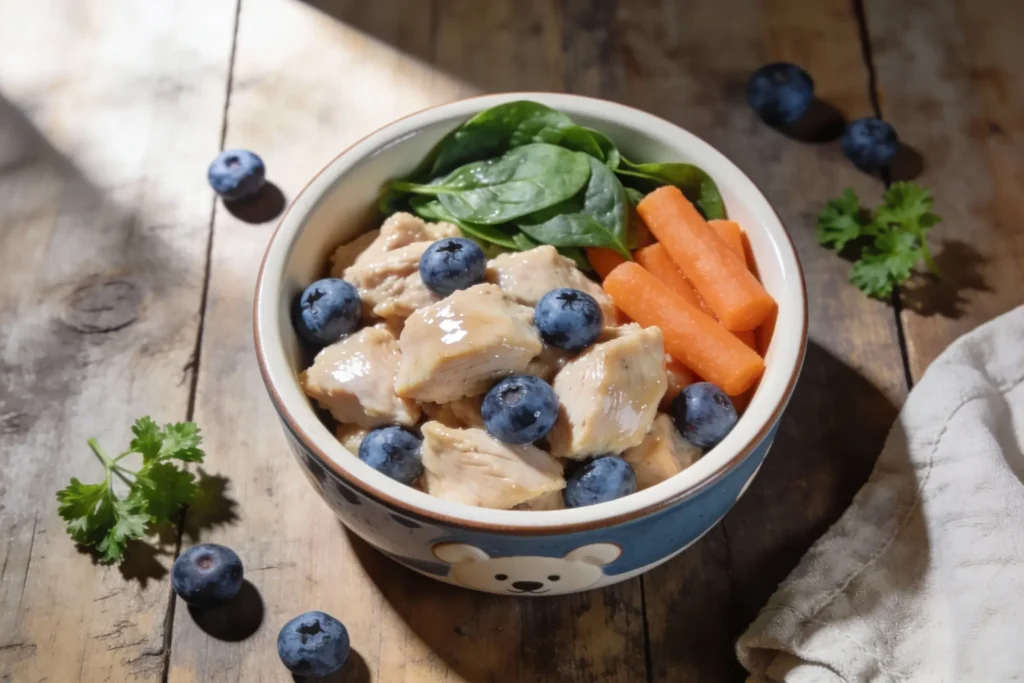
Your senior dog still zooms for treats but naps like a pro. Same. If you want to boost their bowl without turning dinner into a science project, chicken dog food with blueberries hits the sweet spot: simple, tasty, and packed with senior-friendly perks. Think lean protein for muscles, antioxidants for aging brains, and fiber for happy tummies. Let’s build a recipe your elder pup will actually drool over.
Why Chicken and Blueberries Work for Senior Dogs
Chicken brings lean protein that older dogs can digest easily. It supports muscle maintenance, which keeps your pup mobile and not just a couch potato with opinions. Blueberries serve up antioxidants that support brain health, eye health, and immune function. And they taste like dog candy. Win-win.
Key benefits at a glance:
- Lean protein to maintain muscle mass and support joints
- Antioxidants to combat oxidative stress and support cognitive function
- Fiber for gut health and more regular poops (we all celebrate that, right?)
- Low fat to help manage senior metabolism and weight
- Hydration from fresh ingredients to support kidneys and overall wellness
The Senior-Friendly Chicken & Blueberry Recipe
This recipe makes about 6 cups of food. Adjust portions based on your dog’s size and activity level. Always consult your vet if your pup has specific health conditions or allergies. FYI: This is a topper or balanced meal depending on your add-ins (details below).
Ingredients
- 1 lb (450 g) ground chicken or finely chopped boneless, skinless chicken thighs
- 1 cup blueberries (fresh or frozen, unsweetened)
- 1 cup pumpkin purée (plain, not pie filling)
- 1 cup finely diced carrots or green beans (lightly cooked)
- 1 cup cooked quinoa or brown rice (softened well)
- 1–2 tbsp olive oil or salmon oil (for healthy fats)
- 1 large egg, scrambled (optional for extra protein and choline)
- 1/2 tsp cinnamon (optional; adds flavor and may help with blood sugar)
- 2–3 cups low-sodium chicken broth or water
- Senior dog multivitamin/mineral and calcium source (see notes below)
Directions
- Cook the chicken in a nonstick pan over medium heat until fully done. Break it up into tiny pieces so older teeth don’t struggle.
- Add carrots/green beans and 1–2 cups broth. Simmer 5–7 minutes until veggies go soft.
- Stir in cooked quinoa/rice, pumpkin, and egg. Add more broth to reach a soft, spoonable texture.
- Turn off heat. Fold in blueberries and oil. The residual warmth softens berries without killing all the good stuff.
- Cool completely. Stir in the appropriate calcium and senior dog supplement per label directions just before serving.
About Supplements and Balance
Homemade dog food needs the right calcium and micronutrients. IMO, use:
- Calcium: Use a canine-specific calcium supplement or finely ground eggshell (about 1 tsp per lb of raw meat). Do not guess—measure.
- Senior multivitamin/mineral: Choose one formulated for dogs that includes vitamin D, E, B-complex, zinc, copper, iodine, and selenium.
- Fish oil: If you didn’t add salmon oil, use a canine omega-3 (EPA/DHA) for joints and brain health.
If you prefer zero guesswork, serve this recipe as a topper on a complete, AAFCO-compliant senior kibble or wet food. Easy mode unlocked.
Texture Matters for Older Mouths

Chewing gets harder with age. That doesn’t mean dinner needs to be boring puree, but softer helps.
- Go moist: Add extra broth or water to create a stew-like consistency.
- Chop small: Think pea-sized chicken bits and finely diced veggies.
- Warm it up: Slightly warm food to boost aroma. Not hot, just cozy.
- Mash blueberries if your dog struggles to chew them whole.
Portioning and Storage Without Stress
Cook once, relax for a week. That’s the dream.
- Storage: Refrigerate in airtight containers for up to 4 days. Freeze portions for up to 2 months.
- Serving size: As a standalone balanced meal, most dogs eat roughly 2–3% of body weight daily; seniors often need less. As a topper, 10–25% of the bowl works great.
- Thaw smart: Thaw in the fridge overnight. Add a splash of warm water before serving.
Customize for Common Senior Needs
Every older dog brings their own quirks. Let’s tweak.
For sensitive stomachs
- Swap quinoa/rice for overcooked white rice or oats for extra gentle carbs.
- Skip cinnamon and start blueberries small (1–2 tbsp) to test tolerance.
- Use bone broth (low sodium) for added gut-loving gelatin.
For joint support
- Add canine-safe turmeric paste (tiny amount) or a glucosamine/chondroitin supplement.
- Prioritize salmon oil for EPA/DHA.
- Keep weight lean—joints will thank you.
For kidney-conscious diets
- Use dark meat chicken mixed with white rice and increase moisture.
- Limit added salt; choose low-sodium everything.
- Talk to your vet for protein and phosphorus targets before making big changes.
For picky seniors
- Lightly sear the chicken at the end for aroma.
- Add a spoon of plain Greek yogurt on top (if dairy-tolerant).
- Serve warm with a sprinkle of crushed freeze-dried chicken.
Blueberries: Tiny Superfood, Big Punch

You don’t need to drown the bowl in berries. A little goes a long way.
- Serving idea: 1–2 tbsp for small dogs, 2–4 tbsp for medium, 1/4 cup for large dogs per meal.
- Fresh vs frozen: Both work. Frozen can be mashed into warm food for a swirl of purple magic.
- Pairs well with: Pumpkin, chicken, yogurt, oats, and a little cinnamon.
Signs the Recipe Works (And When to Pivot)
Watch your dog—no one gives feedback like a senior with standards.
- Good signs: Steady energy, normal stools, shiny coat, less itch, eagerness at mealtime.
- Red flags: Gas, loose stool, itchy flare-ups, or lethargy. Scale back blueberries or switch carbs. Hydrate more.
- Vet check: Recheck weight and bloodwork every 6–12 months, especially if feeding homemade regularly.
FAQ
Can dogs eat blueberries every day?
Yes, in moderation. Blueberries are safe and beneficial, but they’re still a treat-like addition. Stick to a few tablespoons depending on your dog’s size. Too many can cause loose stools because fiber is a thing.
Is this recipe complete and balanced?
It becomes balanced when you add a canine-appropriate calcium source and a senior multivitamin/mineral per label directions, plus omega-3s. If you don’t want to supplement, use this as a topper on a complete commercial food. FYI, homemade without supplements rarely hits every nutrient target.
Can I swap chicken for another protein?
Totally. Turkey, lean beef, or white fish work well. If you switch proteins, keep the texture soft and add the same supplements. Watch for allergies when you experiment.
My dog has diabetes. Is this recipe okay?
Often yes, with tweaks. Use lower-glycemic carbs (quinoa or barley), skip cinnamon if your vet says so, and portion blueberries modestly. Monitor blood glucose closely and get your vet’s sign-off before making changes.
How much should my senior dog eat?
As a general guide, start around 2% of body weight daily for seniors and adjust based on body condition. For a 50-lb dog, that’s about 1 lb of food per day, split into two meals. If you’re using it as a topper, aim for 10–25% of the bowl.
Can I make this in an Instant Pot?
Yes. Sauté the chicken, add veggies, grains, and 2 cups broth. Pressure cook 3 minutes, quick release, then stir in pumpkin, blueberries, and oil off heat. Adjust liquids for a soft, stew-like finish.
Conclusion
Chicken and blueberries bring big benefits in a bowl your senior dog will actually finish. Keep it soft, keep it simple, and add the right supplements to cover nutrients. Try it as a topper first, watch your dog’s signals, and tweak from there. IMO, this recipe hits the sweet spot of tasty, nourishing, and totally doable—because our old dogs deserve gourmet without the fuss.