
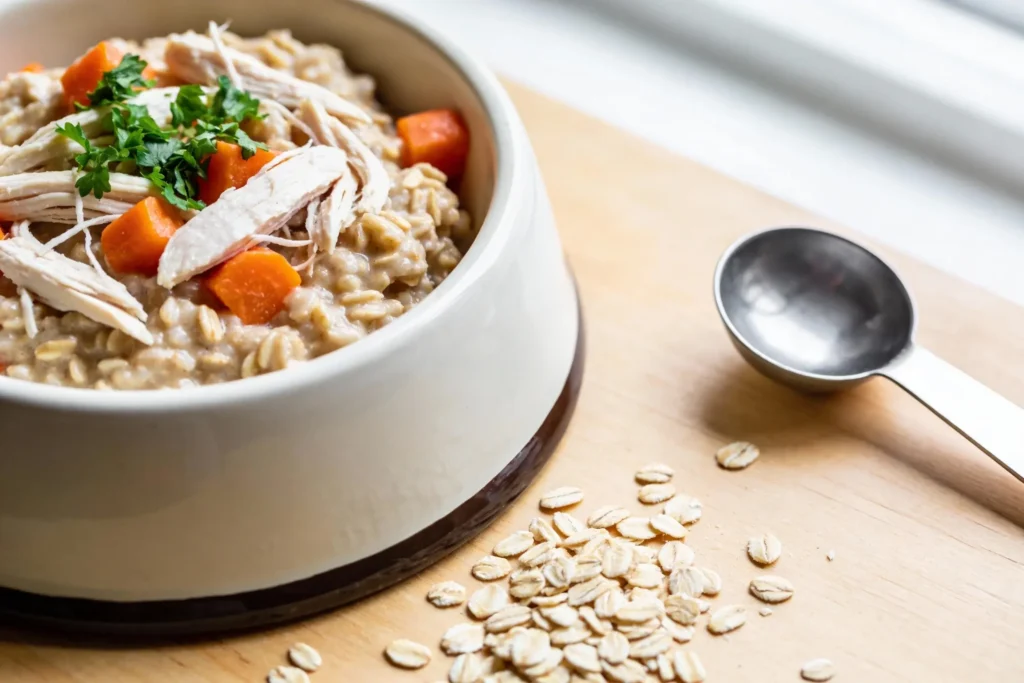
Your pup’s tummy drama isn’t a personality trait—sometimes it’s a food problem. If your dog scratches like a DJ, licks paws nonstop, or leaves little tummy gurgles in their wake, you might be dealing with food sensitivities. Here’s the good news: a chicken-and-oatmeal combo can be a gentle, simple fix. Let’s walk through why it works, how to make it, and when to tweak the recipe so your dog feels awesome again.
Why Chicken and Oatmeal Can Be a Gentle Win
Chicken gives you lean, easy-to-digest protein without a ton of fat. Oatmeal brings the calm: it’s soft, soothing, and friendly to sensitive stomachs. Together, they create a meal that supports energy and gut health with minimal chaos.
Big picture:
- Chicken = high-quality protein for muscles and recovery
- Oatmeal = soluble fiber to calm digestion and support regular poops
- Limited ingredients = fewer triggers for itchy skin and upset bellies
FYI: Some dogs have genuine chicken allergies. If you’ve tried chicken before and saw hives, ear infections, or diarrhea, swap chicken for turkey or white fish and keep the rest of the plan.
Signs Your Dog Might Need a Gentler Recipe
You know your dog best, but these clues scream “switch the menu.”
- Persistent itching, red paws, or face rubbing
- Soft stools, diarrhea, or gurgly tummy noises
- Chronic ear gunk or recurring hot spots
- Gas that clears the room (ask me how I know)
IMO, any combo of these is worth a diet tweak for 2–3 weeks to see if symptoms calm down.
Core Recipe: Chicken Dog Food with Oatmeal (Gentle and Balanced)

This batch makes about 8–10 cups of food (enough for 3–5 days for a medium dog). Adjust based on your dog’s size.
Ingredients
- 2 pounds boneless, skinless chicken thighs or breasts (thighs add flavor and moisture)
- 1 cup rolled oats (plain, not instant packets with flavors)
- 2 cups water or low-sodium chicken broth
- 1 cup finely chopped carrots
- 1 cup finely chopped green beans or zucchini
- 2 tablespoons olive oil or salmon oil
- 1/2 teaspoon turmeric (optional, anti-inflammatory)
- Calcium source: 1 teaspoon eggshell powder per pound of meat OR a vet-approved calcium supplement
- Dog-safe multivitamin/mineral supplement designed for home-cooked diets
Why the extras matter
- Veggies: fiber, antioxidants, skin-friendly nutrients
- Oil: omega fats for skin/coat and joint support
- Calcium + vitamins: home-cooked food needs them for balance
Directions
- Cut chicken into small chunks. Simmer in a pot with 2 cups water/broth until cooked through (10–12 minutes). Skim any foam.
- Remove the chicken. In the same pot, add the oats to the cooking liquid. Simmer on low 8–10 minutes until soft and porridge-like.
- Stir in carrots and green beans during the last 3–4 minutes to soften.
- Chop or shred the chicken and fold it back into the oats/veggies.
- Cool to lukewarm. Stir in oil, calcium, turmeric, and your dog-safe multivitamin (follow label dose).
- Portion into airtight containers. Refrigerate up to 3 days or freeze portions for up to 2 months.
Texture tip: Add extra water or broth if your dog prefers a softer mash. Sensitive tummies appreciate moisture.
Portions: How Much Should You Feed?
Every dog is different, but this gets you close:
- Small dogs (10–20 lb): 3/4–1.5 cups per day
- Medium dogs (20–50 lb): 1.5–3 cups per day
- Large dogs (50–90 lb): 3–5 cups per day
Split into two meals. Watch body condition over 2 weeks—adjust by 10–15% if needed. If your dog inhales food like it’s their job, use a slow feeder.
Customization for Allergies and Sensitivities
You can tweak this recipe without wrecking the balance.
If chicken might be the problem
Swap one-to-one:
- Turkey (lean, mild, great for sensitive guts)
- White fish like cod or pollock (super gentle, low fat)
- Lamb if you need a novel protein (richer—pair with a bit less oil)
If grains don’t sit right
Some dogs do fine with oats, others don’t. Try:
- Quinoa (rinse well to remove saponins)
- Pumpkin + sweet potato combo for fiber and carbs
Boosters for skin and gut
- Omega-3s: 1,000 mg fish oil per 20–30 lb body weight daily
- Probiotics: dog-specific blend with multiple strains
- Pumpkin puree: 1–2 tablespoons per meal for stool quality
FYI: Always introduce changes slowly over 5–7 days to avoid a digestive mutiny.
Safety Notes You Shouldn’t Skip

I know, I know—rules are boring. But these matter.
- Never use onion, garlic, chives, or leeks.
- Skip salt and seasoning blends.
- Cook chicken thoroughly. No pink.
- Balance the diet with calcium and a dog multivitamin if feeding long-term.
- Transition slowly: start with 25% new food, then 50%, 75%, 100% over several days.
How to Tell If It’s Working
You should see improvements in 1–3 weeks if food sensitivity caused the issues.
- Fewer itches and paw licks
- Smaller, better-shaped poops
- Less gas and tummy rumbling
- Shinier coat and better energy
IMO, keep a simple log: what you fed, symptoms, and poop score (yes, the glamorous dog-parent life).
Simple Variations to Keep It Interesting
Dogs love variety, and rotating safe add-ins keeps nutrition broad.
- Blueberries (a few on top for antioxidants)
- Chopped spinach (stir in at the end to wilt)
- Bone broth (unsalted) for extra flavor and hydration
- Cottage cheese (1–2 tablespoons) if dairy sits well
Keep extras under 10–15% of the bowl so you don’t unbalance the meal.
FAQ
How long can I feed homemade chicken and oatmeal?
You can feed it long-term if you add a complete canine multivitamin/mineral and a calcium source. Without those, you risk deficiencies over time. If you prefer ultra-precise balance, ask your vet for a home-cooked diet plan based on your dog’s weight and health.
What if my dog is allergic to chicken?
Swap chicken for turkey, white fish, or lamb, and keep everything else the same. If symptoms persist, talk to your vet about an elimination diet using a truly novel protein like venison or duck.
Can I use instant oatmeal?
Plain instant oats won’t ruin anything, but rolled or steel-cut oats digest more slowly and usually work better for sensitive stomachs. Avoid any flavored or sweetened packets.
Do I need to add calcium if I use a multivitamin?
Most general multivitamins don’t supply enough calcium. If your recipe doesn’t include finely ground bone, add eggshell powder (about 1 teaspoon per pound of cooked meat) or a vet-recommended calcium supplement.
My dog still has soft stools—now what?
Reduce the oil slightly, add 1–2 tablespoons pumpkin per meal, and check portion sizes. If that fails after a week, try a different protein (like turkey or fish) and consider a probiotic. Persistent diarrhea means a vet visit—don’t wait it out.
Can I batch cook and freeze?
Absolutely. Cool completely, portion into freezer-safe containers, and freeze up to 2 months. Thaw in the fridge overnight and warm to room temp before serving.
Conclusion
Chicken dog food with oatmeal offers a calm, comforting reset for dogs with itchiness or tummy drama. It’s simple, budget-friendly, and easy to tailor with vet-approved add-ins. Start small, keep it balanced, and watch your dog’s coat, energy, and poop tell you you’re on the right track. Gentle food for the win—and fewer late-night itch-fests, please and thank you.