
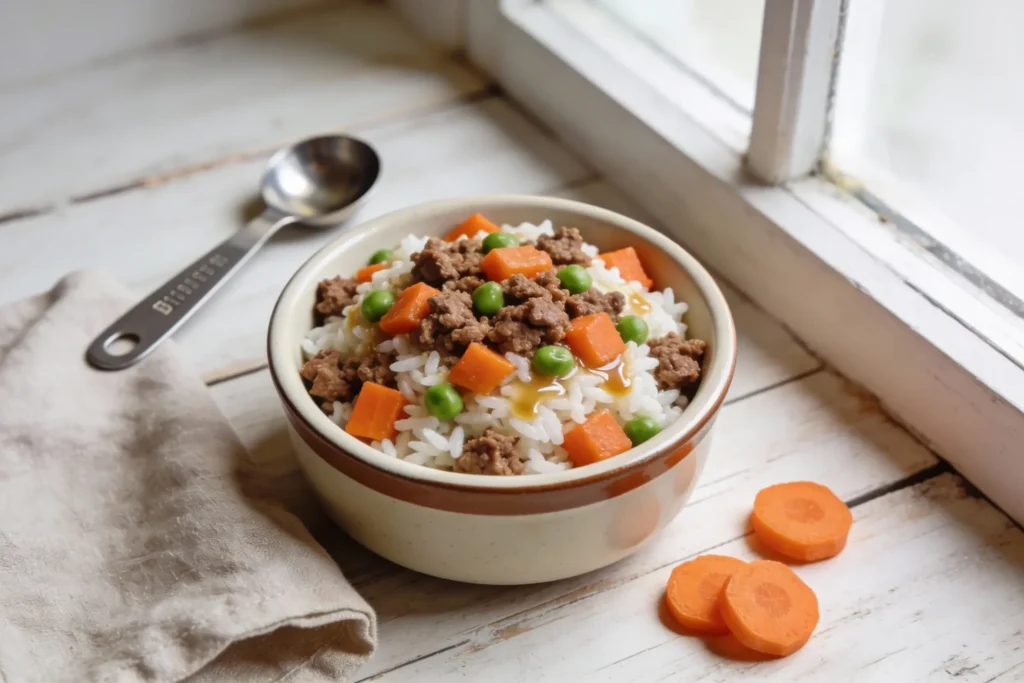
You want to feed your dog better without turning your kitchen into a science lab? Same. This easy beef-and-carrot dog food hits that sweet spot: simple ingredients, quick to make, and dogs actually lick the bowl clean. We’ll cover what to use, how to cook it, and how to serve it safely every day. Bonus: your house will smell amazing, and your dog will look at you like you invented steak.
Why Beef and Carrots Work Like a Charm
Beef gives dogs the protein and essential amino acids they need to keep muscles strong and energy steady. Carrots add fiber, natural sweetness, and a boost of beta-carotene for eye and skin health. It’s a combo that tastes great and checks important nutrition boxes.
FYI: You still want a balanced bowl, not just meat and veg. Add a healthy carb, a tiny bit of healthy fat, and a calcium source to round it out.
The Simple, Balanced Recipe
This batch makes roughly 6–8 cups, enough for 2–4 days for a medium dog. Adjust quantities based on your pup’s size and vet guidance.
Ingredients
- 2 lb (900 g) lean ground beef (90–93% lean)
- 2 cups carrots, finely diced or shredded (fresh or frozen)
- 2 cups cooked white rice (or quinoa or oats if you prefer)
- 1 cup peas (frozen is fine; skip if your dog can’t tolerate legumes)
- 1–2 tbsp olive oil (or fish oil per label for EPA/DHA)
- 1/2 tsp iodized salt (optional; tiny amount helps iodine needs)
- 1/2 tsp turmeric (optional; anti-inflammatory vibes, plus color)
- Calcium source: 900–1,000 mg calcium per pound of cooked food. Options:
- Ground eggshell powder: 1 tsp per pound of food
- Calcium carbonate supplement: follow label
- Multivitamin/mineral designed for dogs (follow label; this helps cover selenium, vitamin E, etc.)
Step-by-Step Instructions
- Cook the rice: Rinse and cook 1 cup dry rice to yield about 2 cups cooked. Set aside.
- Brown the beef: Add ground beef to a large skillet. Cook on medium, breaking up clumps. Drain excess fat if it looks greasy.
- Add veggies: Stir in carrots and peas. Cook 5–7 minutes until tender. Add a splash of water if the pan gets dry.
- Season smart: Stir in turmeric and salt (if using). Don’t go wild. No onions, garlic, or seasoning blends.
- Combine: Add cooked rice to the skillet. Mix well. Turn off heat.
- Finish with fats and calcium: Once slightly cooled, stir in olive or fish oil and your calcium source. Mix thoroughly.
- Cool: Let it cool completely before portioning. Hot food = impatient dog + potential burns.
Storage: Refrigerate up to 4 days. Freeze portions up to 2 months. Thaw in the fridge, not on the counter.
How Much to Feed Your Dog
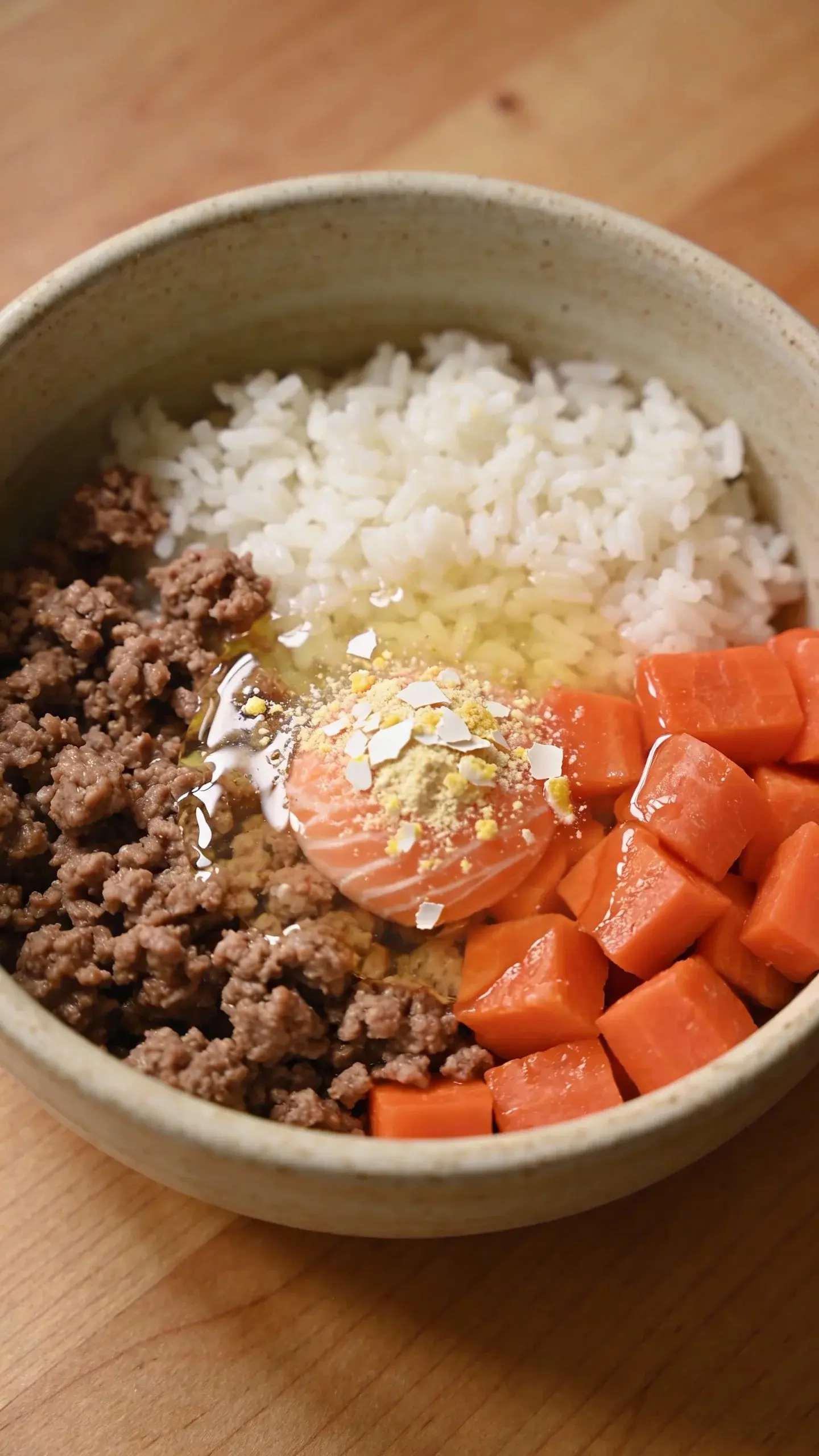
Portion sizes depend on age, weight, activity, and metabolism. Use this as a starting point, then adjust based on body condition.
- General starting guide: 2–3% of your dog’s body weight per day in cooked food.
- Small dogs (10 lb): 1/4–1/3 lb (115–150 g) per day
- Medium dogs (30–40 lb): 3/4–1 lb (340–450 g) per day
- Large dogs (60–70 lb): 1.25–1.5 lb (565–680 g) per day
Check the Body Condition
- See a waist from above? Good.
- Ribs easily felt but not poking out? Perfect.
- Gaining weight? Reduce portions by 10–15%.
- Too lean? Increase portions slightly.
Make It Truly Balanced (Without a PhD)
Homemade dog food can miss key micronutrients if you don’t plug the gaps. Don’t stress—just cover these basics:
- Calcium: Dogs need more calcium than humans. If you don’t feed raw meaty bones (I don’t for this recipe), add eggshell or a calcium supplement.
- Essential fats: Beef provides fat, but add fish oil for omega-3s (EPA/DHA) to support skin, coat, and joints.
- Iodine: A pinch of iodized salt or a vet-approved iodine source helps thyroid health.
- Vitamins and minerals: Use a dog-specific multivitamin/mineral to cover selenium, vitamin E, manganese, etc. IMO, this is the easiest way to keep the diet balanced long-term.
When to Talk to Your Vet
– Puppies, seniors, and dogs with kidney, liver, or pancreatitis issues need customized plans.
– If your dog has food allergies or GI drama, get a vet or board-certified nutritionist to tweak the recipe.
Smart Swaps and Flavor Upgrades
Want variety without ruining your dog’s tummy? Rotate gently.
- Carb swap: Try cooked quinoa, barley, or steel-cut oats.
- Veg swap: Green beans, zucchini, spinach (lightly wilted), or pumpkin puree.
- Protein swap: Turkey, chicken, or lean pork. Keep it low-fat for sensitive stomachs.
- Add-ins: 1–2 tbsp plain pumpkin, a spoon of plain kefir or yogurt, or a sprinkle of parsley for breath.
Important: Avoid onions, garlic, chives, grapes/raisins, xylitol, nutmeg, cooked bones, and heavy salt. No, your dog doesn’t need sriracha.
One-Pot Meal Prep Routine
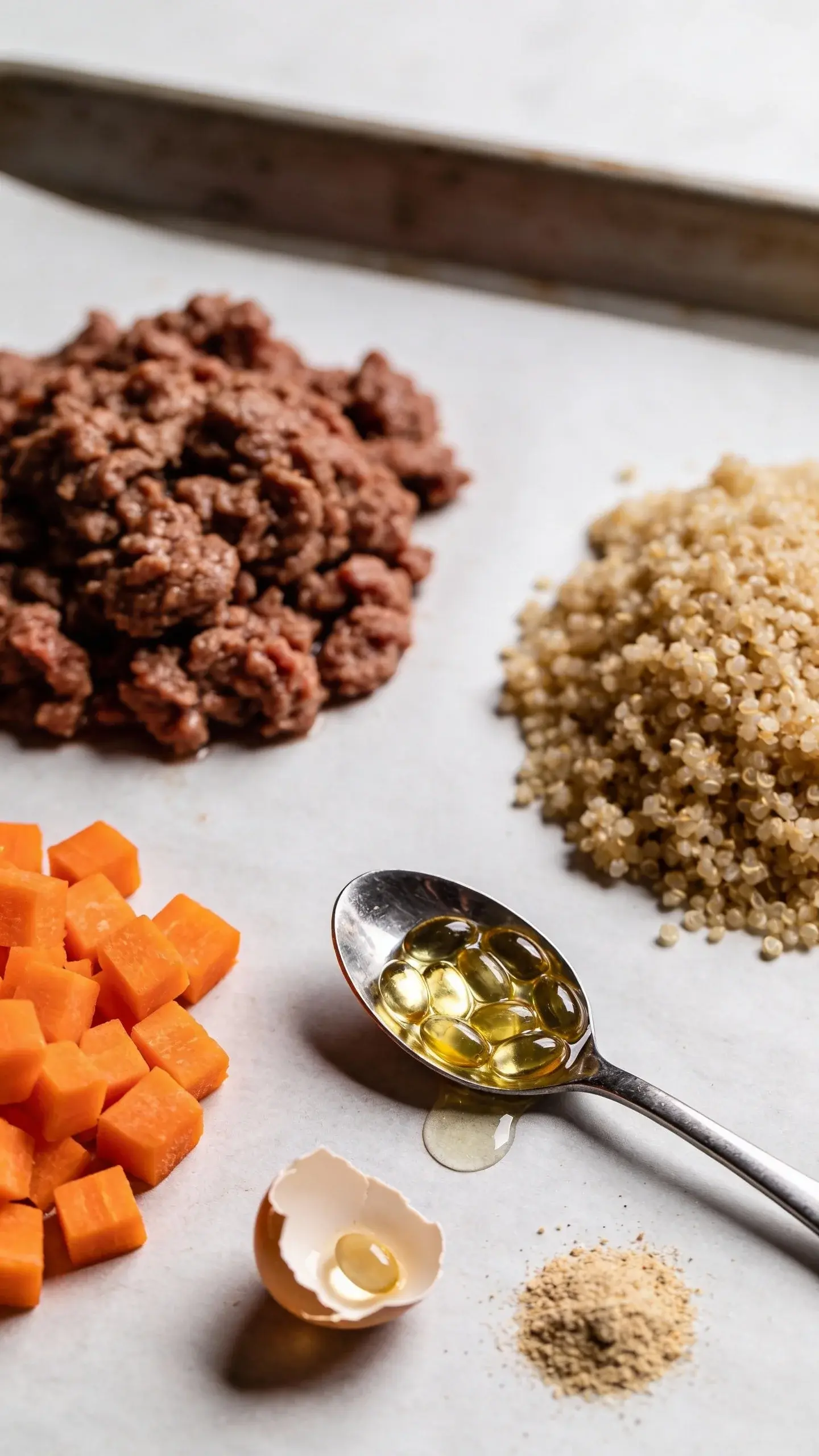
Batch cooking makes weekdays chill. Here’s a workflow that saves time.
- Start rice in a pot or rice cooker.
- Brown beef in a Dutch oven. Stir in carrots and peas.
- Fold in the cooked rice.
- Cool, then add oils, calcium, and supplements.
- Portion into freezer-safe containers or silicone molds (1-meal portions).
Label Like a Pro
– Write the date and portion size.
– Note add-ons you plan to mix in at serving (e.g., fish oil if you prefer to add fresh).
– Rotate oldest to newest like a grocery store ninja.
Serving Tips for Happy Tummies
– Warm to room temp or slightly warm in the microwave. Stir well so there are no hot pockets.
– Transition from kibble slowly over 5–7 days: 25% new, 50%, 75%, then 100%.
– Add a bit of warm water or bone broth (no onion/garlic) for picky eaters.
– Watch stools. Too soft? Reduce fat, add more rice or pumpkin. Too firm? Add a splash of water and a little oil.
FAQ
Can I feed this every day long-term?
Yes—if you include a calcium source and a dog-specific multivitamin/mineral, and you balance fats with fish oil. Rotate proteins and veggies over time to keep nutrition varied. Regular vet check-ins help catch any imbalances early.
Is raw beef okay in this recipe?
For this specific recipe, cook the beef. Cooking reduces pathogen risk and makes batch prep simpler. If you want to go raw, consult your vet or a nutritionist to ensure safe handling and proper calcium/phosphorus ratios.
What if my dog has a sensitive stomach?
Go extra simple: 90–93% lean beef, white rice, and carrots only. Skip peas and oil at first. Introduce new elements slowly. If diarrhea lasts more than 24–48 hours, call your vet.
How do I add eggshell calcium?
Bake clean eggshells at 300°F (150°C) for 10 minutes, cool, and blend to a fine powder. Use about 1 tsp per pound of cooked food. This helps meet calcium needs without bones.
Can I use brown rice instead of white?
Sure, if your dog tolerates it. Brown rice has more fiber and can bloat sensitive stomachs. For picky or GI-prone dogs, white rice keeps things calmer, IMO.
Do I still need kibble?
Not necessarily. A balanced homemade diet can replace kibble. Many people still mix a little high-quality kibble for convenience or added micronutrients. Your call.
Conclusion
Homemade beef and carrot dog food doesn’t need to be complicated or expensive. Cook lean beef, toss in carrots and a simple carb, add omega-3s and calcium, and you’ve got a daily-friendly meal your dog will devour. Keep it balanced, keep portions sensible, and tweak as needed—because your dog deserves the good stuff without the drama. FYI: expect extra tail wags at dinner time.