
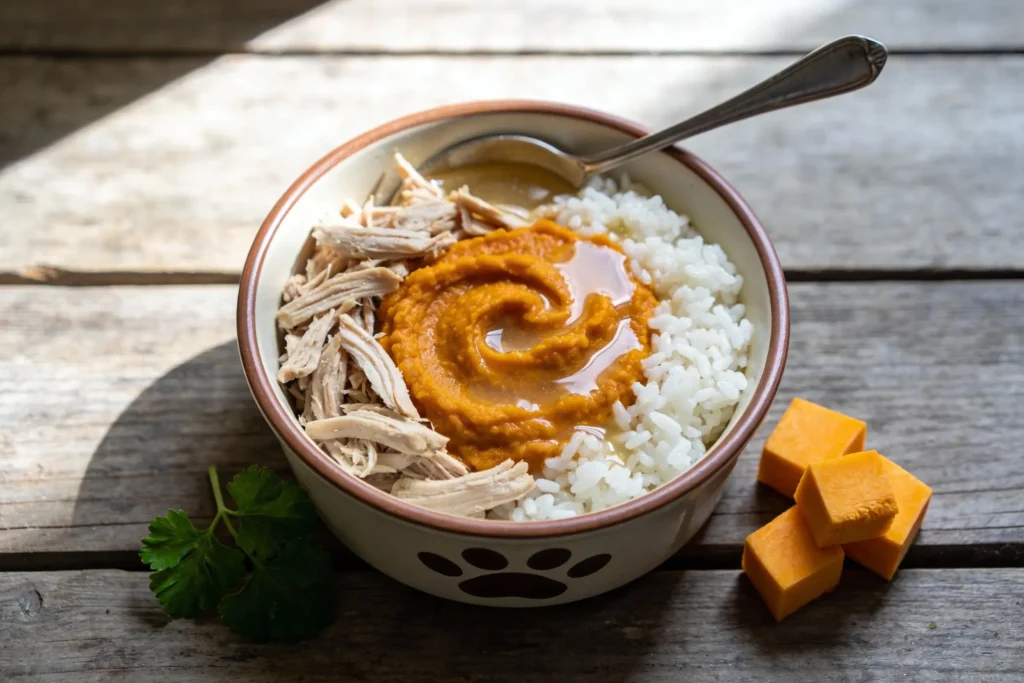
Your dog’s tummy threw a tantrum again? You’re not alone. When my pup gets the “grumbles,” I reach for a simple, soothing fix: chicken and pumpkin. It’s gentle, tasty, and quick to make. Let’s turn that upset belly into a happy tail wag, without fancy ingredients or a three-hour kitchen marathon.
Why Chicken + Pumpkin Works (and Works Fast)
Chicken and pumpkin act like the dynamic duo of doggy digestive support. Chicken gives lean protein that’s easy on the stomach. Pumpkin brings fiber that helps with both diarrhea and constipation. Wild, right?
Here’s the gist:
- Lean chicken = protein without fatty chaos
- Pumpkin = soluble fiber that firms or softens stool as needed
- Rice or oats = bland carbs that soothe the gut
- Bone broth (unsalted) = hydration + flavor = dog’s instant buy-in
FYI: This recipe supports short-term tummy troubles. It’s not a complete long-term diet unless you tweak nutrients carefully.
The Easy Chicken & Pumpkin Dog Food Recipe
This batch makes about 6 cups, which feeds a 30–40 lb dog for 1–2 days depending on appetite. Scale up or down as needed.
Ingredients
- 1 lb (450 g) skinless, boneless chicken (breast or thighs)
- 1 cup canned pumpkin puree (plain, not pie filling)
- 1 cup white rice (or 3/4 cup steel-cut oats)
- 2–3 cups water or unsalted bone broth
- 1 tbsp olive oil (optional, for calories and palatability)
- 1/4 tsp turmeric (optional, anti-inflammatory)
- Pinch of ginger powder (optional, for nausea)
Instructions
- Cook the carbs: Rinse the rice. Add rice and 2 cups water/broth to a pot. Simmer until soft and slightly overcooked (about 18 minutes). You want mushy, not al dente.
- Cook the chicken: Poach or bake until fully cooked (no pink). Shred or finely chop. Smaller pieces = easier digestion.
- Combine: In a large bowl or pot, mix chicken, pumpkin, cooked rice, and 1/2–1 cup extra water/broth. Stir in olive oil and optional spices.
- Cool and serve: Let it cool until just warm. Dogs don’t need molten lava food. Portion and refrigerate leftovers for up to 3 days (or freeze up to 3 months).
Basic serving guide:
- 10 lb dog: 1/2–3/4 cup per meal
- 20 lb dog: 3/4–1 cup per meal
- 40 lb dog: 1.5–2 cups per meal
- 70 lb dog: 2.5–3 cups per meal
Feed 2–3 small meals per day during tummy recovery. Adjust if your dog inhales it and still looks starving (relatable).
What Makes Pumpkin a Gut Hero?

Pumpkin brings soluble fiber that absorbs excess water in diarrhea and adds gentle bulk in constipation. It also carries prebiotics that feed good gut bacteria.
How much pumpkin should you use?
- Small dogs (under 20 lb): 1–2 tsp per meal
- Medium dogs (20–50 lb): 1–2 tbsp per meal
- Large dogs (50+ lb): 2–4 tbsp per meal
Too much pumpkin can loosen stools, so don’t dump in half the can. IMO, start low and watch results.
Fresh vs. Canned
Both work. Canned is convenient as long as the only ingredient is pumpkin. No spices, no sugar, definitely no “pumpkin pie mix.” Fresh pumpkin must be cooked and mashed until smooth.
Optional Add-Ins for Extra Support
You can keep it basic. But if your dog’s gut throws frequent curveballs, these add-ins help.
- Plain kefir or unsweetened yogurt: 1–2 tsp for small dogs, 1–2 tbsp for big dogs. Great for probiotics. Avoid if lactose sensitive.
- Psyllium husk: 1/8 tsp small dogs, 1/4 tsp medium, 1/2 tsp large. Mix with water first. Firms stool effectively.
- Boiled carrot or sweet potato: A few tablespoons for fiber and vitamins.
- Electrolyte support: Unsalted bone broth adds hydration and flavor. Dogs love it. You’ll feel like a culinary genius.
What to Avoid
- Onion, garlic, salt, and seasoning blends: Hard no.
- Butter and excess oils: Can trigger pancreatitis and diarrhea.
- Pumpkin pie filling: Sugar, spices, chaos.
How Long Should You Feed This?
Use this as a short-term recovery diet for 2–5 days while the gut resets. If your dog bounces back, slowly transition to their regular food over 2–3 days.
Transition plan:
- Day 1: 75% chicken-pumpkin mix, 25% regular food
- Day 2: 50/50
- Day 3: 25/75, then back to regular
If diarrhea, vomiting, or gas-party behavior continues beyond 48 hours—or if you see blood, lethargy, or dehydration—call your vet. Don’t wait it out. Better an eye-roll from the vet than a real problem.
A Quick Note on Nutrition Balance

This recipe calms the gut, but it’s not a fully balanced long-term diet. Dogs need calcium, specific fatty acids, vitamins, and trace minerals that plain chicken-and-rice doesn’t cover.
If you want to feed home-cooked longer-term, consider:
- Calcium: Add a vet-approved calcium supplement or finely ground eggshell (1/2 tsp per pound of meat).
- Essential fats: A small amount of fish oil (per vet dosing) for EPA/DHA.
- Complete supplement: Use a dog-specific multivitamin/mineral designed for home-cooked diets.
- Balanced recipes: Consult a board-certified veterinary nutritionist or use a reputable formulation tool.
FYI: For a quick fix, don’t stress this section. For long-term homemade meals, it matters a lot.
Common Mistakes (I’ve Made Them Too)
- Using seasoned rotisserie chicken: Smells amazing, ends badly. Too salty, often onion/garlic-spiced.
- Not cooking the rice enough: Slightly mushy is your friend during tummy troubles.
- Too much pumpkin: More isn’t more. Start small and increase if needed.
- Feeding large meals: Smaller, more frequent meals sit better.
- Skipping water: Hydration is half the battle. Offer fresh water and consider broth.
FAQs
Can I use turkey instead of chicken?
Absolutely. Lean ground turkey or turkey breast works the same way. Just cook it thoroughly, drain any fat, and keep the seasonings out of it.
How fast will this help my dog’s diarrhea?
Many dogs improve within 12–24 hours if the issue is mild dietary indiscretion. If you don’t see improvement in 48 hours, or your dog seems unwell, call your vet. Quick relief is common, but not guaranteed.
Is canned pumpkin safe every day?
In small amounts, yes. Pumpkin can be part of a regular diet, especially for dogs with sensitive stomachs. Keep portions modest to avoid too much fiber (which can backfire).
What if my dog has allergies?
If your dog reacts to chicken, swap in turkey, lean beef, or white fish. If rice causes issues, use quinoa or cooked oats. Keep labels clean and add new ingredients one at a time.
Can I freeze portions?
Totally. Freeze in meal-sized containers or silicone trays. Thaw in the fridge overnight and rewarm gently with a splash of water or broth. Your future self will thank you.
When should I go to the vet instead of DIY?
See your vet right away for puppies, seniors, dogs with chronic illnesses, or any dog with vomiting, blood, black tarry stools, severe lethargy, or suspected toxin ingestion. Home cooking helps mild cases; serious signs need medical care.
Conclusion
Chicken and pumpkin make a simple, gentle reset when your dog’s gut goes rogue. Cook it soft, keep flavors plain, and feed small, frequent meals. Layer in smart add-ins if needed, and transition back slowly once things normalize. IMO, it’s one of those easy wins every dog parent should have in their back pocket—fast to make, easy to digest, and approved by picky eaters everywhere.