
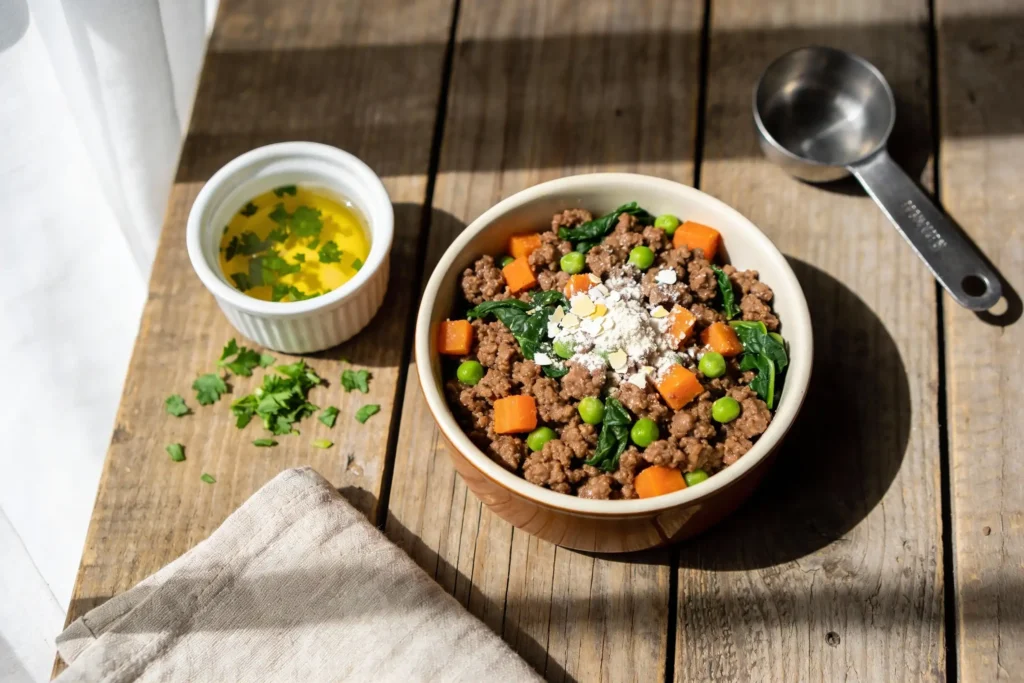
Your dog doesn’t care about perfectly plated dinners. They care about tasty, meaty goodness that makes their tail helicopter. If you’ve ever looked at kibble and thought, “I can do better,” you absolutely can—with a little know-how. Let’s make a homemade beef dog food with veggies that’s not just delicious but complete and balanced. Yes, balanced—because good intentions don’t replace nutrients.
Why Go Homemade (And How Not to Mess It Up)
Homemade dog food gives you control over ingredients, freshness, and quality. You skip fillers and mystery meat and feed real food you’d actually eat. But here’s the catch: dogs need specific nutrients in the right amounts.
Balance matters. That means the right ratio of protein, fat, fiber, calcium, and micronutrients. We’ll cover a simple, repeatable recipe and exactly how to make it complete. FYI: A vet or board-certified veterinary nutritionist is your best friend for tweaks if your dog has health issues.
The Golden Ratio: What a Balanced Bowl Looks Like
Here’s the general breakdown for adult dogs:
- Protein (from meat and organs): about 40–50% of the recipe
- Carbs and veggies: about 30–40%
- Healthy fats: about 10–15%
- Calcium and essential micronutrients: required, not optional
Dogs also need vitamins and minerals like zinc, iodine, vitamin E, manganese, copper, and more. Meat and veggies alone won’t cover all of it. That’s why we add a canine multivitamin/mineral and a calcium source or use a complete premix.
The Recipe: Beef & Veggie Dog Food (Complete & Balanced)
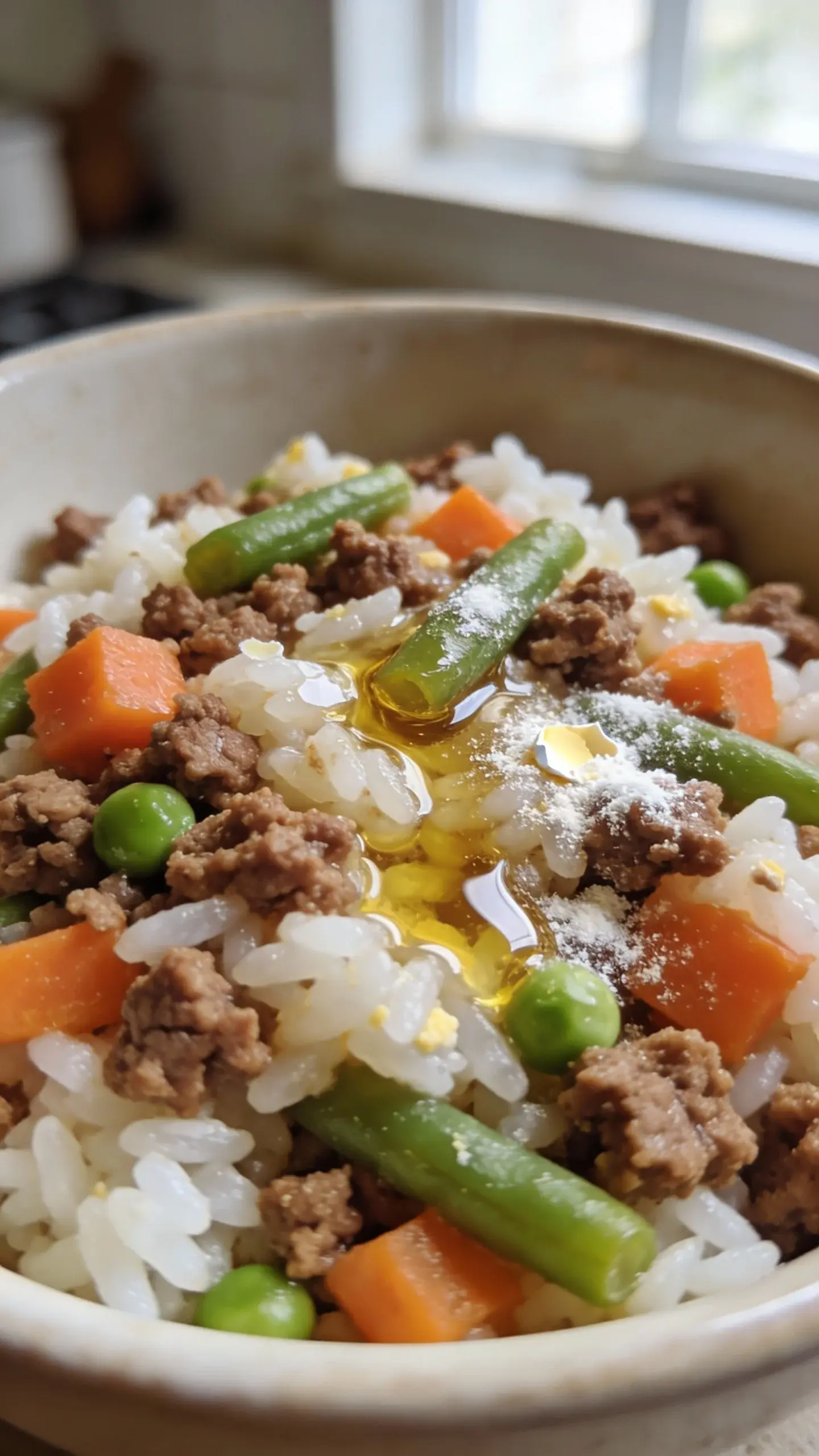
This batch makes about 12–14 cups (roughly 8–10 adult dog meals depending on size). Store portions and freeze extras.
Ingredients
- 2 lb (900 g) lean ground beef (90–93% lean)
- 6 oz (170 g) beef liver (about 10% of the meat weight)
- 1 cup (150 g) finely chopped carrots
- 1 cup (130 g) green beans (fresh or frozen, chopped)
- 1 1/2 cups (225 g) butternut squash or pumpkin (cooked and mashed)
- 1 cup (160 g) cooked brown rice or quinoa (optional but helpful for energy and fiber)
- 2 tbsp olive oil (or 1 tbsp olive oil + 1 tbsp salmon oil)
- 1 large egg (cooked, for protein and choline)
- 1 tsp finely ground eggshell powder per pound of meat (about 2 tsp for this recipe), or 1,200 mg calcium per pound of meat
- 1–2 tsp fish oil (adjust based on product to get ~300–500 mg EPA + DHA per 25 lb of body weight per day)
- Dog-specific multivitamin/mineral per label for your dog’s weight (Look for one that covers zinc, iodine, vitamin E, copper, manganese, and B vitamins)
- Water or low-sodium bone broth as needed
Directions
- Lightly cook the meats. Brown the ground beef in a large skillet over medium heat. Drain excess fat if very greasy, but keep some for flavor and calories. Chop the liver finely and add it in the last 3–4 minutes until just cooked through.
- Cook the veggies and starch. Steam carrots and green beans until tender. Cook squash or pumpkin until soft if not using canned plain pumpkin. Cook rice or quinoa per package if using.
- Combine. In a large pot or bowl, mix beef, liver, veggies, and rice/quinoa. Stir in olive oil, cooked scrambled egg, and enough warm water/broth to reach a moist, scoopable texture.
- Add supplements after cooling. Let the mixture cool to lukewarm. Stir in ground eggshell or calcium powder, fish oil, and the dog multivitamin/mineral according to label directions. Do not cook supplements.
- Portion. Divide into daily meal containers. Refrigerate up to 4 days or freeze for up to 2–3 months.
Portion Guide (General)
Every dog is different, but a handy starting point:
- Dogs 10–20 lb: 3/4–1 1/4 cups per day
- Dogs 20–40 lb: 1 1/4–2 1/4 cups per day
- Dogs 40–60 lb: 2 1/4–3 cups per day
- Dogs 60–80 lb: 3–4 cups per day
Adjust weekly based on body condition. Ribs buried under fluff? Feed less. Ribs popping like xylophone? Feed more.
How to Make It Truly “Complete”
You have two solid routes:
- Route A: Use a complete premix. Products labeled for home-prepared diets let you add meat and sometimes veggies for a balanced result. Follow their directions exactly. IMO the easiest path if you hate math.
- Route B: Use a canine multivitamin/mineral + calcium. Choose a reputable dog-specific supplement that covers zinc, iodine, vitamin E, copper, manganese, and B vitamins. Add calcium at ~1,200–1,300 mg per pound of raw meat if you’re not feeding bones. Ground eggshell works (about 1 tsp per pound of meat equals ~1,800–2,000 mg calcium, so measure carefully).
Non-negotiable: Add omega-3s. Beef diets run high in omega-6. Fish oil or salmon oil helps balance inflammation and supports skin and joints.
Safe Veggies Dogs Actually Like
- Great picks: carrots, green beans, peas, broccoli (small amounts), zucchini, spinach (cooked), pumpkin, butternut squash
- Avoid: onions, leeks, chives, large amounts of garlic, raw potatoes, unripe tomatoes, and anything seasoned with salt/onion powder
Texture, Flavor, and Variety Tips
Dogs eat with their noses, not their Instagram feeds. Keep it simple and tasty.
- Add aroma: a splash of low-sodium bone broth or a few sardines in water (boneless) for picky eaters
- Switch carbs: rotate rice, quinoa, barley, or skip carbs and bump veggies if your dog maintains weight easily
- Rotate proteins: swap beef for turkey, chicken, or pork, adjusting fat and cooking thoroughly
- Keep liver at ~5–10% of meat weight: more can cause loose stools and vitamin A excess
Cooking Methods: What’s Best?
- Light cooking keeps nutrients while killing surface bacteria—great for most dogs.
- Slow cooker works too: add a bit of water, cook on low 3–4 hours until safe and tender. Add supplements last.
- No heavy seasoning. Dogs don’t need salt, onions, or “chef’s kiss” spice blends.
Storage, Safety, and Transition
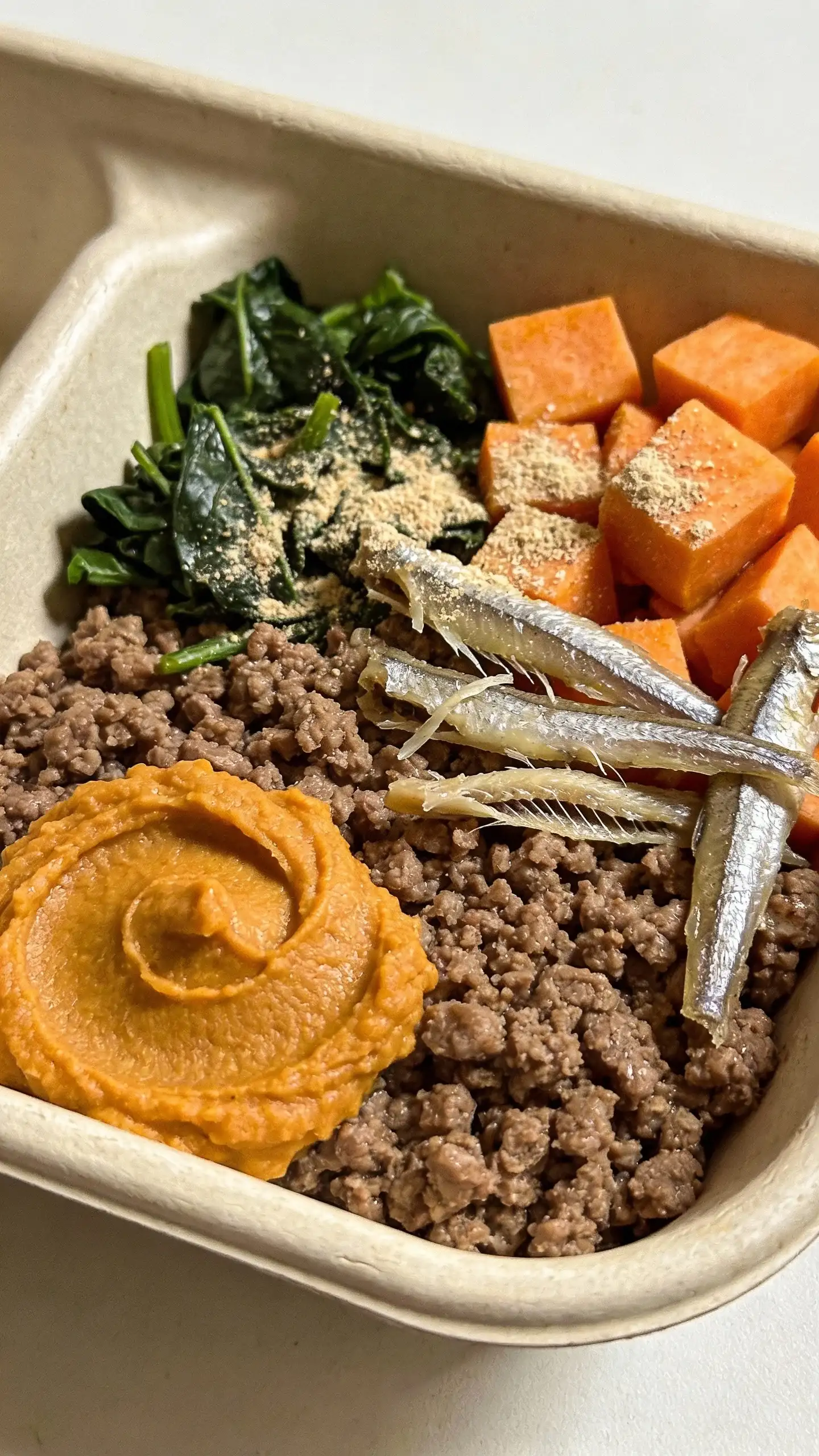
Storage: Refrigerate portions up to 4 days. Freeze in meal-size containers. Thaw in the fridge, not on the counter.
Transition: Over 5–7 days, mix with current food:
- Day 1–2: 25% homemade, 75% old
- Day 3–4: 50/50
- Day 5–6: 75% homemade
- Day 7: 100% homemade
If stools get soft, slow down and add a bit more pumpkin. If your dog looks like they swallowed a beach ball, you fed too much—cut back.
Troubleshooting Common Issues
My dog got runny poop
You probably changed too fast or added too much fat or liver. Reduce liver to 5% of meat weight, skim visible fat, and add 1–2 tbsp pumpkin per cup of food until things normalize.
My dog won’t eat it
Warm it slightly, add a splash of broth, or crumble a sardine on top. Some dogs need the “this is special” routine—hand-feed a few bites, then bowl it.
My dog gained weight
Homemade food can be calorie-dense. Drop portions by 10–15% and increase walks. Use green beans to add volume with fewer calories.
Skin or coat looks meh
Add or increase fish oil (per label) and confirm your multivitamin includes vitamin E and zinc. These matter for coat health.
FAQ
Can I feed this to puppies?
Not as-is. Puppies need different calcium-to-phosphorus ratios and higher energy density. Use a veterinary nutritionist-designed puppy recipe or a puppy-specific complete premix. Growing bones are unforgiving—don’t wing it.
Do I need to add calcium if I use bone broth?
Yes. Bone broth does not provide adequate calcium. You need a measured calcium source like eggshell powder, calcium carbonate, or a balanced premix. Strong bones don’t happen by vibes.
Is raw beef okay?
Some owners feed raw, but cooked reduces pathogen risk for both dogs and humans. If you go raw, consult your vet and practice strict hygiene. IMO lightly cooked hits the sweet spot of safety and nutrition.
What if my dog has allergies?
This recipe works well because it’s simple. If beef triggers issues, swap in a tolerated protein like turkey or pork and keep the structure the same. For true allergies or chronic itch/ear problems, loop in your vet for elimination diet guidance.
Can I batch-cook a month at a time?
Absolutely. Freeze in single-meal packs, label with date, and rotate oldest to newest. Thaw overnight in the fridge. Add supplements after thawing if they’re heat-sensitive.
How do I know it’s balanced for my dog?
Use a dog-specific multivitamin/mineral and calcium as instructed, include omega-3s, keep liver to 5–10%, and maintain variety over time. For extra credit, ask your vet about periodic bloodwork and body condition scoring. Data > guesswork.
Conclusion
Homemade dog food doesn’t need to be complicated or scary. With good ingredients, the right supplements, and a little routine, you can feed a beef-and-veggie bowl that’s both drool-worthy and complete. Start with this recipe, watch your dog’s energy and body condition, and tweak as needed. Your dog will vote with their tail—loudly. FYI, that’s the only Yelp review that matters.