
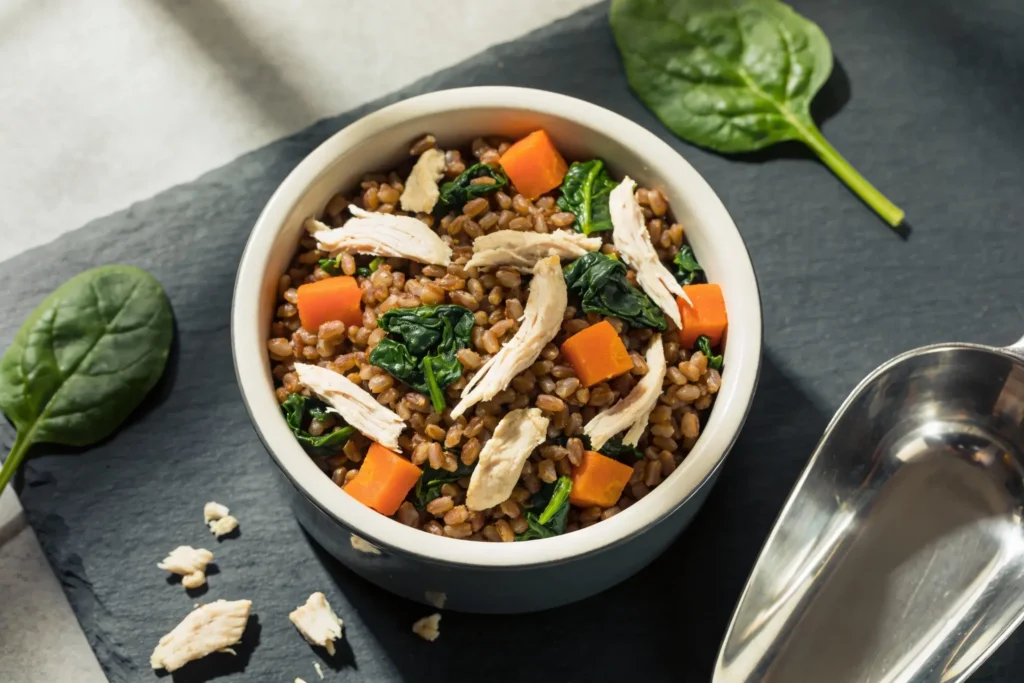
Your dog just stared at your salad like it owed them money, didn’t they? If you’ve wondered whether you can share chicken and spinach with your pup—and maybe even make a full homemade meal out of it—you’re in the right place. Short answer: yes, you can feed dogs chicken with spinach. But let’s do it right so your dog gets the benefits without upsetting their tummy or your vet.
Is Chicken and Spinach Safe for Dogs?
Chicken makes a fantastic lean protein for dogs. Spinach? Also OK in moderation. It’s nutrient-rich, but it contains oxalic acid, which can interfere with calcium absorption if you go overboard. So the key here: use spinach as a small portion of the meal, not the main event.
If your dog has kidney issues, calcium oxalate stones, or a sensitive stomach, ask your vet before adding spinach. Otherwise, most healthy adult dogs handle small amounts of cooked spinach perfectly fine.
Why Add Spinach at All?
Spinach brings some legit perks when used thoughtfully:
- Vitamins galore: A, C, K, and folate support immune function and blood health.
- Minerals: Iron, magnesium, and potassium help muscles and nerves do their thing.
- Antioxidants: Help fight cellular damage—because zoomies require maintenance.
- Fiber: A little fiber can support digestion (but too much = poop regret).
FYI: Dogs don’t “need” spinach, but it can be a nice nutrient boost alongside a balanced base.
The Big Picture: Balance Matters

Homemade dog food can be awesome, but balance makes or breaks it. Dogs need protein, fat, and the right calcium-to-phosphorus ratio, plus essential vitamins and minerals. Chicken alone won’t cover everything. That’s why we add a calcium source, some healthy fats, and dog-safe carbs/veggies.
How much should spinach be?
Keep spinach to about 5–10% of the total recipe. You’ll still get the nutrients without pushing oxalates too high. IMO, that’s the sweet spot for most dogs.
Recipe: Chicken and Spinach Dog Food (Vet-Friendly Basics)
This makes about 6 cups of food (roughly 5–6 meals for a 20–25 lb dog; adjust portions for your pup). Store in the fridge up to 3 days or freeze portions.
Ingredients
- 2 lb (900 g) ground chicken or finely chopped boneless, skinless chicken thighs
- 1 cup cooked white rice or quinoa (rice is gentler for sensitive tummies)
- 1 cup finely chopped spinach, packed (about 2 large handfuls), steamed
- 1/2 cup finely chopped carrots, steamed
- 1/2 cup green beans, chopped and steamed
- 1–2 tbsp olive oil or salmon oil (for healthy fats and omega-3s)
- 1/2 tsp turmeric (optional, anti-inflammatory)
- 1 tsp eggshell powder (about 2 ground eggshells) or a canine calcium supplement per label
- Canine multivitamin/mineral supplement (follow vet advice or label)
Strong opinions here: do not skip the calcium. Meat-heavy diets without calcium can lead to serious deficiencies over time.
Directions
- Cook the rice or quinoa according to package instructions. Set aside.
- In a large skillet, cook the chicken over medium heat until done. Do not add salt, garlic, onions, or seasoning.
- Steam the spinach, carrots, and green beans until soft. Chop finely if needed.
- Combine chicken, rice, and veggies in a large bowl. Stir in oil.
- Let cool to lukewarm, then mix in eggshell powder or calcium supplement and the canine multivitamin.
- Portion into daily servings. Refrigerate or freeze extras.
Portion Guidelines
As a starting point:
- Small dogs (10 lb): 3/4–1 cup per day split into two meals
- Medium dogs (25 lb): 1.5–2 cups per day
- Large dogs (50 lb): 3–4 cups per day
Adjust based on activity, body condition, and your vet’s input. If your dog is getting chunky, reduce by 10–15%. If they’re lean and zippy, add a bit more.
Safe Prep Tips (Because Dogs Can’t Read Labels)
- Fully cook chicken to an internal temp of 165°F (74°C).
- No onions, garlic, chives, leeks—all toxic to dogs.
- No salt, butter, or spicy seasonings.
- Chop veggies small for better digestion and nutrient absorption.
- Introduce new foods slowly over 5–7 days to avoid tummy drama.
- If you use bones for calcium, they must be finely ground, never cooked whole.
Spinach Alternatives (For Sensitive Pups)

If your dog can’t do spinach or you just don’t vibe with it, try:
- Kale (cooked): similar vitamins, fewer oxalates than spinach
- Zucchini: super gentle, low-oxalate
- Pumpkin or butternut squash: fiber and beta-carotene
- Broccoli (steamed, small amounts): nutrient-dense but can cause gas
IMO, zucchini and pumpkin are the most tummy-friendly substitutes.
How to Transition Without Upsetting Your Dog’s Stomach
Slow and steady wins the no-diarrhea race:
- Day 1–2: 25% new food, 75% old food
- Day 3–4: 50/50
- Day 5–6: 75% new, 25% old
- Day 7: 100% new
Watch for loose stools, vomiting, itchiness, or lethargy. If anything seems off, dial back or check with your vet.
FAQ
Can dogs eat raw spinach?
They can, but cooked spinach is easier to digest and releases more nutrients. Lightly steaming works best. Raw spinach in big amounts can cause gas and doesn’t add much benefit.
How often can I feed this chicken and spinach recipe?
You can feed it daily if you include proper calcium and a canine multivitamin/mineral supplement and the diet fits your dog’s calorie needs. Otherwise, use it as a topper a few times per week.
What signs mean spinach doesn’t agree with my dog?
Watch for loose stools, straining, excessive gas, vomiting, or decreased appetite. If your dog has a history of kidney or bladder stones, talk to your vet before using spinach at all.
Can I use chicken breast instead of thighs?
Yes, but chicken breast is leaner. Add a bit more healthy fat (like salmon oil) to support skin, coat, and energy. Thighs give a better fat balance for most dogs.
Do I really need supplements?
For complete nutrition long-term, yes. Home-cooked diets without added calcium and micronutrients can cause deficiencies. Short-term or as a topper, you can skip—but not for a full-time diet.
Can puppies eat this?
Puppies have higher nutrient needs (especially calcium and phosphorus). Use a vet-formulated puppy-specific recipe if you want to home cook. This one is better for healthy adult dogs unless a vet adjusts it.
Conclusion
Chicken and spinach can make a tasty, safe homemade meal for your dog when you keep spinach in moderation, cook everything simply, and balance the nutrition with calcium and a multivitamin. Start slow, watch your pup’s digestion, and tweak portions to fit their lifestyle. Want a shortcut? Use the recipe above as a base and swap veggies to keep things interesting—your dog will act like a food critic anyway. FYI: when in doubt, your vet’s advice beats the internet every time.