
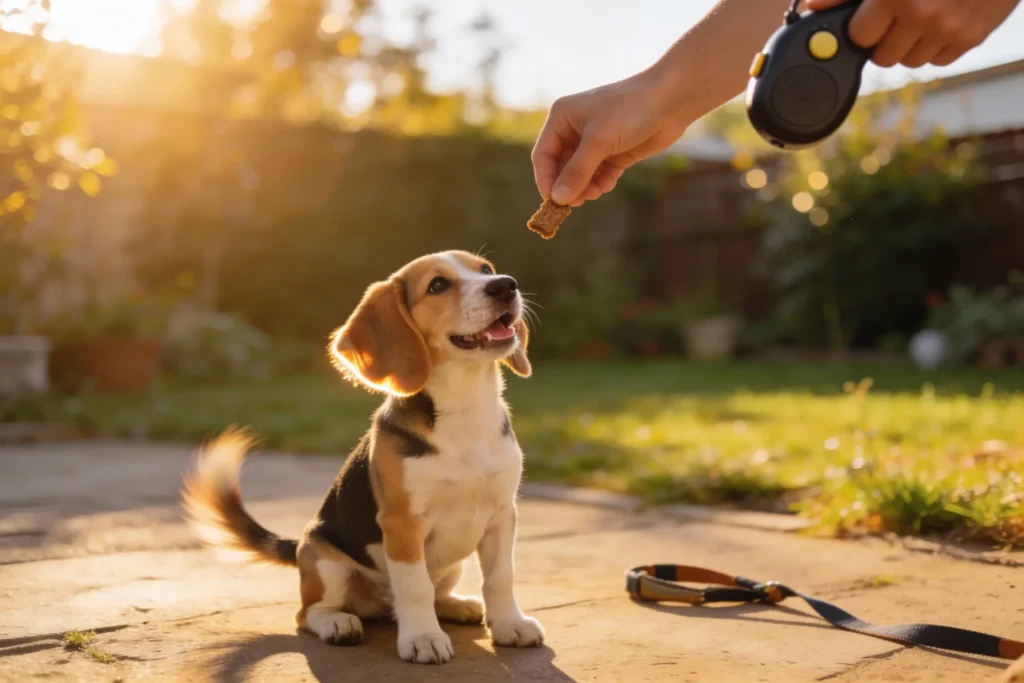
Beagles learn fast when they want to—and when you pay them well. How long does it take? Short answer: longer than a Golden Retriever, shorter than you fear if you stay consistent. You’re training a nose with legs, not a tiny philosopher. But with the right plan, you’ll see real results in weeks, not years.
So…how long are we talking?
Beagles usually master basic manners in 8–12 weeks if you train daily. That means sit, down, wait, come (well, “come-ish”), and polite leash skills. Housetraining takes 2–4 weeks with a solid routine, though nighttime control can take a bit longer.
For more advanced stuff—like off-leash reliability around distractions or scent work—plan for 3–6 months of consistent practice. Does that sound like a lot? Sure. But you’re shaping habits that last for years. Totally worth it.
Why Beagles take their sweet time
Beagles were bred to follow scent above all else. That nose isn’t a hobby—it’s a calling. They’re smart, but they value independence over blind obedience. Translation: they won’t do it “just because.”
Key factors that affect training time:
- Age: Puppies soak up basics faster, but they get distracted easily. Adults may unlearn old habits, but they focus better.
- Consistency: Daily reps beat once-a-week marathons. You can’t cram training like an exam.
- Rewards: Beagles work for food, scent games, and sniff time. If the pay is low, they’ll clock out.
- Environment: Quiet living room? Easy. Park full of squirrels? Good luck—without proofing.
- Temperament: Some are goofy social butterflies; others are stubborn detectives. Adjust your approach.
FYI: The “scent brain” problem
When a Beagle catches a smell, it hijacks their attention. That’s not disobedience—it’s genetics. You train around it by using higher-value rewards and building difficulty slowly.
Realistic timelines by skill
Let’s map it out. These are reasonable goals if you train 10–15 minutes daily.
- Housetraining: 2–4 weeks to reliable days, 4–8 weeks for all-day + night control.
- Crate training: 1–3 weeks to settle calmly for naps and bedtime.
- Basic cues (sit, down, wait): 2–3 weeks to reliable in quiet rooms.
- Recall (“come”): 6–12 weeks to decent response on a long line; months for off-leash around smells (if ever—be honest about your dog).
- Leash manners: 4–8 weeks for loose-leash walking in calm areas; more with distractions.
- Leave it/drop it: 3–6 weeks to handle food and random street “treasures.”
IMO: Off-leash goals need realism
Some Beagles never become fully reliable off-leash. That’s okay. Use a long line, fenced areas, and heavy rewards. Safety first, pride second.
Your weekly game plan
Strong routines beat long sessions. Think tiny, daily wins.
- Week 1–2: Name recognition, sit, down, crate comfort, potty schedule every 2–3 hours, short recall games indoors.
- Week 3–4: Add “wait,” begin loose-leash walking in low-distraction areas, recall on a long line in your yard, introduce “leave it.”
- Week 5–6: Practice around mild distractions—park edges, quiet trails. Increase sniff breaks as rewards.
- Week 7–8: Proof behaviors: different times of day, new environments, more people/dogs in sight (not up close yet).
Micro-sessions win
Do 3–5 mini sessions a day, 3–5 minutes each. Pair them with daily life: sit before meals, wait at doors, recall for playtime. No big productions—just habits.
Techniques that actually work on Beagles
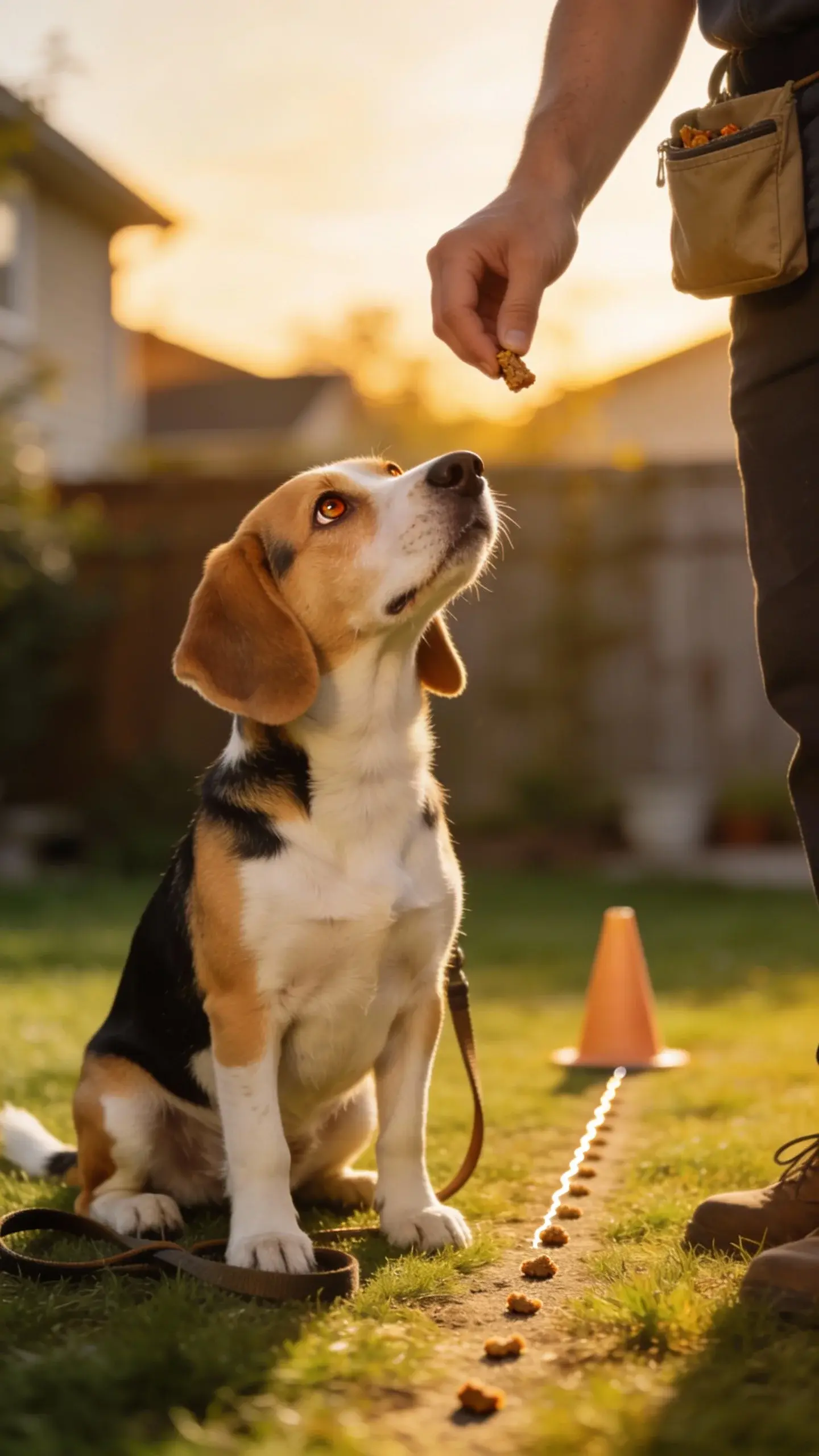
Beagles care about what they get, not how you feel. So pay well, be clear, and keep it fun.
Use these tactics:
- High-value rewards: Chicken, cheese, soft treats. Dry kibble won’t beat a squirrel. Mix in sniff breaks as a “jackpot.”
- Variable reinforcement: Start with every correct rep rewarded, then switch to random wins. It keeps them gambling for the next payout.
- Long line recall: 15–30 feet. Let them wander, call once, reel gently if needed, party hard when they return. One cue only—don’t nag.
- Sniff time as currency: Ask for a sit, then say “go sniff!” as the reward. They’ll work for nose privileges.
- Pattern games: Predictable routines (like “sit, eye contact, treat”) settle high-energy brains.
Common mistakes to avoid
- Repeating cues: “Come come come come” becomes background noise. Say it once, help them succeed, then reward like crazy.
- Skipping proofing: If they only sit in the kitchen, that’s not trained—that’s situational.
- Underpaying: If the reward can’t beat the environment, you lose. Upgrade your treat menu.
- Unclear rules: No couch sometimes. It’s yes or no. Beagles exploit loopholes like tiny lawyers.
Housetraining without the stress
Beagles respond well to structure and praise. You’ll get there faster if you prevent accidents instead of punishing them.
Do this:
- Take out first thing in the morning, after meals, naps, and play. Set a timer—seriously.
- Use a crate that fits: enough to stand and turn, not big enough to potty in one corner.
- Reward within 2 seconds of finishing outside. Yes, bring treats to the yard.
- Clean accidents with enzymatic cleaner. Regular cleaners tell the nose “bathroom goes here.”
Nighttime tips
Young puppies can’t hold it all night. Set one alarm for a quick, calm potty break. Keep lights low, praise softly, and go right back to bed.
Leash skills for the sniff-obsessed
Loose-leash walking feels like wizardry at first. You’re teaching the art of patience.
Here’s the formula:
- Start indoors. Reward for staying near your side.
- Move outside only when they nail it inside.
- When they pull, stop. When the leash loosens, move forward. You control the scenery.
- Use “go sniff” as a release reward after short stretches of nice walking.
Handling distractions
Work at the edge of the distraction bubble. If they lock onto a scent, you’re too close. Back up, regain focus, then try again. You don’t fight their nose—you negotiate with it.
When to get help
If you hit a plateau, bring in a positive-reinforcement trainer. Group classes build focus around distractions and speed up progress. For reactivity, resource guarding, or separation issues, go straight to a behavior professional. Faster fix now beats bigger problems later, IMO.
FAQ
Can Beagles ever be off-leash?
Some can, many shouldn’t. Their instincts run deep, and one rabbit scent can erase six months of training. If you try it, use fenced areas first and proof recall relentlessly. A long line gives you freedom without the heart attack.
What’s the best treat for Beagles?
Soft, smelly, tiny. Think chicken, turkey, freeze-dried liver, cheese. Rotate often so they don’t get bored. And yes, sniff time and play count as rewards too.
How much training per day is ideal?
Aim for 15–30 minutes total, split into short sessions. Layer cues into daily life: sits at doors, downs while you watch TV, recalls during yard time. Short, frequent reps beat long lectures every time.
Why does my Beagle listen indoors but not outside?
Because outdoors is Disneyland. You need to “proof” behaviors—train the same cue in gradually harder environments. Increase your reward value, lower the difficulty, and work your way up. It’s a marathon, not a meme.
Are Beagles harder to train than other breeds?
They’re different, not worse. They’re independent and scent-driven, so you must motivate them smartly. If you keep sessions fun and pay well, you’ll get great results. If not…enjoy the chaos.
When will my Beagle stop being so stubborn?
Stubborn is often “confused” or “underpaid.” Clarify what you want, reward generously, and stay consistent. With maturity (around 2–3 years) and training, they’ll feel way more cooperative, FYI.
Conclusion
Training a Beagle takes weeks for basics and months for real-world reliability, especially with recall and distractions. You’re not battling a bad dog—you’re partnering with a professional sniffer. Pay well, practice daily, and keep it playful. Do that, and your Beagle will surprise you—in a good way, not the “ate an entire sock” way.