
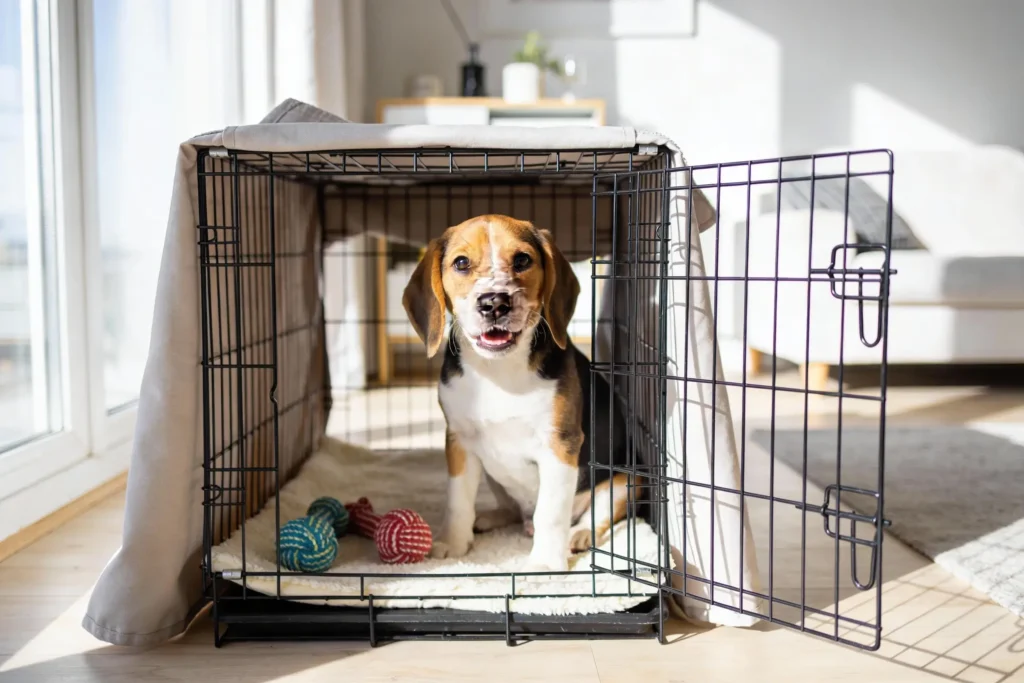
Beagle puppies are adorable, stubborn little detectives with noses that don’t quit. You want them to love their crate, not plot an escape like a cartoon bandit. Good news: you can absolutely crate train a Beagle without tears (yours or theirs). Let’s build a cozy den they choose on their own—and use it to boost potty training, sleep, and sanity.
Why Crate Training Works (Especially for Beagles)
Beagles are scent-driven and curious, which means they’ll find trouble like it’s their job. A crate gives them a safe, quiet place to chill when you can’t watch them. It also gives you a huge win for potty training because dogs avoid soiling their sleeping area.
Think of the crate as a bedroom, not a jail. It’s a spot for naps, snacks, and downtime. If you build positive associations from day one, your Beagle will trot into their crate like it’s VIP lounge time.
Pick the Right Crate and Setup
Size matters. You want a crate big enough for your puppy to stand up, turn around, and lie down comfortably—no ballroom dancing. Too big and they’ll nap in one corner and potty in the other. Many wire crates have dividers, which work perfectly for growing puppies.
What to include:
- Comfortable mat or bedding (washable, because, puppies)
- One or two safe chew toys
- Optional: a crate cover to create a cozy den vibe
- Water bowl or bottle if crated longer than an hour
Location matters too. Place the crate in a low-traffic spot where your puppy still sees you—like the living room corner. At night, move it to your bedroom so your puppy doesn’t feel isolated.
Wire vs. Plastic vs. Soft-Sided
– Wire: Great airflow, adjustable size, good visibility. Most popular for training.
– Plastic: More den-like, cozy, airline-friendly.
– Soft-sided: Not for Beagle puppies (they chew and claw like tiny raptors).
Step-by-Step Crate Training Plan
Ready for the playbook? Follow this, and you’ll avoid most drama.
Step 1: Introduce the Crate (Day 1-2)
– Prop the door open and let your puppy sniff around.
– Toss treats inside and say a happy cue like “Crate!”
– Feed meals inside the crate for bonus points.
Goal: Your pup chooses to go in and out freely without pressure.
Step 2: Short Doors-Closed Sessions (Day 2-3)
– After a meal or playtime, lure them inside with a treat or toy.
– Close the door for 1-3 minutes while you stay nearby. Calm praise.
– Open before they fuss. End on a win.
Pro tip: Start with several tiny sessions rather than one long one.
Step 3: Build Duration (Days 3-5)
– Increase to 5-10 minutes with you in the room, then leave for 30-60 seconds.
– Return before whining starts if possible.
– Gradually work up to 20-30 minutes with you briefly out of sight.
Consistency beats marathon sessions. IMO, 5-6 mini sessions daily works best.
Step 4: Naps and Short Outings (Days 5-7+)
– Put them in the crate after potty and play when they’re naturally tired.
– Leave the house for 10-20 minutes. Keep arrivals/ departures low-key.
– Slowly extend to 45-90 minutes.
Rule of thumb: Maximum crate time = roughly puppy’s age in months + 1 hour (daytime), up to 4 hours.
Make the Crate a Rewarding Place
Pay the crate well. Like, really well. If the crate dispenses magic (treats, chews, meals), your Beagle will adore it.
High-Value Goodies
– Stuffed Kongs with puppy-safe fillings (yogurt, pumpkin, kibble paste)
– Long-lasting chews (bully sticks, yak chews—supervise)
– Scatter kibble in the bedding to turn it into a treasure hunt
Avoid using the crate for punishment. If your puppy sees it as “time-out jail,” you’ll fight them every evening.
Potty Training + Crate = Dream Team
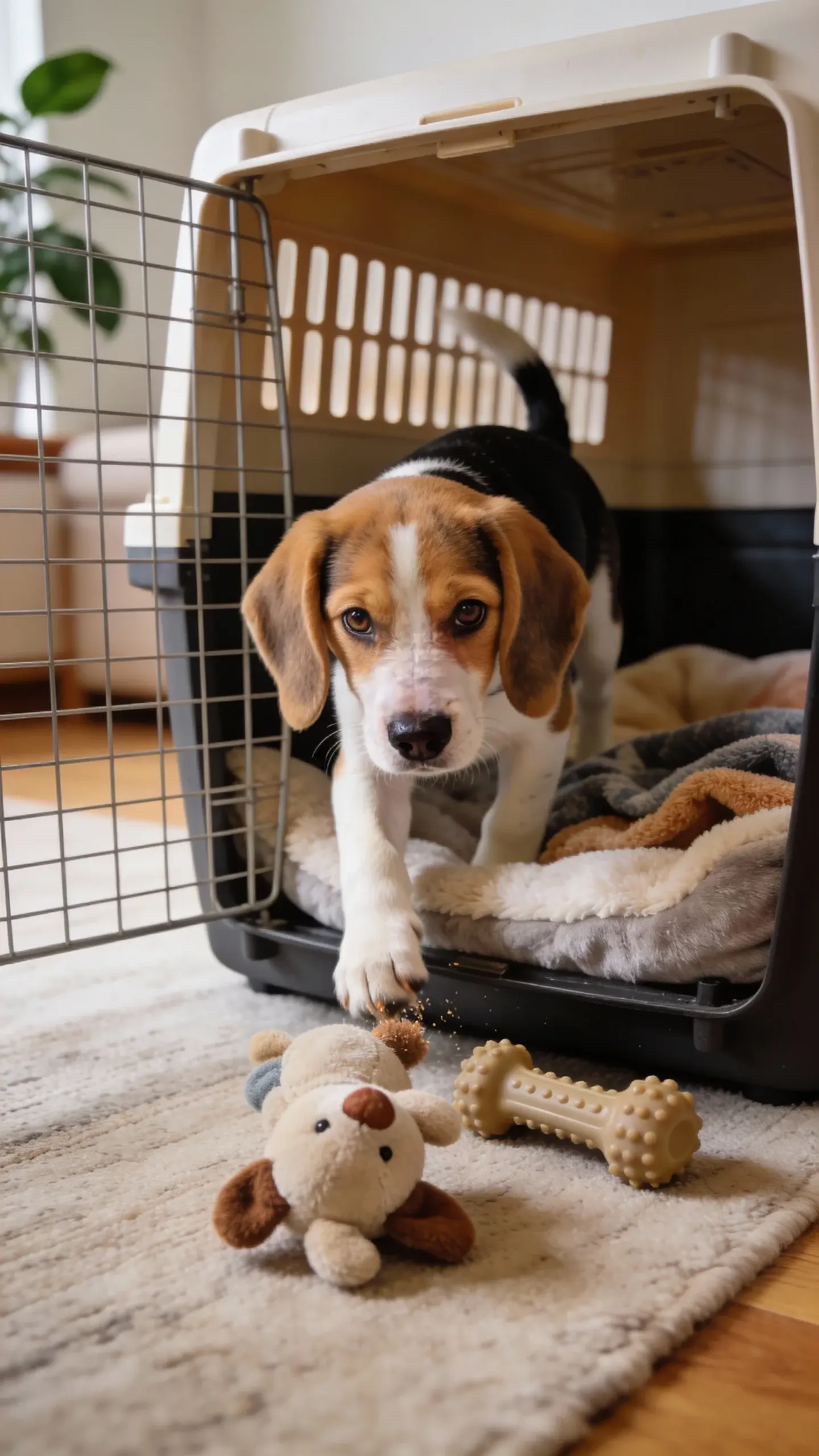
Beagles are smart, but their bladders are tiny. Use the crate as part of a predictable routine.
Simple Day Schedule
– Wake up → potty outside immediately
– Breakfast in crate → 10-20 minutes rest
– Outside again → play → short crate rest
– Repeat cycles throughout the day
Always take your puppy out after sleeping, eating, playing, or 30-60 minutes of wake time.
Nighttime Plan
– Crate in your bedroom helps with whining and bathroom cues
– Expect 1-2 potty breaks at night for young pups
– Keep it boring: out, potty, back to bed—no party vibes
Whining, Barking, and Other Drama
Beagle puppies love to narrate their feelings. You need to decode whether it’s real need or FOMO.
Is It a Potty Need or a Protest?
– Recently drank/ate? Just woke up? Take them out calmly.
– Continuous whining with escalating barks = likely needs a break.
– On-and-off whining while lying down = “I’m bored.” Wait for a brief pause, then reward quiet with a calm release.
Never open the crate during active whining if you know they don’t need potty. Wait for 2-3 seconds of silence, then open. That timing matters.
Separation Sensitivity vs. Normal Pup Fuss
– Normal: Short-lived whining, then settles with a chew.
– Concern: Panicky howling, drooling, attempts to escape, no settling after multiple sessions.
If that happens, slow down the training and consider a trainer. FYI, Beagles can lean clingy—early practice with short separations helps.
Common Mistakes to Avoid
– Skipping exercise: A wired Beagle in a crate = tiny tornado. Tire them out first.
– Going too fast: Build minutes, not hours.
– Using the crate only when leaving: Mix in “I’m home but you’re chilling” sessions.
– Leaving collars on: Remove tags that can snag. Safety first.
– Over-crating: Puppies need play, training, and snuggles. The crate helps, not replaces, good care.
Layer in Useful Cues and Routines
Teach a “Crate!” cue and a release word like “Free!” Practice 3-4 reps daily when you’re not leaving the house. Make it a fun little game.
Daily micro-routine:
- Potty break
- Play/training for 10-15 minutes
- Into crate with stuffed Kong
- Short rest while you answer emails or pretend to be productive
Add a calm soundtrack or white noise near the crate. It helps mask the neighborhood squirrel drama Beagles obsess over. IMO, a fan or soft classical playlist works wonders.
FAQs
How long can I crate my Beagle puppy during the day?
Use the age-in-months-plus-one rule. A 3-month-old can usually handle about 4 hours max during the day. Break it up with potty, play, and training. Overnight stretches go longer because metabolism slows.
My puppy screams in the crate—what do I do?
First, check needs: potty, water, comfort, temperature. If all good, wait for a few seconds of silence before letting them out. Shorten the session next time and build back up more slowly with higher-value chews. If panic persists, consult a trainer to rule out separation issues.
Should I cover the crate?
If your puppy settles better with less visual stimulation, a breathable cover can help. Leave the front uncovered at first so airflow stays good and your puppy doesn’t feel trapped. Test both ways and watch your puppy’s response.
Can two puppies share one crate?
Nope. Even best friends need their own bedrooms. Puppies can crowd, guard resources, or squabble. Crate them side by side instead so they still feel close.
When can I stop using the crate?
When your Beagle consistently avoids accidents, ignores cords and furniture, and chills when unsupervised—often around 12-18 months. Start giving short “freedom trials” in puppy-proofed spaces and build up gradually.
What if my Beagle hates the crate I bought?
Sometimes a different style makes a difference. Try a wire crate with a cover, or switch to plastic for a cozier feel. Refresh the association with new bedding, higher-value treats, and shorter sessions. The crate should scream “spa day,” not “ugh, again?”
Conclusion
Crate training a Beagle puppy boils down to timing, consistency, and positive vibes. Keep sessions short, pay the crate with great goodies, and match crate time with potty and play. You’ll end up with a pup who naps like a pro and gives you some freedom back. And yes, your furniture will thank you.