
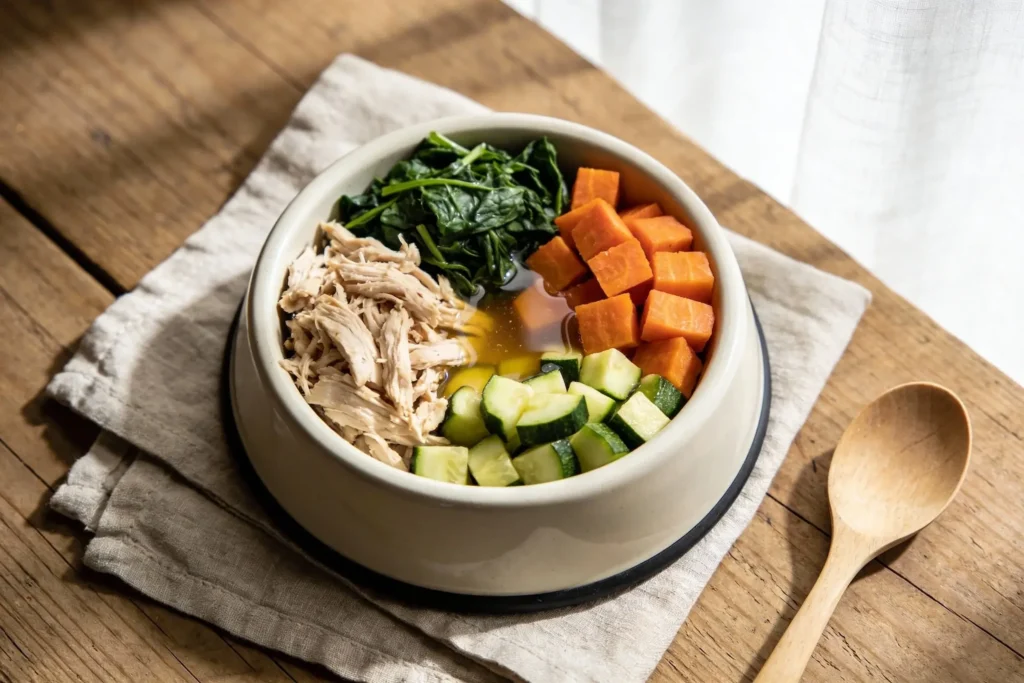
Your dog keeps scratching, you keep Googling, and mealtime feels like a minefield. Allergies stink, but homemade meals can help—without turning your kitchen into a science lab. Let’s make a simple, allergy-friendly chicken meal your dog will actually inhale, and you’ll feel good serving. Easy, customizable, and yes, totally doable on a weeknight.
Why Go Allergy-Friendly With Chicken?
Chicken gives you a lean protein your dog can digest easily. It’s affordable, cooks fast, and works beautifully with limited-ingredient recipes. If your dog reacts to common triggers like beef, dairy, soy, or wheat, a clean chicken base can calm the chaos.
But some dogs do react to chicken, FYI. If you’ve noticed itching or tummy trouble after chicken, swap it for turkey or pork. The method stays the same.
The Allergy Triggers We’re Avoiding
Let’s keep this clean and focused. Many commercial foods include stuff that bothers sensitive dogs. We’ll dodge the usual culprits:
- Grains with gluten like wheat, barley, rye
- Dairy (cheese, yogurt, milk)
- Soy and soy byproducts
- Eggs (can be a trigger for some)
- Artificial additives like colors, flavors, and some preservatives
We’ll also keep the recipe short on ingredients. Fewer moving parts = easier troubleshooting if something bugs your pup.
The Core Recipe: Allergy-Friendly Chicken Dog Meal
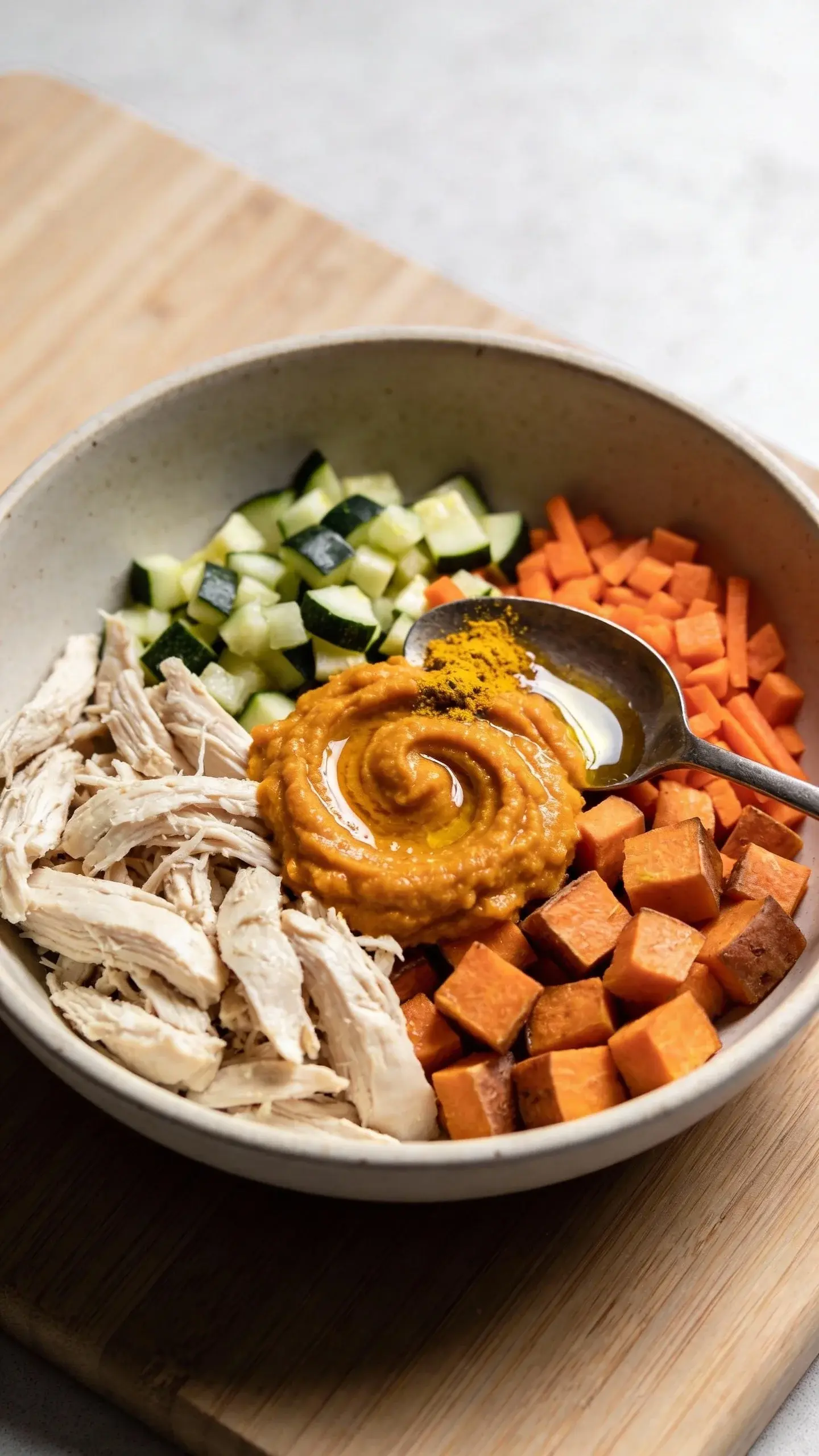
This recipe makes about 6 cups of food, enough for a small dog for several days or a medium dog for 2–3 days. Store in the fridge for up to 3 days or freeze in portions for 2–3 months.
Ingredients
- 2 lb skinless, boneless chicken (breasts or thighs; thighs add moisture)
- 1 cup white rice (or quinoa if your dog tolerates it; rice is usually gentler)
- 2 cups water or low-sodium chicken broth (no onion, no garlic)
- 1 cup finely chopped carrots
- 1/2 cup chopped zucchini (peeled if your dog is extra sensitive)
- 1/2 cup pumpkin puree (plain, not pie filling)
- 1 tbsp olive oil (or salmon oil if tolerated)
- Optional: 1/4 cup blueberries (fresh or frozen, no sugar)
- Vet-approved canine multivitamin/mineral + omega-3 supplement to balance nutrients
Cooking Instructions
- Rinse the rice until the water runs mostly clear. Add rice and water/broth to a pot. Bring to a boil, then simmer covered for 12–15 minutes until tender.
- Chop chicken into small, bite-sized pieces. Add to a large skillet with olive oil. Cook on medium heat for 8–10 minutes until fully cooked through. No seasoning—your dog doesn’t need your garlic obsession.
- Add carrots and zucchini to the skillet with a splash of water. Cover and steam for 5–7 minutes until soft.
- Combine rice, chicken, and veggies in a large bowl. Stir in pumpkin puree and blueberries (if using).
- Let cool to room temperature. Stir in supplements according to your vet’s dosage guidance.
Macros and Why They Work
– Protein from chicken helps maintain muscle and keeps your dog satisfied.
– Carbs from rice offer gentle energy and a happy gut.
– Fiber from pumpkin supports firm, consistent poop (we all want that).
– Healthy fats help skin and coat—huge for allergy-prone dogs.
IMO, this balance hits the sweet spot for sensitive stomachs while giving complete, real-food nourishment—assuming you add the right supplements.
How Much Should You Feed?
General rule of thumb for cooked, balanced homemade meals:
- Small dogs (10–20 lb): 3/4–1.5 cups per day
- Medium dogs (20–50 lb): 1.5–3 cups per day
- Large dogs (50–80 lb): 3–4.5 cups per day
Split into two meals. Adjust for activity level, age, and body condition. If your dog looks like a furry loaf of bread, scale back a bit. If ribs show, bump it up.
Transitioning Without Tummy Drama
– Day 1–2: 25% new, 75% old food
– Day 3–4: 50/50
– Day 5–6: 75% new
– Day 7: 100% new
If you see loose stools, slow down. It’s not a race.
Smart Substitutions (Because Allergies Aren’t One-Size-Fits-All)
Use these swaps if your dog reacts to any main ingredient or if you just want variety.
Protein Swaps
- Turkey (similar to chicken, very digestible)
- Pork loin (lean, gentle if trimmed)
- White fish like cod or pollock (great for ultra-sensitive pups)
Carb Swaps
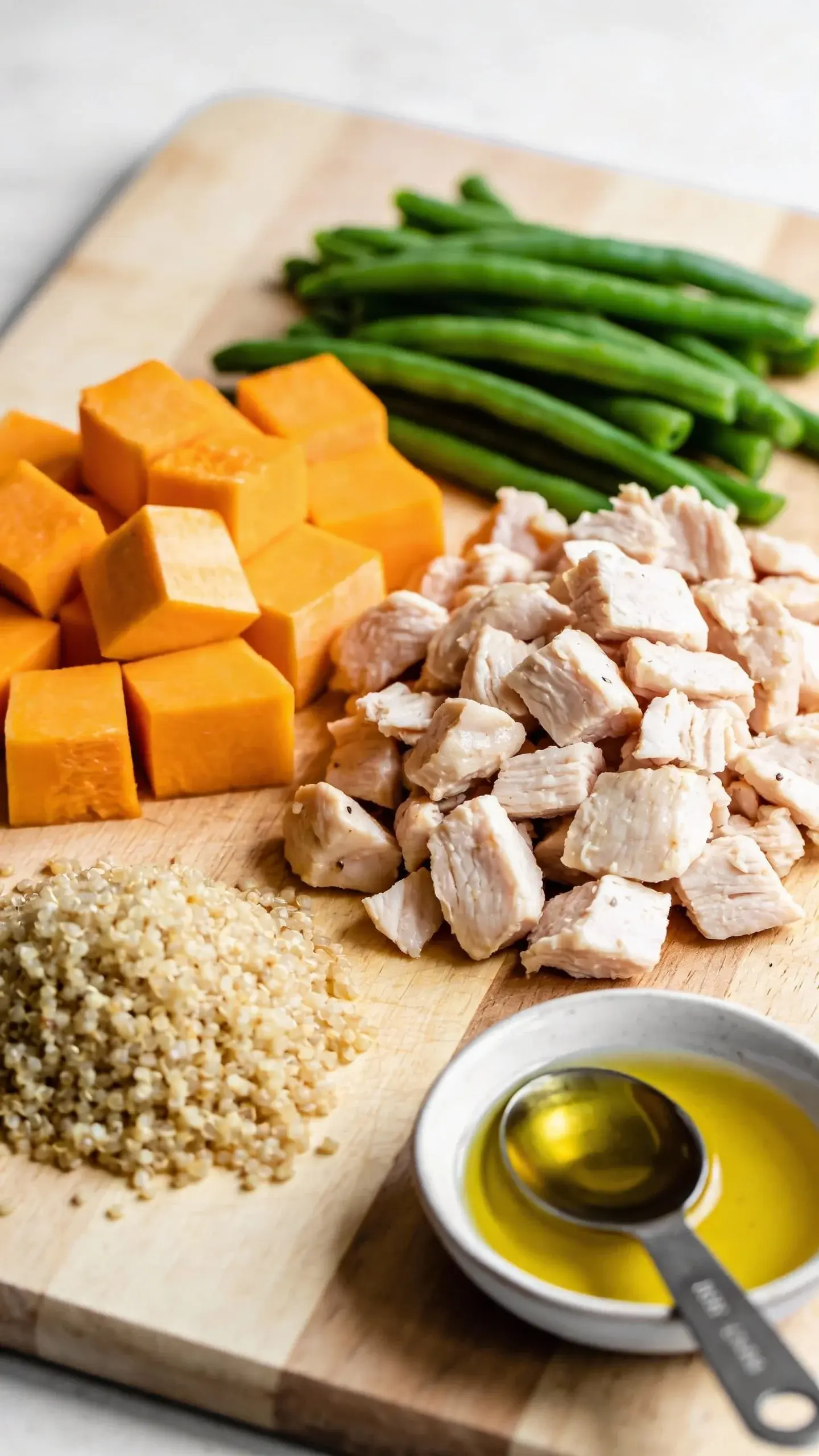
- Sweet potato (steam until very soft, mash in)
- Quinoa (rinse very well to remove saponins)
- Millet (another mild option)
Veggie Swaps
- Green beans (steamed, chopped)
- Spinach (briefly wilt, chop fine)
- Butternut squash (roast or steam, mash)
Absolute No-Go List
- No onions or garlic (toxic)
- No grapes or raisins (also toxic)
- No xylitol (sweetener—extremely toxic)
- No heavy seasoning, butter, or high salt
Make It Balanced: Don’t Skip Supplements
Homemade food rocks, but you still need to fill nutrient gaps. Most dogs need:
- Complete canine multivitamin/mineral specifically for home-prepared diets
- Omega-3s from fish oil or algae oil to support skin, coat, and inflammation control
- Calcium if you do not include bone—in many multivitamins but verify dosage
FYI: Human multivitamins don’t fit. Get a vet-recommended canine formula and dose by weight.
Batch Cooking and Storage Tips
You’re busy. So cook once, relax for days.
- Double the recipe and cool quickly—spread on a sheet pan before storing.
- Freeze in daily portions using freezer-safe containers or silicone molds.
- Label with date and protein so you can rotate flavors without guessing.
- Reheat gently with a splash of water until just warm. Don’t serve hot.
Signs It’s Working
– Less itching and paw licking
– Smaller, firmer stools (the dream)
– Shinier coat and fewer ear issues
If symptoms persist after 4–6 weeks, talk to your vet about a true elimination diet.
FAQ
How do I know if my dog is allergic to chicken?
Watch for consistent itching, red skin, ear gunk, paw chewing, or soft stools that flare after chicken. The only legit way to confirm is a strict elimination diet under vet guidance. If you suspect chicken, swap to turkey or fish and monitor for 4–6 weeks.
Can I use brown rice instead of white rice?
You can, but white rice is gentler for sensitive stomachs. Brown rice has more fiber and can cause gas or loose stools in some dogs. If you try brown rice, cook it very soft and introduce slowly.
Do I really need supplements?
Yes. Home-cooked meals alone rarely cover all micronutrients long-term. A canine multivitamin/mineral and omega-3s help prevent deficiencies that can show up as dull coat, low energy, or bone issues. Balance matters beyond the short term.
Is pumpkin safe every day?
In moderate amounts, yes. Pumpkin supports digestion and stool quality. Stick to 1–2 tablespoons per cup of food for most dogs. Too much can loosen stools—nobody wants that surprise.
Can I feed this to a puppy?
Only with your vet’s approval. Puppies have different calcium and energy needs, and they grow fast. If you want a homemade puppy plan, ask your vet for a recipe balanced specifically for growth.
What if my dog won’t eat vegetables?
Steam until very soft and chop tiny or puree into the mix. You can also use dog-safe veggie powders. Most dogs can’t resist when veggies soak up chicken juices—culinary trickery for the win.
Conclusion
You don’t need a culinary degree to cook an allergy-friendly chicken meal your dog will love. Keep the ingredients clean, cook them simply, and add the right supplements. Track your dog’s symptoms and tweak as needed—IMO, that’s the secret sauce. With a little prep and a lot of love, you’ll turn mealtime from “ugh” to “heck yes” in a week.