
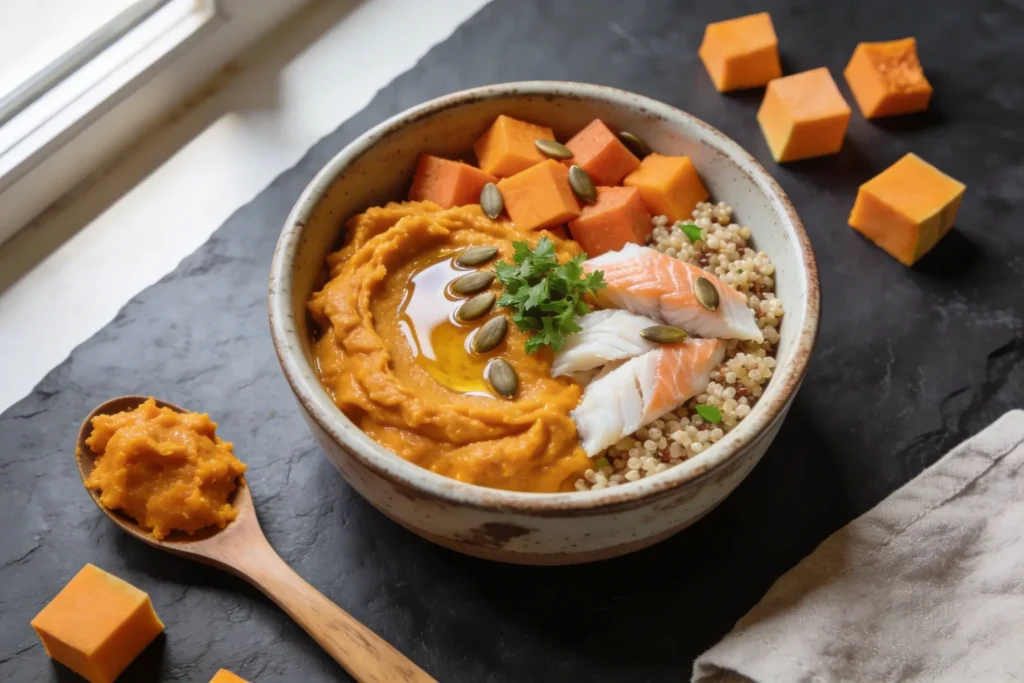
Pumpkin isn’t just for lattes and porch decor. It’s a gut-soothing, vitamin-packed hero for pups with sensitive stomachs or food allergies. If your dog gets itchy, gassy, or suspiciously dramatic after meals, pumpkin-based, allergy-friendly dog food can help. Let’s make a gentle, tasty recipe your dog will actually inhale (politely, of course).
Why Pumpkin Rocks for Sensitive Pups
Pumpkin brings fiber, vitamins A and C, and beta-carotene to the bowl. That combo supports digestion, eyes, and the immune system. It also helps firm up loose stools and ease constipation. Basically, pumpkin does PR for your dog’s gut.
Use plain, unsweetened pumpkin puree, not pumpkin pie filling. Pie filling hides sugar and spices your pup doesn’t need. Fresh steamed pumpkin works too if you want to flex your kitchen skills.
Common Allergens to Dodge (and What to Use Instead)
Lots of pups react to the usual suspects. If you’re not sure what triggers your dog, start with a short list of safe, simple ingredients. Fewer variables = fewer “surprises.”
Often problematic:
- Chicken and beef
- Dairy (cheese, yogurt, milk)
- Wheat and other gluten grains
- Soy and corn
- Eggs (for some dogs)
Usually safer alternatives (IMO, great starting points):
- Protein: turkey, white fish (cod, pollock), duck, or rabbit
- Carbs: pumpkin, sweet potato, quinoa, oats (gluten-free, if needed)
- Fats: olive oil, coconut oil, or fish oil
- Flavor/boosters: parsley, turmeric (tiny pinch), blueberries
Check with Your Vet, FYI
Allergy-friendly still needs to be balanced. If you plan to feed homemade long-term, ask your vet or a veterinary nutritionist about supplements (calcium, omegas, trace minerals). For short-term tummy resets, this simple mix works well without overthinking.
Recipe #1: Gentle Pumpkin & Turkey Dog Food (Allergy-Friendly)
This soft, scoopable meal works for sensitive stomachs and picky eaters. Makes about 6 cups, roughly 6–8 meals for a small dog or 3–4 for a medium dog, depending on your vet’s portion guidance.
Ingredients:
- 1 lb ground turkey (preferably 93% lean, no seasoning)
- 2 cups plain pumpkin puree (unsweetened)
- 1 cup cooked quinoa (rinsed before cooking)
- 1 small zucchini, finely diced (optional)
- 2 tbsp olive oil or 1 tbsp fish oil (don’t combine; pick one)
- 1/4 tsp turmeric (optional)
- Water or low-sodium bone broth (allergen-free), as needed
Instructions:
- Cook the quinoa: Rinse 1/2 cup dry quinoa until water runs clear. Simmer in 1 cup water until fluffy, about 15 minutes. Cool it.
- Brown the turkey: In a skillet over medium heat, cook the ground turkey until no pink remains. Break it up small. Drain excess fat if needed.
- Soften the veg: If using zucchini, sauté it with the turkey for 2–3 minutes until tender.
- Combine: In a large bowl, mix turkey, pumpkin puree, and cooked quinoa. Add oil and turmeric. Stir well. Add a splash of water or broth for a soft, spoonable texture.
- Cool completely: Let it hit room temp before serving. Dogs pretend they like lava-temp food. They don’t.
- Serve: Start with small portions to test tolerance.
Storage:
- Fridge: Up to 4 days in an airtight container.
- Freezer: Up to 2 months. Freeze in portioned containers or silicone trays.
Portion Guide (Quick and Dirty)
Every dog’s different, but a ballpark: 1/4 to 1/3 cup per 10 lbs body weight per meal, twice daily. Monitor weight and adjust. When in doubt, ask your vet.
Recipe #2: Crunchy Pumpkin Sweet Potato Treats (Grain-Free, Egg-Free Option)
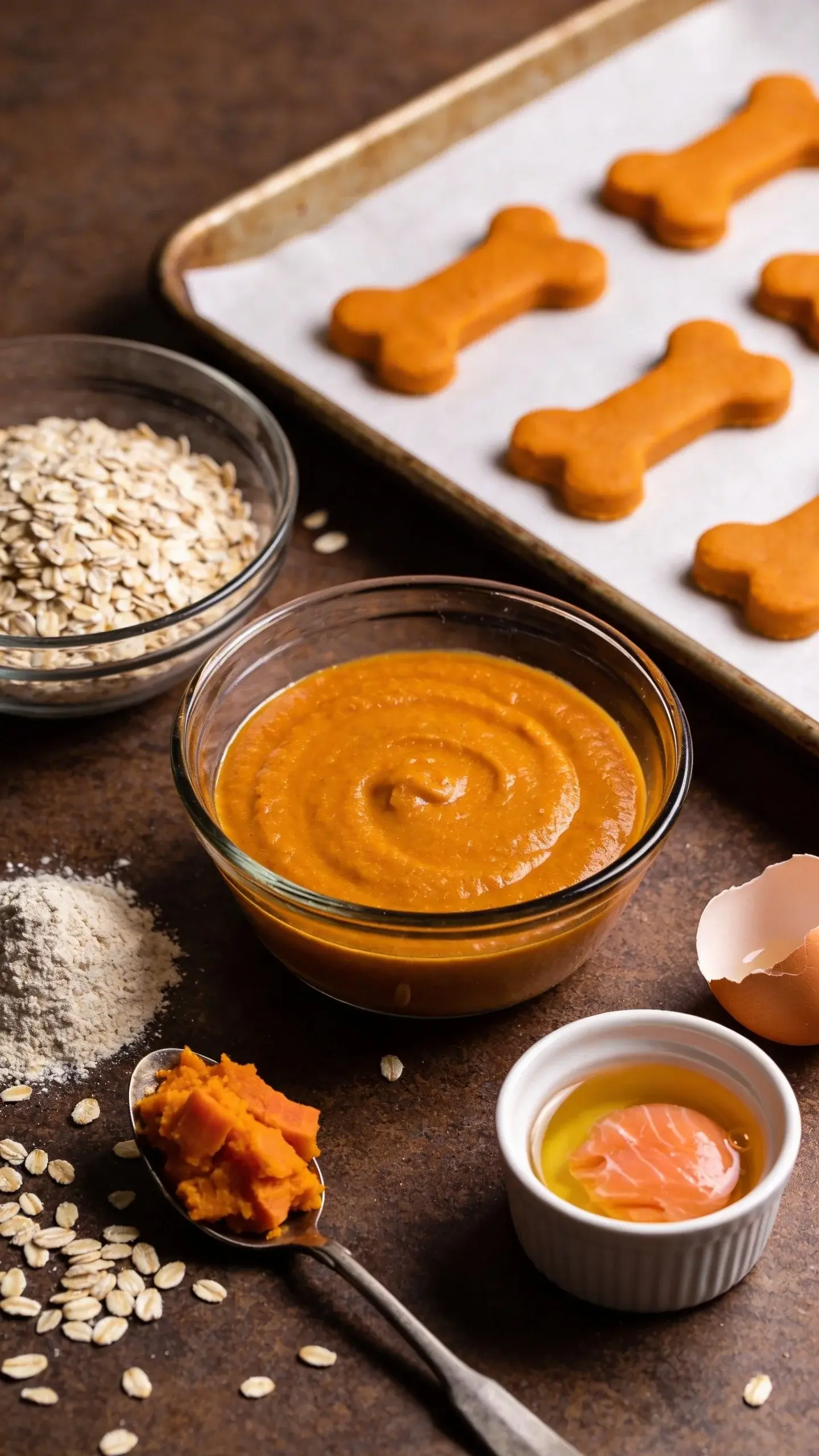
These smell like fall and break easily into training bits. Dogs think you’re a genius. You are.
Ingredients:
- 1 cup plain pumpkin puree
- 1 cup mashed cooked sweet potato (no skin, no butter)
- 2–2.5 cups chickpea flour (or oat flour if tolerated)
- 2 tbsp coconut oil, melted
- 1/2 tsp cinnamon (Ceylon preferred; optional)
Instructions:
- Preheat oven: 325°F (165°C). Line a baking sheet with parchment.
- Mix wet: Stir pumpkin, sweet potato, and coconut oil until smooth.
- Add dry: Start with 2 cups flour. Mix until a dough forms. Add more flour as needed for a non-sticky, rollable dough.
- Roll and cut: Roll to 1/4-inch thick on a floured surface (use the same flour). Cut into small squares or use cute bone cutters if you feel fancy.
- Bake: 25–35 minutes until firm and lightly golden. For extra crunch, turn off the oven and let them dry inside for 30 minutes.
- Cool completely before treating your sous-chef.
Storage:
- Counter: 3–4 days in an airtight jar (if extra dry).
- Fridge: Up to 10 days.
- Freezer: Up to 2 months. Thaw a handful at a time.
How to Do a Simple Food Trial Without Losing Your Mind
Elimination diets sound scary. You can keep it simple and still learn a lot. The goal: feed a short list of safe foods consistently and watch for changes.
Steps:
- Pick one protein and one carb source your dog hasn’t eaten much (e.g., turkey + pumpkin).
- Feed only that combo for 2–3 weeks. No table scraps, no mystery treats, no “just one bite.”
- Track symptoms: itching, paw licking, ear gunk, gas, stool quality, energy.
- If symptoms improve, reintroduce one new ingredient at a time every 5–7 days. Watch for a flare.
Red Flags That Mean Stop and Call the Vet
- Hives, facial swelling, or trouble breathing
- Bloody stool or persistent vomiting
- Severe lethargy or refusal to eat more than 24 hours
Make It Complete and Balanced (Long-Term Tips)
Homemade food can absolutely work long-term, but balance matters. Short-term tummy resets? Fine. Long-term main meals? Add the missing pieces.
Consider:
- Calcium source: ground eggshell (if no egg allergy) or a vet-approved calcium supplement
- Omega-3s: fish oil (EPA/DHA) for skin, joints, and inflammation
- Trace minerals and vitamins: a canine multivitamin/mineral made for homemade diets
IMO, the easiest route: rotate safe proteins and use a veterinary-formulated supplement blend built for homemade feeders. Less math, more tail wags.
Troubleshooting: Texture, Taste, and Picky Judges
Dog turning up their nose? Shocking. Try these hacks:
- Warm the food slightly and add a splash of warm water or broth.
- Mix in a teaspoon of canned sardines (in water) or a tiny drizzle of fish oil.
- Adjust texture: more pumpkin for softer, more quinoa for firmer.
- Use tiny portions on top of regular safe kibble as a topper while transitioning.
FAQ
How much pumpkin can my dog eat daily?
Most dogs do well with 1 teaspoon per 10 lbs body weight per meal to start. Too much fiber can cause loose stools, so start small and adjust. Watch the poop (you already do).
Can I use canned pumpkin pie filling instead of puree?
Nope. Pie filling includes sugar and spices like nutmeg that dogs don’t need and may not tolerate. Always use plain, unsweetened pumpkin puree or fresh cooked pumpkin.
What if my dog can’t have turkey either?
Swap in a novel protein your dog hasn’t reacted to: white fish, duck, rabbit, or venison often work. Keep the rest of the recipe the same and test slowly.
Do I need supplements if I feed this every day?
For long-term feeding, yes. Add calcium, omega-3s, and a canine multivitamin/mineral to cover gaps. Short-term (a week or two) during a tummy reset usually doesn’t require full supplementation, FYI.
Can I make this recipe in an Instant Pot or slow cooker?
Yes. Brown the turkey first for texture, then combine with pumpkin and cooked quinoa at the end. If you toss everything in at once, it can get mushy—but dogs don’t mind mush.
How do I transition from kibble to homemade without chaos?
Mix 25% homemade with 75% kibble for 2–3 days, then 50/50 for a few days, then 75/25, then full homemade. Slow and steady keeps tummies happy and carpets clean.
Wrap-Up: Simple, Soothing, and Actually Tasty
Pumpkin-based dog food and treats give sensitive pups a break while keeping meals fun and flavorful. Start with clean, low-allergen ingredients, keep portions reasonable, and track how your dog feels. If things go well, build toward a balanced, long-term plan with the right supplements. Your dog gets comfort food; you get fewer midnight itch-fests. Win-win.