

You want to make your dog a hearty beef dinner without any grains getting in the way? Love it. Homemade dog food can be simple, tasty, and easier on sensitive tummies. Plus, you control every ingredient—no mystery fillers, no weird byproducts. Let’s build a bowl that actually makes tails wag.
Why Go Grain-Free (and When You Shouldn’t)
Grain-free isn’t a magic fix for every dog, but it helps if your pup struggles with itchy skin, gassy belly, or recurring ear gunk. Some dogs react to wheat, corn, or soy—pulling grains can calm things down.
That said, grain-free doesn’t mean carb-free. Dogs still need energy. We just swap grains for dog-friendly veggies. And FYI: if your dog has heart concerns or you plan on long-term grain-free feeding, chat with your vet to keep things balanced.
What a Balanced Beef Bowl Needs
Homemade doesn’t equal “wing it.” We aim for protein, fat, and the right micronutrients. Here’s the base framework:
- Protein: Lean ground beef, stewing beef, or chuck roast.
- Healthy carbs/fiber: Sweet potato, pumpkin, butternut squash.
- Low-oxalate veggies: Green beans, zucchini, spinach (cooked), carrots.
- Calcium: Essential to balance phosphorus in meat. Use a canine-safe calcium source.
- Omega-3s: Fish oil or sardines for skin, coat, and joints.
- Trace nutrients: A canine multivitamin/mineral helps cover gaps.
About Calcium (Super Important)
Meat packs phosphorus. Dogs need calcium to balance it or their body pulls calcium from bones—hard pass. Use:
- Eggshell powder: About 1 teaspoon per pound (450 g) of boneless meat.
- Commercial calcium supplement: Follow the label for canine dosing.
IMO, eggshell powder is easy and cheap—bake shells at 300°F/150°C for 10 minutes, cool, then grind to a fine powder.
The Core Recipe: Beef & Sweet Potato Grain-Free Dog Food
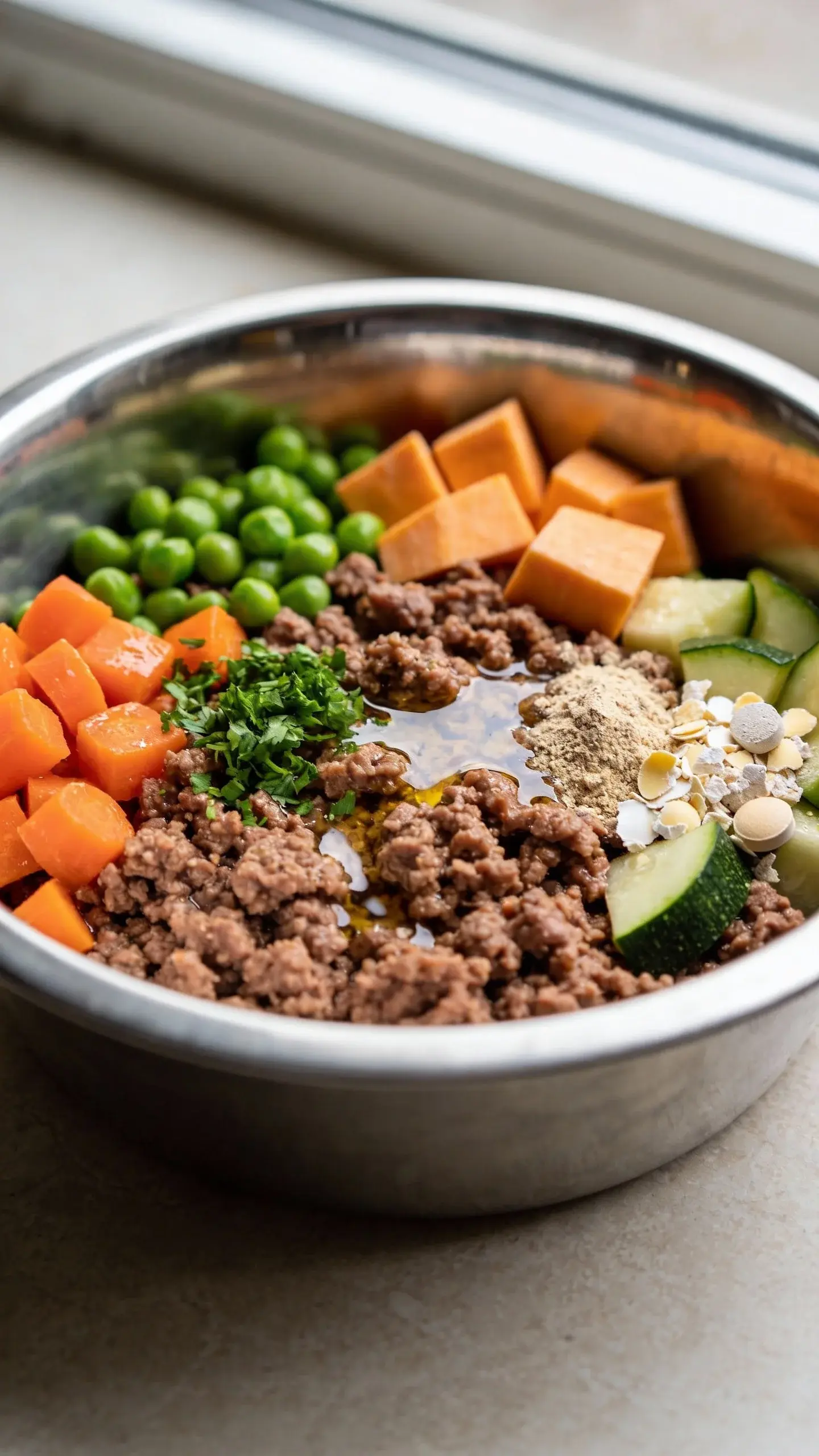
This recipe makes roughly 8 cups of food (about 6–8 dog meals for a 25–30 lb dog, depending on activity). Scale up or down as needed.
Ingredients
- 2 lb (900 g) lean ground beef (90% lean or better)
- 2 medium sweet potatoes (about 1.5 lb / 680 g), peeled and diced
- 1 cup green beans, chopped
- 1 cup carrots, diced
- 1 small zucchini, diced
- 1 tablespoon olive oil or coconut oil
- 1.5 teaspoons eggshell powder (or equivalent calcium per 2 lb meat)
- 1–2 teaspoons fish oil (or 1 small can sardines in water, drained)
- Optional: 1/2 cup plain pumpkin puree for extra fiber
- Optional: Canine multivitamin/mineral as directed
Instructions
- Cook the sweet potatoes: Steam or boil until fork-tender, about 10–12 minutes. Drain well.
- Sauté the veggies: In a large skillet or pot, warm the oil over medium heat. Add carrots, green beans, and zucchini. Cook 5–7 minutes until tender. No browning needed.
- Brown the beef: In the same pot, push veggies aside and add ground beef. Cook thoroughly, breaking it up. Drain excess fat if needed.
- Combine: Add cooked sweet potatoes and pumpkin (if using). Stir gently to keep some texture.
- Cool and fortify: Let the mixture cool to room temp. Stir in eggshell powder, fish oil or sardines, and your canine multivitamin (if using). Never add supplements to very hot food.
- Portion: Divide into daily servings and refrigerate up to 4 days or freeze up to 2 months.
Serving Guide (Ballpark)
Every dog is different, but a simple starting point:
- Small dogs (10–15 lb): 3/4–1.25 cups per day, split into 2 meals
- Medium dogs (20–40 lb): 1.5–3 cups per day, split into 2 meals
- Large dogs (50–75 lb): 3–5 cups per day, split into 2 meals
Adjust based on body condition. If ribs vanish under fluff, feed less. If ribs look front-row obvious, feed more.
Variations Your Dog Will Actually Love
Boredom-proof the menu while staying balanced.
Beef & Pumpkin “Gut-Soother”
- Swap sweet potato for 1 cup pumpkin puree + 1 cup butternut squash.
- Add 1 teaspoon ginger powder for mild tummy support.
- Keep the calcium and fish oil the same.
Beef, Sardines, and Spinach
- Add 1 small can sardines in water (drained) to the base recipe.
- Stir in 1 cup cooked chopped spinach at the end.
- Great omega-3 boost and iron. Don’t skip the calcium.
Low-Fat Version
- Use 95–97% lean beef or swap half the beef for extra-lean turkey.
- Increase veggies by 1 cup to keep volume satisfying.
Hidden Must-Knows for Safe Homemade Feeding
Let’s keep your pup thriving, not just surviving.
- Always cook beef fully. No tartare for dogs. Cook to no pink.
- Balance calcium every time. Missing calcium long-term causes real problems.
- Don’t overdo liver. It’s nutrient-dense. If adding, keep it to 5% of the total recipe and cook it.
- Go slow with transitions. Mix 25% new food with 75% old for 2–3 days, then 50/50, then 75/25, then 100% by day 7–10.
- Watch stools and itchiness. They tell you everything. Firmer stool? Add a splash of warm water. Loose stool? Cut back on rich fats and try more pumpkin.
- Store smart. Refrigerate portions you’ll use in 3–4 days. Freeze the rest flat in zip bags for quick thawing.
Ingredient Swaps That Work (and Ones That Don’t)
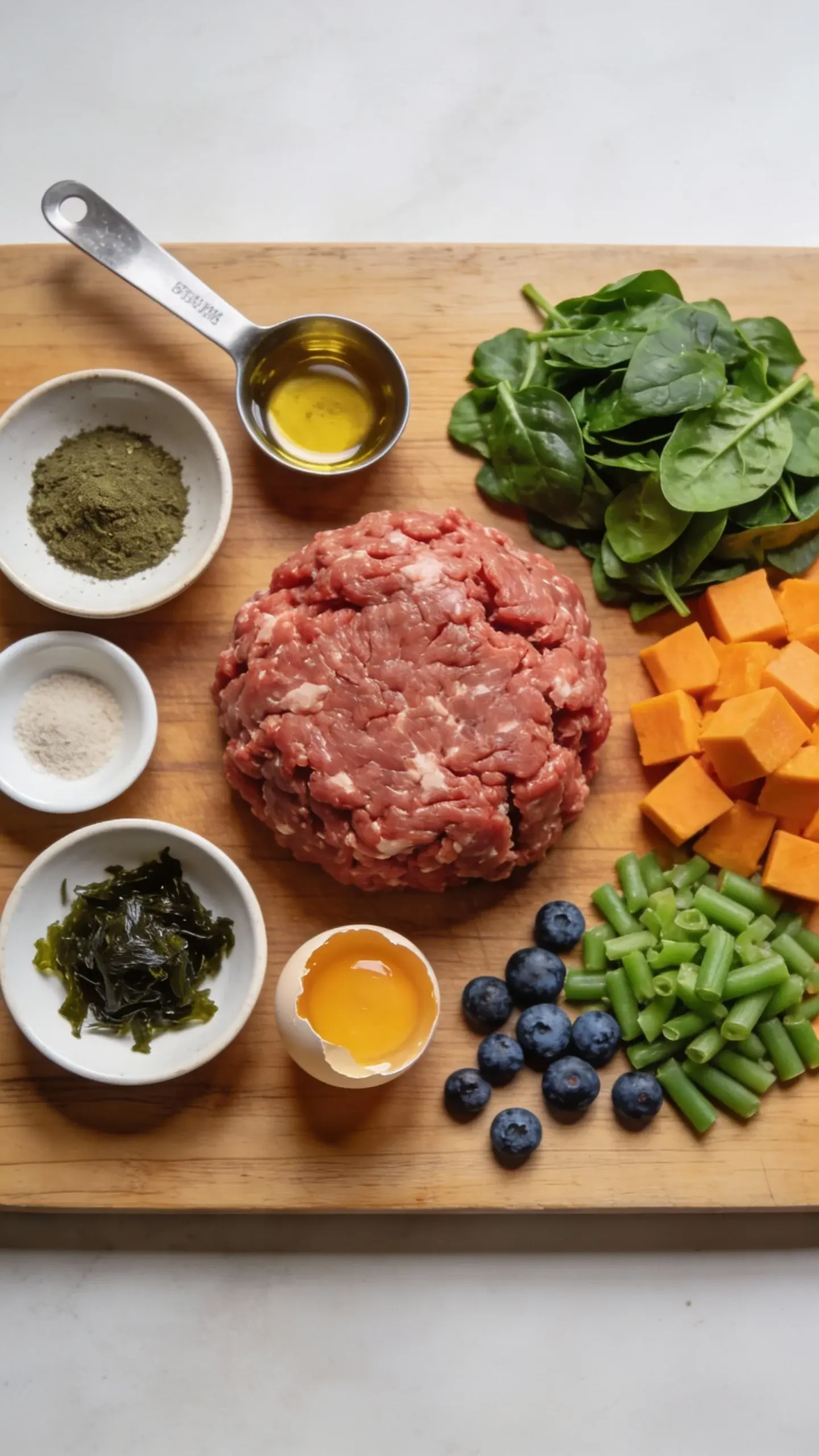
Because the store was out of zucchini again, of course.
- Swap sweet potato with: butternut squash or acorn squash.
- Swap green beans with: broccoli florets (lightly cooked) or peas (if tolerated).
- Swap olive oil with: salmon oil or flaxseed oil (add after cooking).
- Avoid: onions, garlic, leeks, raisins, grapes, and xylitol (toxic). Also avoid heavy seasoning—no salt bombs.
Protein Notes
You can rotate proteins if beef doesn’t agree with your dog, but for this article we keep beef as the star. If you rotate later, keep calcium and omega-3s in place, and re-check portions.
Sample Weekly Plan (For a 30 lb Moderately Active Dog)
FYI this is a sample, not a prescription. Use it as a template.
- Daily amount: About 2–2.5 cups split into two meals.
- Mon–Tue: Base beef & sweet potato recipe.
- Wed: Beef & pumpkin variation.
- Thu: Base recipe with sardines added.
- Fri–Sat: Base recipe, low-fat version if needed.
- Sun: Light day with extra green beans if weight control is a goal.
Add your dog’s usual probiotics or joint supplements at mealtime, not during cooking.
FAQ
How do I know if my dog gets enough calcium?
Use a consistent calcium source. For every pound of boneless meat, add about 1 teaspoon eggshell powder or a canine calcium supplement per label. Signs of deficiency can be subtle at first—don’t skip it. When in doubt, run your recipe by your vet or a vet nutritionist.
Can I serve it raw?
You can explore raw feeding, but it needs stricter hygiene, balanced bones or precise calcium, and careful sourcing. This guide focuses on cooked because it’s simpler, safer, and more forgiving. If raw intrigues you, consult a board-certified veterinary nutritionist to avoid gaps.
Do I still need a multivitamin?
Short-term, probably fine without if you include variety and fish oil. Long-term, a canine-formulated multivitamin/mineral helps cover trace nutrients like vitamin D, iodine, manganese, and zinc. Human multis don’t translate well—dose and forms differ.
What if my dog has allergies?
Start with a simple version: beef + sweet potato + one green veg. Feed that for 2–3 weeks. If your dog improves, add one new ingredient at a time every 5–7 days. If symptoms flare, you’ll know the culprit. Keep notes—your future self will thank you.
How do I adjust for weight loss or gain?
For weight loss, cut portions by about 10% and bump low-cal veggies (green beans, zucchini). For weight gain, add 10% more food and a teaspoon of healthy fat per meal. Re-check body condition every 2 weeks. Ribs should be easy to feel, not see.
Can I add rice or oats if I’m not strictly grain-free?
Sure—if your dog tolerates grains, add a cooked carb like rice or oats for budget and calories. But this article sticks to grain-free on purpose, so consider that a different recipe day.
Closing Thoughts
Homemade grain-free beef dog food doesn’t need a culinary degree or a second mortgage. Keep it simple: quality beef, starchy veg, a rainbow of greens, reliable calcium, and omega-3s. Transition slowly, watch your dog, and tweak as you go. And IMO, the best part is obvious—when the bowl hits the floor and your dog acts like you’re a Michelin-star chef.