
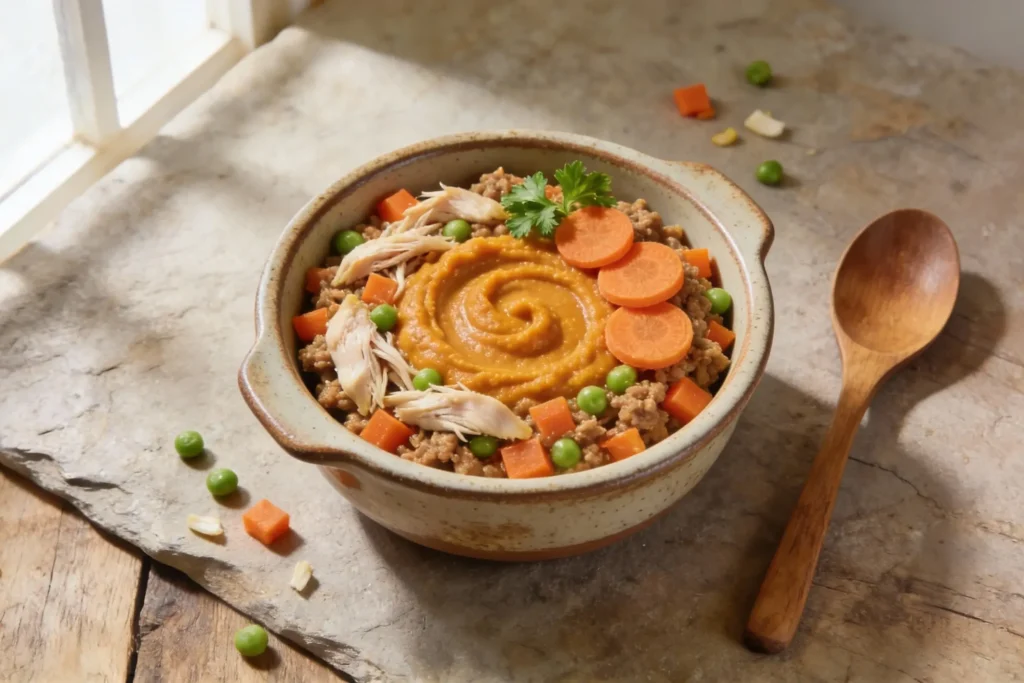
You want your dog to eat better, live longer, and stop side-eyeing those bland kibble bits, right? Great news: chicken and carrot dog food hits the sweet spot between simple, nutritious, and drool-level delicious. It’s budget-friendly, easy to batch-cook, and you control every ingredient. Ready to make your pup’s bowl the best part of their day?
Why Chicken and Carrots Work So Well
Chicken brings lean protein that supports strong muscles and keeps your dog energized. Carrots add crunch, sweetness, and loads of beta-carotene for eye and skin health. Together, they make a balanced base that most dogs tolerate well.
Bonus perks:
- Carrots are low-calorie chews with fiber for healthy digestion.
- Chicken thighs offer healthy fats and better flavor than breasts.
- Both ingredients are easy to find and easy on the wallet.
FYI: You still need to think balance. Dogs thrive on protein, healthy fats, and carbs, plus vitamins and minerals. We’ll cover how to round out the meal so it’s more than just chicken and carrots.
What You’ll Need (Ingredients & Tools)
Core ingredients for about 8 cups (8–10 dog servings, depending on size):
- 2 lb boneless, skinless chicken thighs (or mix thighs and breasts)
- 2 cups carrots, finely diced or shredded
- 1 cup peas (frozen, no salt added)
- 1 cup pumpkin puree (plain, not pie filling) or 1 cup sweet potato, mashed
- 1 cup brown rice or quinoa (cooked)
- 2 tbsp olive oil or salmon oil
- 2 large eggs (optional, for extra protein and nutrients)
- 4 cups low-sodium water or homemade no-salt chicken broth
- Dog-safe supplement: a complete canine multivitamin/mineral or calcium source (e.g., ground eggshell powder)
Tools:
- Large pot or Dutch oven (or an Instant Pot/slow cooker)
- Colander, knife, cutting board
- Storage containers or freezer-safe bags
Step-by-Step: Easy Chicken & Carrot Dog Food

- Prep the chicken. Trim visible fat if you prefer leaner meals. Cut into small bite-size pieces for your dog’s size.
- Cook the grains. Prepare brown rice or quinoa according to package directions. Set aside.
- Simmer the chicken. Add chicken and water/broth to your pot. Bring to a boil, then reduce to a gentle simmer for 12–15 minutes until fully cooked. Skim any foam.
- Add the veggies. Stir in carrots and peas. Simmer 8–10 more minutes until tender.
- Optional eggs. Crack eggs into the hot mixture and stir to gently cook them into ribbons—like egg drop soup for dogs.
- Stir in pumpkin/sweet potato for fiber and extra nutrients. Mix well.
- Finish with fats. Remove from heat and stir in olive or salmon oil.
- Cool completely. Let it cool to room temp. Dogs appreciate not burning their tongues (and so do we).
- Add supplements. Once cool, mix in your dog-safe multivitamin/mineral per label directions. If using calcium, see below.
How to Add Calcium Safely
Dogs need calcium for bones and nerve function. If your multivitamin doesn’t include calcium, use one of these:
- Ground eggshell powder: Rinse and bake eggshells at 300°F for 10 minutes, grind to a fine powder. Add about 1 tsp per pound of cooked food.
- Commercial canine calcium: Follow the package dosage.
IMO, eggshell powder is cheap, easy, and does the job.
Nutritional Balance: Make It Complete(ish)
Homemade dog food can be awesome, but it needs planning. Here’s how to make your chicken and carrot mix more balanced:
- Protein: Chicken and eggs cover this. Aim for 35–45% of calories from protein for most adult dogs.
- Fat: Add salmon oil or sardines for omega-3s. Healthy fat supports skin, coat, and joints.
- Carbs & Fiber: Brown rice or quinoa + pumpkin/sweet potato keep digestion smooth.
- Vitamins & Minerals: Use a canine-specific supplement to cover zinc, iodine, copper, vitamin D, etc.
- Calcium-to-phosphorus: Chicken is high in phosphorus. Balance it with a calcium source as noted above.
Portion Guide (General)
Every dog is different. Start with:
- Adult dogs: 2–3% of ideal body weight per day in food.
- Active dogs or underweight: 3–4%.
- Less active or overweight: 1.5–2%.
Example: A 20-lb dog might eat about 6–8 oz total per day, split into two meals. Adjust weekly based on body condition—can you feel ribs easily without seeing them? You’re close.
Ingredient Swaps and Add-Ins
Want variety? Your dog does too, even if they act thrilled every time.
- Protein: Turkey, lean beef, or white fish. Cook thoroughly and drain excess fat if needed.
- Veggies: Green beans, zucchini, spinach (chopped, lightly cooked). Skip onions, garlic, leeks—hard no.
- Carbs: Oats, barley, or more sweet potato instead of rice.
- Flavor boosters: A tiny pinch of turmeric or parsley. No salt, no seasoning blends.
What to Avoid (Seriously)
- Onions, garlic, chives, leeks
- Grapes/raisins, xylitol, chocolate, alcohol, caffeine
- Too much fat at once (hello, pancreatitis)
- Cooked bones of any kind
- Excess salt or seasoning
Storage, Serving, and Safety

Storage:
- Refrigerate in airtight containers for up to 3–4 days.
- Freeze portions for up to 2–3 months. Label with date because future-you will forget.
Serving:
- Thaw in the fridge overnight. Serve at room temp or slightly warmed.
- Introduce gradually over 5–7 days to avoid tummy drama: mix 25% homemade with 75% current food, then increase.
Food safety tips:
- Cook chicken to an internal temp of 165°F.
- Wash hands and utensils that touched raw poultry.
- When in doubt, toss it out. Dogs are tough, but foodborne illness is not fun.
Sample One-Pot Recipe Card
Chicken & Carrot Power Bowl (approx. 8 cups)
- 2 lb boneless skinless chicken thighs, chopped
- 2 cups carrots, finely diced
- 1 cup peas, frozen
- 1 cup pumpkin puree
- 1 cup cooked brown rice
- 2 tbsp salmon oil (or olive oil)
- 2 eggs (optional)
- 4 cups low-sodium water or no-salt broth
- Canine multivitamin and calcium per label
Method:
- Simmer chicken in water/broth until done, 12–15 minutes.
- Add carrots and peas; cook 8–10 minutes.
- Stir in pumpkin and cooked rice.
- Add eggs, stir to cook, then finish with oil.
- Cool, mix in supplements, portion, and store.
FAQ
Can I feed this to my puppy?
Yes, but adjust for growth needs. Puppies require higher protein, fat, and calcium. Use a puppy-specific multivitamin/mineral and talk to your vet to get portioning right. Puppies also eat 3–4 times daily.
What if my dog has a sensitive stomach?
Keep it simple. Use chicken, carrots, pumpkin, and rice only at first. Skip peas and oils the first few days, then add slowly. If diarrhea lasts more than 48 hours or you see vomiting, call your vet.
Is raw chicken okay instead?
I recommend cooked chicken for safety. Raw feeding can work for some, but it carries higher risk of bacterial contamination for both dogs and humans. If you go raw, consult a veterinary nutritionist for a balanced plan.
How do I know if the meal is balanced?
Use a canine multivitamin/mineral and calcium, include a healthy fat source, and rotate proteins/veggies. For true precision, get a formulation from a veterinary nutritionist or use a reputable recipe tool designed for dogs. FYI, guesswork often misses key micronutrients.
Can I use chicken with skin?
You can, but it raises the fat significantly. For dogs prone to pancreatitis or weight gain, stick with skinless thighs/breasts and add controlled amounts of salmon oil for healthy fats.
How much should I feed per day?
Start with 2–3% of your dog’s ideal body weight and adjust weekly. Watch body condition and energy levels. If your dog acts hungry but gains weight, the eyes are lying—cut back a little.
Wrapping It Up
Homemade chicken and carrot dog food gives you control, quality, and a very happy taste-tester. Keep it balanced with a supplement and calcium, rotate ingredients for variety, and portion based on your dog’s needs. Your dog gets nutrients that actually taste good, and you get that smug “I made this” glow. Win-win, IMO.