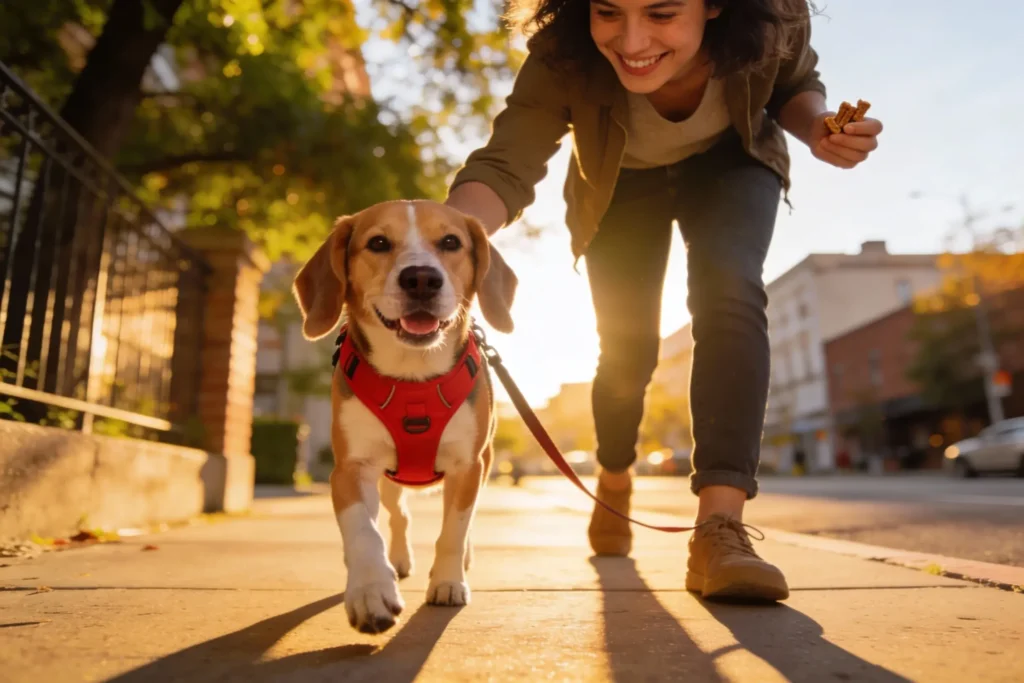
Your beagle drags you down the sidewalk like a sled in a snowstorm, right? Classic beagle behavior. They’re scent-driven, enthusiastic, and totally convinced they’re the lead dog. Good news: you can teach polite leash manners without killing their spirit. You just need the right gear, a plan, and a little patience. Okay, maybe a lot of patience—but you’ve got this.
Why Beagles Pull (And Why It’s Not Personal)
Beagles follow their noses. That’s their superpower and also your daily workout. A squirrel zips across the street, a hot dog wrapper rustles, and boom—your beagle turns into a tiny tow truck.
They also get rewarded for pulling—without you realizing it. When they pull toward a smell and you follow, they learn that pulling works. That’s how bad habits stick. But the fix? Teach them that staying near you gets the rewards instead.
Gear That Helps (Without Being Overkill)
The right tool won’t train your beagle for you, but it can make training safer and faster. Think “assist,” not “shortcut.”
- No-pull front-clip harness: It redirects pulling slightly to the side, which gives you better control. Great for beagles because they’re small but stubborn.
- Fixed-length leash (4–6 ft): Ditch the retractable for training. Consistent length makes expectations clearer.
- High-value treats: Use tiny, smelly rewards—chicken, cheese, or soft training treats. Dry kibble won’t cut it outside with a thousand smells around.
- Treat pouch and clicker (optional): If you like clicker training, it adds clarity. IMO, it’s handy but not mandatory.
Your Core Strategy: Reward Proximity, Not Pulling
Let’s keep it simple. Your beagle learns two rules: pulling slows the fun, and walking near you speeds it up.
The Foundation: The “Let’s Go” Game
You’ll teach your beagle that being by your side turns on the jackpot.
- Start indoors or in your yard. Fewer distractions mean faster learning.
- Mark and reward position. When your beagle stands or walks at your side (left or right—your choice), say “Yes!” and feed a treat at your knee or hip level.
- Take one step, then reward. Gradually add steps—2, 3, 5—while paying for that close position.
- Add your cue. Say “Let’s go,” step forward, reward when they follow and stay near.
Practice for 3–5 minutes, a couple times a day. Keep it short and successful.
The Rule on Walks: No Pulling Pays
On real walks, you’ll use two smart moves: stopping and changing direction.
- When your beagle pulls, you stop. No yanking, no lecturing. Just become a tree. The moment the leash slackens, say “Yes!” and move forward, rewarding near your side.
- Or change direction. Say “This way!” and turn 180 degrees. Reward when they follow. They’ll learn that pulling makes the walk less predictable and slower.
Key idea: Your beagle controls the speed of the walk with their choices. Loose leash = forward. Tight leash = boring standstill or direction change.
Level Up: Scent Work as a Reward
You own a beagle. Pretending smells don’t exist won’t work. Instead, use sniffing as the best reward in your toolbox.
The “Go Sniff” Cue
Teach them that walking nicely earns permission to dive into smells.
- When your beagle walks loosely for a few steps, say “Go sniff!” and let them investigate a bush or patch of grass.
- Keep the leash loose while they sniff. After 10–20 seconds, say “Let’s go,” and move on.
- Repeat. You’ll see your beagle check in more because sniffing becomes a paycheck for good walking.
FYI: This turns the environment into a reward so you don’t rely only on food.
Fix the Hot Zones: Distractions and Triggers
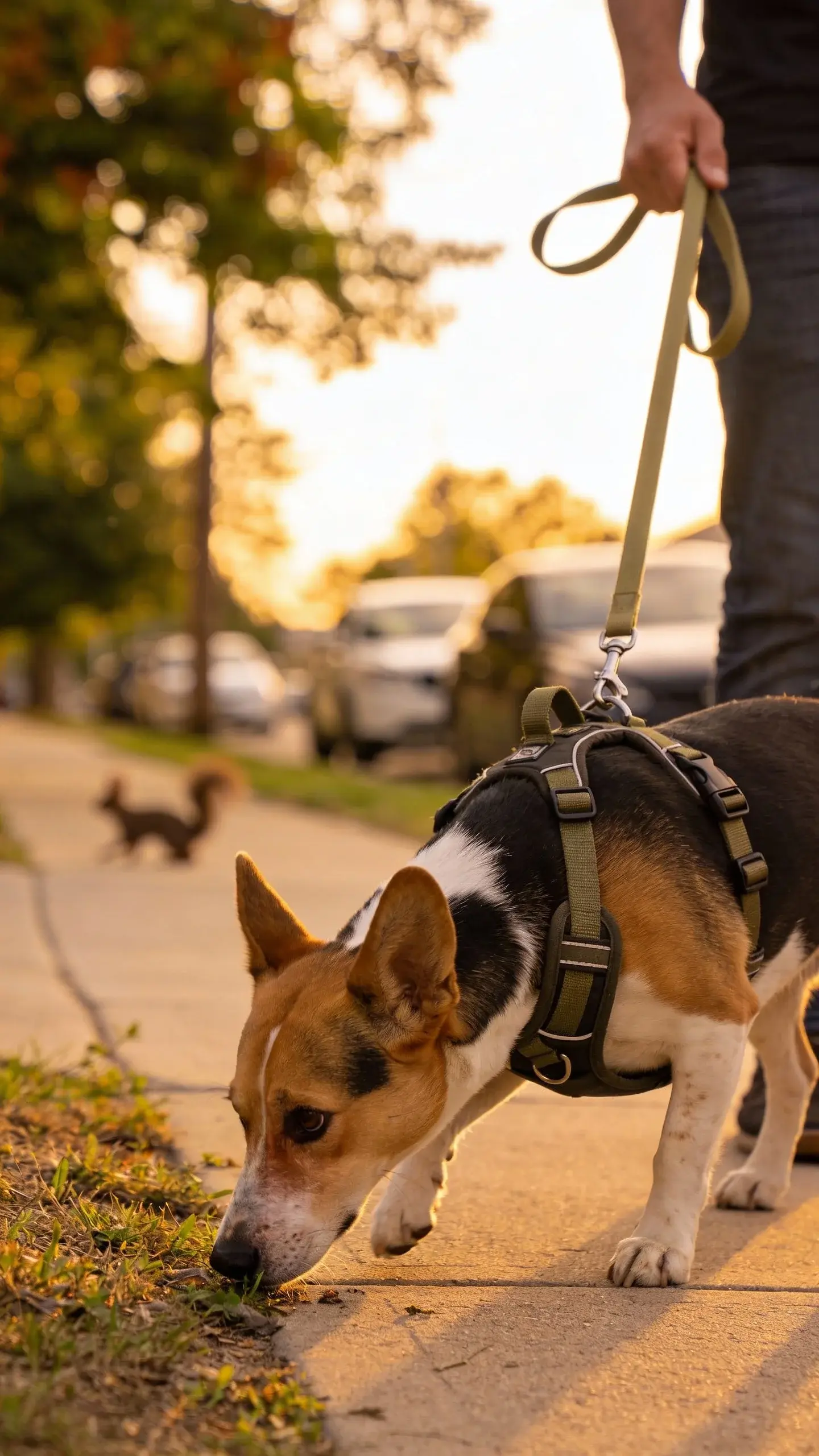
Some places melt your progress—squirrels, busy streets, dog-heavy paths. Plan for that.
- Train at easier times: Early morning or quieter routes help you win more reps.
- Use distance as your friend: If your beagle loses it near a dog park fence, cross the street and work from farther away.
- Pre-pay before triggers: Feed rapid, tiny treats as you pass a distraction. Then “Go sniff” once you’re past. It’s like a toll booth but for good behavior.
Pattern Games That Calm the Brain
Try quick, predictable patterns to keep your dog focused:
- 1-2-3 Treat: Count “one, two, three”—treat on three by your knee while walking. It creates rhythm and reduces sniff-induced chaos.
- Find It: Toss one treat at your feet and say “Find it!” Great reset when your beagle gets overstimulated.
The “Stand Still Statue” and Other Micro-Skills
These tiny skills make a huge difference.
- Automatic check-in: Reward your beagle anytime they look back at you. That glance becomes gold on walks.
- Reinforce heel zone: You don’t need a formal heel, but pay generously when they hang out by your leg. That’s your safety bubble.
- Leash handling matters: Keep one hand anchored by your belly button, gather slack with the other. Don’t water-ski behind your dog.
- Short sessions: End before your beagle spins out. Two 15-minute training walks beat one exhausting marathon, IMO.
Common Mistakes That Keep Pulling Alive
Avoid these, and you’ll speed up progress.
- Sometimes allowing pulling: Consistency wins. If pulling works even once in a while, your beagle gambles every time.
- Using a retractable leash for training: It teaches pulling by design. Save it for well-trained strolls later.
- Jumping to busy environments too fast: Master calm routes first, then level up to Main Street.
- Training when your dog’s tank is full: Burn a little energy first with a quick sniff session or 5 minutes of fetch, then train.
Weekly Plan You Can Actually Follow
Keep it simple and repeatable.
- Days 1–2: Indoor/yard “Let’s go” reps. Reward position. 5 minutes, twice daily.
- Days 3–4: Quiet street walks. Stop/change direction for pulling. Add “Go sniff” as reward.
- Days 5–7: Introduce mild distractions. Use 1-2-3 Treat and pre-pay past triggers. Keep sessions short.
Rinse, tweak, repeat. You’ll see real improvement by week two if you stay consistent.
FAQ
How long does it take to stop leash pulling?
You’ll see small wins in a week with daily practice. Solid habits usually take 3–6 weeks, depending on your beagle’s age and how consistently you train. Stick to short, focused sessions and you’ll get there.
Should I use a head halter or prong collar?
I recommend a front-clip harness for most beagles. Head halters can help but need careful intro so your dog doesn’t paw it off. Prong collars can suppress behavior without teaching better choices, and beagles respond great to positive, reward-based methods. IMO, train the brain, not just the neck.
What if my beagle ignores treats outside?
Upgrade the reward and lower the difficulty. Use soft, smelly treats and start in calmer environments. Also, feed a normal meal after training, not before—hunger helps. And use sniffing as a reward when food flops.
Can I ever let my beagle explore on a long line?
Absolutely, once you’ve built a loose-leash habit. Use a 15–20 ft long line in safe, open areas. Add rules: loose leash equals forward access; pulling means you pause. Balance freedom with structure.
My beagle pulls toward other dogs. What now?
Create space before your dog locks on. Cross the street, then feed a steady stream of treats as you pass. Mark and reward any glance back at you. After you pass, “Go sniff” to release pressure. Over time, your beagle will see dogs and check in with you automatically.
Is it okay to let my beagle sniff a lot on walks?
Yes—and it actually helps reduce pulling. Build sniff breaks into your walk with a clear “Go sniff” cue. Structure turns chaos into cooperation.
Conclusion
Beagles pull because their noses scream “Follow me!” You’ll win by flipping the script: reward closeness, stop or turn when they pull, and pay with sniff time and treats. Use a front-clip harness, keep sessions short, and work up through easy environments to harder ones. Do that consistently, and your sled-dog beagle turns into a polite walking buddy—still goofy, still curious, just way easier on your shoulder.