Your Beagle heard the treat bag from three rooms away, didn’t they? That nose rules their world—and your training. Beagles are smart, hilarious, and stubborn in a “I love you, but I’m busy sniffing” kind of way. You can absolutely train one, but you’ll need consistency, creativity, and snacks. Lots of snacks.
Know Your Beagle: Nose First, Everything Else Second
Beagles come built with a supercomputer for a nose and a strong independent streak. That combo makes them great at tracking…and at ignoring you when a squirrel farts two blocks away. You’re not fighting their biology—you’re working with it.
Key mindset shift: You don’t “command” a Beagle. You convince, motivate, and outsmart them. If training feels like a game, you win.
Set Up Your Training Toolkit
You don’t need fancy stuff, but the right basics make life easier.
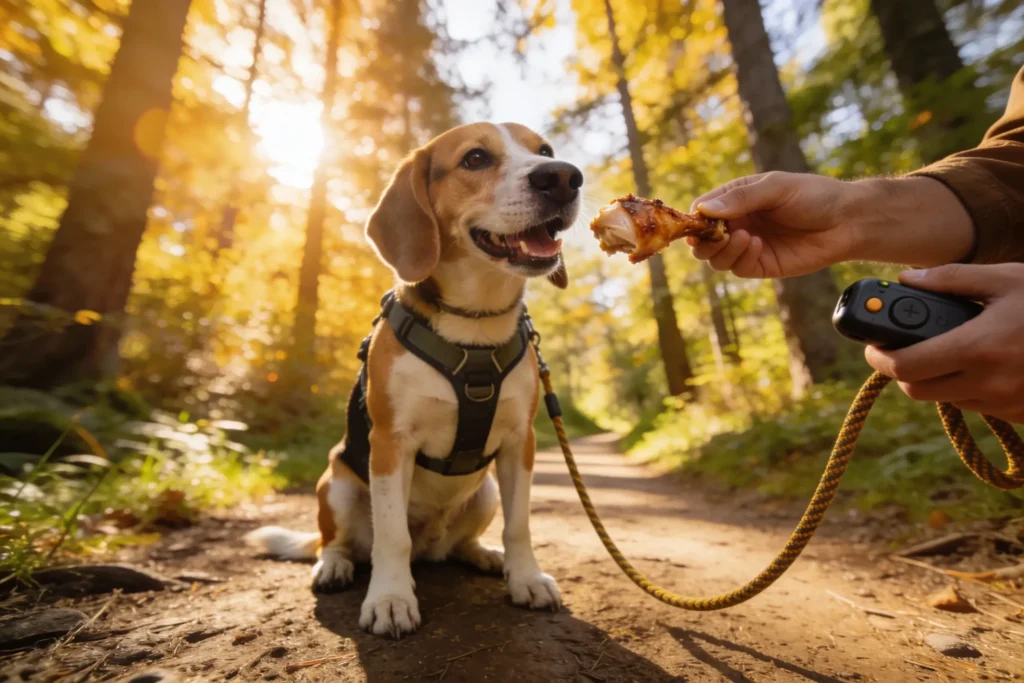
- High-value treats: Think tiny, smelly, soft. Rotisserie chicken trumps dry biscuits every time.
- Clicker or marker word: A quick “Yes!” or a click marks the exact moment they nail it.
- Harness and long line: A well-fitted harness plus a 15–30 ft long line lets them sniff while staying safe.
- Food puzzle toys: Work their brain so they don’t redecorate your couch.
Pro tip: Use life rewards
Your Beagle loves sniffing more than anything. Use that. Ask for a sit, then release them to sniff as the reward. That feels like winning the lottery to them.
Master the Essentials (Beagle Edition)
Let’s cover the core skills every Beagle needs. Keep sessions short (3–5 minutes) and end while you still win.
Name recognition
Say their name once. When they glance your way, mark and treat. Make “looking at you” pay off. If you get crickets, don’t repeat the name—make your reward better.
Recall that actually works
Start indoors. Say your recall word (“Come!” or “Here!”), then back up, cheer, and jackpot treat when they arrive. Add distractions slowly and keep your recall sacred—never use it to end fun. Recall = party, always.
- Use a long line outside. Practice with mild distractions first.
- Pay big. Rotating rewards keeps it exciting.
- Never punish after a recall. They won’t forget, and they won’t come next time. FYI.
Loose-leash walking
Beagles pull because the world smells like a buffet. Teach them that a loose leash moves forward, a tight leash stops the party.
- Start in a low-distraction area.
- When the leash loosens, move forward and praise.
- When they pull, stop. Wait. They look back? Mark and go.
Upgrade: Use sniff breaks as rewards every few minutes. “Heel” for 20 steps, “Go sniff!” for 20 seconds.
Harness the Sniff: Turn Their Superpower Into Training Gold
Stopping a Beagle from sniffing is like asking a fish not to swim. Instead, use scent games to drain energy and build focus.
Nosework basics
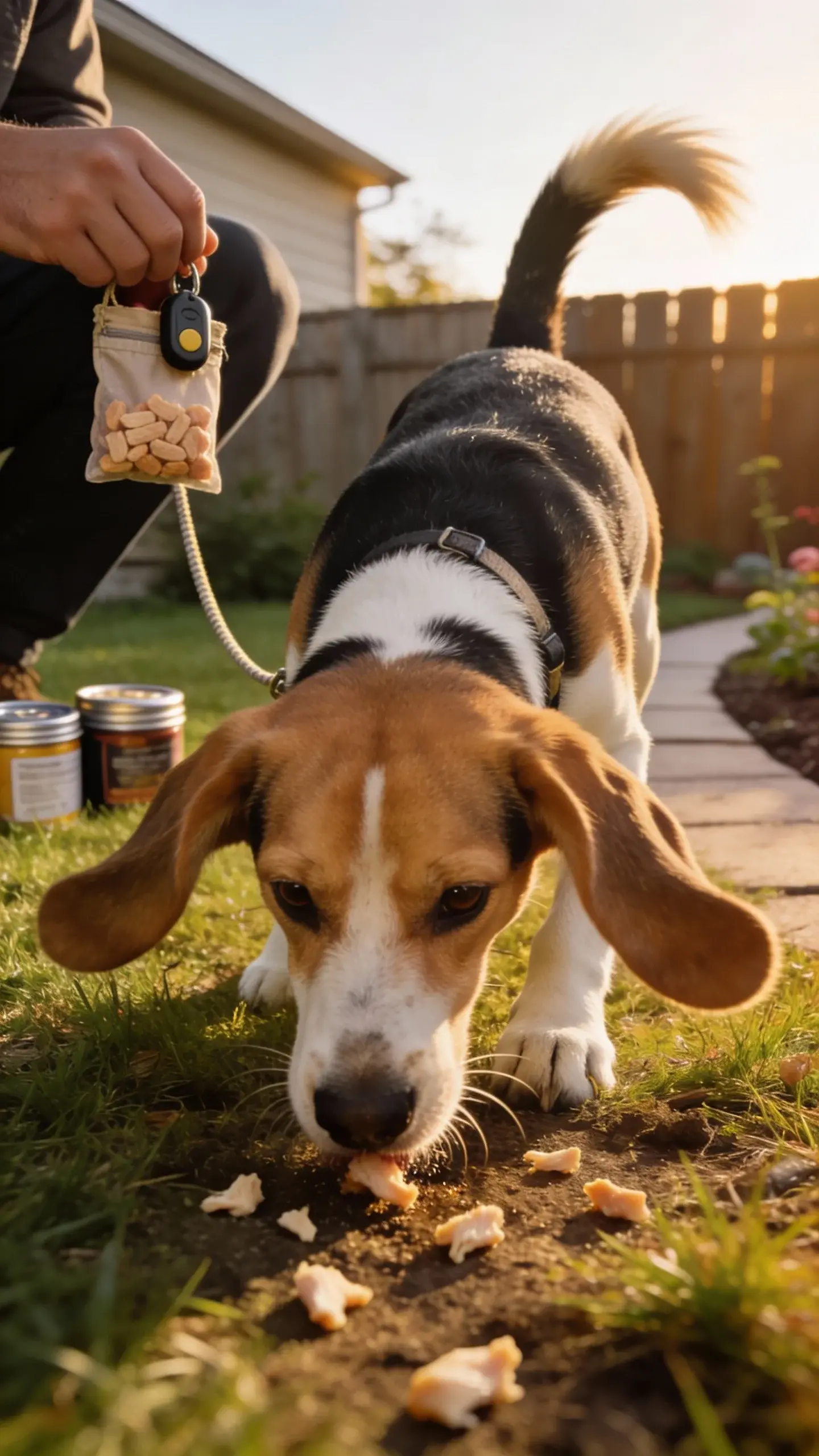
- Scatter treats in grass and cue “Find it.”
- Hide treats under cups and let them figure it out.
- Play hide-and-seek with a family member. Call once, then let them track.
Five minutes of sniffing equals a much calmer dog, IMO.
Sniff walks = sanity walks
Alternate structured walking and sniff zones. Use a cue like “Free” to let them investigate. You’ll see fewer tug-of-war moments because you’re giving them what they want—on your terms.
House Manners Without Drama
Beagles love counters, trash, and creative cuisine. Set them up to win.
- Crate train early. Crates keep them safe and prevent bad habits when you can’t supervise.
- Baby gates are your friend. Manage space while training.
- Counter-surfing prevention: Don’t leave food out. Beagles don’t “unlearn” free snacks.
- Teach “leave it” and “drop it.” Practice with low-value items first, then trade up.
“Leave it” quick start
Place a treat under your hand. When your Beagle stops licking and looks away, mark and reward from your other hand. Build to treats in open palm, then on the floor, then real-life distractions. Keep it playful, not punitive.
Consistency, Not Perfection
Beagles test routines. That’s fine. You just need a plan and a sense of humor.
- Use short, frequent sessions. Two minutes here, three minutes there.
- Pick one cue per behavior. “Down” and “Lay down” confuse them.
- Reward the good stuff every time at first. Then fade to random jackpots to keep them guessing.
- Don’t negotiate with whining. Wait for quiet, then reward calm.
When setbacks hit
Regress to an easier version of the behavior and rebuild. If recall fails outside, go back to the long line and higher-value treats. No guilt, just reps.
Socialization and Confidence Building
Beagles can get hyper or anxious without good early experiences. Show them the world—slowly and positively.
- New places: Short visits, lots of treats, then leave before they stress.
- Sounds: Play low-volume noises (traffic, fireworks), treat, and stop before they worry.
- Handling: Practice gentle paws, ears, and mouth checks with treats. Vet visits get way easier.
Dog parks?
Some Beagles love them, others get overstimulated and ignore you completely. Try structured playdates with known dogs first. IMO, it’s more controlled and more fun.
Common Mistakes (And Easy Fixes)
- Overusing the word “No.” Tell them what to do instead: “Off,” “Leave it,” “Bed.”
- Chasing your Beagle. Congratulations, you started the best game ever. Run the other way, crouch, and cheer.
- Letting recall get boring. Keep it unpredictable: sometimes chicken, sometimes a tug game, sometimes a sniff party.
- Too little mental work. Food puzzles, training games, and sniff walks prevent chaos.
FAQ
Are Beagles harder to train than other breeds?
They’re not “harder,” they’re “different.” Beagles love independent problem-solving and scent work. If you use motivation, structure, and sniff-based rewards, they learn fast. If you rely on force or nagging, they check out.
How long can a Beagle focus in one session?
About 2–5 minutes for focused training. Do multiple mini-sessions each day. Mix formal training with life rewards—sits before meals, recalls in the hallway, “leave it” during walks.
Can I ever trust my Beagle off leash?
Sometimes, in safe, fenced areas or with a rock-solid recall and minimal wildlife. Many Beagle owners stick with long lines in open spaces. Safety over ego. A rabbit sprint isn’t worth the risk.
What treats work best?
Soft, stinky, tiny pieces: chicken, cheese, turkey, or store-bought training treats. Rotate to keep the novelty high. Keep dry biscuits for “easy” behaviors at home.
My Beagle howls nonstop—help?
Meet their needs first: exercise, sniffing, mental work. Then teach a “quiet” cue by marking moments of silence and rewarding calm. Prevent trigger stacking—if the mailman sets them off, create distance and reward quiet before the bark happens.
Is a clicker required?
No, but it helps. A crisp “Yes!” works too. The consistency matters more than the tool.
Conclusion
You don’t need superhuman patience to train a Beagle—you just need a plan, great snacks, and respect for that legendary nose. Keep sessions short, make rewards awesome, and turn sniffing into your secret weapon. Do that, and your Beagle will surprise you with how much they can learn—when they aren’t busy investigating that very suspicious leaf.