
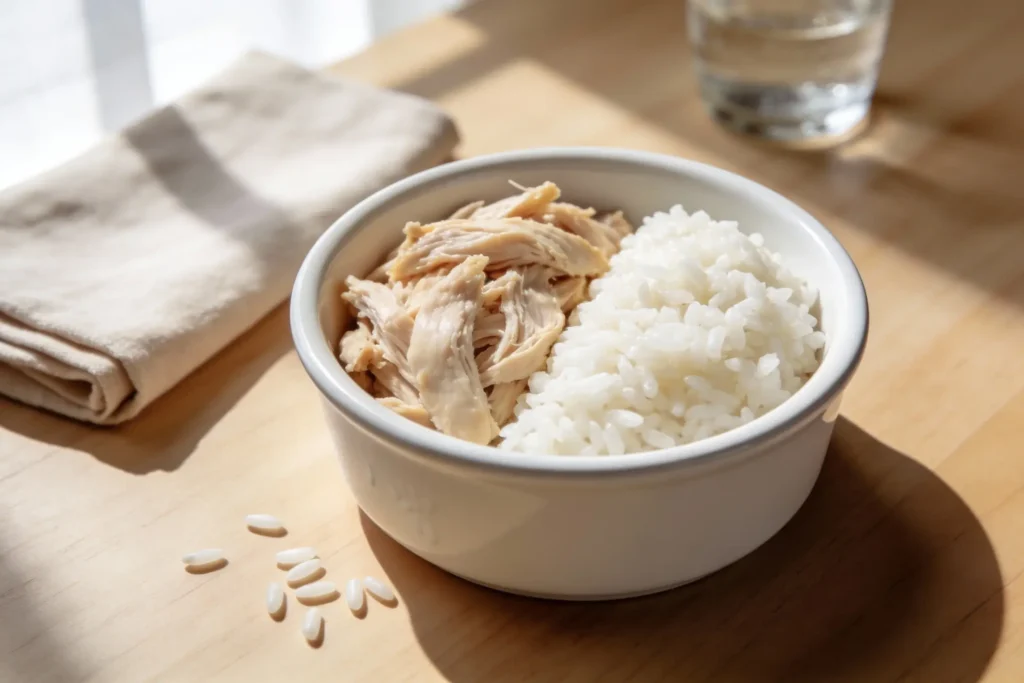
Your dog’s tummy is doing the tap dance of doom. You’ve cleaned the floor twice, and someone looks very sorry about it (but also kind of proud?). Let’s fix that. A simple chicken and rice meal can calm the chaos fast—and you can make it with ingredients you probably already have. No fancy chef hat needed, just a pot, patience, and a hungry pup.
Why Chicken and Rice Works When Bellies Revolt
When a dog’s stomach flips out, you want food that’s boring—in a good way. Chicken and rice bring gentle protein and easy-to-digest carbs to the party. They give energy without poking the sensitive gut.
Boiled chicken has minimal fat and no seasonings, which keeps nausea and diarrhea from getting worse. White rice beats brown rice here because it’s lower in fiber and kinder to irritated intestines. Basic, bland, effective. IMO, it’s the ultimate “reset button” meal for mild tummy troubles.
Before You Start: When to Call the Vet
I love a kitchen fix, but we don’t ignore red flags. If your dog shows any of the following, skip the DIY and call the vet:
- Vomiting or diarrhea that lasts longer than 24 hours
- Blood in stool or vomit, black/tarry stools, or coffee-ground vomit
- Lethargy, fever, severe belly pain, or bloating
- Puppies, seniors, or dogs with chronic conditions (pancreatitis, diabetes, kidney/liver disease)
- Foreign object ingestion or toxin exposure
FYI: Dehydration sneaks up fast. Check gums (they should be moist) and do a gentle skin tent test at the shoulders. If it stays tented, call the vet.
The Simple Chicken and Rice Recipe

Yield: About 4 cups cooked (enough for most medium dogs for 1–2 days)
Ingredients
- 1 pound (450 g) skinless, boneless chicken breast or thighs
- 1 cup (200 g) white rice (plain, not instant)
- 4 cups (950 ml) water or low-sodium chicken broth (no onion/garlic)
- Optional add-ins for later stages:
- 1/2 cup plain canned pumpkin (not pie filling)
- 1/2 cup pureed cooked carrots
- A splash of water to adjust moisture
Step-by-Step Instructions
- Boil the chicken: Add chicken to a pot, cover with water or broth, bring to a boil, then simmer 12–15 minutes until fully cooked. No oils, salt, onion, or garlic. Remove and cool.
- Cook the rice: Use the chicken cooking liquid if it’s unsalted. Add 1 cup rice to 2 cups liquid. Simmer covered 18–20 minutes until soft. Slightly overcooked is good here.
- Shred the chicken: Finely shred or chop it so it’s easy to digest.
- Combine: Mix 2 parts cooked rice with 1 part chicken by volume. Add warm water to create a soft, porridge-like texture.
- Cool and serve: Food should be warm, not hot. Lukewarm helps picky, queasy eaters.
Portion guide:
- Small dogs (10–20 lb): 1/2–1 cup per meal
- Medium dogs (20–50 lb): 1–1.5 cups per meal
- Large dogs (50–90 lb): 1.5–2.5 cups per meal
Start with smaller, more frequent meals (every 3–4 hours) the first day.
Feeding Schedule for Upset Stomachs
When guts are cranky, structure helps. Here’s a simple plan.
Day 1: Reset and Test
- If your dog vomited recently: Offer a 6–12 hour rest from food, but not water.
- Offer 1–2 tablespoons of chicken-rice mixture (tiny amount). Wait 1–2 hours.
- If they keep it down: Offer another small amount. Repeat.
Day 2–3: Small, Frequent Meals
- Feed 3–4 small meals spread through the day.
- Keep it bland—no treats, chews, or table scraps. Yes, even the cute begging face.
- Consider 1–2 teaspoons of plain canned pumpkin to firm stools.
Day 4–5: Transition Back
- Mix in 25% regular food with 75% chicken-rice for one meal.
- If that goes well for 24 hours, go 50/50 the next day, then 75/25, then back to normal.
- Any setback? Drop back a step.
Pro Tips to Make It Work Better
- Chop it fine: Smaller pieces digest easier and reduce gulping.
- Moisture is magic: Add warm water or broth for extra hydration.
- Keep fat low: Avoid skin, dark pan juices, or oils—fat can trigger more GI upset.
- No herbs or seasonings: Onion and garlic are toxic. Salt isn’t helpful.
- Fridge and freezer: Store leftovers in the fridge for 3 days or freeze in meal-size containers for 2 months.
- Electrolytes, carefully: Plain water is usually fine. Ask your vet before using electrolyte products.
Variations for Sensitive Pups

Some dogs turn up their nose or don’t do well with chicken. You’ve got options.
Protein Swaps
- Turkey: Skinless ground turkey, boiled and rinsed.
- Lean beef: Boil and drain well to keep fat low.
- White fish: Poached cod or tilapia can be super gentle.
Carb Swaps
- White rice: First choice for diarrhea.
- Boiled potatoes: Peeled and mashed (plain), good alternative.
- Plain pasta: Soft-cooked can work in a pinch.
Soothers You Can Add
- Plain canned pumpkin: 1 tsp per 10 lb body weight to help stool consistency.
- Probiotics for dogs: As directed; can rebalance gut flora.
- Slippery elm powder: Some owners use 1/4–1/2 tsp for small/medium dogs, but check with your vet first.
Common Mistakes to Avoid
- Feeding too much, too soon: Start tiny and build up. Your dog is not a vacuum today.
- Using seasoned meat: No garlic, onion, butter, or spices. Ever.
- Skipping water: Dehydration makes everything worse. Offer frequent small sips.
- Staying on chicken and rice too long: It’s a short-term fix, not a balanced diet.
- Ignoring patterns: If tummy troubles repeat often, ask your vet about allergies, parasites, or pancreatitis.
FAQ
How long can I feed chicken and rice?
Keep it short—usually 2–5 days. Once stools firm up and vomiting stops for 24 hours, start transitioning back to balanced dog food. Long term, chicken and rice lacks key nutrients.
How much should I feed my dog?
Start small and feed 3–4 mini-meals on day 1–2. As a rough guide, many dogs do well on about 1/2 cup per 10 pounds of body weight per day, split into multiple meals. Adjust based on appetite, size, and how they feel.
Can I use brown rice instead of white?
You can, but I wouldn’t for diarrhea. White rice digests easier and creates firmer stools. Brown rice has more fiber, which can be irritating during tummy trouble.
Is rotisserie chicken okay?
Nope. It’s salty, fatty, and usually seasoned with garlic/onion. Boiled, skinless, boneless chicken only. Boring food saves the day here, FYI.
What if my dog won’t eat?
Try warming the food, adding a little unsalted broth, or hand-feeding. If your dog refuses everything for 24 hours (or for 12 hours in puppies/seniors), call your vet.
Can I give meds like Pepto or Imodium?
Only with veterinary guidance. Some human meds are unsafe for dogs or specific conditions. Always check the dose and safety first. When in doubt, call your vet—IMO, better safe than sorry.
Conclusion
A simple chicken and rice meal can calm an upset stomach, rehydrate gently, and restore your dog’s appetite without drama. Keep portions small, keep the recipe plain, and transition back to regular food once things settle. If symptoms persist or your gut says something’s off, call your vet. Your floors—and your dog—will thank you.