
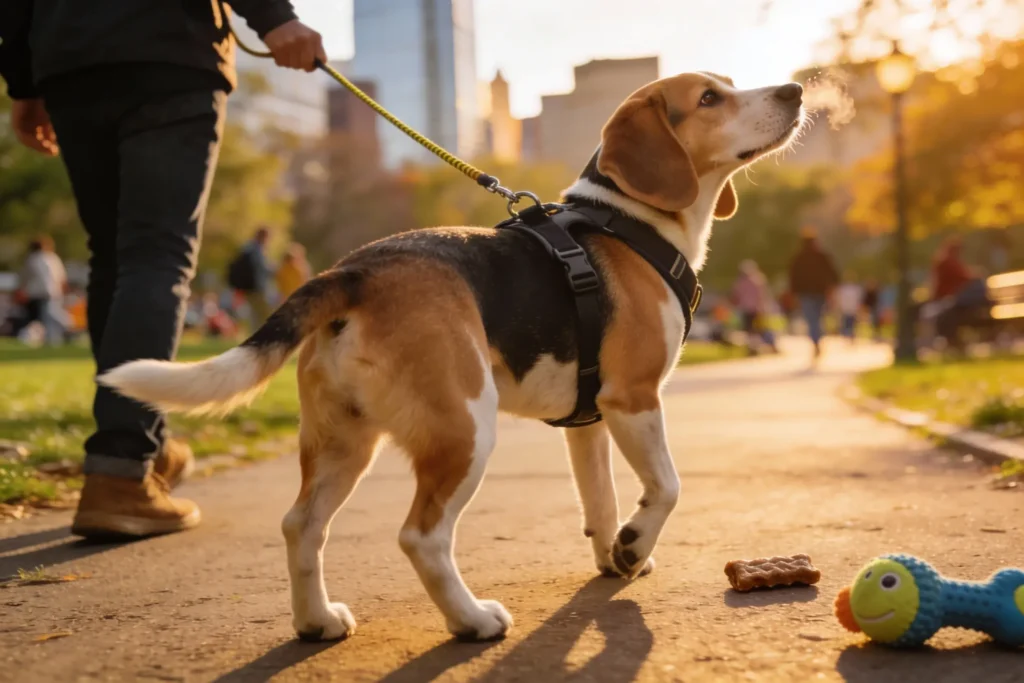
Beagles come with a big personality stuffed into a compact, floppy-eared package. They’re smart, hilarious, and occasionally chaotic gremlins with noses that basically run the show. If your Beagle has turned your life into a sitcom, you’re not alone. Let’s tackle the most common Beagle behavior problems and, more importantly, how to fix them without losing your sanity (or your sandwich).
The Nose Knows: Scent-Driven Stubbornness
Beagles don’t ignore you because they’re rude. They ignore you because a smell three blocks away just wrote a love letter to their brain. Their hunting heritage makes them hyper-focused on scent trails.
How to fix it:
- Train a rock-solid recall word. Pick one cue (like “Here!”). Start indoors with zero distractions. Reward with high-value treats only used for recall. Gradually level up to the yard, then the park.
- Use a long line. A 20–30 ft training leash gives freedom without risk. Perfect for practicing recall and check-ins.
- Make yourself more interesting. Play “hide and seek,” use squeaky toys, and randomly drop treats during walks so checking in pays off.
Leash Training Tip
Use a front-clip harness to reduce pulling and protect their neck. Pair it with “stop-and-go” walking: if they pull, you stop. When the leash loosens, you move. It’s slow, but it works.
The Siren Song: Excessive Howling and Barking
Beagles have a legendary “aroo.” Cute for five minutes, less cute at 2 AM. They vocalize from boredom, anxiety, or because a squirrel blinked weirdly.
How to fix it:
- Fulfill the job. Scent work = mental gold. Scatter kibble in the yard or use scent games indoors. A tired nose makes a quiet Beagle.
- Teach “quiet.” Catch a moment of silence, say “quiet,” then reward. Gradually extend the quiet time before the treat.
- Control the view. Close blinds or set up a window film to reduce trigger barking. Out of sight, out of aroo.
When the Doorbell Sets Off a Concert
Create a “go to mat” routine. Ring the bell (or knock), cue “mat,” and reward calm on the mat. Practice 5 minutes daily. After a week, have a friend play delivery driver. Boom—less chaos.
The Great Escape Artist: Chewing, Digging, and Counter-Surfing
If your Beagle could write a memoir, it would be titled “I Ate That Because It Existed.” Chewing and digging relieve stress and burn energy. Counter-surfing? That’s just a Beagle getting promoted to head of kitchen security.
How to fix it:
- Puppy-proof like a parent-proofing a toddler. Keep food out of reach, use closed bins, block off countertops when you’re away.
- Offer legal outlets. Heavy-duty chew toys, frozen stuffed Kongs, and dig boxes (a sandbox with buried toys) channel the chaos.
- Teach “leave it” and “off.” Practice daily with low-value items, then progress. Reward generously. Yes, even when they look offended by your rules.
Crate Training That Doesn’t Feel Like Jail
Make the crate a cozy club: soft bedding, a chew, and occasional surprise treats tossed in. Feed meals there. Start with short sessions while you’re home. The crate becomes safety, not punishment.
Selective Hearing: Training and “Stubbornness”
Beagles aren’t stubborn, IMO—they’re strategic. If you’re less fun than a trash can, you lose. You need high-value rewards and short, fun sessions.
How to fix it:
- Use jackpot rewards. Reserve chicken or cheese for top-tier behaviors like recall or leave-it wins.
- Keep sessions short. 2–5 minutes, multiple times a day. Quit while they still want more.
- Generalize commands. Practice “sit,” “stay,” and “come” in different rooms, then outdoors, then around distractions.
Impulse Control Games
Try “It’s Your Choice”: hold treats in your open hand. When your Beagle backs off, mark and reward. This teaches restraint, which helps with door bolting, barking, and counter-surfing.
Separation Drama: Anxiety and Destructive Behavior
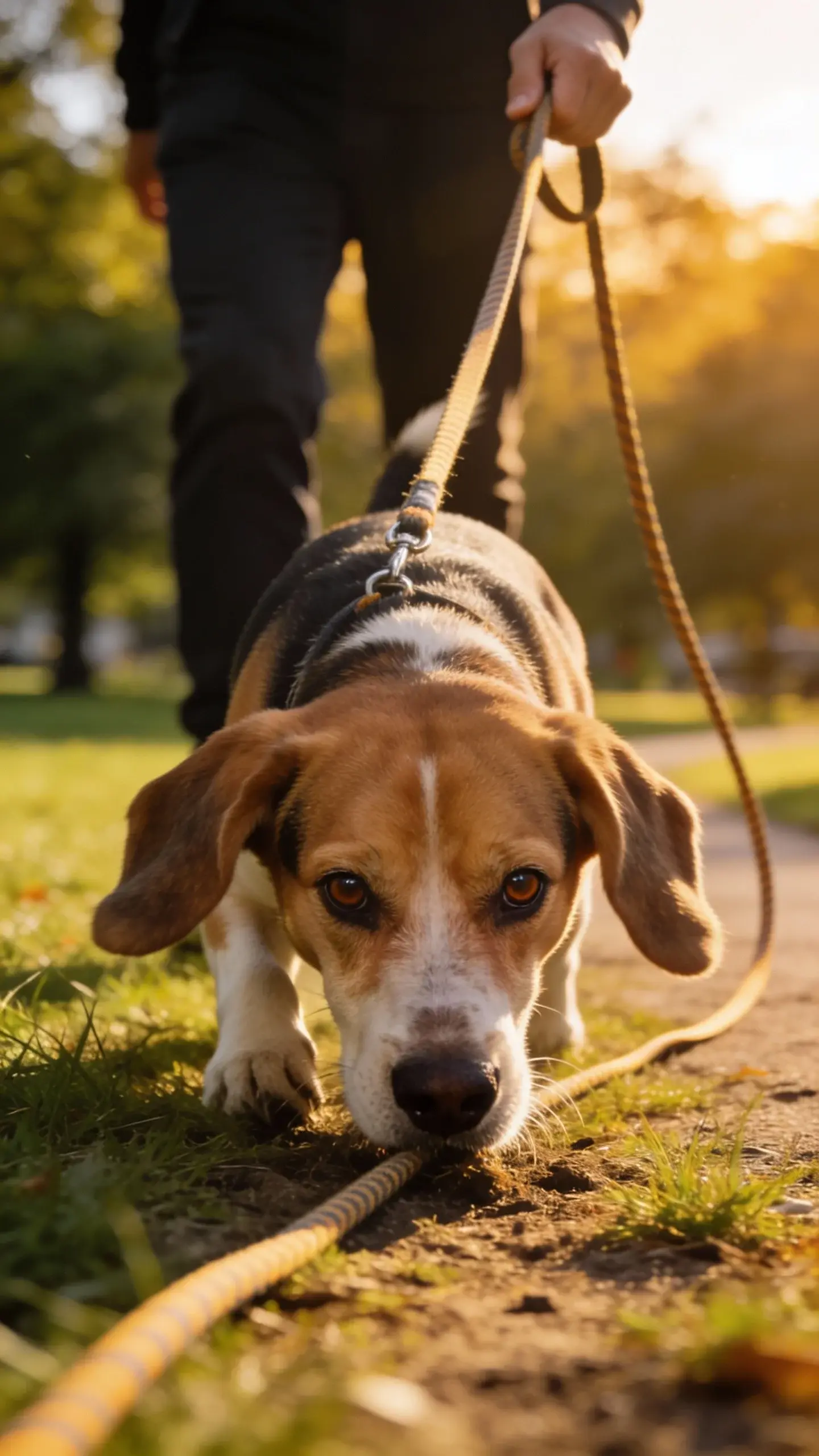
Some Beagles panic when left alone. You’ll see pacing, howling, or door scratching. They weren’t built to solo—hunting packs are kind of their whole thing.
How to fix it:
- Gradual departures. Start with 1–2 minutes out of sight, then build up. Keep returns calm, not like a surprise party.
- Pre-leave rituals. Food puzzles right before you go help pair your exit with something awesome.
- Background sound. Calm music or white noise can mask outside triggers.
When to Call a Pro
If your dog drools excessively, destroys doors, or hurts themselves, bring in a certified behavior consultant or veterinary behaviorist. Medication plus training can change lives. FYI, this isn’t failure—it’s care.
Energy to Burn: Boredom That Breeds Mischief
A bored Beagle becomes a chaos machine. They were bred to run and think, not vibe on the couch all day (as much as they love it later).
What to add to your routine:
- Daily sniffari walks. Let them choose the route and sniff to their heart’s content for at least 15–20 minutes. This is mental exercise, not just bathroom time.
- Food work. Ditch the bowl. Use puzzle feeders, scatter feeding, snuffle mats, or training as mealtimes.
- Short training games. Practice “find it,” “touch,” and “stay” between TV commercials. Micro-sessions add up.
Beagle Sports, Anyone?
Try nose work, tracking, or beginner agility. These activities scratch that instinctual itch. Plus, you’ll meet other folks who think pockets full of hot dogs is normal, IMO.
Social Butterfly, Clingy Tendencies: Greeting and Jumping
Beagles love people. They greet like they’re being paid per tail wag. Jumping looks cute at 12 pounds, less cute at 30 and muddy.
How to fix it:
- Teach an incompatible behavior. Train “sit to say hi.” Dog sits, human pets. Dog jumps, human turns away. Consistency makes it click.
- Leash management. Step on the leash to limit height during training. Reward calm immediately.
- Recruit your friends. Set up practice greetings. Five controlled reps beat one chaotic park moment.
Consistency Cheat Sheet: Your Beagle Success Plan
Let’s make this easy to use daily:
- Morning: 15-minute sniff walk + 5-minute training (recall, sit-stay).
- Midday: Food puzzle or snuffle mat + 3-minute “leave it” drills.
- Evening: Long-line recall practice + play + 5-minute impulse control game.
- Throughout the week: Rotate chew toys, organize short greeting sessions, and do one scent game daily.
Reward Strategy
Keep a treat pouch handy. Mix treat values:
- Everyday: Kibble, small biscuits.
- Medium-value: Turkey, soft training treats.
- Jackpot: Cheese, hot dog, freeze-dried liver—only for the big wins.
FAQ
Can Beagles ever be reliable off-leash?
Yes—sometimes. But many Beagles struggle off-leash in open areas because scent takes over. Use fenced spaces, long lines, and tons of recall training. If your Beagle fails the “squirrel test,” stick to safety. IMO, freedom on a long line beats a lost dog any day.
How much exercise does a Beagle actually need?
Most adult Beagles do best with 60–90 minutes daily split between walks and mental games. Puppies need shorter, more frequent sessions. Seniors still benefit from sniff time—just keep it gentle.
What treats work best for training a Beagle?
Soft, smelly, and small. Think pea-sized chicken, cheese, or commercial training treats. Change it up often so your Beagle doesn’t get bored. Variety keeps motivation high.
Are Beagles good with kids and other dogs?
Generally yes—Beagles tend to be friendly, playful, and tolerant. Supervise interactions, teach kids gentle handling, and manage resources like food and toys. As always, personalities vary.
How do I stop my Beagle from howling when I leave?
Work on gradual absences, pair your exits with food puzzles, and avoid dramatic goodbyes. If the howling escalates or your dog shows distress, consult a pro. Separation anxiety is treatable.
What’s the best harness for a Beagle that pulls?
Try a well-fitted front-clip harness from brands known for no-pull designs. Pair it with training—equipment helps, but your consistency seals the deal.
Conclusion
Beagles bring the laughs, the love, and the chaos. When you channel their nose and brain into jobs—sniffing, puzzles, short training bursts—you’ll see the “stubborn” dog turn into a star student. Set clear rules, stay consistent, and reward like a vending machine for good choices. Do that, and your floppy-eared detective becomes the best roommate you’ve ever had (and the worst kitchen thief, but we’re working on it).