
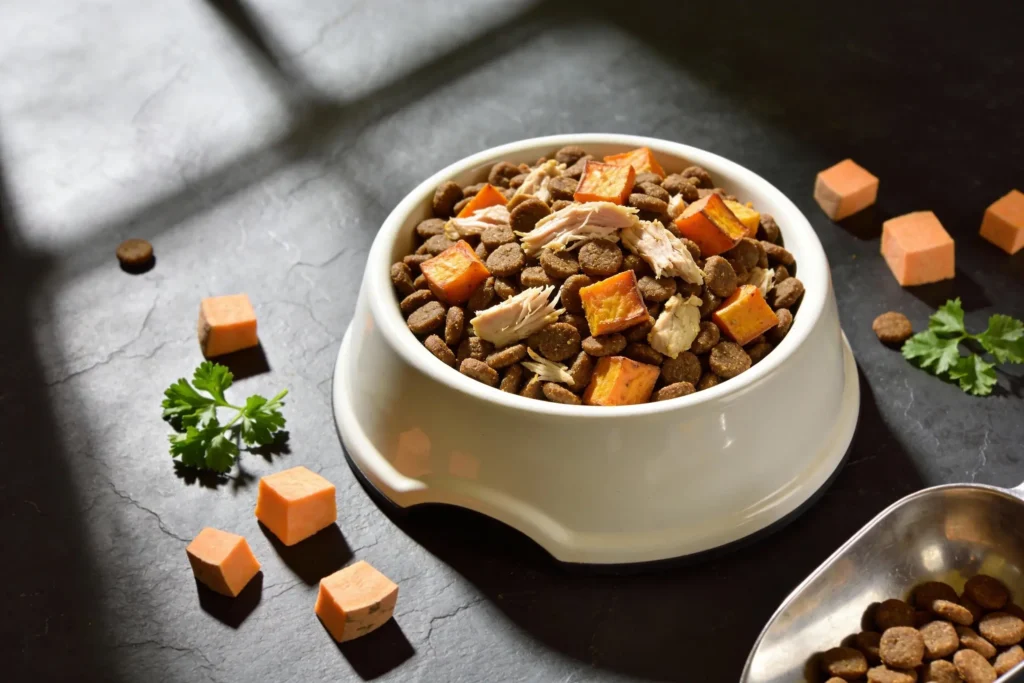
Your dog isn’t picky—your dog is decisive. If that decisive nose keeps pointing toward chicken and sweet potato, you’re onto something. This combo nails flavor, protein, and gut-friendly carbs without weighing them down. Let’s build the best everyday chicken-and-sweet-potato meals, decode labels, and dodge the sneaky stuff brands hope you don’t notice.
Why Chicken + Sweet Potato Works So Well
Chicken brings lean, high-quality protein for muscle maintenance and zoomies-on-demand. Sweet potato delivers complex carbs that release energy slowly, so your dog doesn’t crash at 3 p.m. like a toddler after cake.
Bonus points:
- Digestive support: Sweet potatoes offer fiber that helps keep stools firm but not dry.
- Vitamins: Vitamin A for vision and skin, plus B vitamins for metabolism.
- Affordable and available: You can find chicken and sweet potatoes anywhere, and most dogs love both.
What “Best” Actually Means on the Label
Not all chicken-and-sweet-potato foods are created equal. You want the good stuff without the filler parade.
Look for:
- Named protein first (e.g., “Chicken,” “Chicken meal”). If “sweet potato” shows up before a real protein, IMO skip it.
- Clear fat sources like chicken fat or salmon oil (hello omega-3s).
- No mystery meat: Avoid “meat by-product” without specifying species.
- AAFCO statement: It should say the food is complete and balanced for your dog’s life stage.
Red flags:
- Added sugars (molasses, cane syrup) — your dog doesn’t need dessert in their dinner.
- Too many legumes at the top of the list (pea, lentil overload can skew protein counts).
- Artificial colors or “smoke flavor.” Your dog does not care if kibble is orange.
Homemade Everyday Recipe: Chicken & Sweet Potato Bowl

This balanced, home-cooked recipe suits most adult dogs. Still, adjust for your pup’s size and activity level, and check with your vet if your dog has health conditions. FYI: This is a complete meal only when you include the supplement mix.
Ingredients (Makes ~6 cups, about 4–6 meals for a 30–40 lb dog)
- 2 lb skinless, boneless chicken thighs (or 1.5 lb thighs + 0.5 lb chicken hearts for extra taurine)
- 2 medium sweet potatoes, peeled and diced (about 700 g total)
- 1 cup finely chopped carrots
- 1 cup chopped green beans or zucchini
- 2 tbsp olive oil or chicken fat
- 1 large egg (cooked, scrambled or hard-boiled)
- 1 tsp finely ground eggshell powder or 1,000 mg calcium supplement (see note)
- 1/2 tsp iodized salt (or 1/4 tsp if using a commercial vitamin mix with iodine)
- Fish oil per label for 500–1,000 mg combined EPA/DHA per day (add at serving)
- Optional: 1–2 tsp turmeric paste or a sprinkle of parsley for palatability
Calcium note: If you don’t include bone, you must add calcium. To DIY eggshell powder, bake shells at 300°F for 10 minutes and grind to a super-fine powder. Aim for about 900–1,000 mg calcium per pound of finished food.
Directions
- Dice chicken into small chunks. Sauté lightly in a large pan with 1 tbsp oil until just cooked through. Don’t overbrown.
- Steam or boil sweet potato until tender. Drain well.
- Sauté carrots and green beans in remaining oil for 3–4 minutes to soften slightly.
- Combine chicken, sweet potato, veggies, and cooked egg in a bowl. Cool until warm, not hot.
- Mix in calcium, salt, and any vitamin/mineral blend per label. Stir thoroughly.
- Portion into containers. Refrigerate up to 3 days or freeze for 2–3 months.
Serving Guide
- General starting point: 2–3% of body weight per day for adults. Example: A 40 lb dog might eat 0.8–1.2 lb (360–540 g) per day, split into 2 meals.
- Add fish oil at serving for healthy skin and joints.
- Adjust amounts up or down based on your dog’s weight and energy. Ribs should be easy to feel, not see.
Kibble and Wet Food Picks (What to Prioritize)
If you prefer commercial food, here’s how to choose without getting bamboozled.
What to prioritize
- Protein 24–30% (dry matter) for most adults.
- Fat 12–18% for energy and coat health.
- Carbs from sweet potato rather than corn-heavy formulas.
- Joint-friendly add-ons like glucosamine, chondroitin, or green-lipped mussel.
Mixing methods
- Half-and-half: Combine high-quality chicken-and-sweet-potato kibble with the homemade recipe. Dogs love the variety.
- Topper style: Add 1–2 spoonfuls of homemade to kibble to boost moisture and flavor.
- Wet food rotation: Use chicken-and-sweet-potato canned food a few days per week to increase hydration.
Tweak It: Picky Eaters, Sensitive Tummies, and Active Dogs
Every dog needs a custom touch. Consider these tweaks to make meals land perfectly.
For sensitive stomachs
- Use poached chicken breast instead of thighs to reduce fat.
- Peel sweet potatoes and cook until very soft. Mash thoroughly.
- Add a scoop of plain kefir or unsweetened yogurt for probiotics (unless dairy-sensitive).
For picky eaters
- Warm food slightly and add a splash of low-sodium chicken broth.
- Mix in a few freeze-dried chicken crumbles as a topper.
- Rotate textures: mash one batch, cube the next. Dogs care about mouthfeel—who knew?
For high-activity dogs
- Increase healthy fats (add 1 tsp olive oil or salmon oil per meal).
- Use chicken thighs and hearts for extra iron and B vitamins.
- Consider a second complex carb like pumpkin or butternut squash on heavy training days.
Common Mistakes to Avoid

- Skipping calcium in homemade diets. This one matters for bone health—don’t wing it.
- Overloading treats on top of a complete diet. Treats should stay under 10% of daily calories.
- Switching foods too fast. Transition over 5–7 days to avoid “why is everything a puddle?” stools.
- Forgetting water. Add warm water or broth to kibble meals for hydration and better digestion.
One-Pot Sunday Batch: Slow Cooker Version
Prefer to set it and forget it? Same. This version is minimal effort and makes the house smell amazing.
Ingredients
- 2.5 lb bone-in chicken thighs (remove bones after cooking) or 2 lb boneless thighs
- 3 medium sweet potatoes, peeled and cubed
- 1 cup peas (frozen, added at the end)
- 1/2 cup chopped spinach
- 1 tbsp olive oil
- 1 tsp turmeric + pinch black pepper
- Calcium supplement if using boneless meat (see earlier note)
Method
- Add chicken, sweet potatoes, turmeric, and oil to the slow cooker. Cook on low 5–6 hours.
- Remove bones and skin if present. Shred chicken.
- Stir in peas and spinach. The residual heat will cook them through.
- Cool, then add calcium and any vitamin mix. Portion and store.
FAQ
Is chicken and sweet potato safe for everyday feeding?
Yes—when balanced. Ensure adequate calcium, healthy fats, and a vitamin/mineral source. If using commercial food labeled complete and balanced, you’re covered. For homemade, follow the recipe and don’t skip supplements.
Can I feed this to a puppy?
Puppies need more calcium, phosphorus, and overall calories. Use a puppy-formulated commercial chicken-and-sweet-potato food or work with your vet to tailor a puppy-specific homemade plan. Don’t guess with puppy nutrition, IMO.
What if my dog has chicken allergies?
True chicken allergies exist, but they’re less common than people think. If your dog itches, gets ear infections, or has GI upset after chicken, try a vet-guided elimination diet. You can swap chicken for turkey or duck in the recipes.
How do I transition to a new food without upset?
Mix 25% new with 75% old for 2 days, then 50/50 for 2 days, then 75/25 for 2 days, then all new. Add a spoonful of plain pumpkin to help keep stools tidy. Slow and steady wins the belly.
Can I use white potatoes instead of sweet potatoes?
You can, but sweet potatoes provide more fiber and vitamin A. White potatoes run higher on the glycemic side and can spike energy. If your dog does better with white potatoes, just keep portions moderate and balance the rest of the diet.
Do I still need fish oil if the food has omega-3s?
Usually yes. Many kibbles list fish oil but lose potency over time. Adding a fresh fish oil at serving ensures your dog actually gets those EPA/DHA benefits for skin, coat, and joints. Follow the label for dosing.
Conclusion
Chicken and sweet potato make an everyday dream team: tasty, gentle on tummies, and easy to balance. Whether you batch-cook or pick a great commercial option, focus on real protein, clean carbs, and smart add-ons like calcium and fish oil. Keep it simple, watch your dog’s body condition, and tweak as needed. Your dog will vote with their bowl—prepare for an enthusiastic yes.