
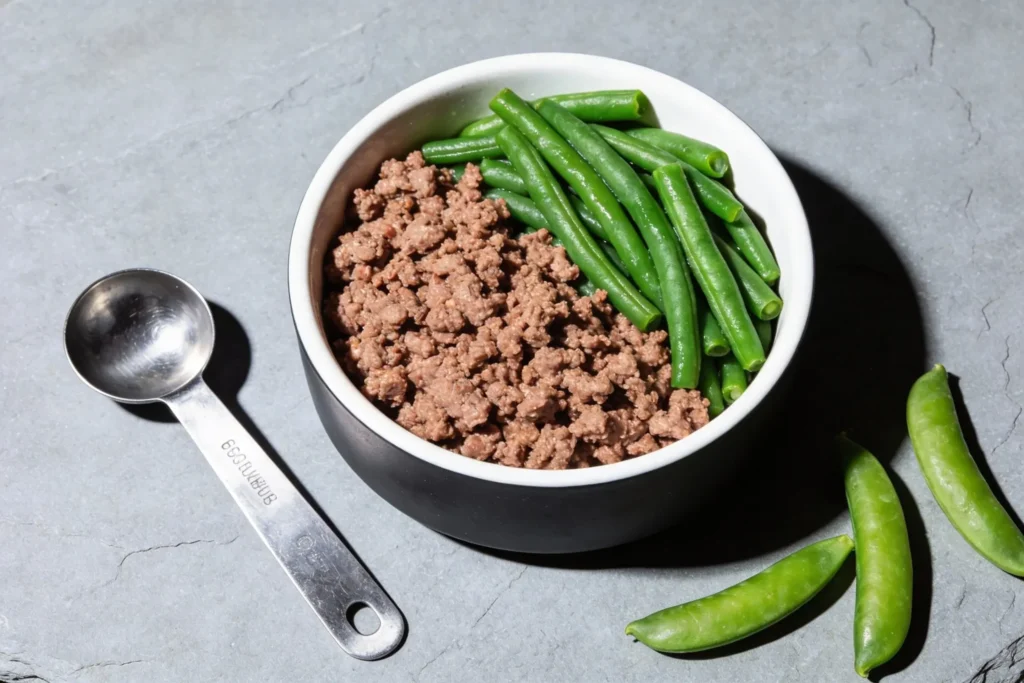
Your dog’s waistline creeping out of its harness a bit? You’re not alone. Many pups need to trim a few ounces (or pounds), and you don’t have to turn mealtime into a sad salad. Enter beef dog food with green beans: hearty, tasty, and cleverly lower in calories. Let’s talk about how to use this simple combo to help your dog feel full, stay energized, and actually enjoy their diet.
Why Beef and Green Beans Work So Well
You want a meal that fills your dog up without filling them out. Beef offers complete protein for muscle maintenance, while green beans add volume and fiber with very few calories. That combo keeps hunger away and supports weight loss without your dog giving you that “I’m starving” side-eye.
– Beef gives your dog essential amino acids, iron, zinc, and B vitamins.
– Green beans bring fiber, water content, and crunch with minimal calories.
– Mixed together, they create a bowl that feels big and satisfying while keeping the calorie count reasonable.
Key point: We’re not starving your dog—we’re swapping calorie-dense fillers for low-calorie volume so your dog still feels full.
How Much Should Your Dog Eat?
The right portion depends on current weight, target weight, and activity level. A safe weight-loss goal: 1–2% of body weight per week. Anything faster? Too aggressive. Your vet should confirm a target weight and daily calories.
Quick estimate:
– For weight loss, many dogs do well at about 20 calories per pound of target body weight per day.
– Example: Target weight 30 lb ≈ 600 calories/day.
– Divide into two meals. Treats count. Sorry, but they do.
Macronutrient Balance
For weight management, aim roughly for:
– Protein: 30–40% of calories (builds and preserves lean muscle)
– Fat: 20–30% of calories (energy and flavor)
– Carbs + Fiber: the rest (satiety and digestion)
IMO, a high-protein, moderate-fat, high-fiber approach keeps most dogs happy and fit.
Simple Beef and Green Bean Weight-Management Recipe
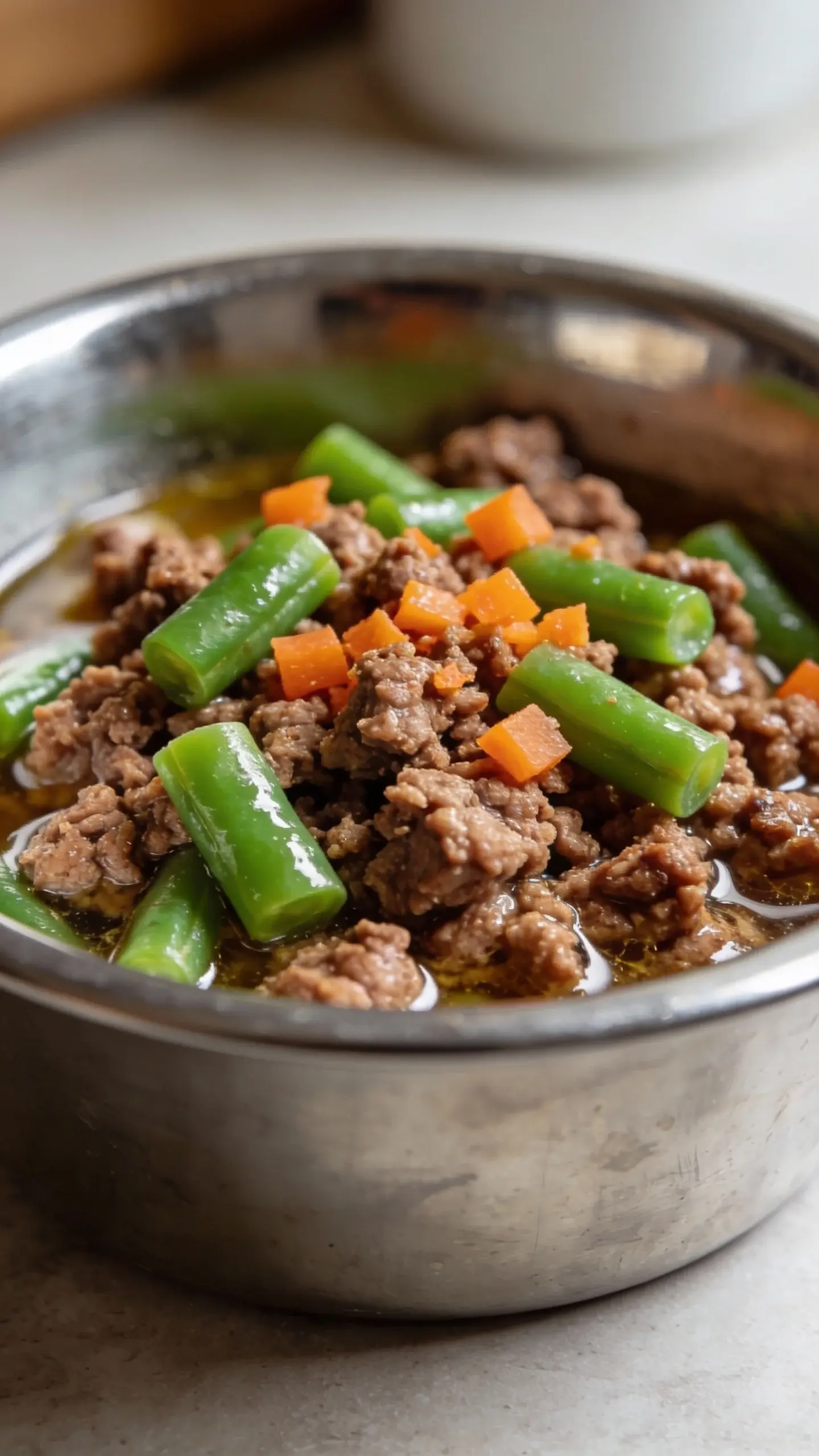
This is a balanced topper or partial meal replacement for adult dogs. If you want to feed 100% homemade long-term, chat with your vet about a complete vitamin-mineral mix. FYI, this recipe prioritizes satiety and simplicity.
Ingredients (makes about 6 cups, ~6–8 servings for a 25–35 lb dog)
– 1.5 lb (680 g) 90–93% lean ground beef
– 3 cups chopped green beans (fresh or frozen, no salt)
– 1 cup pumpkin puree (plain, not pie filling)
– 1 cup cooked brown rice or quinoa (optional for extra bulk and fiber)
– 1 tablespoon olive oil or salmon oil (healthy fats and flavor)
– 1/2 teaspoon ground turmeric (optional)
– 1/2 teaspoon dried parsley (optional)
– 1/4 teaspoon iodized salt (optional, small amount can help balance iodine if not adding a supplement)
– Dog-safe multivitamin/mineral designed for homemade diets (follow label dosing)
– Water or low-sodium beef broth as needed
Note: If your dog needs stricter calorie control, drop the rice/quinoa and halve the oil.
Directions
1. Brown the beef in a large skillet over medium heat. Drain excess fat if needed.
2. Add chopped green beans and a splash of water/broth. Simmer 6–8 minutes until beans soften.
3. Stir in pumpkin, cooked rice/quinoa (if using), turmeric, parsley, and oil. Mix well and warm through.
4. Cool completely. Stir in the vitamin/mineral supplement just before serving if the product recommends adding after cooking.
5. Portion into airtight containers. Refrigerate up to 4 days or freeze in single-meal packs for up to 2 months.
Approximate Nutrition (per 1/2 cup, with rice and oil)
– Calories: ~140–160
– Protein: ~12–14 g
– Fat: ~6–8 g
– Carbs: ~8–12 g
– Fiber: ~3–4 g
Without rice and with less oil, you’ll shave off 20–40 calories per 1/2 cup, which helps aggressive weight plans.
How to Use This Recipe in Real Life
You have options depending on how much weight your dog needs to lose.
– Topper method: Replace 25–50% of your dog’s current kibble with this recipe. You reduce calories while keeping meals exciting.
– Full meal (short-term): Feed entirely homemade for a few weeks with a complete supplement, then reassess weight and energy levels.
– Treat swap: Use chilled spoonfuls or frozen cubes as low-calorie treats instead of biscuits.
Pro tip: Measure everything. Eyeballing portions “just this once” adds up fast.
Transitioning Without Tummy Drama
– Days 1–3: 25% new, 75% old food
– Days 4–6: 50/50
– Days 7–9: 75% new, 25% old
– Day 10+: Full plan
If stools get loose, slow down. Add a little extra pumpkin or feed smaller, more frequent meals.
Green Beans: Fresh, Frozen, or Canned?
All can work, with a few caveats.
– Fresh: Great crunch, easy to chop.
– Frozen: Convenient, budget-friendly, no prep.
– Canned: Rinse well to remove excess sodium. Choose no-salt-added when possible.
Avoid seasoned or sauced beans. Garlic, onions, and heavy salts don’t belong in dog food. Your dog won’t miss them, trust me.
Keeping It Balanced Over Time
Homemade diets need a little planning to stay nutritionally complete.
– Add a canine multivitamin/mineral supplement if this replaces most of your dog’s diet.
– Include omega-3s from salmon oil or an EPA/DHA supplement for skin, coat, and joints.
– Rotate proteins occasionally—lean turkey or chicken can stand in for beef to keep things interesting and allergy-friendly.
– Monitor body condition every 2 weeks. Ribs should feel like the back of your hand: easy to find, not sharp.
What About Treats and Chews?
Treats still count. Use:
– Green bean pieces, carrot coins, or freeze-dried lean meats
– Air-popped popcorn (plain)
– Frozen pumpkin-and-yogurt bites (unsweetened, low-fat yogurt)
Skip calorie bombs like peanut butter blobs and giant dental chews while cutting weight. Sorry, pups.
Signs the Plan Works (and When to Adjust)
You want steady progress and a happy dog.
Good signs:
– Losing 1–2% body weight weekly
– Good energy, shiny coat, normal stools
– Less begging between meals
Adjust if:
– Weight plateaus for 3+ weeks: reduce portions 5–10% or increase activity.
– Excess hunger or fatigue: slightly increase protein portion or add veggies for volume.
– Soft stools: reduce oil, add pumpkin, and slow the transition.
And yes, more walks help. You knew that was coming.
FAQ
Can I just add green beans to my dog’s current food?
Yes, and it’s a great starting point. Replace up to 25% of the kibble with green beans to lower calories without reducing bowl size. Watch stools and energy levels, and adjust as needed.
Is beef too fatty for weight loss?
Not if you pick lean options like 90–93% ground beef. Fat adds flavor and helps with satiety, but keep it moderate. If your dog needs stricter control, drain the fat after browning and reduce added oil.
What if my dog has a sensitive stomach?
Go slow with the transition and start with smaller portions. Use plain ingredients, avoid spices beyond mild turmeric or parsley, and consider skipping rice if grains bother your dog. Pumpkin usually helps stabilize stools.
Can I use canned green beans?
Yes, but rinse them well and choose no-salt-added when possible. Canned beans can carry more sodium, which dogs don’t need. Texture may be softer, but most dogs don’t mind.
Is this recipe complete and balanced on its own?
Not without a dog-specific vitamin/mineral supplement. For long-term feeding, add a supplement designed for homemade diets. For toppers or short-term weight cuts, you can go without briefly, but balanced is best.
How long until I see results?
Most owners see changes within 2–4 weeks if they measure portions, limit treats, and keep walks consistent. If the scale won’t budge, recheck calories and talk to your vet about thyroid or mobility issues.
Final Thoughts
Beef and green beans make a surprisingly powerful weight-loss duo: satisfying, simple, and budget-friendly. Keep portions honest, add the right supplements if you go fully homemade, and keep daily movement steady. Your dog gets a tasty bowl, you get a healthier pup, and everyone wins—no sad diet vibes required. IMO, that’s the sweet spot.