

Your dog loves beef. Your carpet loves fewer tummy troubles. Enter beef dog food with oatmeal: hearty protein meets gentle grains. It’s simple, budget-friendly, and friendly on sensitive stomachs. Ready to cook something your pup will inhale and your vet will approve? Let’s get into it.
Why Oatmeal Works for Sensitive Stomachs
Oatmeal brings calm to chaotic dog tummies. It’s a soluble fiber powerhouse that helps form better poops (we’re all adults here). It digests slowly, so your dog stays satisfied longer.
It’s also naturally gluten-free and typically well-tolerated. If chicken and rice never quite did the trick, beef and oatmeal might. FYI, always choose plain oatmeal—no flavor packets, no sugar, no sneaky raisins.
Beef + Oatmeal: A Balanced Tag Team
Beef brings complete protein, iron, and B vitamins. Oatmeal adds fiber, manganese, and energy that sticks around. Together, they create a meal that fuels playtime and supports digestion.
Want to level it up? Add veggies for vitamins and omega-rich oils for skin and coat. Keep it simple and clean. Your dog doesn’t need a spice rack—just smart nutrition.
Pick the Right Beef
– Ground beef 85–90% lean works great
– Trim visible fat if using stew meat
– Skip seasoned or pre-marinated beef (salt, onions, garlic = hard no)
Oats: Steel-Cut vs. Rolled vs. Instant
– Rolled oats: best texture, quick to cook, easy on digestion
– Steel-cut: chewier, longer cook time, fine if cooked thoroughly
– Instant: only if plain, unsweetened, unflavored
Core Recipe: Gentle Beef and Oatmeal Dog Food
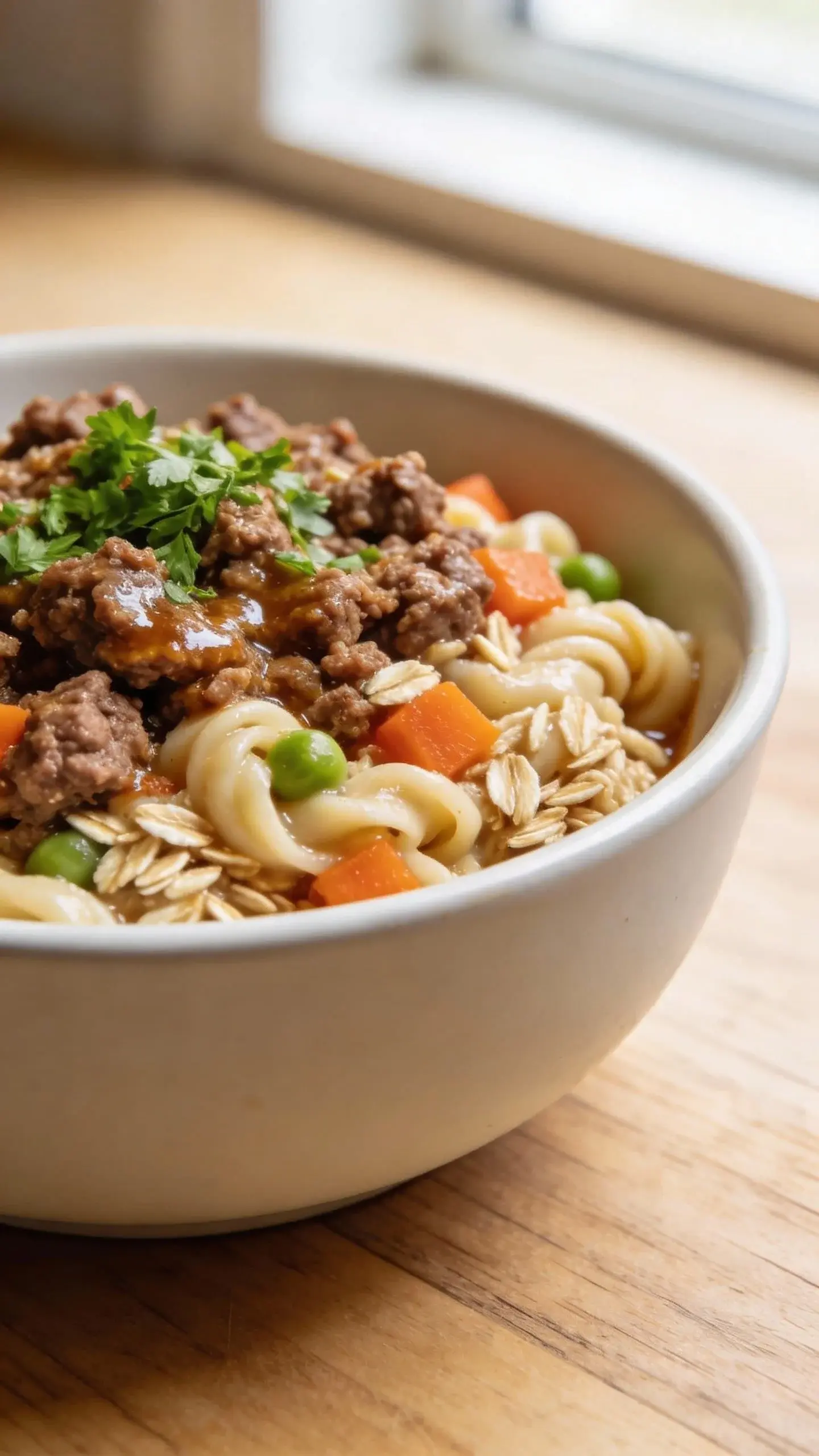
This batch makes about 8 cups (roughly 6–8 meals for a 30–40 lb dog). Adjust portions to your dog’s size and activity level. Always cool before serving.
Ingredients
– 2 pounds ground beef (85–90% lean)
– 2 cups rolled oats (plain)
– 3 cups low-sodium beef or chicken broth, or water
– 1 cup finely chopped carrots
– 1 cup chopped green beans (fresh or frozen)
– 1 tablespoon olive oil or salmon oil
– 1 teaspoon ground flaxseed (optional)
– 1/4 cup chopped parsley (optional, for fresh breath)
– Calcium source: 1 teaspoon powdered eggshell or canine calcium supplement per 1 pound of meat (follow product directions)
– Dog-safe multivitamin (optional but recommended for home-cooked diets)
Instructions
1. Cook the beef: In a large skillet or pot, brown the ground beef over medium heat. Drain excess fat if needed. Keep a little moisture for flavor.
2. Cook the oats: In a separate pot, bring broth or water to a gentle boil. Stir in the oats. Reduce heat and simmer for 8–10 minutes until soft and thick.
3. Soften the veggies: Add carrots and green beans to the oat pot for the last 5–7 minutes. You can also steam them separately. Chop small for easier digestion.
4. Combine and enrich: Stir the cooked beef into the oat-veggie mix. Add oil, flaxseed, and parsley. Mix well.
5. Add calcium: Once slightly cooled, stir in your calcium source thoroughly. This matters—homemade diets need calcium to balance phosphorus in meat.
6. Cool and portion: Let the mixture cool completely. Portion into meal-size containers.
Serving
– Feed about 1/2 to 3/4 cup per 10 pounds of body weight daily, split into two meals (IMO, start on the lower end and adjust).
– Transition over 5–7 days: mix with your dog’s current food, increasing gradually.
Storage Tips
– Refrigerate up to 4 days
– Freeze in single-serve containers up to 2–3 months
– Thaw in the fridge, not the counter
Variations Your Dog Will Love
Let’s not bore your pup. Rotate flavors while keeping their stomach happy.
Beef, Oatmeal, and Pumpkin
– Add 1/2 cup plain canned pumpkin per 4 cups of cooked food
– Great for firming up stools and extra fiber
Beef, Oatmeal, and Blueberry Breakfast
– Stir in 1/2 cup blueberries at the end (fresh or frozen)
– Antioxidants for the win, plus most dogs love the sweet-tart bite
One-Pot Lazy Version
– Brown beef in a Dutch oven
– Add oats, water/broth, veggies, and simmer 10–12 minutes
– Stir in oil and calcium after cooling
– Fewer dishes, more tail wags
Portioning and Nutrition Basics
Dogs need protein, fat, carbs, vitamins, and minerals in balance. Homemade food can hit the mark if you plan it right. This recipe is balanced enough for occasional rotation or short-term feeding, but for long-term daily use, add a dog-safe multivitamin/mineral.
Quick guidelines
– Protein: 20–30% of calories (beef covers this)
– Fat: 10–20% of calories (add oil if your dog needs more)
– Fiber: 2–5% (oats and veggies handle it)
– Calcium: crucial if you cook boneless meat—don’t skip it
Adjust for Your Dog
– Weight loss: use 90–93% lean beef, add extra green beans, keep oil moderate
– Skin/coat support: add 1–2 teaspoons salmon oil per day for omega-3s
– Senior dogs: cook oats softer, chop veggies finer, consider joint supplements
What to Watch For (Because You’re a Great Dog Parent)
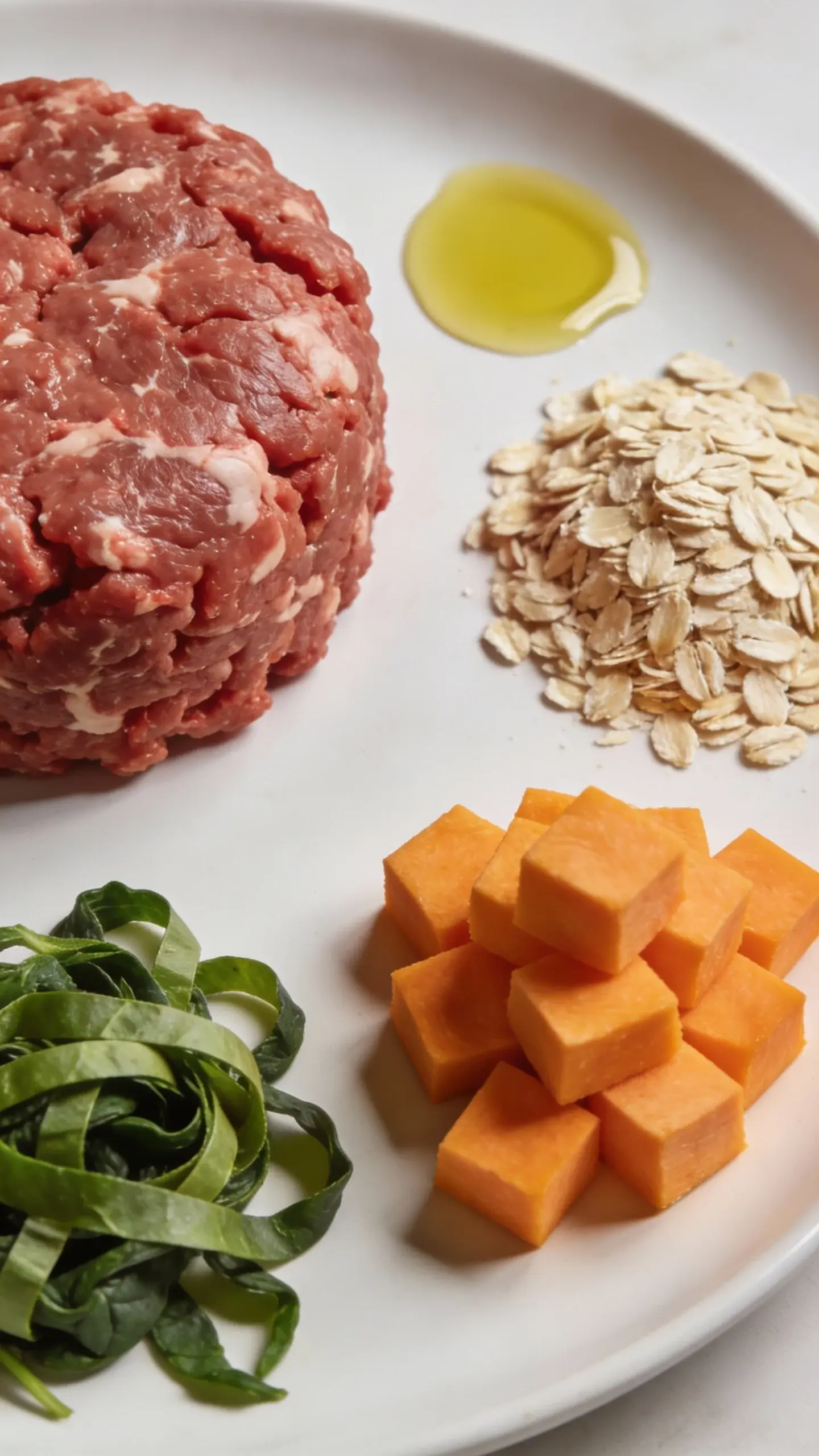
Some dogs react to beef or grains. If your dog scratches more, gets gassy, or has loose stools, adjust.
Red flags
– Diarrhea or constipation for more than 48 hours
– Vomiting, lethargy, or sudden itchiness
– Ear infections or hot spots with diet changes
If any show up, pause the new food and check with your vet. Also, avoid onions, garlic, chives, raisins, grapes, and excessive salt. Your dog’s stomach is adventurous but not invincible. FYI: “natural flavorings” on human broths can hide onion—read labels.
Cost, Convenience, and Why This Works
Homemade beef and oatmeal dog food costs less than many premium wet foods, and you control every ingredient. You can batch cook on Sunday, freeze portions, and feel smug for the week. Your dog gets a cozy, nutrient-dense meal that won’t wage war on their gut. Win-win.
FAQs
Can I use ground turkey or chicken instead of beef?
Absolutely. Swap 1:1 with ground turkey or chicken. If you use very lean poultry, add a bit more healthy fat (olive oil or salmon oil) to keep calories adequate and support skin and coat.
Is oatmeal safe for dogs with gluten sensitivity?
Yes, oats are naturally gluten-free, but cross-contamination can occur. Choose certified gluten-free oats if your dog has true gluten sensitivity. If you’re unsure, start with a small amount and watch for any digestive changes.
How long can I feed homemade dog food?
You can feed it long-term if you balance nutrients. That means adding calcium and, IMO, a quality dog multivitamin/mineral. For full confidence, ask your vet or a board-certified veterinary nutritionist to review your exact recipe and your dog’s needs.
Can I add rice instead of oats?
You can, but oats offer more soluble fiber and satiety. If your dog loves rice, try a half-and-half blend with oats. White rice is gentler than brown rice for sensitive stomachs.
What if my dog has pancreatitis or needs low-fat?
Use 93–96% lean beef or switch to extra-lean turkey. Skip added oils. Keep portions small and frequent. Always get your vet’s guidance for dogs with pancreatitis since fat tolerance varies a lot.
Do I need to include bones?
No. For cooked diets, avoid bones entirely—they can splinter. Provide calcium with powdered eggshell or a canine calcium supplement. If you feed raw (different game entirely), that’s a separate conversation with your vet.
Conclusion
Beef dog food with oatmeal hits the sweet spot: simple, soothing, and satisfying. It’s easy to cook, gentle on bellies, and versatile enough for picky eaters. Start with the core recipe, tweak it for your dog, and enjoy the smug joy of serving a bowl that gets devoured in 12 seconds flat. IMO, it’s one of the best home-cooked options for happy guts and happy pups.