
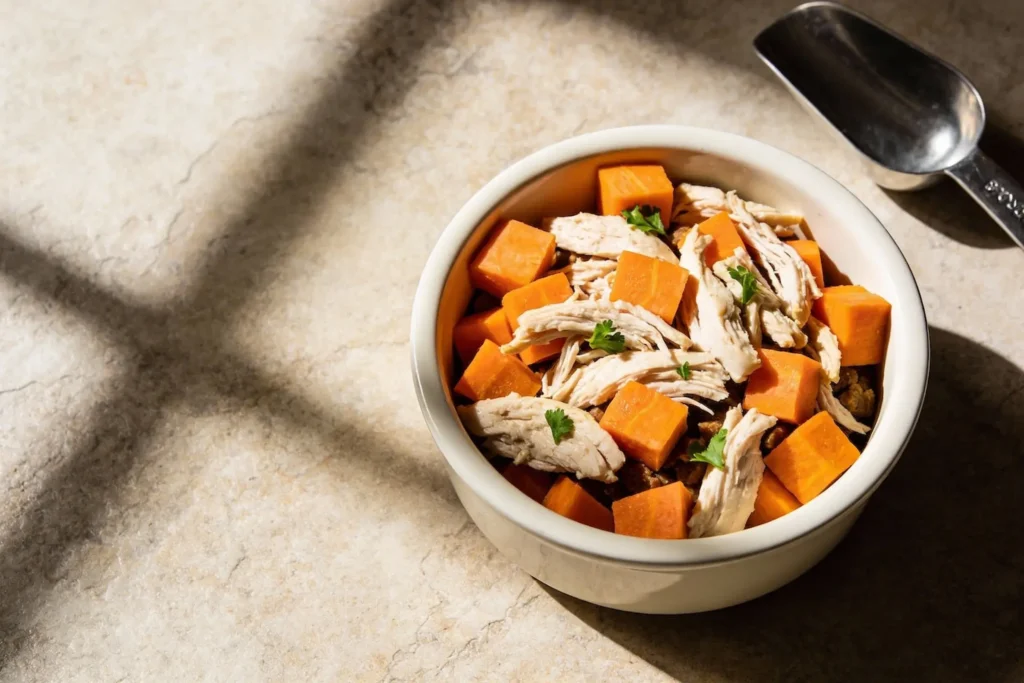
Your dog’s belly drama ends here. This simple chicken-and-sweet-potato dog food checks all the boxes: gentle on digestion, easy to make, and actually smells like real food. If your pup gets gassy, itchy, or just “meh” with kibble, this recipe can be a game changer. Bonus: you control every ingredient, so no mystery fillers. Deal?
Why Chicken and Sweet Potato Works So Well
Chicken brings lean, high-quality protein that most dogs tolerate like champs. Sweet potato adds slow-burning carbs and soluble fiber that soothes the gut. Together they’re like the comfort-food duo your dog didn’t know they needed.
– Lean protein = fewer tummy tantrums. Chicken breast or thigh without skin gives muscle-building amino acids without excess fat.
– Sweet potato = gentle fiber. It helps firm up stools and feeds good gut bacteria.
– Simple ingredients = fewer triggers. When you ditch fillers and artificial stuff, you reduce the chance of flare-ups.
What if my dog has sensitivities?
Chicken ranks as digestible for many dogs, but not all. If your pup can’t do chicken, you can swap it with turkey. FYI, always introduce new foods slowly and watch for changes.
The Recipe: Easy Chicken & Sweet Potato Dog Food
This makes about 6–8 cups of finished food, enough for 3–5 days for a 30–40 lb dog. Adjust portions based on your dog’s size, activity, and your vet’s advice.
Ingredients
- 2 lb (900 g) boneless, skinless chicken (breast or thigh)
- 2 medium sweet potatoes (about 1.5 lb/680 g), peeled and diced
- 1 cup carrots, diced
- 1/2 cup green beans, chopped (fresh or frozen)
- 1 cup pumpkin puree (plain, not pie filling), optional for extra fiber
- 2 cups low-sodium chicken broth or water
- 1 tbsp olive oil or salmon oil
- 1/2 tsp ground turmeric (optional, anti-inflammatory)
- Calcium source: 1,000–1,200 mg calcium carbonate powder per pound of meat used (so ~2,000–2,400 mg for this recipe), unless you grind and include raw bone
- Dog-safe multivitamin/mineral designed for homemade diets (follow label)
Directions
- Dice the chicken into small cubes. Peel and cube the sweet potatoes. Chop the carrots and green beans.
- Heat olive or salmon oil in a large pot over medium heat. Add chicken and cook until no pink remains. Don’t brown hard; we want gentle cooking for tender texture.
- Add sweet potatoes, carrots, green beans, and broth. Stir, bring to a simmer, then cover.
- Cook 15–20 minutes until the sweet potatoes turn soft and the veggies pierce easily.
- Stir in pumpkin puree and turmeric. Remove from heat and let cool.
- Once lukewarm, mix in calcium and your dog-safe multivitamin according to directions. Do not cook supplements.
- Portion into containers. Refrigerate up to 4 days or freeze up to 2 months.
Texture tips
If your dog wolfs food or struggles with chewing, mash the mixture with a potato masher or pulse in a food processor for a soft, cohesive texture.
Portion Sizes and How to Transition

Every dog is a unique chaos gremlin with unique needs, but here’s a helpful starting point.
How much to feed
- General daily estimate: 2–3% of your dog’s body weight in food per day, divided into 2 meals.
- Example: 30 lb dog → 0.6–0.9 lb (9.6–14.4 oz) of food daily.
- Monitor weight and adjust weekly. Ribs should be palpable but not visible, waist should taper.
Transition schedule (5–7 days)
- Day 1–2: 25% new food, 75% old food
- Day 3–4: 50/50
- Day 5–6: 75% new, 25% old
- Day 7: 100% new
If your pup gets loose stools, slow the roll and add a bit more pumpkin.
Why This Recipe Is Easy on Digestion
– Low fat, lean protein: Fat can trigger tummy issues in sensitive pups; chicken breast or trimmed thigh stays light.
– Soluble fiber from sweet potato and pumpkin: This helps form stool and supports gut microbes.
– Short ingredient list: Fewer variables make it easier to pinpoint triggers.
– Gentle cooking: Simmering keeps proteins tender and reduces GI stress.
When to tweak fat levels
If your dog struggles to keep weight, add 1–2 tsp extra salmon oil per day for calories and omega-3s. If your dog has pancreatitis history, keep fats minimal and talk to your vet for safe targets.
Optional Add-Ins (Dog-Safe Only)
You can customize, but keep it simple and balanced.
- Blueberries: A handful stirred in after cooling for antioxidants.
- Chopped spinach or kale: 1 cup steamed and finely chopped.
- Plain kefir or goat milk: 1–2 tbsp per meal for probiotics (check tolerance).
- Parsley: A pinch for fresh breath. Not a miracle, just nice.
What to avoid
Never add onion, garlic, chives, leeks, raisins, grapes, xylitol, nutmeg, or high-sodium broth. No artificial sweeteners, ever. IMO, keeping it boring beats an emergency vet bill.
Nutritional Balance: The Important Stuff

Homemade dog food can rock, but balance matters. The two biggies you can’t skip: calcium and micronutrients.
– Calcium: Meat alone does not provide enough calcium, and the calcium-to-phosphorus ratio matters for bone health. Add calcium carbonate per the recipe or use a veterinary-formulated bone meal powder.
– Vitamins/Minerals: Use a supplement designed for canine homemade diets. Human multis often miss canine-specific needs.
– Omega-3s: Salmon oil or fish oil supports skin, joints, and digestion. Follow label dosing to avoid diarrhea.
Signs the diet works
You want small, formed stools, less gas, shinier coat, more energy, and consistent appetite. If your dog still struggles, log symptoms and consider a vet nutrition consult.
Make-Ahead, Storage, and Budget Tips
– Batch cook: Double the recipe and freeze flat in freezer bags. Thaws fast and saves time.
– Ice cube trays for toppers: Freeze 2–3 tbsp portions to use as meal toppers over kibble if you’re not going full homemade.
– Use a scale: Weigh portions for accuracy. Eyeballing turns into “oops, chonky dog” fast.
– Buy in bulk: Grab family packs of chicken and a sack of sweet potatoes. Your wallet will high-five you.
Reheating
Warm gently to room temp or slightly warm. Super-hot food can burn mouths, and reheating too aggressively can make the texture rubbery.
FAQ
Can I use ground chicken instead of diced?
Yes. Ground chicken cooks evenly and offers a softer texture. Brown it lightly, drain any excess fat, then proceed with veggies and simmering.
What if my dog can’t handle chicken?
Swap with turkey or lean pork loin. Keep the same weight of meat, cook the same way, and still add calcium and supplements. Always introduce gradually and watch for signs of intolerance.
Do I need to add rice for sensitive stomachs?
Not necessarily. Sweet potato often does the job better because it offers soluble fiber and nutrients. If your vet recommends rice, use well-cooked white rice and replace part of the sweet potato 1:1 by volume.
Is this safe for puppies?
With a vet’s guidance, yes—but puppies need higher calories, precise calcium/phosphorus ratios, and complete micronutrients. Use a puppy-appropriate supplement and get a vet nutritionist to confirm amounts. FYI, winging puppy diets can cause growth issues.
How long can I store this?
Refrigerate for up to 4 days. Freeze for up to 2 months. Thaw in the fridge overnight and stir before serving. If it smells off or looks slimy, toss it. Your dog deserves better than a science experiment.
Can I skip the supplements if I feed this as a topper?
If you use it as a topper for a complete and balanced kibble, you can skip supplements. Keep the topper under 20–25% of total daily calories to avoid unbalancing the overall diet.
Final Thoughts
You don’t need a culinary degree to cook dog food that loves your pup’s gut. This chicken and sweet potato combo keeps things simple, soothing, and seriously tasty. Start slow, keep it balanced, and tweak as you learn what your dog thrives on. And if they lick the bowl clean and burp happily? That’s the review that matters.