
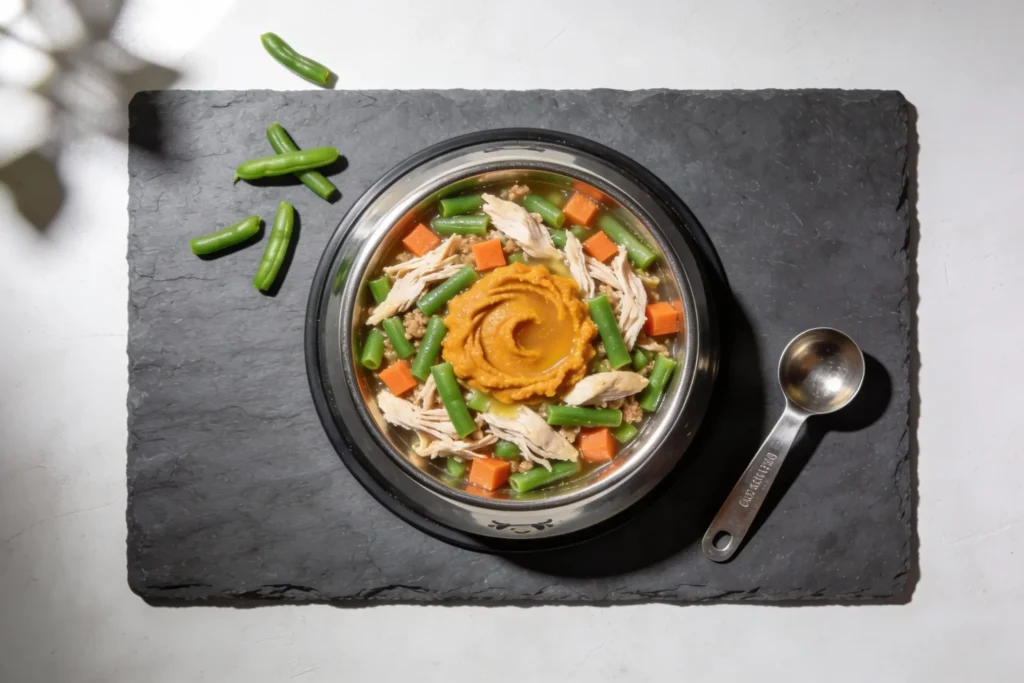
Your dog gained a few “love pounds,” and now you’re Googling healthy swaps between walks and zoomies? You’re in the right place. Green beans can help your pup feel full without packing in calories, and chicken brings the lean protein. Put them together, and you’ve got a tasty, budget-friendly, weight-control meal your dog will actually eat. Let’s build a simple recipe that helps your buddy slim down without the drama.
Why Green Beans and Chicken Work for Weight Control
Green beans bring volume and fiber with very few calories. Your dog gets a full bowl without the extra weight gain. Chicken breast provides lean protein to support muscle, especially important if you’re cutting calories.
The combo helps curb begging and scavenging because your dog still feels satisfied. And since we’re keeping ingredients simple, you can control what goes into the bowl. Fewer mystery fillers? Big win, IMO.
The Basic Recipe: Chicken and Green Bean Weight-Control Bowl
Yield: About 4 cups (enough for 2–4 meals depending on your dog’s size)
Calories: Roughly 250–300 calories per cup (varies by chicken cut and broth)
Ingredients
- 1 lb skinless, boneless chicken breast or thighs (trim visible fat if using thighs)
- 2 cups green beans, chopped (fresh or frozen; no added salt)
- 1/2 cup carrot, diced small
- 1/2 cup pumpkin puree (plain, not pie filling)
- 1–1.5 cups low-sodium chicken broth or water
- 1 tablespoon olive oil or salmon oil (optional for omega boost)
- Small pinch turmeric (optional)
- Calcium source if served as a stand-alone long term: 1/2 teaspoon finely ground eggshell or a vet-approved calcium supplement (optional – see notes)
Instructions
- Dice the chicken into bite-size pieces.
- Warm a nonstick pan. Add a splash of broth. Add chicken and cook until no pink remains.
- Add green beans and carrots. Pour in remaining broth or water. Simmer 6–8 minutes until tender.
- Stir in pumpkin puree and optional turmeric. Mix until creamy and evenly coated.
- Cool completely. Stir in oil if using. Portion into containers.
Serving Notes
- Short-term topper: Mix into your dog’s regular food to reduce calories while keeping volume.
- Stand-alone meal: Works for short periods, but long-term feeding needs added calcium and a broader nutrient profile. FYI, homemade diets need balancing.
Portion Guide (General Starting Point)
Every dog is different, so treat this as a starting point and adjust with your vet:
- Small dogs (10–20 lb): 1/2–3/4 cup per meal, twice daily
- Medium dogs (20–50 lb): 3/4–1.5 cups per meal, twice daily
- Large dogs (50–90 lb): 1.5–2.5 cups per meal, twice daily
If weight loss stalls, reduce total daily calories by 5–10% or add more green beans while slightly reducing starchy add-ins elsewhere in the diet.
How to Use It for Weight Loss Without Hangry Meltdowns

The trick: reduce calories, not bowl size. Dogs care about volume. We care about waistlines. Win-win.
- As a topper: Replace 25–50% of your dog’s regular kibble with this recipe. Start at 25% for a week, then go to 50% if needed.
- As a full meal for a short period: Feed for up to 2–3 weeks while you transition to a balanced weight-management plan.
- Boredom-buster: Stuff into a puzzle feeder or lick mat and freeze. Slows eating and burns a little mental energy.
What If My Dog Acts Starving?
Try feeding the same daily calories split into three smaller meals. Add extra non-starchy veggies like zucchini or more green beans. Also, check for sneaky snacks—treats and table scraps sabotage progress faster than you think.
Ingredient Swaps and Flavor Boosters
You can keep it simple or jazz it up. Just stay in the low-calorie lane.
- Protein swaps: Turkey breast, extra-lean ground turkey, white fish (tilapia, cod), or poached eggs for toppers.
- Veggie swaps: Zucchini, spinach, broccoli (small amounts), or cauliflower rice.
- Carb add-ins (if needed for energy): 1–3 tablespoons cooked brown rice or quinoa per cup for active dogs.
- Flavor boosters: Parsley, a splash of bone broth (low sodium), or a few sardines in water once a week for omega-3s.
What to Avoid
- No onions, garlic, chives, leeks
- No salt, heavy oils, or butter
- No canned green beans with added salt unless rinsed well
- No seasoned rotisserie chicken (tempting, I know)
Safety, Supplements, and When to Talk to Your Vet
Weight loss should feel steady, not dramatic. Aim for 1–2% body weight loss per week. If your dog seems tired, cranky, or always hungry, recalibrate.
- Calcium: If you feed homemade long term, include a calcium source. Ground eggshell (baked and finely powdered) or a vet-approved supplement works.
- Micronutrients: Consider a canine multivitamin and omega-3s (EPA/DHA) if you go >4 weeks homemade. Dogs need more than protein and veg.
- Medical check: If your dog gains weight despite cuts, ask your vet about thyroid disease, Cushing’s, or joint pain limiting activity.
- Puppies, pregnant/nursing dogs, or dogs with kidney issues: Skip DIY weight-loss diets without veterinary guidance.
How to Track Progress
- Weigh every 2 weeks on the same scale
- Use a body condition score chart (look for waist tuck and rib feel)
- Measure the ribcage with a soft tape once a month
If nothing changes after 3–4 weeks, reduce portions by 5–10% and increase exercise by 10–15 minutes daily.
Make-Ahead, Storage, and Budget Tips

Batch-cook like a pro. Your future self will thank you when you’re running late for the evening walk.
- Fridge: Store in airtight containers for up to 3 days.
- Freezer: Freeze in single-meal portions for up to 2 months. Thaw in the fridge overnight.
- Reheat: Warm gently with a splash of water. Stir well and check temperature—lukewarm only.
Budget Moves
- Buy chicken in bulk and freeze in 1-lb packs
- Use frozen green beans—they’re cheap, nutritious, and always ready
- Save veggie scraps like zucchini ends and carrot tops for broth (no onions!)
Sample 7-Day Weight-Control Plan
Here’s a simple framework you can tweak. Always adjust for your dog’s size, age, and activity.
- Breakfast: 50% regular kibble + 50% chicken/green bean mix
- Dinner: 50% regular kibble + 50% chicken/green bean mix
- Treats: Use a portion of the daily mix in a lick mat, or 2–4 green bean pieces or a small training treat
- Exercise: 2 brisk walks + 10 minutes of play or sniffaris (let them use that nose!)
After 1–2 weeks, reassess weight and energy. Increase percentage of the mix or reduce kibble slightly if needed.
FAQ
Can I use canned green beans?
Yes, but choose no-salt-added. If you only have regular canned, rinse thoroughly under cold water for 30–60 seconds to remove excess sodium. Fresh or frozen often costs less per serving and tastes better, IMO.
How much should I feed for weight loss?
Start with 10–20% fewer calories than your dog currently eats and monitor weekly. Use the chicken/green bean mix to replace part of the higher-calorie food so bowl volume stays similar. Adjust every 1–2 weeks based on progress.
Is this recipe complete and balanced?
Not on its own for long-term feeding. It’s great as a topper or a short-term meal while you plan a full, balanced diet. For long-term homemade, add proper calcium and consider a veterinary nutritionist-approved supplement blend.
Can I use dark meat or thighs?
Yes, with skin removed and visible fat trimmed. Thighs add flavor and a bit more fat, which some dogs tolerate better. If weight loss stalls, switch to breast or reduce added oil.
My dog has a sensitive stomach—will this help?
Often, yes. The recipe is simple, low in fat (especially with chicken breast), and the pumpkin can help digestion. Introduce it gradually over 3–5 days and watch stool quality. If stools loosen, reduce pumpkin and add a little plain rice temporarily.
What about adding rice?
You can add small amounts for energy or to firm up stools. Keep it modest—1–3 tablespoons per cup of the mix. Green beans should remain the main volume booster for weight control.
Conclusion
You don’t need fancy diet food to help your dog slim down. A straightforward chicken and green bean mix keeps calories in check, supports muscle, and fills the bowl so nobody side-eyes you at dinner. Keep portions consistent, track progress, and adjust with your vet’s help. Simple plan, happy pup, tighter harness—FYI, that’s the goal.