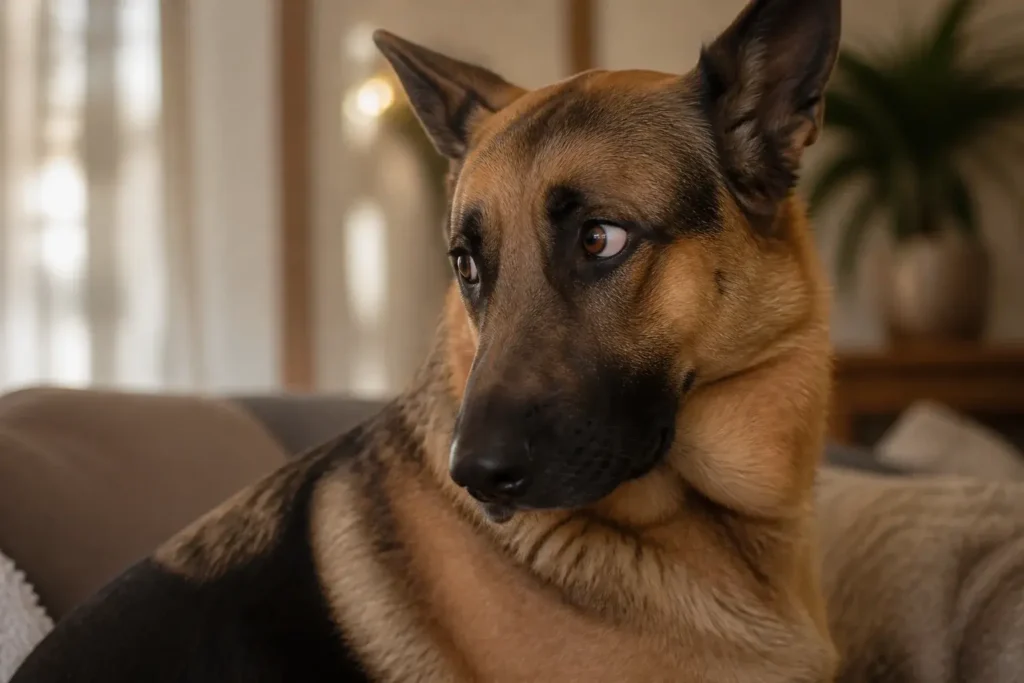
You love your German Shepherd. But sometimes you get that look that screams, “We need to talk.”
Maybe they snub your cuddle request or park their butt with their back to you. That feels personal, right?
Good news: your dog probably isn’t plotting your downfall. But they might feel frustrated, anxious, or confused. Let’s decode the sass and fix the vibe.
The Difference Between “Mad” And “Stressed”
We say “mad,” but dogs don’t stew about texts left on read. German Shepherds show what we call anger when they feel overwhelmed, ignored, confused, or under-stimulated. It’s more about unmet needs than revenge.
So your dog isn’t holding a grudge about the bath. They’re saying, “Hey, my brain and body need something.” That something could be exercise, clarity, or just five solid minutes of your attention.
What GSDs Need To Stay Chill
- Daily physical exercise: 60 to 90 minutes minimum for most adults.
- Brain work: training reps, sniffing games, puzzle toys.
- Predictable routines: clear cues, consistent boundaries.
- Calm handling: no yelling, no chaotic corrections.
Classic “I’m Mad At You” Behaviors
Let’s translate the drama into dog.
The Cold Shoulder
Your GSD turns away, avoids eye contact, or leaves the room when you approach. That often means disengagement due to frustration. Maybe you skipped the walk or ended play abruptly. It can also signal uncertainty if your tone changed.
Withholding Obedience
They know “down.” Today they stare like you asked for calculus. This isn’t spite. It usually means competing motivation or confusion from inconsistent cues. Sometimes they’re mentally tired. FYI, training burnout is real.
Grumbling And Sighing
Low grumbles, groans, or giant huffs after you move them off the couch say, “Ugh, fine.” That’s allowed. Respect the communication, then reward compliance so they don’t feel pushed around for nothing.
Deliberate Slow-Mo
The world’s slowest sit? That’s your dog saying, “I’ll do it, but I’m not thrilled.” It often follows nagging cues or unclear rewards. Tighten up your timing and pay better.
Selective Sniffing
You call, they sniff the exact same spot for a full minute. That’s a calming signal and a polite way to opt out. It can mean, “I need space,” or “You made this cue weird.”
Spicier Signs You Shouldn’t Ignore
Not all attitude is cute. Some signals warn you to adjust fast.
Hard Stares And Stiff Bodies
A fixed stare, closed mouth, and statue-still frame mean serious discomfort. Break eye contact, turn your body slightly, and de-escalate. Don’t push.
Lip Lifts, Freezes, Or Air Snaps
Those are “back off” messages. Respect them. Remove pressure, reassess your handling, and find a trainer if this pattern repeats.
Resource Guarding
Growling over toys or beds often looks like “mad.” It’s actually anxiety about losing stuff. Manage access, trade up with high-value treats, and teach “drop” and “leave it” with zero drama.
Why Your German Shepherd Might Be “Mad”
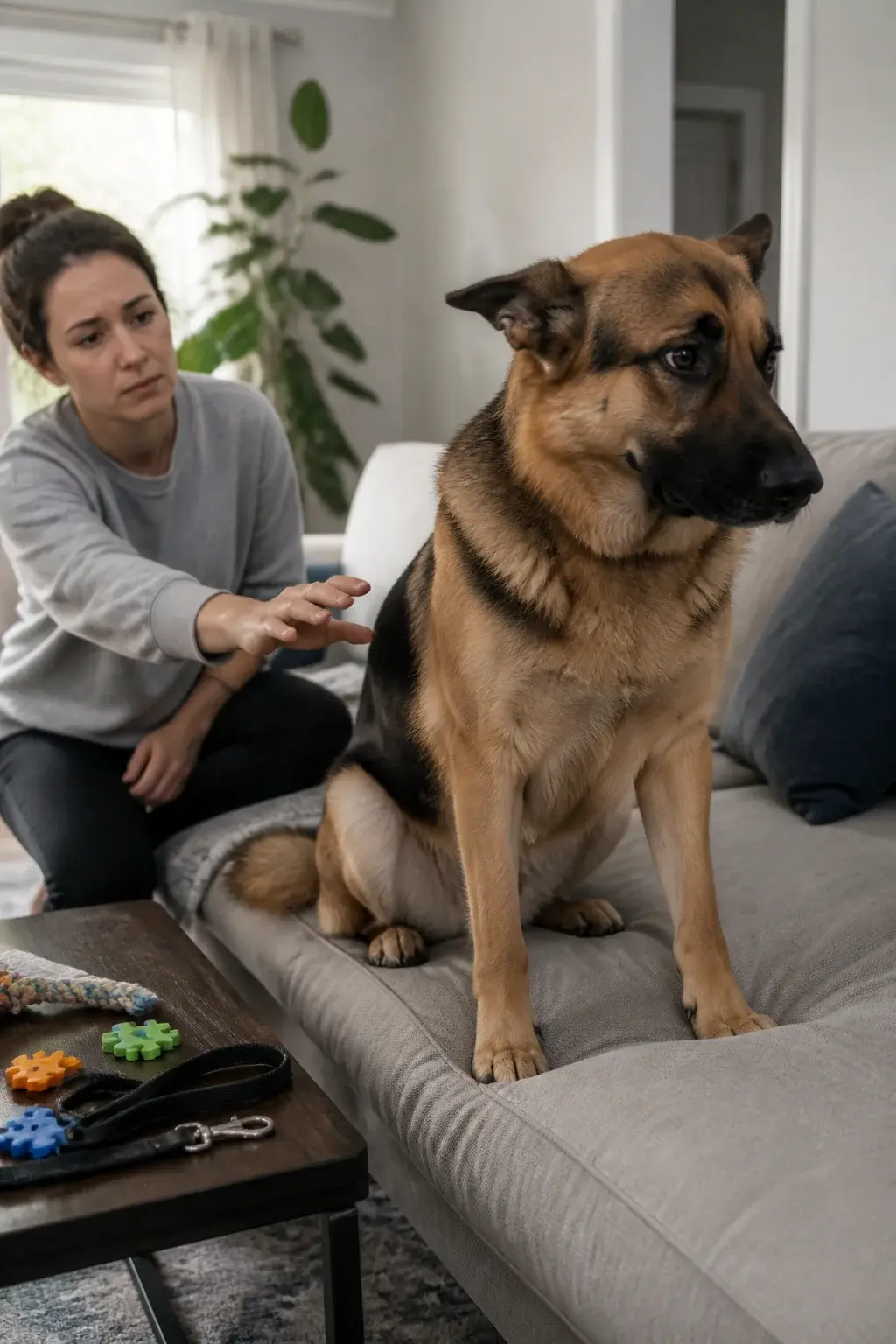
You’ll fix the behavior faster if you fix the cause.
Under-Exercised Brain And Body
German Shepherds need a job. Boredom breeds attitude. Aim for:
- Morning cardio: brisk walk or fetch, 20 to 30 minutes.
- Evening brain work: 10-minute training, sniffari, or puzzle.
- Weekend big outing: hike, tracking, or structured play.
Mixed Signals From Humans
You allow couch snuggles on Tuesday and scold for it on Thursday. Confusing. Set one rule and stick to it. Use the same cue words and pay the behavior you want.
Too Much Pressure
If you correct every tiny mistake, your dog might check out. Keep sessions short, end on a win, and reward generously. IMO, 80 percent rewards to 20 percent gentle redirection works wonders.
Pain Or Discomfort
Sudden irritation, flinching at touch, or snarkiness around stairs? Could be hips, spine, or GI issues. Shepherds hide pain like champs. Vet check first, training tweaks second.
<h2“How Do I Apologize?” Repairing The Relationship
Yes, you can say sorry. But do it in dog language.
Reset The Vibe
- Soft voice, relaxed shoulders. Ditch the stern stance.
- Offer a simple choice: “Want to target?” Hold out your hand for a nose boop and reward.
- Short play: two minutes of tug or fetch builds goodwill fast.
Rebuild Trust With Predictability
Pick three cues you’ll use consistently this week: “sit,” “here,” “leave it.” Pay them every time. Keep sessions under five minutes. Your dog learns you’re clear and fair again.
Make Deposits Into The Fun Bank
For every correction, make five positive interactions:
- Scatter-feed kibble in the yard.
- Sniff walk with a loose leash.
- Massage ears or chest if your dog enjoys touch.
- DIY puzzle: kibble in a towel burrito.
FYI, this ratio keeps your dog choosing you over dirt and squirrels.
Body Language Decoder: What Your GSD Really Means
“Back Turn + Ears Neutral”
I need a breather. Give space, then invite gently.
“Tail Low And Wagging Slow”
Nervous, not furious. Pair your cue with a treat toss to reduce pressure.
“Zoomies After Scolding”
Stress relief. End the lecture. Redirect into a sniff game.
“Sigh Then Heavy Lean”
We’re cool again. Reward the lean with calm pets and release.
Quick Fixes You Can Try Today
Use these simple tweaks when your shepherd acts salty.
- Trade Nagging For Timing: Ask once, wait two seconds, then help. Lure or reset. Reward the yes like it’s Black Friday.
- Pay The Check-In: Any time your dog glances at you outside, mark it (“yes!”) and pay. Attention grows where you reward it.
- Sniff Breaks Every 5 Minutes: During walks, cue “go sniff” for 30 seconds. Pressure down, cooperation up.
- Play The Two-Toy Game: Toss toy A, party with toy B when they return. Builds recall without tug-of-war over possession.
- End Sessions Early: Quit while you’re ahead. Leave them wanting more, not tapping out.
When To Call A Pro
If you see repeated freezing, growling around kids, or any bite history, bring in a qualified trainer or behavior consultant who uses reward-based methods. Add your vet to the team to rule out pain. It’s not “giving up.” It’s smart project management.
FAQs
Is my German Shepherd actually mad at me or just stubborn?
Probably neither. Most “stubborn” moments come from unclear cues, low motivation, or stress. Fix your timing, make rewards valuable, and reduce pressure. You’ll see cooperation spike.
Why does my GSD ignore me after I come home?
Many dogs need a decompression minute. Drop the hype. Toss a treat on a mat, let them sniff you, then invite gentle say-hi time. Within five minutes, you’ll get the wiggles back.
How long do GSDs hold a grudge?
Dogs don’t hold grudges like humans. They remember outcomes. If your interactions predict fun, clarity, and safety, the vibe improves fast. If interactions predict confusion or corrections, you’ll see distance.
Is turning their back a sign of disrespect?
Nope. It’s often a calming signal. Your dog says, “I’m not here to fight.” Respect it, soften your approach, and invite engagement instead of insisting.
What if my shepherd only listens when I have treats?
Your dog learned the paycheck rules. Fade treats by paying variable schedules and using life rewards like sniff time, tug, or door opens. But IMO, paying good work sometimes forever keeps behavior strong.
Do German Shepherds need a job to stop acting out?
They need purpose, which can be as simple as daily training, puzzle feeders, and structured play. Sports like tracking, nose work, or agility help, but you can meet needs at home with five to ten focused minutes twice a day.
Conclusion
Your German Shepherd isn’t mad. They’re communicating. When you meet their needs for exercise, clarity, and calm handling, the attitude melts away. Keep it simple: reward the good, stay consistent, and add play. Do that, and your “mad” shepherd becomes your most eager teammate again. IMO, that’s the kind of comeback story we all want.
About the Author

David
Blogger/YouTuber
A guitar nerd, the myth, the legend.