
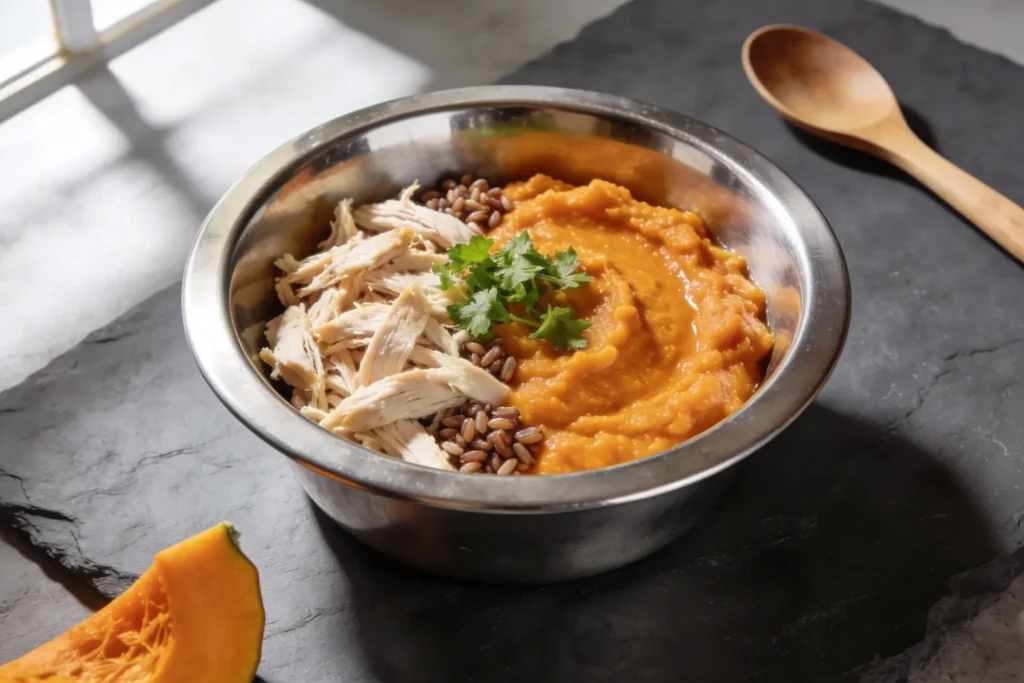
Your dog just locked eyes with your dinner and you’re wondering if there’s a way to turn that longing stare into a actually-healthy meal. Enter chicken & pumpkin mash: simple, comforting, and wildly dog-friendly. It’s easy to make, gentle on tummies, and spoiler alert—your pup will probably inhale it. Ready to swap mystery kibble for a bowl that looks like real food? Let’s go.
Why Chicken & Pumpkin Works Like Magic
Chicken and pumpkin sound basic, but together they check a ton of boxes for dogs. You get lean protein from chicken and fiber-rich goodness from pumpkin. That combo supports muscles, digestion, and energy without loading your pup with fillers.
Also, pumpkin isn’t just orange fluff. It brings:
- Soluble fiber to firm up loose stools and keep things regular
- Beta-carotene (a vitamin A precursor) for skin, coat, and eyes
- Natural sweetness that picky dogs actually like
If your dog has a sensitive stomach, chicken & pumpkin mash often feels like a warm hug for their gut. IMO, it beats “mystery meat by-product stew” by a mile.
The Simple Formula (Don’t Overthink It)
Here’s the basic setup that works for most healthy adult dogs:
- Protein: Cooked, shredded chicken breast or thigh
- Carb/Fiber: Plain canned pumpkin (not pie filling) or steamed pumpkin/squash
- Optional complex carbs: Cooked rice, quinoa, or oatmeal if your dog needs extra calories
- Healthy fats: A dash of fish oil or olive oil for omega support
- Mineral balance: A dog-safe calcium source if serving long-term
Proportions That Make Sense
As a standalone meal for short-term feeding (a few days to a week), aim for:
- 60-70% chicken
- 20-30% pumpkin
- 0-20% rice/quinoa (optional, based on energy needs)
FYI: If you want to feed this as a complete, long-term diet, you’ll need to add a balanced canine multivitamin/mineral and a calcium source. More on that below.
How to Make Chicken & Pumpkin Mash (The Easy Way)
You don’t need a culinary degree. You need a pot and 20 minutes.
- Cook the chicken: Boil or bake skinless chicken until fully cooked. Shred or dice.
- Prep the pumpkin: Use plain canned pumpkin or steam fresh pumpkin/squash until soft, then mash.
- Optional carb: Cook white rice or quinoa until soft. Dogs digest well-cooked grains better.
- Mix: Combine in a bowl. Add a little warm water or low-sodium chicken broth for mashability.
- Finish: Add a splash of fish oil or olive oil. Stir and let it cool to lukewarm before serving.
Storage Tips
- Refrigerate for 3–4 days in airtight containers.
- Freeze in single-serve portions for up to 2 months.
- Reheat gently and stir well—no hot pockets, please.
Nutrition Breakdown (Without the Headache)
Let’s keep it clear and useful:
- Chicken gives complete amino acids for muscle maintenance, immune function, and energy.
- Pumpkin brings fiber to soothe digestion and micronutrients like vitamin A, potassium, and vitamin E.
- Healthy fats support skin/coat and help absorb fat-soluble vitamins.
- Optional carbs add calories for active dogs or pups who need to gain weight.
The Calcium Thing (Don’t Skip This Long-Term)
Commercial foods add calcium and phosphorus in the right ratio. Homemade mash usually doesn’t. If you feed chicken & pumpkin as your dog’s main diet for more than a few days, add:
- Finely ground eggshell powder (about 1/2 teaspoon per 1 lb of food), or
- A vet-approved canine calcium supplement, or
- Bone meal designed for pets (follow label dosing)
And yes, a complete multivitamin for dogs helps cover trace minerals and vitamins. IMO, this turns “treat meal” into “balanced daily meal.”
When to Use It: Upset Stomachs, Picky Eaters, and Beyond
This mash shines during tummy drama or post-vet-recovery when your pup needs simple, gentle calories. It also wins with picky eaters who ghost their kibble but inhale real food.
Great use cases:
- Short-term bland diet after digestive upset
- Appetite boost for picky or elderly dogs
- Weight management with high-pumpkin, lower-fat versions
If your dog has chronic issues, check with your vet first. Food helps a ton, but it doesn’t replace actual medical advice. Shocking, I know.
Variations Your Dog Will Love
You can dress it up without ruining the simplicity. Try:
- Protein swap: Turkey, lean beef, or white fish
- Veggie boost: Mashed carrots, green beans, or spinach (steamed and finely chopped)
- Flavor drizzle: Sardine oil, kefir, or low-sodium bone broth
- Carb alternatives: Sweet potato or barley instead of rice
Portion Ideas
Every dog is different, but a rough range:
- Small dogs (10–20 lbs): 1–1.5 cups per day, split into 2 meals
- Medium (20–50 lbs): 2–3 cups per day
- Large (50–90 lbs): 3–5 cups per day
Start on the low end and adjust based on body condition. Ribs shouldn’t poke, but you should feel them with light pressure. That’s the sweet spot.
Common Mistakes (And How to Avoid Them)
Let’s save you the “oh no” moments:
- Using pumpkin pie filling: It contains sugar and spices. Hard pass.
- Skipping calcium long-term: You’ll create nutrient gaps. Easy fix: supplement.
- Serving it blazing hot: Dogs don’t love mouth burn. Lukewarm works best.
- Overfeeding fats: Too much oil can cause diarrhea. Start small.
- Going all-in overnight: Transition over 2–3 days to avoid GI upset.
FAQs
Can I feed chicken & pumpkin mash every day?
Yes, but only if you balance it. Add a canine multivitamin/mineral and a calcium source, and rotate proteins occasionally. If you want a set-it-and-forget-it plan, ask your vet for a home-cooked recipe tailored to your dog’s size, age, and health.
Is canned pumpkin as good as fresh?
Totally. Plain canned pumpkin works great and keeps things simple. Just avoid pumpkin pie filling, which comes with sugar and spices your dog doesn’t need.
How much pumpkin is too much?
For most dogs, 1 teaspoon per 10 pounds of body weight per meal fits nicely in a mix. Too much fiber can cause loose stools or, ironically, constipation. Balance is your friend.
Can I use chicken skin or fatty cuts?
You can, but go easy. High fat can trigger digestive upset in some dogs and doesn’t suit pups with pancreatitis risk. Lean meat keeps things safe and predictable.
What if my dog has allergies?
If chicken causes issues, swap in turkey or white fish. Keep the ingredients minimal and introduce new proteins slowly. If you see itching, ear gunk, or tummy troubles, hit pause and talk to your vet.
Can puppies eat this?
They can in small amounts, but puppies need very specific calcium, phosphorus, and energy ratios. Use this as a topper or temporary bland meal only. For daily feeding, go with a vet-approved puppy plan or a complete commercial diet.
Conclusion
Chicken & pumpkin mash checks all the right boxes: simple, tasty, and gentle on doggy bellies. You can whip it up fast, tweak it for your pup’s needs, and, with the right add-ons, turn it into a balanced staple. Try a small batch, watch your dog’s reaction, and adjust from there. FYI, you might never go back to boring kibble again—IMO, that’s a win for both of you.
About the Author

David
Blogger/YouTuber
A guitar nerd, the myth, the legend.