
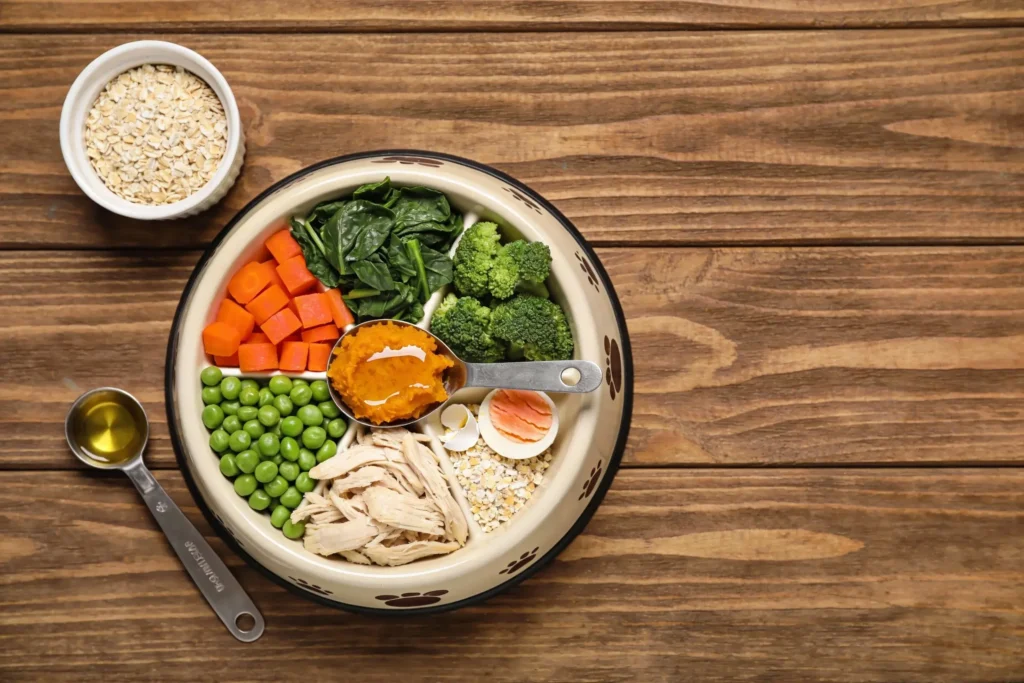
You want to make your dog drool with joy and still feel good about the bowl you serve? Awesome. Cooking balanced chicken dog food at home isn’t complicated, and you don’t need a chef’s hat—just a plan. We’ll keep it simple, tasty, and tailored to real dogs with real appetites. Ready to turn your kitchen into a five-star dog bistro?
Why Homemade Chicken + Veg Works
Homemade dog food puts you in control. You choose the ingredients, you skip the fillers, and you serve fresh food that actually smells like dinner. Dogs love chicken’s flavor, and veggies bring vitamins, fiber, and crunch.
But here’s the catch: dogs need balance, not just chicken and carrots tossed in a pot. They require protein, fat, fiber, calcium, and essential vitamins/minerals. We’ll hit those marks without making your head spin.
The Balanced Bowl Formula (No Guesswork)
Use this simple ratio for adult dogs:
- 40–50% animal protein (chicken thigh, breast, gizzards, or a mix)
- 30–40% vegetables + low-glycemic carbs (pumpkin, peas, green beans, carrots, spinach, broccoli, oats, rice, or quinoa)
- 10–15% healthy fats (chicken skin, salmon oil, olive oil, or sardines)
- Calcium source (crushed eggshell or dog-safe calcium supplement)
FYI: Most homemade recipes miss calcium, and that’s a big deal. Always add a calcium source unless you feed raw meaty bones (we’re cooking here, so add calcium).
Core Recipe: Chicken & Veggie Dog Food (Balanced)
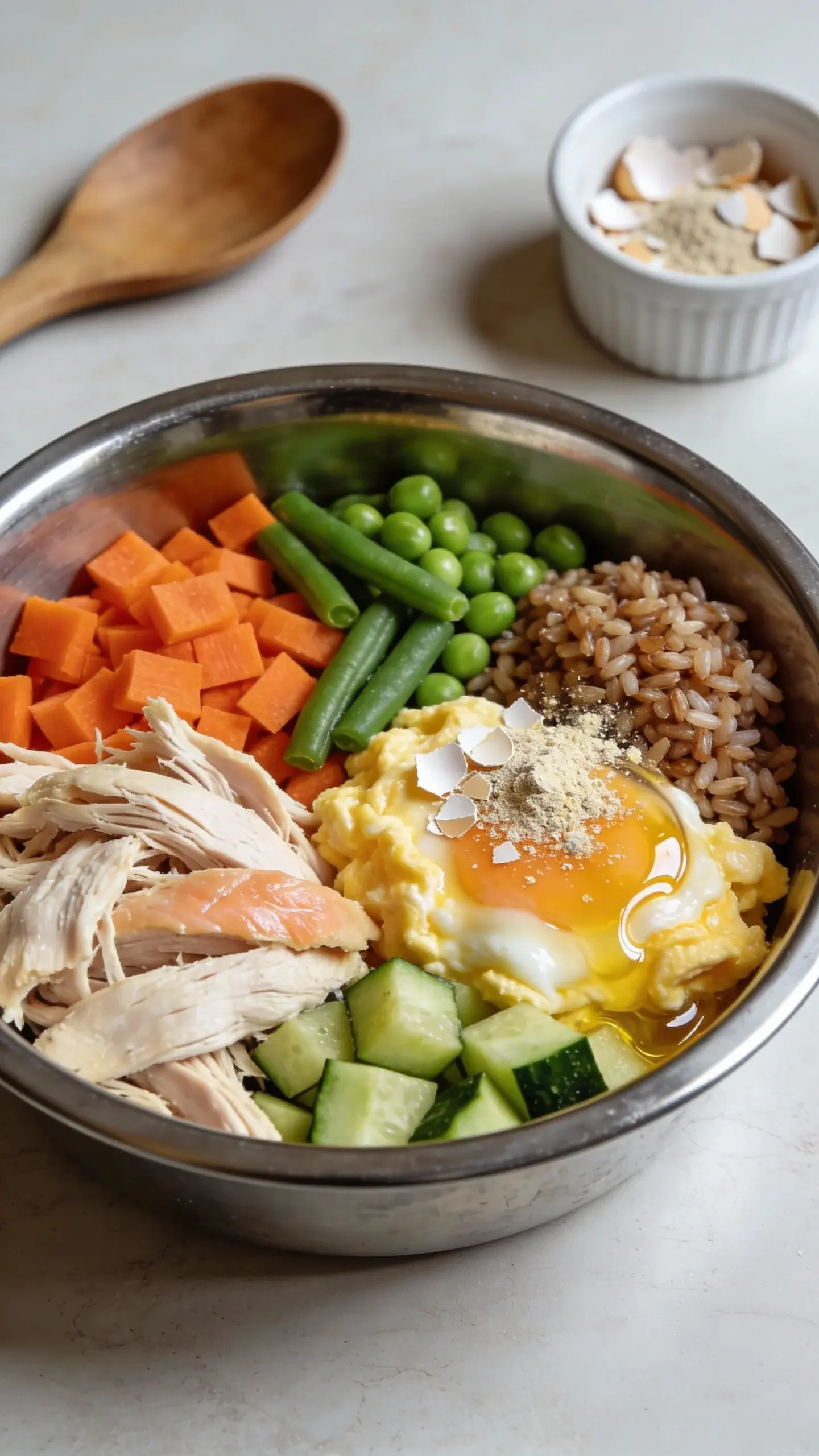
This recipe makes about 8 cups—enough for a medium dog for a few days. Scale up or down.
Ingredients
- 2 lb boneless, skinless chicken thighs (thighs have more fat and flavor than breast)
- 1 cup pumpkin puree (plain, not pie filling) or cooked sweet potato
- 1 cup frozen peas
- 1 cup carrots, diced small
- 1 cup green beans, chopped
- 1/2 cup oats or cooked brown rice (optional for extra carbs)
- 2 tbsp olive oil or 1 tbsp salmon oil (for omega-3s)
- 1/2 tsp iodized salt (yes, dogs need iodine—this tiny amount is safe for a batch this size)
- 1 tsp turmeric (optional, anti-inflammatory)
- 1/2 tsp cracked black pepper (optional, helps turmeric absorption)
- Calcium: 2 tsp finely ground eggshell powder or a dog-specific calcium supplement per label
How to Make It
- Chop chicken into bite-size pieces. Keep some fat for flavor and calories.
- In a large pot, sauté chicken in 1 tbsp oil until opaque and cooked through.
- Add carrots and green beans. Stir for 3–4 minutes.
- Add peas, pumpkin, oats/rice, turmeric, and pepper. Stir and add a splash of water if it looks dry.
- Simmer on low for 10–12 minutes until vegetables soften but don’t turn to mush.
- Remove from heat. Stir in remaining oil and the calcium once it cools a bit. Don’t cook the calcium.
- Cool to room temp before serving. Portion and refrigerate up to 4 days or freeze up to 2 months.
Portion Guide
A basic starting point:
- Small dogs (10 lb): 3/4–1 cup per day
- Medium dogs (30 lb): 2–2.5 cups per day
- Large dogs (60 lb): 3.5–4 cups per day
Split into two meals. Adjust based on your dog’s body condition. Ribs should be easy to feel, not see. If your pup gets hangry or chunky, tweak portions. IMO, a dog’s waistline tells the truth faster than any measuring cup.
Make It Complete: Vitamins and Add-Ons
Even balanced homemade recipes benefit from a couple extras:
- Calcium: Non-negotiable if you don’t include bones. Ground eggshell works: rinse, bake at 300°F for 10 minutes, grind to powder. Use ~1 tsp per pound of cooked meat.
- Omega-3s: Salmon oil or sardines (in water, no salt) 2–3 times per week supports skin, coat, and joints.
- Iodine: A pinch of iodized salt in the batch helps. Don’t go wild.
- Vitamin E: If you add fish oil regularly, consider 100–200 IU vitamin E a few times per week for medium/large dogs.
- Probiotics: Plain kefir or dog-safe probiotic powder helps sensitive tummies.
Good Veggies vs. “Nice Try” Veggies
Great choices:
- Carrots, green beans, peas, broccoli, spinach, zucchini, pumpkin, sweet potato
Skip or limit:
- Onions, leeks, chives (toxic)
- Lots of garlic (tiny amounts may be used by pros, but better to skip at home)
- Grapes/raisins (hard no), avocado skin/pit, mushrooms (unless you’re 100% sure they’re safe)
Texture Tips for Picky Eaters
Some dogs want smooth. Others want chunks like a stew. You can:
- Pulse cooked veggies in a food processor for a smoother mix.
- Leave half the chicken in small chunks for “chew appeal.”
- Add warm water or low-sodium chicken broth before serving for aroma.
If your dog snubs the bowl, warm it slightly. Warm food smells stronger, and dogs follow their nose like it’s Wi-Fi.
Transitioning Without Tummy Drama
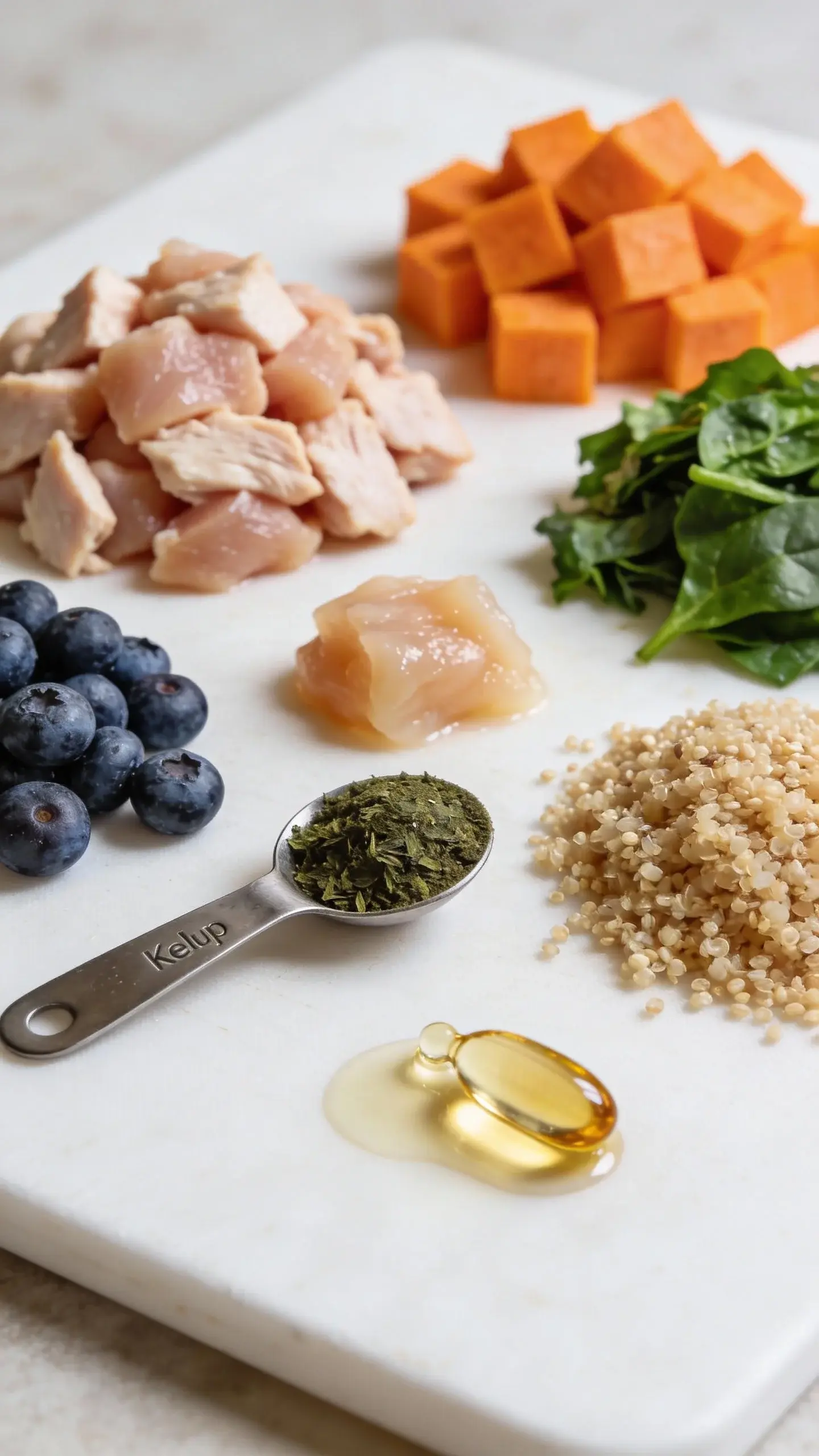
You don’t want a doggy digestive rebellion. Transition over 5–7 days:
- Day 1–2: 25% homemade, 75% old food
- Day 3–4: 50/50
- Day 5–6: 75% homemade
- Day 7: 100% homemade
Watch stools. Too loose? Reduce fat, add pumpkin, and slow down the switch. Too firm? Add a splash more oil and water. FYI, sudden changes cause most issues—not the ingredients.
Sample Variations (Because Variety = Happy Dog)
Chicken & Quinoa with Spinach
- Swap oats/rice for 3/4 cup cooked quinoa
- Add 1 cup chopped spinach in the last 2 minutes
- Finish with 2 tbsp olive oil and calcium
Chicken, Sweet Potato & Sardines
- Use 1.5 cups mashed sweet potato instead of pumpkin
- Stir in 1 small can sardines in water (drained) after cooking
- Skip extra oil if you add sardines
Low-Carb, High-Veg Version
- Double the green beans and broccoli
- Skip grains; add extra 1 tbsp salmon oil
- Great for couch potatoes who act like sprinters
Food Safety and Storage
Cook chicken thoroughly. No pink. We’re feeding dogs, not wolves on a cooking show. Cool before storing.
- Refrigerate in airtight containers up to 4 days.
- Freeze in meal-size portions up to 2 months.
- Thaw in the fridge overnight; never on the counter.
Label containers with dates. Your future self will thank you.
FAQ
How much homemade food should I feed my dog?
Start with 2–3% of your dog’s body weight per day in food, then adjust. For a 30 lb dog, that’s roughly 9–14 oz of food daily, split into two meals. Monitor weight and energy, then tweak portions.
Can I use chicken breast instead of thighs?
Yes, but add extra fat. Breast runs lean, so include 1–2 additional tablespoons of olive oil or mix in some chicken skin to keep calories and satisfaction up.
Do I really need calcium?
Yes. Meat alone doesn’t provide enough calcium and can cause long-term issues. Use ground eggshell (about 1 tsp per pound of cooked meat) or a dog-specific calcium supplement.
Can puppies eat this?
Puppies need different calcium/phosphorus ratios and more calories. Work with your vet or a veterinary nutritionist before feeding homemade to pups. For adults and seniors, this recipe works well with minor adjustments.
What if my dog has allergies?
Chicken is a common allergen. If your dog itches or gets ear gunk, try turkey, lean beef, or whitefish using the same structure. Always introduce new proteins slowly.
Is salt safe for dogs?
In small amounts, yes. A pinch in a full batch provides iodine and supports electrolyte balance. Avoid heavily salted broths or processed add-ins.
Wrapping It Up
Homemade chicken and veggie dog food lets you serve fresh, balanced meals without turning dinner into a science project. Follow the ratio, don’t skip calcium, and keep fats and fiber in check. Start simple, watch your dog’s body condition, and adjust like the attentive pet parent you are. IMO, there’s nothing better than a clean bowl and a wagging tail to prove you nailed it.
About the Author

David
Blogger/YouTuber
A guitar nerd, the myth, the legend.