
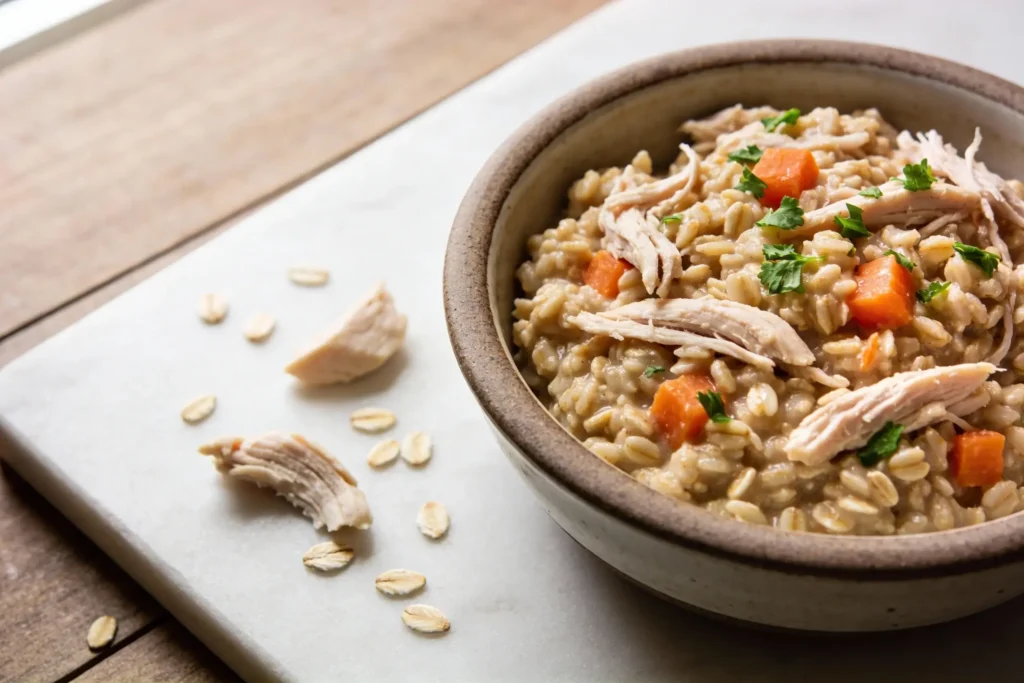
Your dog keeps scratching, licking, and giving you that “help me” look after meals? Yeah, food sensitivities can turn dinner time into detective time. The good news: a simple, soothing combo like chicken and oatmeal often calms the chaos. It’s gentle, balanced, and easy to make at home without needing a culinary degree or a sous-chef named Baxter.
Why Chicken and Oatmeal Works for Sensitive Stomachs
Chicken brings lean protein without heavy fats, which keeps digestion calmer. Oatmeal adds soluble fiber that helps firm stools and supports gut health. Together, they deliver solid nutrition with fewer “uh-oh” ingredients.
Bonus: Oats rarely trigger issues compared to wheat or corn. And when you cook at home, you control the add-ins—no mystery meat meals here.
Signs Your Dog Might Have Food Sensitivities
You don’t need a lab coat to spot the red flags. Watch for:
- Itchy skin or paws after meals
- Recurring ear gunk or infections
- Loose stools, gas, or tummy rumbles
- Face rubbing or scooting (glamorous, I know)
If you see a pattern tied to specific foods, chicken and oatmeal can be a great reset meal while you figure things out.
The Core Recipe: Chicken Dog Food with Oatmeal
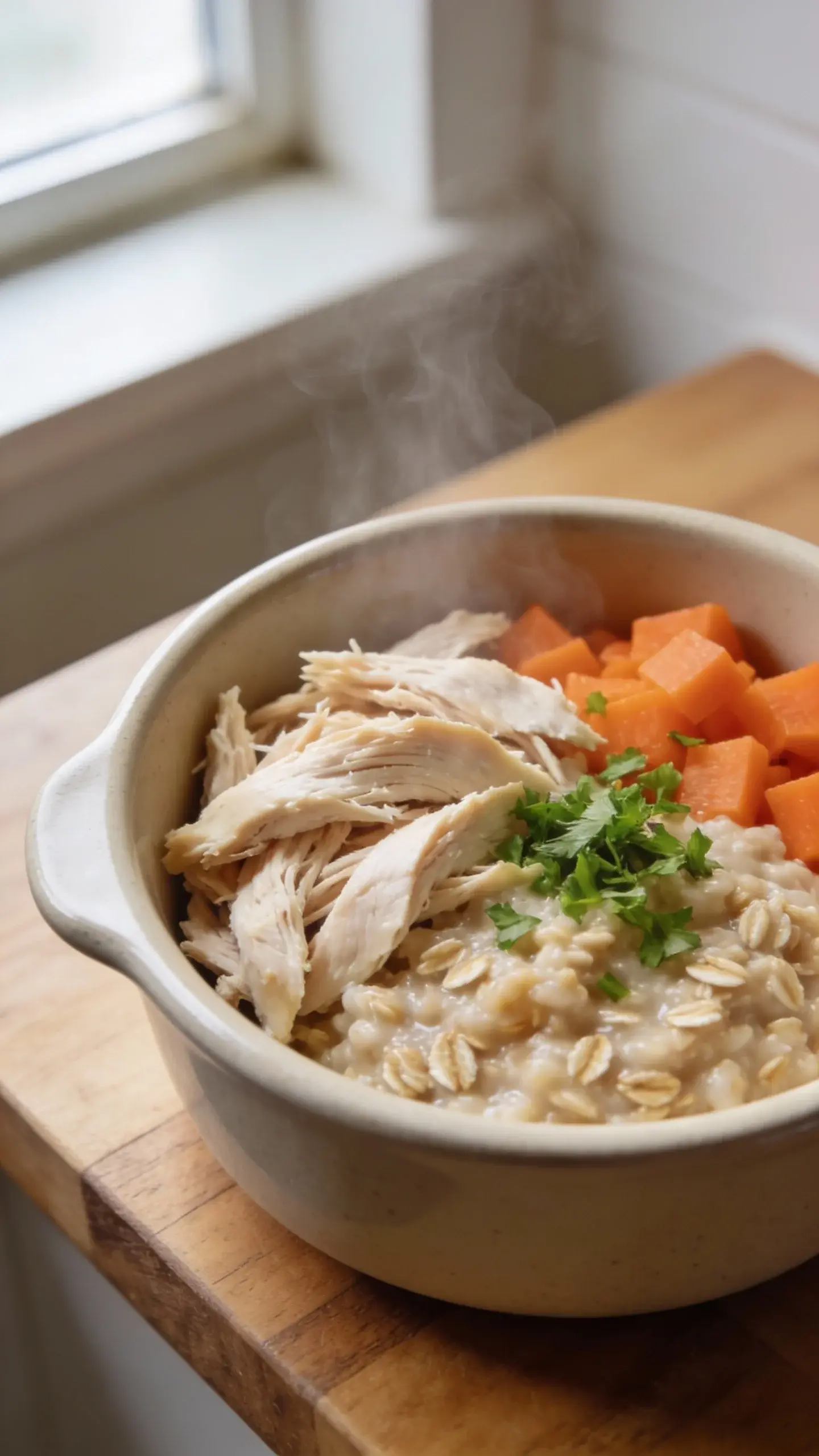
This recipe keeps it simple, digestible, and complete enough for short- to medium-term feeding. For long-term use, add a vet-recommended vitamin/mineral supplement, IMO.
Ingredients (makes ~6-8 cups, about 6-8 servings for a 25–30 lb dog)
- 2 lbs skinless, boneless chicken thighs (or breast if you prefer leaner)
- 1 cup rolled oats (not instant)
- 1.5 cups low-sodium chicken broth or water
- 1 medium carrot, finely diced
- 1/2 cup green beans, chopped
- 1 tbsp olive oil or salmon oil
- 1/4 tsp iodized salt (optional but helps iodine intake)
- Optional boosters: 1 egg (lightly scrambled), 1 tbsp plain pumpkin puree, and a canine multivitamin as directed
Instructions
- Chop chicken into small, bite-sized pieces. Trim visible fat for sensitive tummies.
- In a large pot, warm the oil over medium heat. Add chicken and cook until no pink remains.
- Add carrots and green beans. Stir 2–3 minutes until slightly softened.
- Pour in broth or water. Bring to a gentle simmer.
- Stir in oats. Reduce heat to low, cover, and cook 10–12 minutes until oats are soft and liquid absorbs.
- Remove from heat. Cool to room temp. If using egg or pumpkin, fold in now.
- Portion into containers. Refrigerate up to 4 days or freeze up to 2 months.
Texture tip: If your dog prefers softer food, add an extra 1/2 cup water and cook a few minutes longer.
Make It Balanced: Simple Add-Ins That Matter
Homemade dog food can miss a few key nutrients if we wing it too hard. Let’s not.
- Omega-3s: Add salmon oil or sardine oil for skin and gut support.
- Calcium: If you don’t use bone-in meat, add a calcium source (e.g., finely ground eggshell powder: ~1 tsp per pound of meat) or a vet-approved supplement.
- Iodine: A pinch of iodized salt or a supplement helps thyroid health. Don’t overdo it.
- Vitamins/minerals: Use a canine multivitamin designed for homemade diets. FYI, human multis can overshoot some nutrients for dogs.
Vegetable Swaps
If carrots or green beans don’t vibe with your pup:
- Try zucchini, spinach (lightly wilted), or peas.
- Avoid onions, garlic, leeks, and heavy broccoli/cauliflower if gas becomes a problem.
How Much Should You Feed?
Dogs vary, but here’s a solid starting point:
- Adult dogs: 2–3% of body weight per day in food (split into two meals).
- Example: A 20 lb dog might eat 6–9 oz (170–255 g) per day.
Adjust based on body condition. Ribs too visible? Increase slightly. Pup turning into a couch potato loaf? Decrease. And always keep fresh water available.
Transitioning Without Tummy Drama
Change food slowly over 5–7 days:
- Day 1–2: 25% new food, 75% old
- Day 3–4: 50/50
- Day 5–6: 75% new food
- Day 7: 100% new food
If stools loosen, slow down the switch and add a spoon of pumpkin.
When Chicken Isn’t The Hero
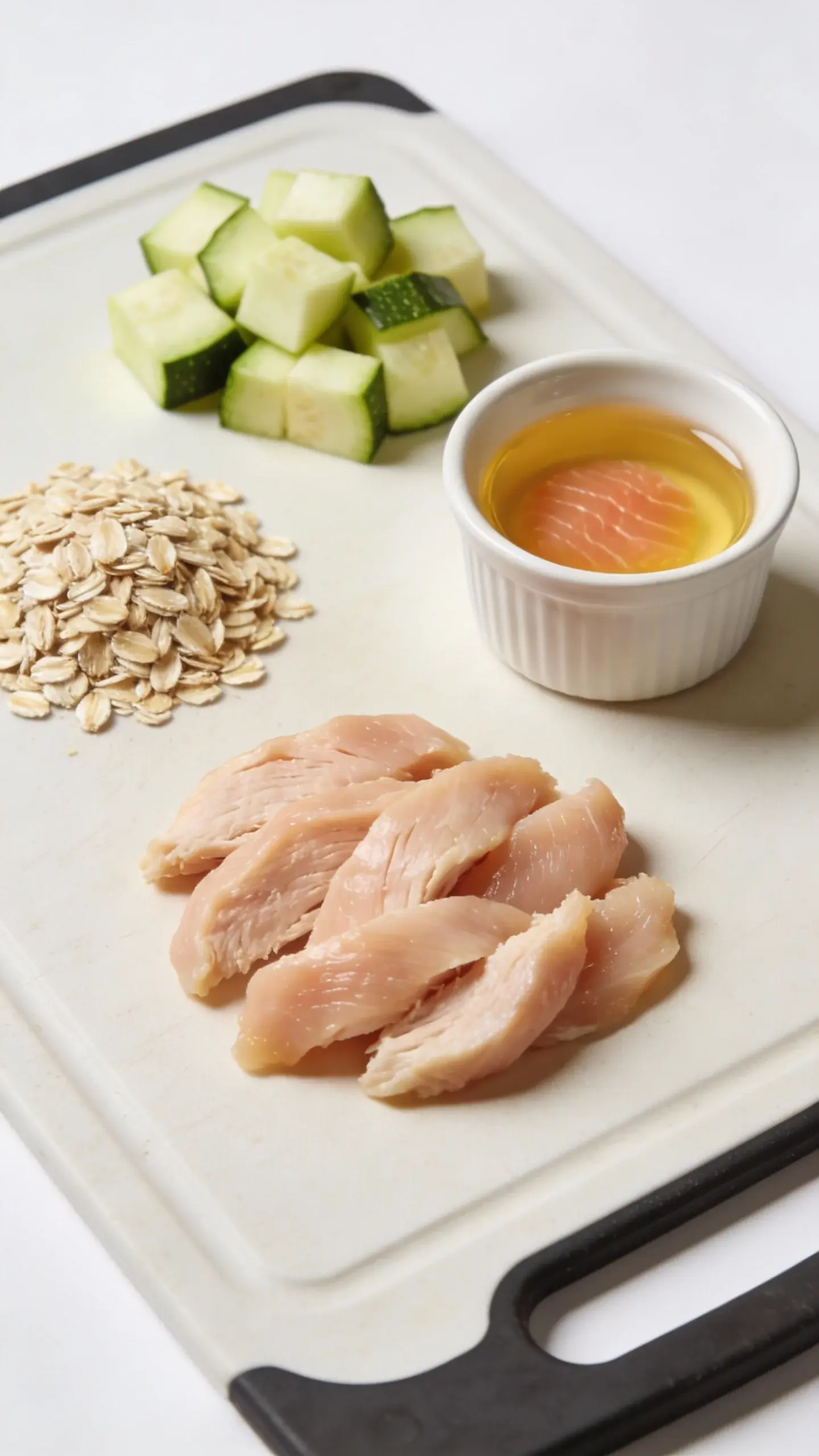
Some dogs react to chicken. Yep, betrayal. If your dog still itches or gets soft stools after switching:
- Swap chicken for turkey or lean pork.
- Try a novel protein like whitefish or duck if you suspect chicken sensitivity.
- Keep the oatmeal if tolerated—most sensitive tummies like it.
Pro move: Keep a food journal. Track protein sources, stool quality, and itch levels. Patterns pop up fast.
Sample Weekly Cook Plan (Low Effort, High Win)
Not into daily cooking? Same. Batch it.
- Sunday: Cook 2–3 batches, chill, and freeze in meal-size containers.
- Weekdays: Thaw one container in the fridge overnight.
- Before serving: Warm slightly and add oils/supplements after heating.
Portioning Hack
Use a kitchen scale and label containers by ounces. Your future self will thank you at 6 a.m.
Troubleshooting Common Issues
- Soft stool? Add 1–2 tsp pumpkin per meal and reduce oil slightly. Make sure oats are fully cooked.
- Dry, flaky coat? Increase omega-3 oil or add a sardine a few times a week.
- Dog bored? Alternate veggies, rotate proteins weekly, or mix in a spoon of plain kefir for probiotics.
- Weight creeping up? Cut portions by 10% and add a bit more green veggies for volume.
FAQ
Can I use instant oatmeal?
You can in a pinch, but rolled oats digest slower and work better for most dogs. Avoid flavored packets since they often contain sugar, salt, or artificial stuff your dog doesn’t need.
Is this recipe complete and balanced long-term?
Not without a supplement. For short-term feeding, it’s great. For long-term, add a canine multivitamin and a calcium source, and consider a vet nutritionist’s review. IMO, a quick consult pays off.
What if my dog is allergic to chicken?
Swap with turkey, pork tenderloin, or whitefish. Keep the same method and ratios. If symptoms persist, consider a novel protein like duck or venison and talk to your vet about an elimination diet.
Can puppies eat this?
Puppies need more calcium, phosphorus, and overall calories. You can adapt the recipe with a vet-formulated puppy supplement and careful ratios, but don’t DIY this for growing pups without guidance.
How do I store and reheat?
Refrigerate for up to 4 days or freeze for 2 months. Thaw in the fridge and warm gently. Add oils and supplements after reheating so you don’t degrade nutrients.
Can I add rice instead of oats?
Sure. Use white rice for extra gentle digestion or brown rice for more fiber. Oats tend to help with stool quality better, but rice works well for many dogs.
Conclusion
Chicken and oatmeal gives sensitive dogs a calm, tasty reset—without the ingredient roulette. You get lean protein, soothing fiber, and the power to control what goes into the bowl. Start simple, add the right boosters, and tweak as you learn what your dog loves. Because honestly, watching your pup eat happily and nap instead of scratch? That’s the real chef’s kiss.
About the Author

David
Blogger/YouTuber
A guitar nerd, the myth, the legend.