
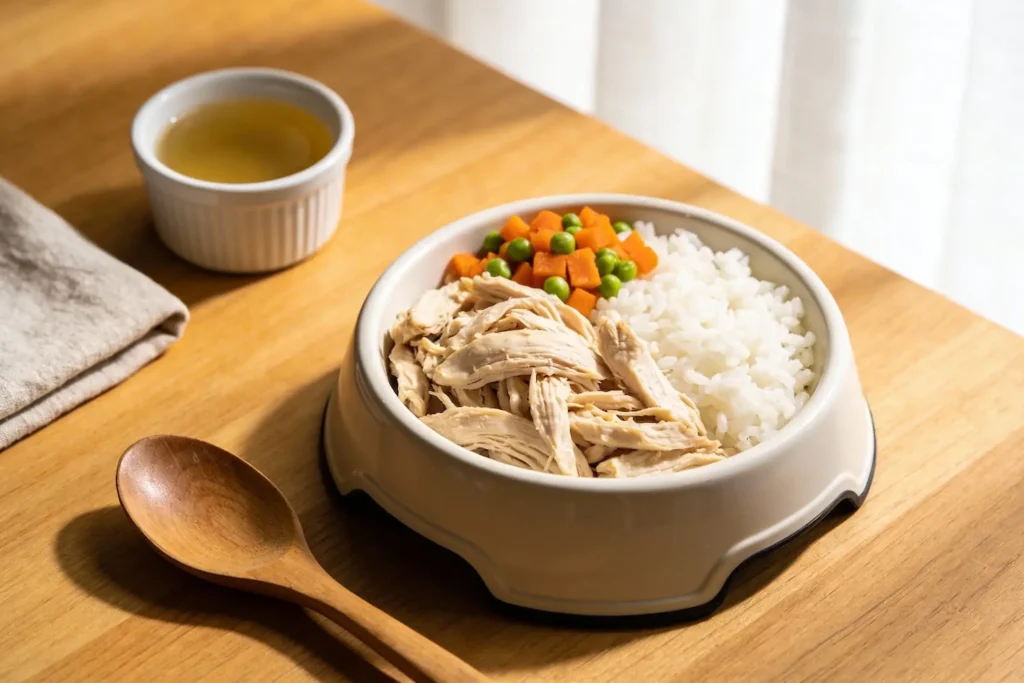
Chicken and rice for dogs sounds simple, right? Toss it in a pot and call it a day? Not so fast. If you want a bowl that actually fuels your pup, keeps their tummy happy, and doesn’t bore their taste buds, you need a few tricks. Stick with me and you’ll master a balanced, tasty, vet-friendly chicken-and-rice dog meal without overcomplicating it.
Why Chicken and Rice Works (When You Do It Right)
Chicken and rice offers gentle protein and easy-to-digest carbs. It’s a go-to when dogs have mild tummy upsets, but it also makes a great base for regular home-cooked meals if you build around it. The key? Balance, portion control, and safe cooking.
Also, don’t get weird with seasoning. No onion, garlic, heavy oils, or spicy blends. Save that for your own dinner.
Choosing the Right Ingredients
Your ingredients matter more than you think. A few small choices add up to better nutrition and fewer vet bills.
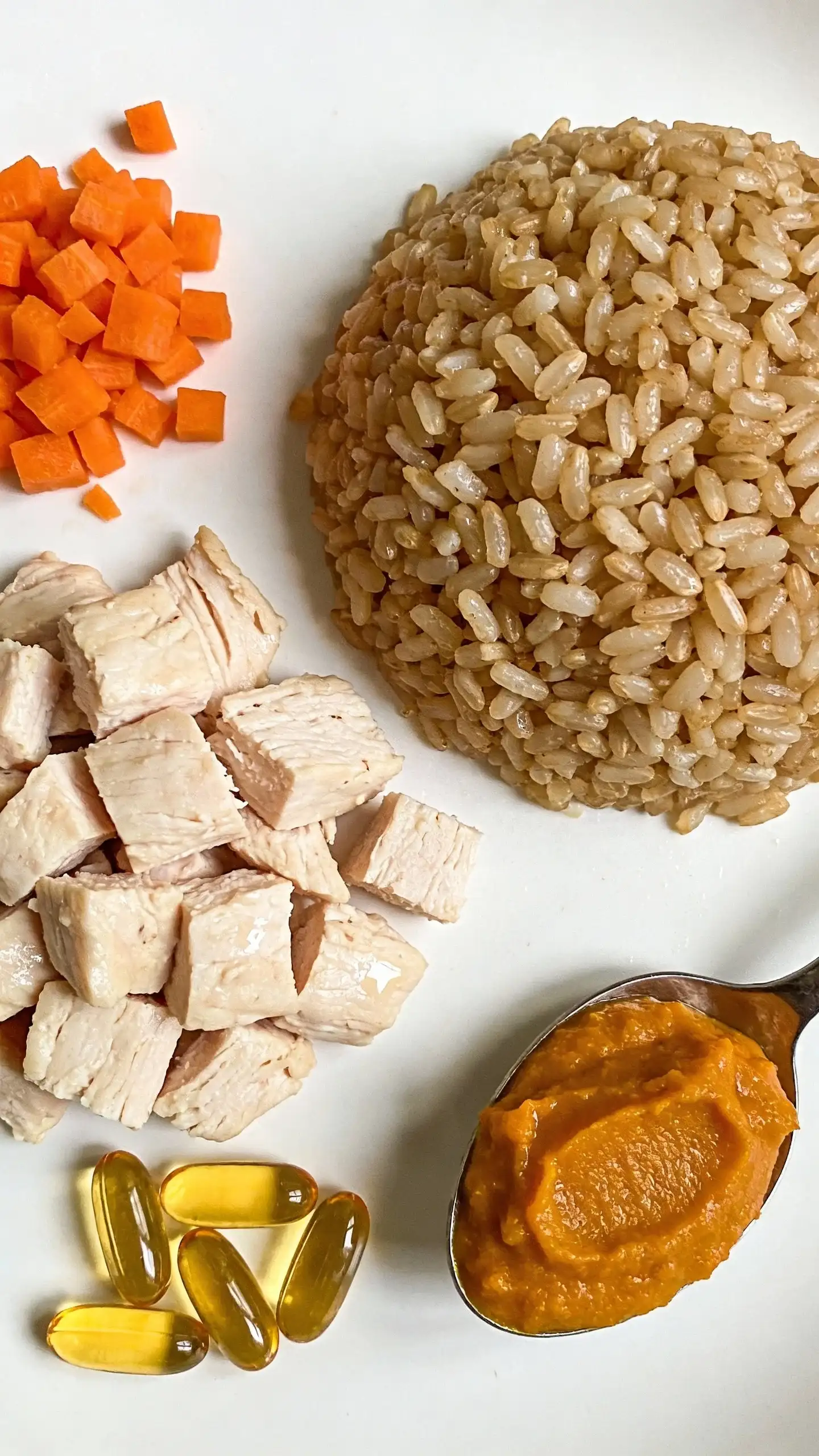
- Chicken: Boneless, skinless chicken breast or thighs. Thighs have more fat and flavor; breasts are leaner. Either works.
- Rice: White rice for sensitive stomachs. Brown rice for more fiber and nutrients (but it’s tougher to digest). FYI: most vets recommend white rice during GI upset.
- Broth: Optional, low-sodium chicken broth for flavor. Check the label: no onion/garlic.
- Veggies: Carrots, peas, green beans, spinach, pumpkin (plain). Chop small or steam to soften.
- Fats: A little healthy fat can help—like salmon oil or a teaspoon of olive oil—especially if you use chicken breast.
What to Avoid
- No onions or garlic (toxic)
- No butter, heavy salt, or spices
- No cooked bones (splinters = ER visit)
- No raisins or grapes (ever)
The Foundational Recipe: Basic Chicken and Rice
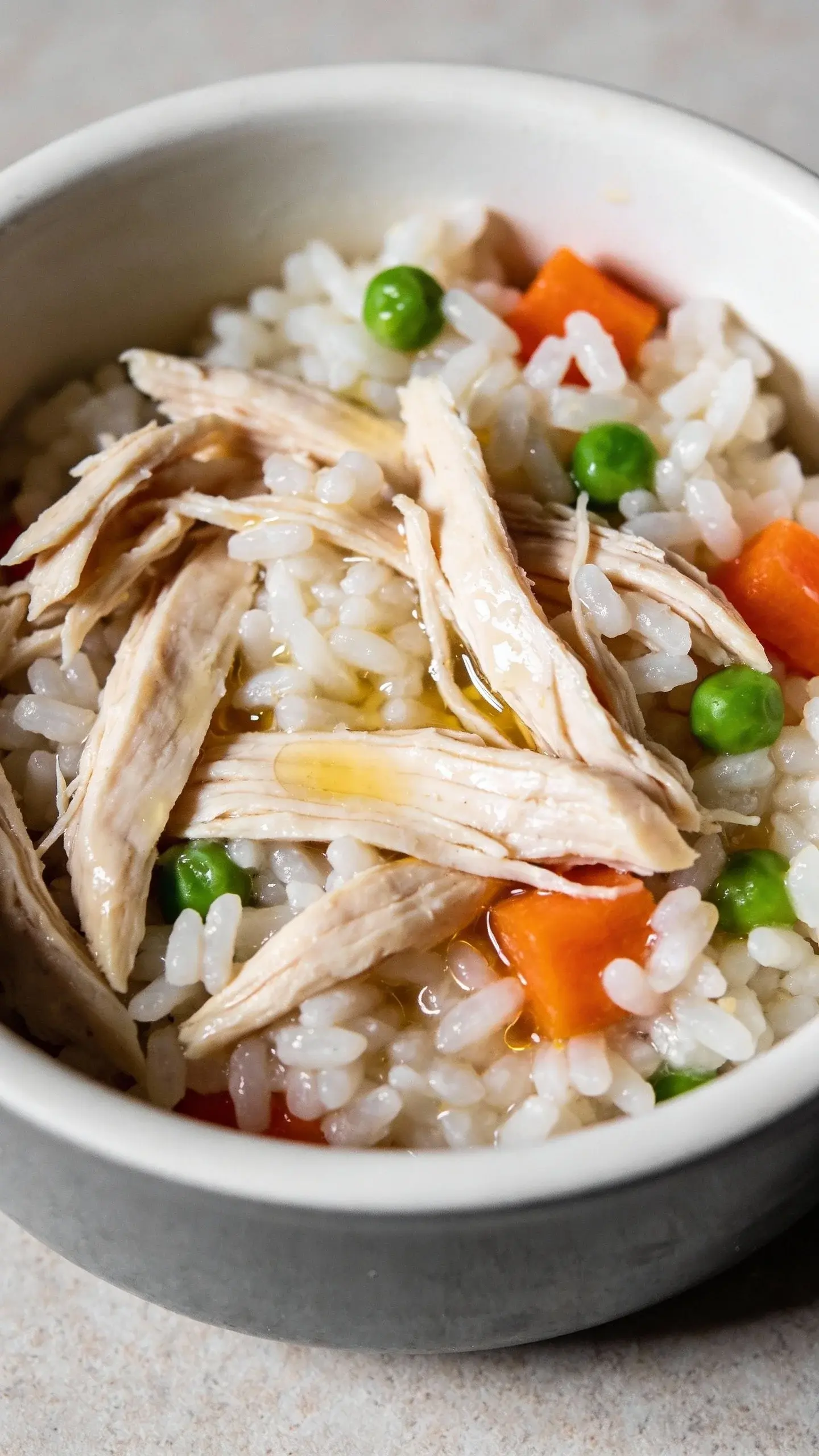
This is your go-to. You can feed it plain during tummy trouble or dress it up for daily meals with extras (more on that next).
Ingredients (Yields about 6 cups cooked)
- 1.5 pounds boneless, skinless chicken (breast or thighs)
- 1 cup uncooked white rice (jasmine or basmati works great)
- 3 cups water or low-sodium chicken broth
- 1/2 cup finely chopped carrots
- 1/2 cup peas (fresh or frozen)
- 1 tablespoon salmon oil or 1 teaspoon olive oil (optional)
Instructions
- Cook the chicken: Boil chicken in a pot of water until fully cooked (internal temp 165°F). Remove, cool, and shred or chop into small bite-sized pieces.
- Cook the rice: In the same pot (dump the water if it’s greasy), add the rice and 3 cups fresh water or broth. Simmer with the lid on until tender (12–15 minutes for white rice).
- Add veggies: Stir in carrots and peas during the last 5 minutes of cooking rice. You want them soft but not mush.
- Combine: Mix the chicken back into the rice and veggies. Add salmon oil or olive oil if using. Cool to room temp before serving.
Portion Guide
As a rough start:
- Small dogs (10–20 lb): 3/4 to 1.5 cups per day, split into 2 meals
- Medium dogs (20–50 lb): 1.5 to 3 cups per day, split into 2 meals
- Large dogs (50–90 lb): 3 to 5 cups per day, split into 2 meals
Adjust based on activity, age, and body condition. If your dog is acting like a furry vacuum after meals, bump portions slightly. If the waistline disappears, dial back. IMO, a kitchen scale helps a ton.
Make It Complete: How to Balance the Meal
Chicken and rice alone won’t cover everything if you feed it long term. You need to round it out so your dog doesn’t miss key nutrients.
Protein-Fat-Carb Balance
- Protein: Aim for about 40–50% of the bowl from chicken by volume.
- Carbs: About 30–40% rice.
- Veggies: 10–20% chopped veggies.
- Fats: Add a small amount of healthy fat (fish oil for omega-3s is clutch).
Supplements That Matter
You can keep this simple:
- Calcium: If you cook boneless meat, you must add calcium. Use a pet-safe calcium supplement per label, or 1/2 teaspoon finely ground eggshell powder per pound of meat.
- Omega-3s: Salmon oil or fish oil per label for skin, coat, and inflammation.
- Multivitamin: A dog-specific multivitamin helps fill micronutrient gaps for long-term feeding.
FYI: If you only feed chicken and rice for 2–3 days during tummy recovery, you can skip supplements. For long-term feeding, don’t skip.
Smart Variations to Keep It Interesting
Dogs love variety too. Keep the base, then rotate ingredients to cover nutrients and prevent boredom.
- Protein swaps: Turkey, lean beef, or white fish. Cook fully and drain excess fat.
- Carb swaps: Sweet potato or pumpkin instead of rice for extra fiber.
- Veggie rotation: Zucchini, spinach, cauliflower rice, green beans. Chop small and steam or simmer.
- Flavor boost: A spoonful of plain Greek yogurt or cottage cheese on top (if your dog tolerates dairy).
Stool Check = Menu Feedback
Yes, we’re going there. If stools turn loose, go simpler: white rice, chicken, and a bit of pumpkin. If stools get too firm, add more veggies or a splash of olive oil. Your dog’s poop gives the most honest food review on earth.
Food Safety and Storage (Don’t Skip This)
Cook clean and store smart to avoid upset stomachs.
- Cool completely before refrigerating to prevent condensation and bacterial growth.
- Fridge: Store in airtight containers for up to 3 days.
- Freezer: Portion into meal-sized packs and freeze for up to 2–3 months. Label with date (future you will thank you).
- Reheat gently: Warm to room temp or slightly warm. Don’t serve piping hot. Stir well.
- Clean tools: Wash cutting boards, knives, and bowls after handling raw chicken. Cross-contamination is not a vibe.
Sample One-Week Meal Prep Plan
Want to cook once and chill? Here’s a simple plan for a 40–50 lb dog. Adjust amounts for your dog’s size.
Batch Cook
- 3 pounds chicken thighs, trimmed
- 2 cups white rice
- 1 cup carrots, 1 cup green beans
- Fish oil per label, plus dog-safe calcium supplement
Cook as above. This makes about 12–14 cups. Feed 2 to 2.5 cups per day split into two meals. Freeze half, refrigerate the rest. Add supplements right before serving, not in the big pot (heat can degrade some nutrients).
Troubleshooting: Common Mistakes
- Overcooking rice: Mushy is fine, gluey is not. Aim for tender, not paste.
- Forgetting calcium: Long-term, this matters. Weak bones are not on the menu.
- Too little protein: Dogs need protein. Keep chicken at around half the bowl by volume.
- Too much fat suddenly: Can trigger diarrhea or pancreatitis in sensitive dogs. Add fats gradually.
- Using seasoned rotisserie chicken: Tempting, but salt, spices, and skin = bad idea.
FAQ
Can I feed chicken and rice every day?
Yes, but you need to balance it. Add veggies, healthy fats, and a calcium source, and consider a dog multivitamin. If you want a forever homemade diet, consult your vet or a board-certified veterinary nutritionist for a custom plan.
White rice or brown rice—what’s better?
For sensitive stomachs or recovery, white rice wins because dogs digest it easily. For healthy dogs who tolerate fiber well, brown rice can work. Start with white, then experiment.
How long should I feed this for an upset stomach?
Usually 24–72 hours after vomiting or diarrhea stops. Then transition back to regular food over 3–5 days. If symptoms persist or your dog seems off, call your vet. Don’t tough it out.
What if my dog has chicken allergies?
Swap in turkey, lean beef, or white fish. Keep the method the same. If you suspect allergies, talk to your vet before you start elimination diets. IMO, keep a simple ingredient list to make troubleshooting easier.
Can I add eggs?
Absolutely. Cooked scrambled or hard-boiled eggs make a great protein boost. Just skip butter and salt. One egg for small dogs, two for medium to large, a few times per week.
How do I know the portion is right?
Watch body condition and energy. You should feel ribs easily with a slight fat cover, and your dog should have a waist. If weight creeps up or down over 2–3 weeks, adjust daily portions by 10–15%.
Conclusion
Chicken and rice can be a hero meal for dogs—simple, gentle, and tasty—if you build it right. Cook clean, keep protein high, add veggies and healthy fats, and don’t forget calcium if you go long-term. Your dog gets real food, you get fewer stomach dramas, and everyone wins. Now go make that pot, chef—your sous-chef is already drooling. FYI, that tail wag? That’s your Michelin star.
About the Author

David
Blogger/YouTuber
A guitar nerd, the myth, the legend.