

Your dog’s stomach is doing somersaults, and you’re stuck between panic and Googling. Take a breath. A simple, soothing meal can help settle that belly and get tails wagging again. Let’s talk beef, pumpkin, and rice—a gentle combo that tastes great and treats tummies kindly. Ready to cook something your pup will actually keep down?
Why This Combo Works (And Why Your Vet Might Approve)
When your dog has an upset stomach, you want food that digests easily and doesn’t cause drama. Beef, pumpkin, and rice check all the boxes.
- Lean beef gives your dog high-quality protein without heavy fat that can irritate the gut.
- Pumpkin offers soluble fiber to absorb excess fluid and firm up stools (glamorous, I know). It also helps with mild constipation.
- White rice is bland, gentle, and easy for sensitive stomachs to handle while providing energy.
Do you need a fancy culinary degree for this? Nope. Just a pot, a pan, and a dog staring at you like you’re a five-star chef.
Before You Start: Quick Safety Notes
I know, I know—fine print. But it matters. Upset stomachs usually resolve in 24–48 hours. If your dog shows vomiting that won’t stop, blood in stool, severe lethargy, dehydration, or pain, call your vet. FYI, puppies, seniors, and dogs with chronic conditions need extra caution.
- Avoid seasonings: No salt, onion, garlic, or spices. Those can be toxic or irritating.
- Use lean meat: Drain fat thoroughly. Too much fat can trigger pancreatitis in sensitive dogs.
- Stick to plain pumpkin: Use 100% pumpkin puree, not pie filling.
- Short-term only: This is a temporary tummy-soother, not a forever diet.
The Core Recipe: Beef Dog Food with Pumpkin and Rice
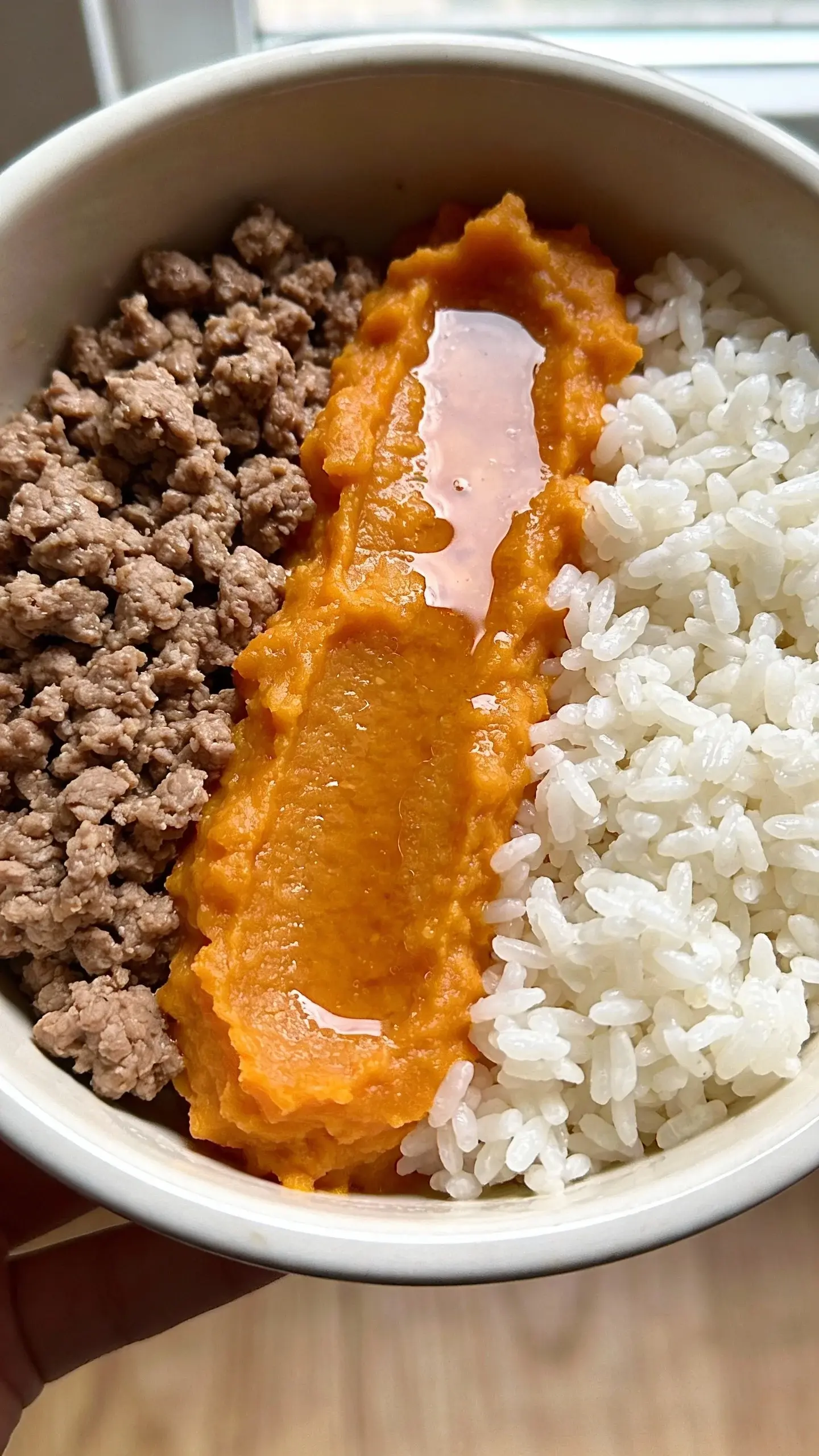
Here’s the gentle, simple meal your dog’s gut will thank you for.
Ingredients (Makes ~4 cups cooked)
- 1 lb (450 g) lean ground beef (90–95% lean) or finely chopped lean beef
- 1 cup uncooked white rice (jasmine or basmati both work)
- 1 cup plain pumpkin puree (no sugar, no spices)
- 2.5 cups water or low-sodium broth (broth optional; ensure no onion/garlic)
Optional Soothers
- 1–2 tbsp plain canned unsalted green beans, chopped (fiber and a bit of bulk)
- 1 tsp fish oil or a few drops of salmon oil (omega support; skip if diarrhea is severe)
Instructions
- Cook the rice: Rinse the rice until the water runs clear. Add to a pot with 2 cups water. Bring to a boil, then simmer covered for 12–15 minutes until soft and slightly overcooked. Overcooked is good here—easier to digest.
- Brown the beef: In a skillet, cook the beef over medium heat until no pink remains. Break it into tiny crumbles. Drain and rinse briefly with hot water to remove excess fat.
- Combine: In a large bowl or pot, mix the cooked rice, drained beef, and pumpkin puree. Add up to 1/2 cup warm water or broth to reach a soft, spoonable texture.
- Cool and serve: Let it cool to just warm. Dogs don’t love mouth-scorching meals. Who knew?
Portion Guide
This is a short-term feeding estimate. Adjust for your dog’s size and appetite.
- 10–20 lb dog: 1/2–1 cup per meal, 2–3 meals/day
- 20–50 lb dog: 1–1.5 cups per meal, 2–3 meals/day
- 50–80 lb dog: 1.5–2 cups per meal, 2 meals/day
Watch stools and energy. If your dog acts hungry but stools look good, you can slightly increase portions. IMO, frequent small meals work best for upset tummies.
When to Use This Meal (And When to Skip It)
You can use this recipe when your dog has:
- Mild diarrhea or soft stools from dietary indiscretion (aka trash buffet), stress, or a quick food change
- Mild vomiting once or twice, with normal energy otherwise
- Post-tummy bug when transitioning back to regular food
Skip or call your vet first if:
- Symptoms last more than 48 hours
- There’s blood, black tarry stool, repeated vomiting, or fever
- Your dog is a puppy under 6 months, a toy breed, diabetic, or on special prescription food
How to Transition Back to Regular Food
Don’t go from bland to “surprise pizza party” overnight. Transition slowly over 3–5 days.
Step-by-Step Transition
- Day 1: 75% beef-pumpkin-rice, 25% regular food
- Day 2: 50/50 mix
- Day 3: 25% bland, 75% regular food
- Day 4–5: 100% regular food if stools stay normal
If diarrhea returns, back up a step. It’s not a race. FYI, one loose stool doesn’t equal disaster—look for patterns.
Make-Ahead Tips and Storage
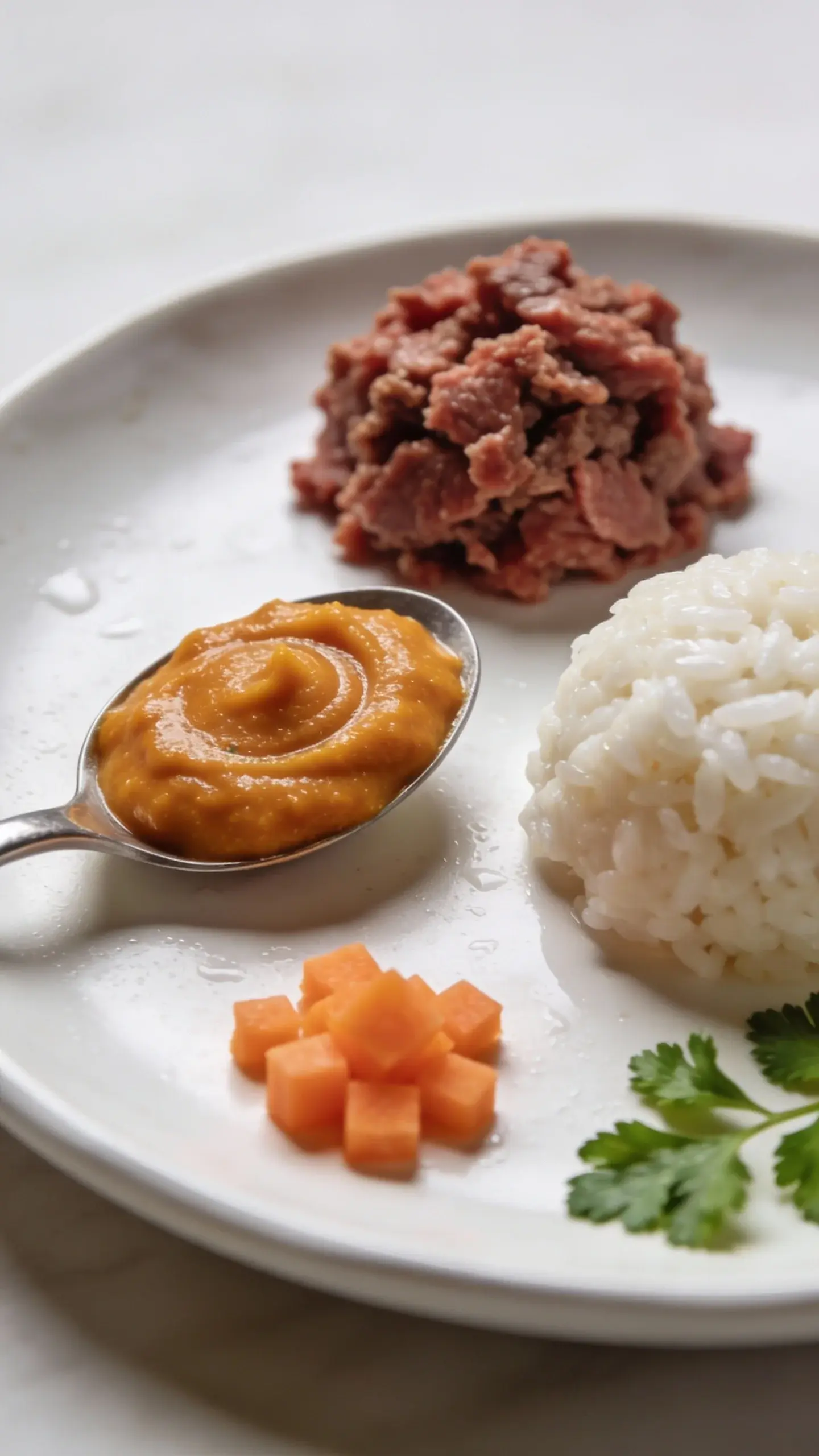
I love a batch-cook moment. Your dog will too.
- Fridge: Store in an airtight container for up to 3 days.
- Freezer: Portion into silicone molds or freezer bags and freeze for up to 2 months.
- Reheat gently: Warm to room temp or slightly warm. Add a splash of water to rehydrate.
Texture Tweaks
- For diarrhea: Add a little extra pumpkin and water for a softer blend.
- For sensitive chewers: Pulse the cooked mix in a food processor briefly for a smoother consistency.
Nutritional Notes (Simple and Useful)
This recipe provides easy-digesting carbs, lean protein, and soluble fiber. But it lacks some micronutrients if you feed it long-term. Think of it like doggy convalescence food, not a forever plan.
What It Delivers
- Protein for tissue repair and energy
- Soluble fiber to normalize stool consistency
- Low fat to reduce GI workload
What It Doesn’t
- Balanced calcium-to-phosphorus ratio
- Comprehensive vitamins and minerals
- Omega-3s at therapeutic levels (unless you add fish oil)
If you want a long-term homemade diet, chat with a vet nutritionist. Balance matters. Your dog agrees, even if they can’t say it.
Smart Add-Ins for Recovery
Use these only if your dog tolerates the base recipe well for 24 hours.
- Probiotics: A dog-specific probiotic can support gut bacteria. Follow label dosing.
- Plain kefir or yogurt: 1–2 tsp for small dogs, 1–2 tbsp for large dogs. Choose unsweetened, no xylitol ever.
- Electrolyte boost: A splash of unseasoned chicken broth encourages hydration.
FAQ
How long should I feed this bland diet?
Usually 1–3 days does the trick. If your dog improves and has normal stools for 24 hours, start transitioning back to their regular food. If nothing improves by 48 hours, call your vet.
Can I use brown rice instead of white rice?
You can, but white rice digests easier during tummy troubles. Brown rice has more fiber and can be tougher on an irritated gut. For now, go white. You can return to brown when everything calms down.
What if my dog won’t eat pumpkin?
Mix it thoroughly so it coats the rice and beef. Most dogs roll with it. If your pup still refuses, reduce the pumpkin by half and add a splash of broth. You want some soluble fiber, so don’t skip it entirely if diarrhea is the issue.
Is ground turkey better than beef for upset stomachs?
Both can work if you keep them lean. Turkey runs slightly milder IMO, but lean beef is perfectly fine and many dogs find it tastier. The key is low fat and no seasoning.
Can I add veggies or sweet potato?
Keep extras minimal at first. A little cooked carrot or green bean is okay. Sweet potato works similarly to pumpkin, but it’s starchier—use smaller amounts to start.
How do I know if my dog is dehydrated?
Check gums—they should be moist, not sticky. Do a skin tent test: gently lift the skin over the shoulder; it should snap back quickly. If it stays tented or your dog seems weak or dull, call your vet.
Conclusion
When your dog’s stomach acts up, you don’t need magic—just a calm plan and a gentle meal. This beef, pumpkin, and rice combo soothes irritated guts, keeps energy up, and buys you time while things settle. Keep portions small, feed slowly, and transition back to normal food once your pup stabilizes. And if something feels off, trust your gut too—your vet’s a call away. Meanwhile, enjoy the adoring stare you’ll get for cooking a doggy comfort classic.
About the Author

David
Blogger/YouTuber
A guitar nerd, the myth, the legend.