

Your dog loves beef, but their itchy skin and mysterious tummy troubles say otherwise. Allergies make meal time tricky and stressful, and you’re not alone if you’ve Googled “safe beef dog food” at 2 a.m. The good news? You can craft allergy-friendly beef meals at home that keep your pup happy and comfortable. Let’s make a plan, dish up a safe recipe, and get your dog back to wagging at dinner.
First, figure out: Is beef the problem—or the solution?
Not all dogs tolerate beef. Some dogs react to beef itself, while others react to common add-ins like chicken fat, wheat, or dairy in commercial foods. So before you commit, check with your vet to confirm your dog can eat beef safely.
Rule of thumb: If your dog has reacted to beef in the past, skip it and choose a novel protein. But if your vet says beef is okay, we’ll build a hypoallergenic-style recipe around it—clean, simple, grain-free or grain-light, and no common triggers.
Common signs of a food allergy
- Itchy paws, ears, face, or belly
- Chronic ear infections or head shaking
- Soft stools, gas, or vomiting after meals
- Red, inflamed skin or hot spots
FYI: Food allergies only improve when you remove the trigger protein/ingredient consistently for several weeks.
The allergy-friendly approach to beef dog food
We’ll keep the ingredient list short, use a single protein source, and add low-risk carbs and veggies. We’ll also balance vitamins and minerals, because an unbalanced homemade diet can cause health issues over time.
Must-do basics:
- Use a single protein: beef only (no chicken broth, no mixed fats).
- Pick a gentle carb: sweet potato, pumpkin, or quinoa.
- Add low-oxalate, low-allergen veggies: green beans, zucchini, spinach (lightly cooked).
- Include healthy fats: fish oil or algae oil for omega-3s.
- Use a canine multivitamin/mineral and a calcium source.
Why calcium matters
Homemade dog food needs added calcium unless you grind bone. You can use a vet-approved calcium supplement or finely ground eggshell powder. Without calcium, your dog’s body will borrow it from their bones—yeah, not ideal.
Beef and Sweet Potato Allergy-Friendly Recipe

Portion note: This recipe makes roughly 6 cups of cooked food. For a 25–30 lb adult dog, that’s about 2–3 days of food depending on activity level. Always adjust with your vet’s guidance.
Ingredients
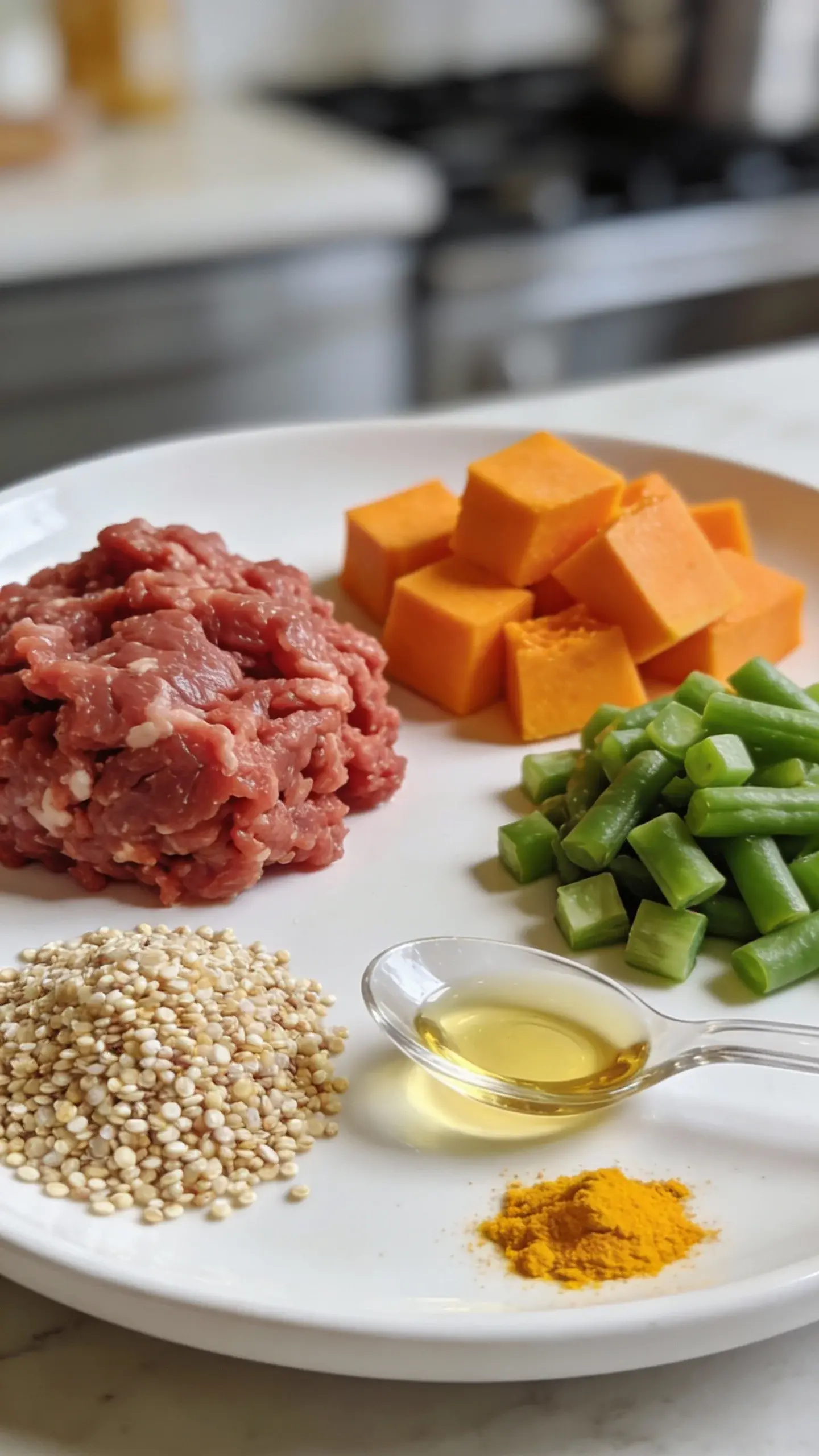
- 2 lb (900 g) lean ground beef (90–93% lean)
- 2 cups cooked, mashed sweet potato (no skin)
- 1 cup finely chopped green beans (steamed)
- 1/2 cup grated zucchini (lightly sautéed or steamed)
- 1 tbsp olive oil or 2 tsp algae oil/fish oil (for omega-3s)
- 1/2 tsp iodized salt (for iodine and sodium) unless your supplement covers it
- 1/2 tsp turmeric + a pinch of black pepper (optional anti-inflammatory)
- Calcium source: 1,200–1,500 mg elemental calcium per lb of meat used (about 2,400–3,000 mg for this batch), or 1.5 tsp finely ground eggshell powder
- Dog-specific multivitamin/mineral as directed by label (not a human multivitamin)
- Water or low-sodium, beef-only bone broth (check labels for chicken or allergens)
Directions
- Cook the beef: Brown the ground beef in a skillet over medium heat. Drain excess fat if needed. Do not season with garlic, onion, or spice mixes.
- Prep the veggies: Steam green beans and zucchini until tender. Mash the sweet potato separately.
- Combine: In a large pot, mix cooked beef, sweet potato, green beans, and zucchini. Add a splash of water or broth for a moist texture.
- Stir in supplements: Let the food cool to lukewarm. Mix in calcium, fish/algae oil, turmeric/pepper (if using), and the dog multivitamin as directed.
- Portion and store: Divide into daily servings. Refrigerate for up to 3 days or freeze portions for up to 2 months.
IMO: The turmeric adds a little anti-inflammatory kick, but it’s optional. If your dog’s tummy is sensitive, skip it at first.
Serving guidelines
- Typical starting point: 2–3% of your dog’s body weight per day in food, split into 2 meals. Example: 1–1.5 cups per day for a 20 lb dog, 2–2.5 cups for a 40 lb dog.
- Adjust for your dog’s activity and body condition. You should feel ribs with slight pressure and see a tucked waist.
Customizing for specific allergies
Every dog is different. Use these swaps to dodge common triggers without losing balance.
If your dog reacts to sweet potato
- Swap with pumpkin or butternut squash.
- Or try quinoa or white rice if your vet approves grains.
If your dog needs lower fat
- Use 95–97% lean beef or boil the beef and rinse briefly with hot water to remove extra fat.
- Keep omega-3s but lower the oil amount slightly—ask your vet for dosing.
If your dog needs more fiber
- Add 1–2 tbsp plain canned pumpkin per cup of food.
- Consider 1 tsp psyllium husk per meal in water if your vet okays it.
How to run a safe elimination trial with beef
Trying to confirm allergies? Run a strict elimination with beef as the only protein and simple carbs/veggies that your dog hasn’t reacted to.
Key rules:
- Feed only the chosen recipe for 6–8 weeks. No treats unless they match the recipe ingredients.
- Check meds and supplements for flavorings (chicken, dairy, etc.).
- Track symptoms weekly: itching, stools, ear gunk, gas, energy.
Reintroduction step
After symptoms improve, add a single new ingredient for 3–5 days. If itching or GI upset returns, you found a trigger. If not, keep it. Yes, it’s slow. Yes, it works.
Safety tips you really don’t want to skip
- No onions, garlic, or chives—toxic to dogs.
- Watch bones—no cooked bones in food; they splinter.
- Balance nutrients—use calcium and a dog multivitamin. Long-term DIY without them can cause deficiencies.
- Rotate proteins carefully—once stable, rotate only one change at a time.
- Food handling—cool before freezing, thaw in the fridge, and don’t leave food out for hours.
Signs your recipe works (and when it doesn’t)
When your dog tolerates the meal, you’ll see better stools, calmer skin, and a happier attitude. When it fails, you’ll see itching, ear gunk, soft stool, or gas within days.
What to do if symptoms return:
- Double-check every ingredient and treat for sneaky allergens.
- Simplify: beef + one carb only for a week.
- Call your vet if symptoms persist or worsen. They may suggest a hydrolyzed protein diet trial.
FAQ
Can dogs be allergic to beef?
Yes. Beef ranks among common dog allergens along with chicken, dairy, and wheat. If your dog flares on beef, switch to a novel protein like venison, rabbit, or duck and talk to your vet about an elimination trial.
Is raw beef better for dogs with allergies?
Not automatically. Raw doesn’t cure allergies, and it carries bacterial risks. Many allergic dogs do great on cooked, simple recipes. If you prefer raw, do it under vet guidance and use reputable sources, IMO.
How do I make sure the recipe is balanced?
Use a dog-specific multivitamin/mineral and a calcium source every time. Consider a custom formulation from a board-certified veterinary nutritionist. You can also use formulation tools made for dogs, but double-check with your vet.
Can I add probiotics?
Yes, and they can help with gut health. Use a dog-formulated probiotic with known CFU counts. Introduce slowly to avoid gas, and give it 2–3 weeks to gauge results.
What treats are safe during an elimination trial?
Only treats that match the recipe ingredients. Dehydrated beef, steamed sweet potato coins, or a portion of the cooked recipe itself. One rogue peanut butter biscuit can ruin your data, FYI.
How fast will my dog’s allergies improve?
Skin can take 4–8 weeks to calm down. GI symptoms often improve faster—sometimes in a few days. Stick with the plan and track progress to avoid guessing.
Wrapping it up
You can absolutely feed beef to a dog with allergies—if beef isn’t the allergen and you keep the recipe clean, simple, and balanced. Start with a short ingredient list, add essential supplements, and track your dog’s response. If you hit snags, simplify or talk to your vet. With a little planning and a lot of love, dinner can go from “itch fest” to “tail-wagging feast” in no time.
About the Author

David
Blogger/YouTuber
A guitar nerd, the myth, the legend.