
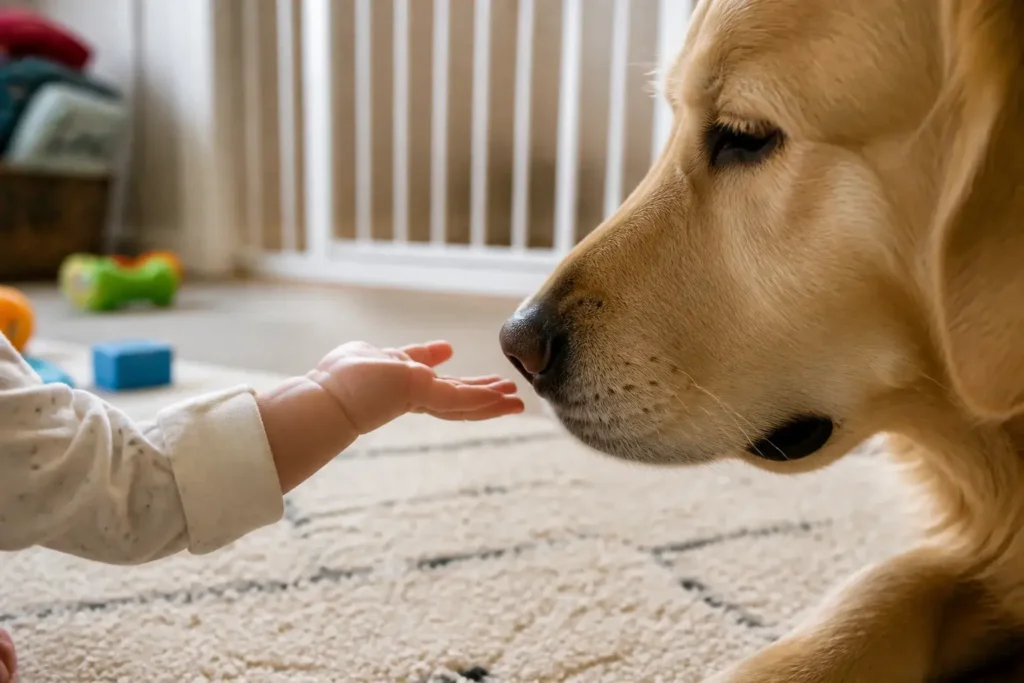
You love your dog. You adore your toddler. But when they join forces, your living room turns into a snack-crumb arena and squeaky-toy stadium.
You don’t need perfection. You need routines that work, boundaries that stick, and a sense of humor when the Cheerios hit the fan.
Let’s make your home feel calmer, safer, and a lot more fun for both your tiny human and your furry best friend.
Set The Tone: Safety First, Stress Second
Your dog and toddler can become best buddies, but you set the rules. Supervise every interaction and give both a safe exit when they want space. If you can’t supervise, use baby gates or playpens.
Teach your toddler the basics early:
- No touching while the dog eats or sleeps.
- No pulling ears, tails, or fur. Show gentle petting with an open palm.
- Ask before petting. You model it first: “Can we pet?” Then watch the dog’s body language.
Decode Dog Body Language (So You Don’t Miss the “I’m Done” Face)
Dogs rarely go from fine to “nope” without signals. Watch for:
- Stress signs: yawning when not tired, lip licking, whale eye, stiff posture, pinned ears, tucked tail.
- Calm signs: soft eyes, loose body, slow tail wag, leaning in.
If you spot stress, cheerfully redirect: “Let’s give pup a break!” Then guide your toddler to another activity.
Zones, Gates, And Boundaries That Actually Work
You need spaces where each can chill. Think of it like traffic lanes for sanity.
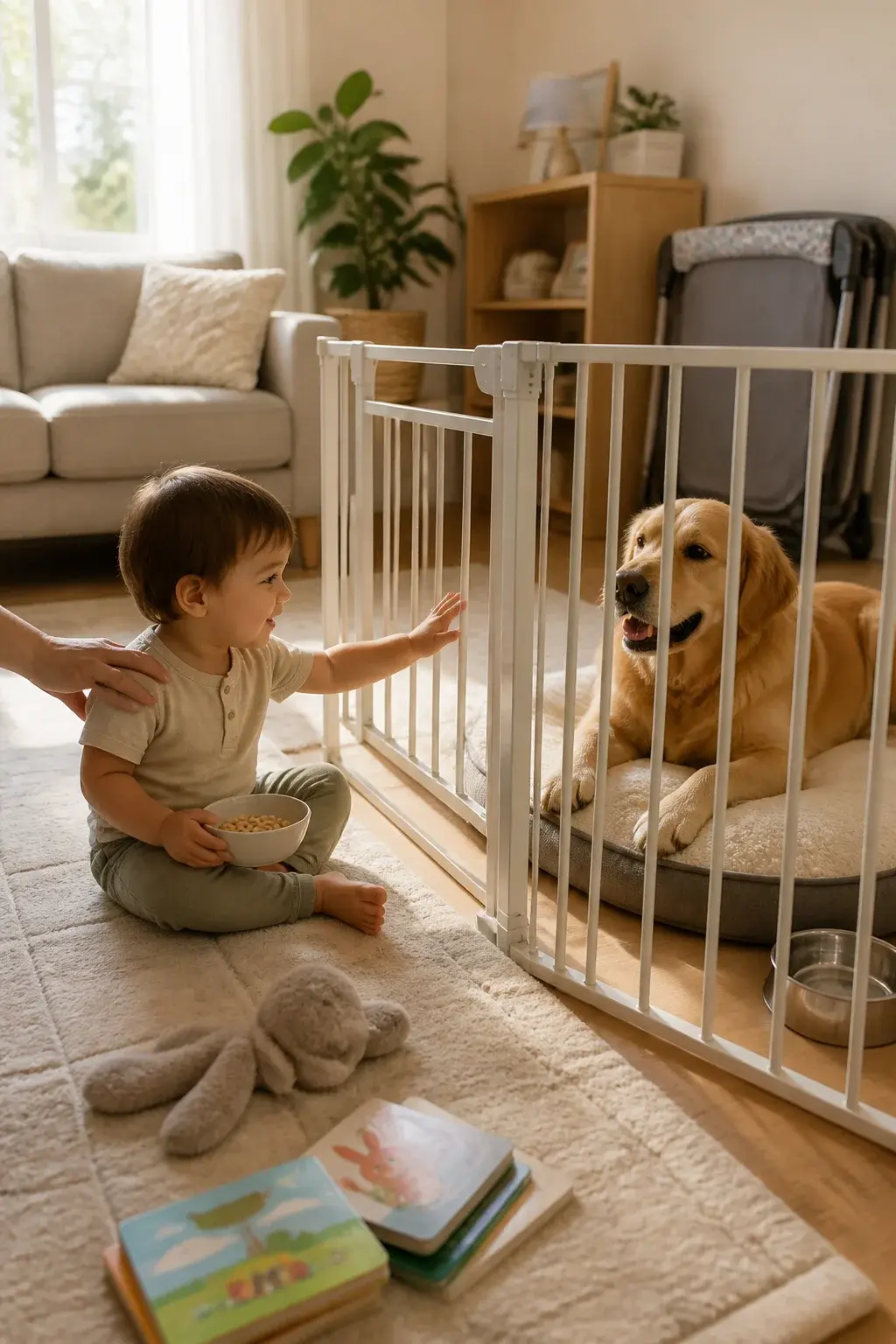
- Dog-Only Zone: A crate, a bed behind a gate, or a quiet room. Teach a strong “Place” cue. This becomes a no-toddler zone.
- Toddler-Only Zone: A playpen or gated room with toys and no dog chewables. Prevents toy theft and accidental body slams.
- Shared Zone: The main area where you supervise and keep sessions short and positive.
Gear That Helps
- Baby gates or a freestanding pen
- Raised surfaces or shelves for dog supplies
- Chew-proof storage bins for toddler snacks and dog treats
- A comfy crate or covered bed for decompression
Teach Skills On Both Sides (Yes, The Dog Too)
Training reduces chaos. You don’t need a thesis in obedience. You need four or five solid cues.
Dog Skills That Save The Day
- Place: Go lie on a mat while the toddler zooms. Reward calm stays.
- Leave It: For rogue puffs, crayons, and forbidden lovies.
- Drop It: When the dog proudly steals the pacifier like it’s treasure.
- Stay: Buy time during diaper changes or door greetings.
- Recall: “Come” that actually works, even with snack bait on the floor.
Toddler Skills (Yes, Really)
- Gentle Touch: Open palm, slow strokes along the back or chest.
- Space Words: “Dog is resting.” Then lead them away, offer a new toy.
- Treat Toss: Toddler stands at a distance and tosses treats to the dog’s mat. Builds positive vibes from afar.
Daily Routines That Keep Everyone Sane
Structure keeps dogs calm and toddlers predictable. You don’t need a strict schedule, just reliable beats.
Morning Reset
- Exercise the dog first. A brisk walk or sniffari makes a huge difference. Tired dogs make better roommates.
- Baby-gated breakfast. Feed the dog behind a barrier. No toddler taste-testing kibble, please.
Midday Calm
- Enrichment time: Snuffle mats, frozen lick mats, or a food puzzle while your toddler snacks in a high chair. Safer separation, shared peace.
- Nap overlap: If possible, schedule the dog’s crate rest during toddler nap. Everyone recharges, including you.
Evening Wind-Down
- Short training sessions: 5 minutes of Place, Leave It, Stay. End on a win.
- Cozy coexistence: Books for toddler, stuffed Kong for dog. Calm begets calm.
Playtime Without Mayhem
Not all games work for all dogs. Some love fetch. Others would rather supervise like tiny, furry librarians. Pick activities that suit both personalities.
Together But Structured
- Fetch with rules: Toddler rolls a soft ball to you. You throw for the dog. Dog returns to you. Toddler helps “trade” with a treat cup. No tug-of-war with the toddler.
- Find It: Let the toddler hide treats under cups. The dog sniffs them out. Cue lots of cheering.
- Target Training: Teach the dog to touch a target stick. Toddler holds it while you cue and reward from a safe angle.
What To Skip
- Roughhousing: Fast movement plus shrieks equals overarousal. Hard pass.
- Shared chew toys: Choking hazard for toddlers, resource guarding risk for dogs.
- Chase games: Toddlers run. Dogs chase. Chaos ensues. You know the ending.
Feeding, Snacks, And “Please Don’t Eat That” Moments
Dogs love toddler snacks. Toddler snacks love the floor. Let’s keep everyone safe.
- Separate mealtimes: Dog eats in a gated area. Toddler eats strapped in. Less begging, fewer arguments.
- Use dog-safe treats only: Small, soft training treats, plain cooked chicken, or dog-safe fruits like blueberries or apple slices without seeds.
- Skip dangerous foods: No grapes, raisins, chocolate, onions, garlic, xylitol, or alcohol. FYI, a dropped raisin counts.
- Teach “Out” of the kitchen: Put a mat at the doorway. Reward the dog for staying out while you cook or prep toddler meals.
Managing Big Feelings: Barking, Jumping, And Guarding
Behavior hiccups happen. You can handle them with management and training. IMO, most issues fade when you meet needs and maintain boundaries.
Jumping On The Toddler
- Prevention: Leash or gate during high excitement, like visitors or stroller unloads.
- Train: Reward sits and four-on-the-floor behavior. Ignore jumping, reinforce calm.
Barking At Toddler Noise
- Sound desensitization: Play baby sounds quietly and pair with treats. Gradually increase volume.
- Calm cues: Teach “Go to place” when noise increases. Reward heavily.
Resource Guarding Concerns
- Management first: Chews and meals happen behind gates. Toddler never approaches.
- Trade games: Practice with adults only. Offer treat, dog drops item, you return a higher-value reward.
- Call a pro: If guarding shows teeth or snaps, bring in a qualified trainer or behavior consultant.
Health, Hygiene, And Clean-Up That Doesn’t Break You
Yes, you can keep things sanitary without scrubbing like a reality show contestant.
- Grooming: Regular brushing reduces fur tumbleweeds. Wipe paws after walks to limit street gunk near crawling zones.
- Toy Rotation: Keep dog toys and toddler toys separate. Wash plush dog toys weekly. Sanitize hard toys often.
- Poop Protocol: Scoop immediately. Yard time stays fun and safe.
- Vet Care: Stay current on preventatives, vaccines, and parasite checks. Especially important with floor-surfing toddlers.
Make Sweet Memories, Not Just Rules
You’re not just preventing chaos. You’re building a friendship. Create little rituals that feel special.
- Goodnight pats: Toddler says “Goodnight” while you guide a gentle pet on the dog’s shoulder or chest.
- Walk helper: Toddler holds a leash handle attached to your belt or a second leash, while you control the main leash.
- Photo ops: Sit side by side with treats on a mat. Two seconds, snap, reward, done.
FAQ
How old should my toddler be before they can interact with the dog?
From the start, but with tight supervision and clear boundaries. Begin with short, structured moments like treat tosses to a dog on a mat. As your toddler’s motor control and understanding improve, you can allow closer contact, always guided and gentle.
What dog breeds work best with toddlers?
Temperament and training matter more than breed. Look for dogs that tolerate noise, handle touch well, and recover quickly from surprises. Meet individual dogs, ask about history with kids, and prioritize calm, friendly behavior over labels.
How do I stop my dog from stealing toddler food?
Manage the environment first. Feed and snack in separate zones, use high chairs and gates, and teach “Out” or “Place” during meals. Reinforce calm distance and keep counters and coffee tables clear of easy wins.
My dog growled at my toddler. What now?
Treat a growl as valuable communication, not bad behavior. Separate calmly, give the dog space, and review triggers like proximity during rest or with chews. Increase management, practice positive training, and consult a qualified trainer if it happens again. FYI, punishing growls often suppresses warnings and increases risk.
Can I involve my toddler in training?
Yes, in simple, safe ways. Have your toddler toss treats to a mat, press a clicker while you handle luring, or cue “Sit” while you reward. Keep sessions short and fun so both partners stay engaged.
What enrichment works when I have zero free time?
Use meal times. Stuff Kongs with soaked kibble and plain pumpkin, freeze lick mats, or scatter-feed in a snuffle mat. Five minutes of setup buys you calm while you handle diaper changes or quick chores.
Conclusion
Living with a dog and toddler can feel like juggling squeaky toys and sippy cups while herding cats. But with smart boundaries, solid routines, and a focus on positive interactions, you’ll watch a real bond grow. Keep sessions short, supervise like a pro, and celebrate the tiny wins. IMO, those goofy, gentle moments make every crumb and fur tumbleweed totally worth it.
About the Author

David
Blogger/YouTuber
A guitar nerd, the myth, the legend.