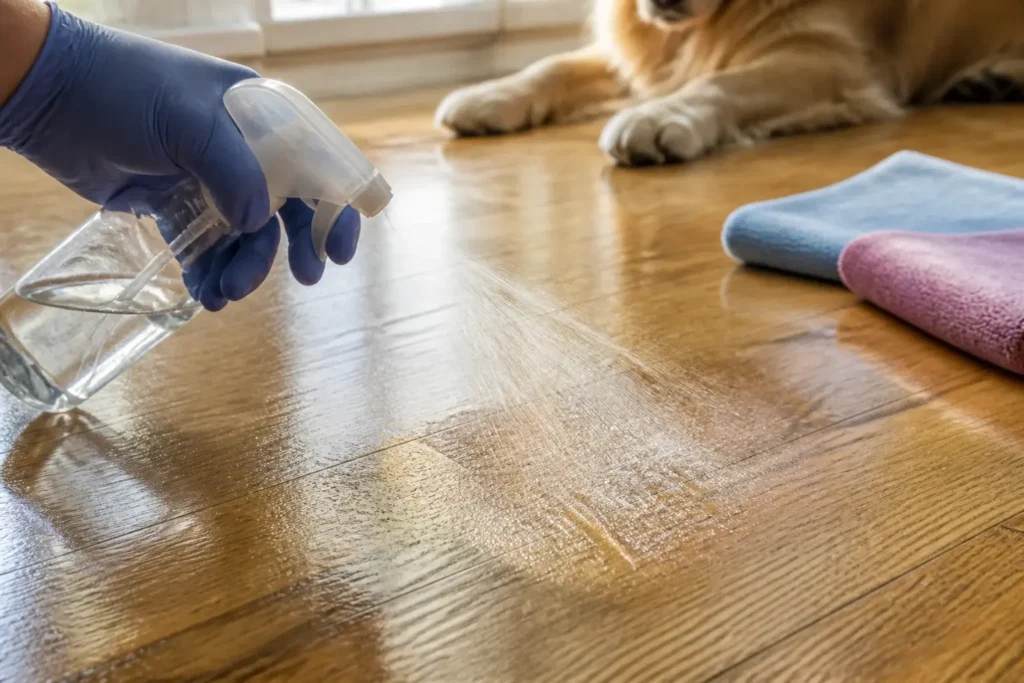
You love your dog, but wow, that smell hit you like a surprise plot twist. Hardwood floors look gorgeous, yet they love to hold onto pet funk like a clingy ex.
Good news: you can beat the stink with simple, dog-safe ingredients from your kitchen. Even better, you can do it fast, without wrecking your floors.
Let’s fix the odor and keep your wood happy. Deal?
Why Hardwood Floors Trap Dog Odors
Hardwood floors aren’t totally sealed. Tiny pores and micro-gaps between boards can absorb pet accidents and lingering oils from paws. Add humidity and time, and hello, eau de dog.
The trick? Neutralize the odor molecules, lift them out of the pores, and leave no residue that damages your finish. Most “just bleach it” solutions ruin finishes or irritate dogs’ noses. Hard pass.
The Dog-Safe, Floor-Safe Odor Remover Recipe
This cleaner targets urine, drool, and that mysterious “dog fog” without hurting sealed hardwood. Always spot test first.
What you’ll need:
- 1 cup distilled water (room temp)
- 1 cup 70% isopropyl alcohol OR vodka (odor-neutral, evaporates quick)
- 1/2 teaspoon gentle, dye-free dish soap (think clear, unscented)
- 10–12 drops dog-safe essential oil (optional): lavender or chamomile. Skip if unsure.
- Spray bottle (fine mist)
- Two clean microfiber cloths
Why this works:
- Alcohol breaks down odor-causing compounds and evaporates fast so moisture won’t soak the wood.
- Mild soap lifts oils and residues that trap stink.
- Distilled water avoids minerals that can dull the finish.
How to mix:
- Pour water and alcohol into the spray bottle.
- Add the dish soap and optional essential oil.
- Gently invert to combine. Don’t shake like a margarita. You want minimal suds.
If Your Dog Had A Fresh Accident
- Blot up liquid immediately with paper towels. Don’t rub. We’re lifting, not spreading.
- Lightly mist the cleaner over the spot until barely damp.
- Wait 2 minutes, then wipe with a microfiber cloth.
- Buff dry with a second cloth. Make it squeak. You’ll thank yourself later.
If You’re Tackling Set-In Odors
- Lightly mist the area and let it sit 3–5 minutes.
- Wipe and buff dry.
- Repeat once if needed. Do not saturate the wood.
What About Vinegar And Baking Soda?
You’ve seen the hacks. Here’s the straight talk.
Vinegar: It neutralizes alkaline odors but it’s acidic and can dull polyurethane finishes over time. Occasional light use won’t nuke your floor, but I wouldn’t make it your daily driver. Also, the smell can bother dogs.
Baking soda: Great on rugs, risky on hardwood. It’s abrasive and can wedge into cracks. If you sprinkle it, it can leave a chalky haze and even pull moisture.
IMO: Keep vinegar and baking soda for laundry and sinks. Your floors prefer the recipe above.
Enzyme Boost For Stubborn Urine Smells
Urine that soaked into gaps or unfinished edges might need enzymatic help.
Dog-safe enzyme option:
- Buy a pet-specific enzymatic cleaner labeled safe for sealed hardwood.
- Apply sparingly. You want the enzymes to reach the odor, not flood the plank.
- Let it sit per label, then wipe and dry thoroughly.
DIY Enzyme Shortcut? Not Really
I love a DIY moment, but homemade “yeast and sugar” blends can create sticky residues and weird smells. For enzymes, store-bought pet formulas outperform kitchen experiments. FYI, they’re designed to digest the uric crystals that DIY cleaners just can’t fully break down.
Deep-Clean Routine That Keeps Odors Away
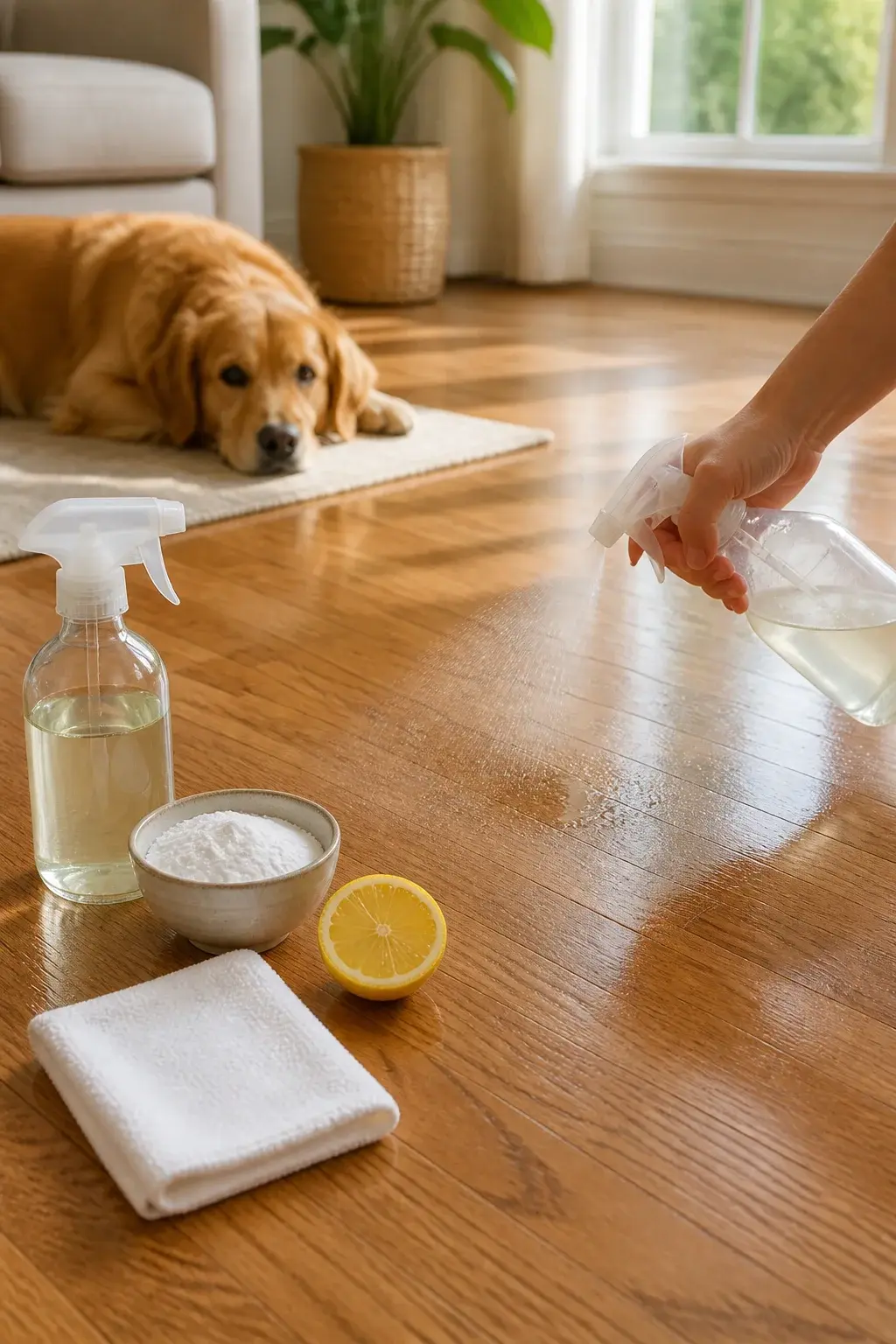
Consistency beats crisis mode. Here’s the low-drama plan.
Weekly:
- Dry dust with a microfiber mop to grab dander and hair.
- Spot treat smelly zones with the DIY spray, then buff dry.
Monthly:
- Damp mop high-traffic zones with the DIY mix. Mist the mop head, not the floor.
- Buff until the floor looks even and dry.
Seasonal:
- Check floor gaps, baseboards, and under furniture. Odors hide there.
- Refresh area rugs and rug pads. Those can be the real culprits.
Quick Grooming Wins
Smell starts on the dog. A few tiny changes make a big difference.
- Wipe paws after walks. Paw pads track oils that cling to wood.
- Brush weekly for less dander. Less dander, less stink.
- Wash collars and harnesses. They hold onto odors like a sponge.
Dealing With Urine Between Boards
Sometimes pee sneaks into seams. Annoying, but fixable.
Try this:
- Use a fine mist of enzymatic cleaner aimed at the seam, not the plank surface.
- Let it dwell per directions.
- Follow with a dry microfiber and a gentle vacuum with a crevice tool to pull moisture and odor from the gap.
- Finish with a pass of the DIY alcohol cleaner to remove residue and speed drying.
When To Call A Pro
If odor lingers after two or three rounds, it may live beneath the finish or in subflooring. A flooring pro can deep clean, reseal seams, or replace a small section. Cheaper than replacing the whole room, thankfully.
What Not To Use On Hardwood (Even If TikTok Says So)
- Bleach or hydrogen peroxide at high strength: can discolor and raise the grain.
- Steam mops: shoot moisture into seams and cause cupping.
- Strong essential oils like tea tree, eucalyptus, or citrus in high amounts: can irritate dogs and damage finishes. If you use oils, keep it gentle and minimal.
- Heavy soaking: water is wood’s frenemy. Moisture causes warping and locks in smells.
Simple Deodorizing Extras That Are Actually Safe
You can layer light deodorizing without going overboard.
- Activated charcoal bags in the room to absorb lingering air odors.
- Open windows for 10 minutes post-clean. Fresh air fixes a lot, IMO.
- Wash dog beds and blankets weekly with fragrance-free detergent. Add a cup of white vinegar to the rinse if fabrics smell stubborn. That’s fine for laundry.
FAQ
Is the alcohol in the DIY cleaner safe for my dog?
Yes, when used as directed. You apply a small amount, wipe it up, and buff dry. The alcohol evaporates quickly, and you should keep your dog off the area until it’s fully dry. Do not spray near your dog’s face or paws.
Can I just mop with vinegar and water?
You can, but I wouldn’t make it a habit. Vinegar can dull polyurethane over time and the smell isn’t exactly “spa day.” Use the DIY mix above for routine cleaning and save vinegar for laundry or occasional mineral-spot removal.
What if my floors are waxed or oiled, not polyurethane sealed?
Test carefully. Alcohol can strip some waxes and oils. For waxed or hardwax-oiled floors, use the manufacturer’s cleaner or a specialized soap designed for that finish. When in doubt, call the floor brand or a pro.
How do I know if the smell is in the subfloor?
If the odor returns after thorough cleaning and seems stronger along seams or near baseboards, it may have soaked through. You might see slight discoloration at board edges. That’s your cue to try targeted enzymatic treatments and, if needed, a pro assessment.
Can I add fragrance to cover the smell?
Light fragrance is fine, but covering stink beats removing it exactly never. Solve the source, then if you want a mild lavender vibe, use 5–10 drops per quart max. Keep it gentle and pet-safe.
Will baking soda ruin my floors?
RUIN is strong, but it can haze the finish and wedge into gaps, which is annoying to remove. I’d skip it on hardwood and save it for carpets and mattresses.
Conclusion
You can absolutely kick dog odors off hardwood without harsh chemicals or heartache. Use the alcohol-water-soap mix for daily wins, keep enzymes in your toolkit for deep stink, and never drown the wood. Pair that with quick grooming habits and you’ll have fresh floors and a happy pup. And yes, you can keep your beautiful hardwood and your lovable fur monster. Win-win, FYI.
About the Author

David
Blogger/YouTuber
A guitar nerd, the myth, the legend.