
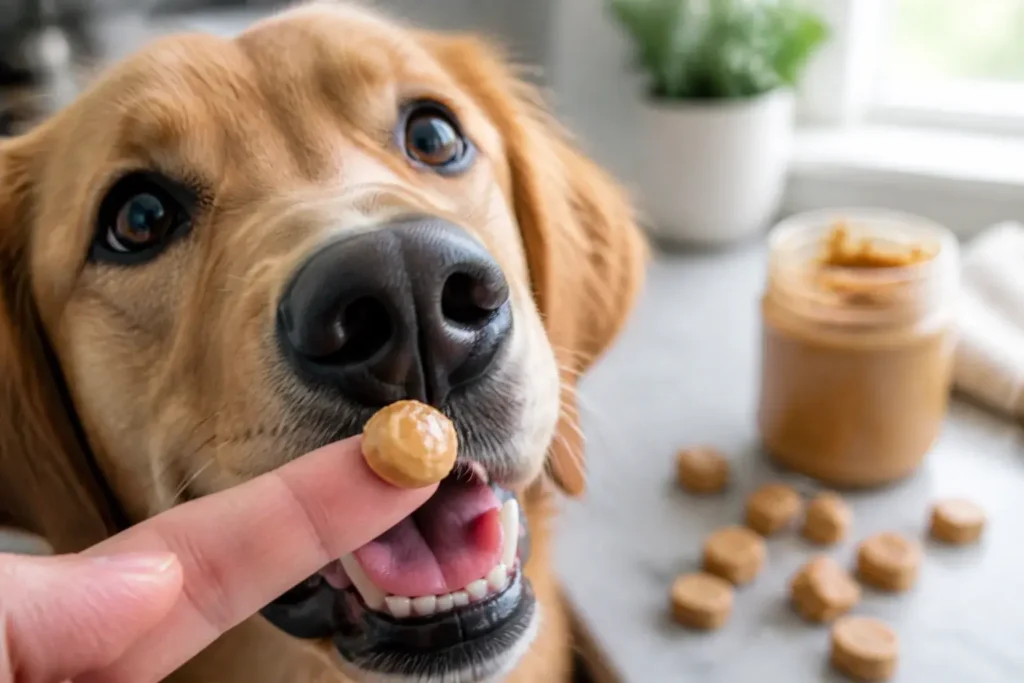
Peanut butter dog training treats might be the most effective negotiation tactic you’ll ever use with your pup.
They’re tasty, simple to make, and perfect for quick rewards when your dog nails a cue.
Let’s talk about how to use them smartly, what to buy, and how to whip up a few safe, dog-approved recipes at home.
Why Peanut Butter Works Like Magic
Peanut butter hits all the right notes: smell, taste, and texture. Dogs go wild for it. You want your training treat to be high-value without turning your dog into a sugar rocket, and PB fits the bill.
Key perks:
- High value: It grabs attention fast and keeps your dog motivated.
- Portable and versatile: Spread it, bake it, freeze it, roll it into tiny balls.
- Protein and healthy fats: Useful in moderation during active training sessions.
Just don’t let “high-value” turn into “high-volume.” Treats should support training, not replace meals.
Safety First: The Peanut Butter Checklist
You control the ingredients, which keeps your dog safe and your conscience clear. Some peanut butters hide sneaky additives that dogs shouldn’t touch.
Always check for:
- No xylitol: This sweetener is extremely toxic to dogs. If the label lists xylitol, toss it.
- No artificial sweeteners: Sorbitol and others may upset stomachs.
- Low sodium and sugar: Choose natural, unsweetened peanut butter with peanuts only, maybe a dash of salt.
- Freshness: Old nut butters can go rancid and taste bitter.
Allergy and Sensitivity Notes
Peanut allergies in dogs are uncommon but possible. Start with a tiny taste and watch for itching, hives, swelling, or tummy issues. If anything looks off, stop and call your vet. Also, rich treats can upset sensitive stomachs, so keep servings small.
How To Use Peanut Butter Treats In Training
You need quick, repeatable rewards. Big chunks slow you down and fill your dog up too fast.
Pro tips for smooth sessions:
- Size matters: Think pea-sized, not marble-sized. You want 10–20 reps without a food coma.
- Timing is everything: Mark the behavior with “Yes!” or a click, then treat immediately.
- Keep it tidy: Use a squeezable pouch or silicone travel bottle for clean delivery.
- Mix values: Reserve peanut butter for tough cues or distractions, use kibble for easy reps.
When Peanut Butter Shines
Use it for recall games, nail trims, bath time, or vet practice. Smear a tiny line on a lick mat to keep your dog calmly busy while you brush or wipe paws. You’ll both survive grooming with fewer “I’m telling Grandma” side-eyes.
Easy Dog-Friendly Peanut Butter Treat Recipes
Every recipe here uses dog-safe ingredients. No xylitol, no chocolate, no raisins, no grapes, no macadamia nuts. FYI, always introduce new treats slowly.
1) No-Bake Peanut Butter Training Bites
Perfect for quick sessions and soft mouths.
Ingredients:
- 1/2 cup natural peanut butter (unsweetened, no xylitol)
- 1 cup oat flour (blend plain oats)
- 2–3 tablespoons unsweetened applesauce or water
Instructions:
- Stir PB and applesauce. Add oat flour until you get a pliable dough.
- Pinch pea-sized bits and roll into tiny balls.
- Refrigerate 1 hour to firm. Store in the fridge for up to 5 days or freeze for 1 month.
Why it works: Soft, aromatic, and easy to portion extremely small.
2) Crunchy Mini PB Cookies
Great for pockets and training pouches.
Ingredients:
- 1/2 cup natural peanut butter
- 1 large egg
- 3/4–1 cup oat flour
- Optional: 1 tablespoon mashed banana for extra aroma
Instructions:
- Preheat oven to 325°F (165°C). Line a sheet with parchment.
- Mix PB, egg, and banana if using. Stir in oat flour to form a soft dough.
- Roll small pea-sized balls, then flatten with a fork.
- Bake 10–12 minutes until set and lightly golden. Cool completely.
Storage: Airtight jar for 5–7 days, or freeze for longer.
3) Frozen PB Yogurt Coins
Summer lifesavers and training jackpots.
Ingredients:
- 1/2 cup plain unsweetened yogurt (no sweeteners, no xylitol)
- 2 tablespoons natural peanut butter
- Water to thin if needed
Instructions:
- Blend until smooth. Spoon dime-sized dots onto a lined tray.
- Freeze until solid. Pop off and store in a freezer bag.
Note: If your dog struggles with dairy, use unsweetened coconut yogurt or skip this one.
4) PB Sweet Potato Training Squares
Soft, smelly, and sliceable.
Ingredients:
- 1/2 cup mashed cooked sweet potato
- 2 tablespoons natural peanut butter
- 1 egg
- 1/2–3/4 cup oat flour
Instructions:
- Preheat oven to 325°F (165°C). Line an 8×8 pan with parchment.
- Blend ingredients into a thick batter. Spread thinly, about 1/4 inch.
- Bake 15–18 minutes until set. Cool, then cut into tiny squares.
Portion Control: Keep Training Treats Tiny
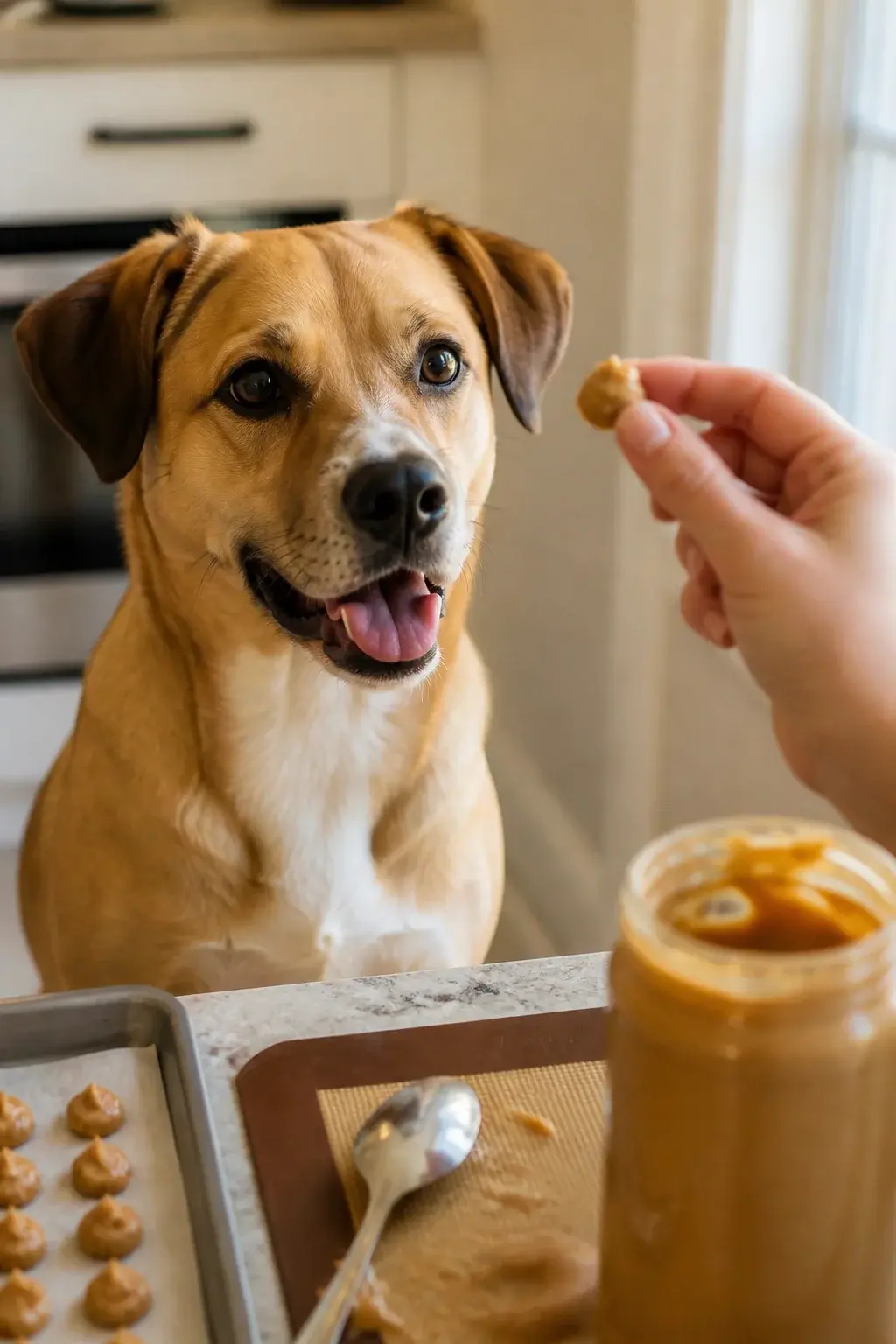
Training eats add up fast. Nobody wants a queasy pup at 2 a.m.
Simple guidelines IMO:
- Daily limit: Keep treats under 10 percent of daily calories. Smaller for toy breeds.
- Cut the size, not the reps: Use very small pieces so you can reward often.
- Balance meals: On heavy training days, slightly reduce dinner.
What If My Dog Needs Fewer Calories?
Mix in lower-calorie options with your PB treats. Try tiny carrot cubes, thawed green peas, or kibble mixed with a smear of PB for scent. You keep motivation high without overdoing the rich stuff.
Store-Bought Peanut Butter Treats: What To Look For
When you don’t have time to bake, no shame. Grab a safe, simple commercial option.
Label checklist:
- No xylitol, always: Scan the ingredient list every time.
- Short ingredient list: Peanuts, oats, eggs, pumpkin, banana. You get the vibe.
- Reasonable calories per piece: Under 5–10 calories for frequent training.
- Appropriate size: Small bites or easily breakable pieces.
Smart Ways To Use Store-Bought Treats
Crush them and sprinkle over kibble for special jackpots. Break them into teeny bits for rapid-fire reps. For picky pups, rub a little PB on a store-bought treat to level up the aroma without doubling calories.
Training Games That Pair Perfectly With PB Treats
Let’s turn your kitchen into a mini obedience studio. Quick, fun, and focused.
- Rapid Sits: Say “Sit,” mark “Yes!” the moment the butt hits the floor, treat. Repeat 10 times. Speed round.
- Name Game: Say your dog’s name once. When they make eye contact, mark and treat.
- Leave It Intro: Present treat in closed fist. When your dog backs off, mark and give a different treat.
- Mat Magic: Lure onto a mat, mark and treat. Build duration with tiny PB rewards.
- Recall Sprint: Two people call alternately. Every correct sprint earns a tiny PB jackpot.
Staying Focused Around Distractions
Train near low-level distractions first. Use peanut butter as your “upgrade” when the environment gets harder. Reward every glance back at you. Your dog learns that checking in pays, even when the world smells like squirrels.
Common Mistakes To Avoid
We all do these at some point. Save yourself the detour.
- Oversizing treats: Your dog gets full fast and motivation drops.
- Slow delivery: If you fumble, your dog forgets what they earned. Prep treats beforehand.
- Using PB for everything: Keep it special. Rotate with lower-value snacks.
- Ignoring labels: One missed xylitol label can be dangerous. Double-check every jar.
- Rewarding late: Mark the second the behavior happens, not after you dig in your pocket.
FAQ
Can all dogs have peanut butter?
Most healthy dogs can enjoy peanut butter in small amounts. Start with a tiny taste to rule out sensitivity. If your dog has pancreatitis, food allergies, or a sensitive stomach, talk to your vet first.
How much peanut butter is safe?
Keep it small and strategic. For many medium dogs, 1–2 teaspoons total across a training day works fine. Tiny dogs need far less. Balance treats with regular meals.
What if my dog won’t take peanut butter?
No problem. Try canned pumpkin, pureed chicken, or salmon-based training treats. You can also mix a dab of PB with a favorite soft treat to boost the smell without relying on PB alone.
Is crunchy or creamy better?
Creamy usually works better for training because you can portion it smaller and deliver it faster. Crunchy bits can distract or crumble. For safety, avoid any nut chunks if your dog gulps food.
Can I use almond or other nut butters instead?
Stick with peanut butter unless your vet says otherwise. Some nut butters contain higher fat or risky additives. Also, never use anything with xylitol. When in doubt, keep it simple with peanuts-only PB.
Do I need special equipment?
Not really. A squeeze pouch or silicone bottle makes creamy treats easy to dispense. A lick mat and a training pouch help keep things tidy. That’s it.
The Bottom Line
Peanut butter dog training treats make learning fun, fast, and ridiculously tasty. Choose safe PB, keep portions tiny, and use it as a high-value reward when you need laser focus. Mix in a few simple homemade recipes and watch your pup sit, stay, and come like a furry genius. FYI, your dog will absolutely think you’re the world’s best chef. And honestly? They’re not wrong.
About the Author

David
Blogger/YouTuber
A guitar nerd, the myth, the legend.