
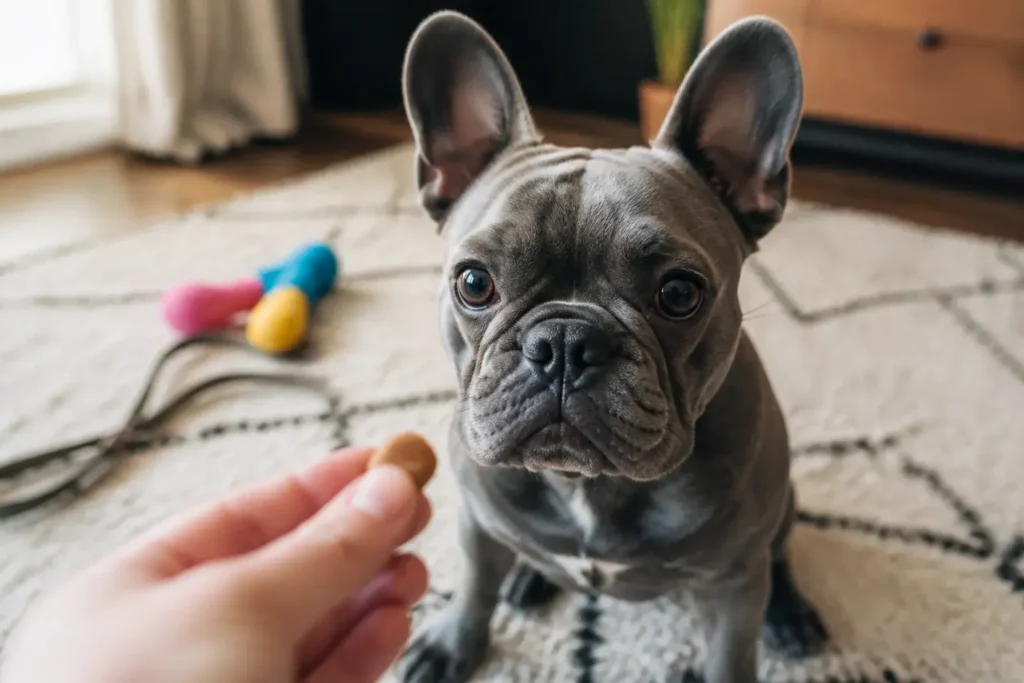
French Bulldogs are adorable charmers with big personalities. They can also be tiny masterminds who pretend they don’t understand “sit” when snacks aren’t involved.
If you want a polite, responsive Frenchie who listens the first time, you’ll need a plan and some patience.
Good news: you don’t need to be a pro trainer. You just need consistency, kindness, and the right game plan.
Know Your Frenchie: Personality First, Training Second
French Bulldogs love people, naps, and being hilariously stubborn. They often understand commands quickly but may choose not to comply if the reward seems meh.
So what wins their heart? Short sessions, high-value rewards, and plenty of praise. They’re sensitive little souls, so harsh corrections can shut them down.
Aim for structure without rigidity. Set rules, keep them consistent, and give your Frenchie choices that lead to good behavior. Easy, right?
Frenchie Quirks To Work With
- Short snouts: They overheat faster. Keep training brief and indoors on hot days.
- Food fans: Use tiny treats like pea-sized bits of cooked chicken or store-bought training treats.
- Velcro energy: They adore you and want to be near you. Use that bond to your advantage.
Build Rockstar Obedience With Bite-Sized Sessions
Think snackable training. Two to five minutes, a few times a day. Keep it upbeat, end on a win, and keep your pockets stocked.
Core Commands To Master Early
- Name Recognition: Say their name once. When they glance at you, mark it with “Yes!” and treat. You’re teaching eye contact equals reward.
- Sit: Lure the nose up and back with a treat until the butt touches the floor. “Yes!” treat. Fade the lure fast.
- Down: From sit, lower the treat to the floor between paws. When elbows hit, “Yes!” and reward.
- Come: Start indoors. Crouch, happy voice, “Come!” When they run to you, jackpot treats and a party. Never punish after a recall.
- Leave It: Present a closed fist with a treat. When your Frenchie backs off, “Yes!” and reward from the other hand. Level up with dropped items later.
Session Flow That Works
- Warm-up with an easy command they crush.
- Teach or practice one new skill for 2 minutes.
- End with a favorite command and a bigger reward. Leave them wanting more.
Potty Training Without Tears (Or Rugs)
French Bulldogs can take a little longer to lock in house training. You’ll win with a schedule and zero guesswork.
The Potty Game Plan
- Crate train with a comfy, just-big-enough crate. Dogs avoid soiling sleep spaces.
- Take out first thing in the morning, after meals, after play, after naps, and before bed.
- Pick one potty spot. Stand still, quiet, and boring until success. Then throw a tiny parade: “Yes!” treat.
- Accident? Clean with enzyme cleaner. No scolding. Supervise better next time.
Leash Manners For Short Kings And Queens
Pulling can feel extra strong when it’s low to the ground. Teach that loose leashes make progress and tight leashes make statues.
Loose-Leash Basics
- Gear: A well-fitted harness and a 4-6 ft leash. Avoid retractables.
- Start indoors or in the yard. Reward for walking near your leg with a slack leash.
- When they pull, stop. When the leash loosens, move again. Your movement becomes the reward.
- Sprinkle in “Let’s go!” and reward for turning with you.
Polite Greetings
- Ask for a sit before anyone says hi.
- If the butt lifts, greeting ends. Calm sit brings the attention back. Frenchies figure this out fast.
Structure the Day So Obedience Sticks
A routine helps your Frenchie predict what earns rewards. Predictability equals calm, and calm equals better listening.
Daily Blueprint
- Morning: Potty, 5-minute training, short sniffy walk.
- Midday: Puzzle feeder or stuffed Kong, potty break.
- Evening: Play, 5-10 minutes of training, cuddle time.
Smart Enrichment
- Rotate 2-3 puzzle toys. Keep novelty high.
- Teach easy tricks like spin, paw, and touch. Trick training builds focus and confidence.
- Practice calm on a mat: reward any relax behavior on a designated blanket.
Socialization Without Overwhelm
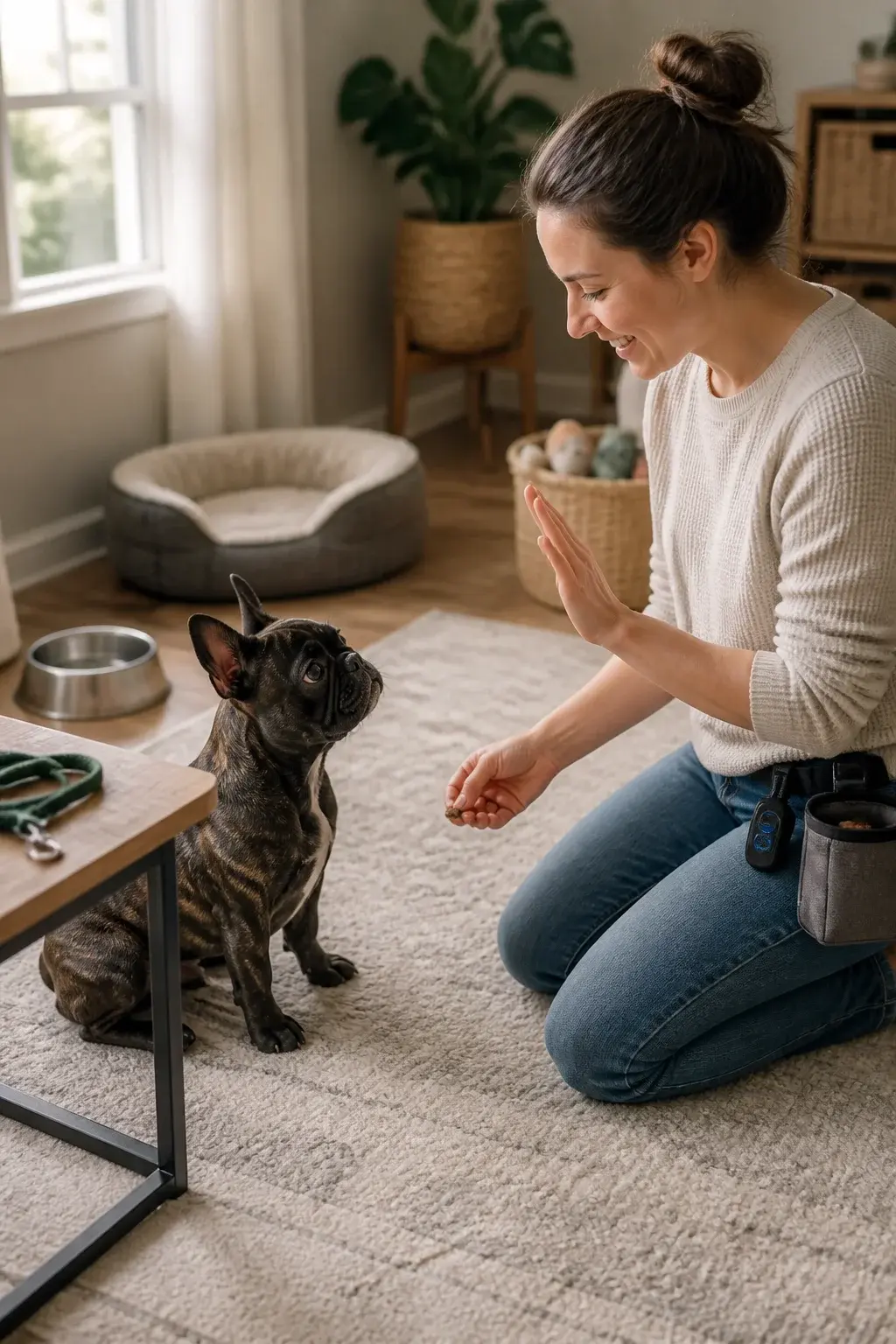
You want a Frenchie who can chill in coffee shops and ignore loud sounds. That starts early and stays positive.
Make New Things = Good Things
- Pair new sights and sounds with treats: skateboards, doorbells, delivery trucks.
- Short, quality exposures beat marathon sessions. Quit while they’re happy.
- Polite dog meetups with balanced, vaccinated dogs. Avoid chaotic free-for-alls.
Positive Reinforcement That Actually Works
You’ll get obedience when your dog believes good choices pay. Bribery? Nope. It’s economics for canines.
Find Your Dog’s Currency
- Food: soft, smelly, tiny. Rotate flavors so they don’t get bored.
- Toys: a quick tug or fetch for toy-motivated pups.
- Life rewards: open the door, hop on the couch, go say hi. Ask for a sit first.
Timing, Frequency, Fading
- Mark the behavior with “Yes!” the instant it happens.
- Pay often while learning, then switch to variable rewards once reliable.
- Fade lures quickly. Keep rewards unpredictable but frequent enough to maintain effort.
Common Frenchie Challenges (And Easy Fixes)
Selective Hearing
Practice in boring rooms first. Add distractions slowly. If “sit” fails at the park, you asked for calculus before mastering math facts. IMO, level down and build back up.
Jumping On Guests
Pre-load your Frenchie with a 1-minute sniffy session or quick training before guests arrive. Ask for a sit to earn attention. Have visitors ignore jumping and reward the sit. Consistency wins.
Barking For Attention
Teach “quiet” by rewarding silence. When they bark for snacks or play, wait for a second of quiet, then mark and reward that. Give attention for calm, not noise. FYI, this feels slow at first but pays off big.
Chewing Stuff
Puppy-proof what you can. Offer safe chews and rotate them. If they grab a shoe, trade for a treat and a toy, then reward chewing the right thing.
Health Considerations That Affect Training
Frenchies have unique health quirks. Comfort matters because uncomfortable dogs don’t learn well.
- Heat sensitivity: Train in cool areas. Bring water on walks. Keep sessions short.
- Allergies: Itchy pups get cranky. Work with your vet on diet and skin care.
- Weight: Keep treats tiny and count calories. Chubby Frenchies struggle to move and focus.
Make Obedience a Lifestyle, Not a Chore
Fold training into daily life. Ask for a sit before meals, a down while you tie shoes, a stay while you open the front door. Sprinkle three 2-minute sessions per day and you’ll see massive progress in a month.
Also, celebrate small wins. Your Frenchie offered a spontaneous sit while you chatted with a neighbor? That’s gold. Pay it. Behavior that gets rewarded, repeats.
FAQ
How long does it take to train a French Bulldog?
Most Frenchies learn basics like sit and down in a few days of short sessions. Reliability around distractions can take weeks. Potty training can take several weeks to a couple of months. Consistency and a solid routine speed everything up.
What treats work best for French Bulldogs?
Use soft, smelly, pea-sized treats like cooked chicken, turkey, or commercial training bites. Keep them tiny to protect their waistline. Rotate flavors so your Frenchie stays motivated, and adjust meal portions to balance the extra calories.
How do I stop my Frenchie from pulling on walks?
Start indoors with loose-leash rewards. When the leash tightens, stop. When it loosens, move. Reward check-ins by your side. A well-fitted harness helps. Practice short, focused walks rather than long battles.
Is crate training necessary?
Necessary? No. Very helpful? Absolutely. Crates aid potty training, prevent destructive chewing, and give your Frenchie a safe, cozy den. Make it positive with treats, chews, and naps. Never use it as punishment.
How much exercise does a French Bulldog need?
Aim for 30 to 60 minutes of total daily activity split into short sessions. Mix sniffy walks, fetch in short bursts, and mental games. Watch for heavy panting or lagging behind, and rest when they tell you they’re done.
Can I train my Frenchie without treats?
Yes, but treats make learning faster. You can use toys, praise, and life rewards like going outside or greeting people. Once your dog understands behaviors, switch to a mix of rewards so they don’t rely on food every time.
Conclusion
Raising an obedient French Bulldog comes down to clear rules, tiny training sessions, and huge positivity. Keep it fun, keep it fair, and reward like a slot machine when they nail it. With steady practice, your Frenchie will listen the first time, strut politely on leash, and charm the socks off everyone. IMO, that’s the dream: a happy dog who loves learning and a human who actually enjoys training.
About the Author

David
Blogger/YouTuber
A guitar nerd, the myth, the legend.