
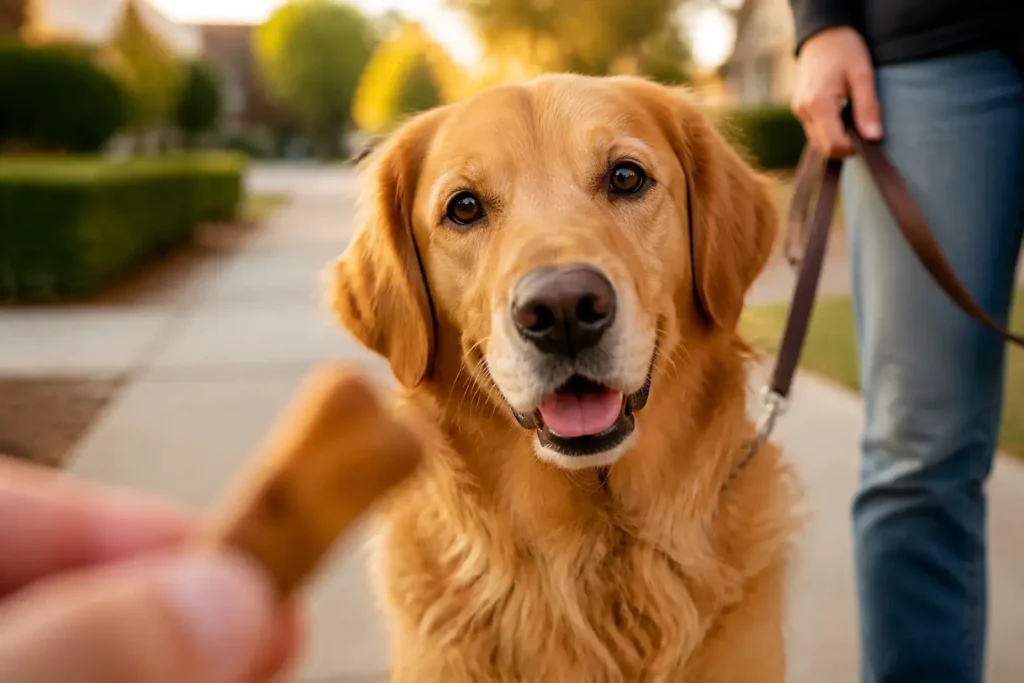
Golden Retrievers come hardwired with sunshine and zoomies. That’s why you love them. But let’s be honest: sunshine that ignores “come” can turn a chill walk into a neighborhood chase scene.
You don’t need a drill sergeant. You need a friendly system that channels that golden gusto into good manners. Let’s turn your eager fluffball into a polite, reliable buddy you can take anywhere.
Ready to raise a well-behaved Golden without crushing the goofy? Let’s go.
Know Your Golden: Motivation, Not Domination
Goldens don’t work for fear. They work for fun, food, and your attention. That’s your secret weapon. When you reward fast and fairly, they learn lightning-quick.
Key motivators for most Goldens:
- Treats: Small, soft, and stinky work best during learning.
- Toys: A quick tug or fetch toss can beat any biscuit for play-driven pups.
- Praise and touch: Big “Good!” and scritches hit the dopamine button.
If your Golden checks out during training, the reward doesn’t match the effort. Upgrade the treat, shorten the task, or add play. Simple fix.
Calm First, Train Second
Trying to teach “down” when your dog is vibrating with excitement? Not happening. Start sessions after a short sniffy walk or a few fetch throws. Brain on, body chill.
The Golden Rules Of Training (That Actually Stick)
You need structure that feels like a game. Use these as your north star.
- Keep sessions short: Two to five minutes, several times daily. Quit while they still want more.
- One cue, one behavior: Don’t say “sit sit sit.” Say it once, then help them succeed.
- Mark success fast: Use a crisp “Yes!” or a clicker the instant they do the thing.
- Pay every success at first: Then switch to variable rewards so they keep trying hard.
- End on a win: Confidence beats confusion every time.
Core Skills Every Golden Should Master
We’ll focus on the big four. Nail these and life gets way easier.
Sit and Down
– Lure your dog’s nose up and back for “sit.” Mark and reward the second their bum hits the ground.
– For “down,” lure the nose to the floor between paws, then out. Reward with calm praise.
– Add duration: Pay every couple of seconds, then every five, then randomly. Goldens love guessing games.
Leave It
– Hold a treat in your closed fist. Pup sniffs, licks, tries pawing. Wait.
– The instant they back off or look away, mark and reward from your other hand.
– Add the cue “leave it,” then upgrade to an open palm, then floor-level food with a hand hover.
– Real-life upgrade: Use a boring treat on the floor and pay with chicken from your pocket. They learn ignoring junk earns gold.
Recall (Come When Called)
– Start inside. Say your recall word once, then run backward, clap, cheer like you just won the lottery.
– When they tag you, mark and pay a jackpot: 3 to 5 tiny treats or a party-level play burst.
– Level up in quiet yards with a long line. Pay big, release back to play. Coming to you should not end the fun.
– Only say the cue when you’re 90% sure they’ll nail it. Protect that word like it’s your phone password.
Loose-Leash Walking
– Reward position, not distance. Treat at your thigh every 2 to 4 steps at first.
– If the leash tightens, stop. Wait for slack or call them back, then move again.
– Use sniff breaks as currency: “Heel for 10 steps, then go sniff.” That trade feels fair to a Golden.
Structure Their Day So Obedience Comes Naturally
Goldens misbehave when needs go unmet. Meet those needs, and manners get easy.
- Physical exercise: Two quality sessions daily. Mix fetch, hikes, and swims. Keep joint safety in mind for pups.
- Mental enrichment: Snuffle mats, food puzzles, hide-and-seek with treats, simple scent games.
- Training woven into life: Sit before meals, down before couch time, wait at doors, eye contact for leash on.
- Predictable routines: Regular sleep, potty, and play windows. Calm brains learn faster.
Smart Feeding Habits That Boost Training
– Use part of breakfast as training currency.
– Save the highest-value treats for the hardest tasks or distractions.
– For young Goldens with bottomless pits, spread meals in puzzle feeders. A busy mouth makes better choices, IMO.
Social Skills: Friendly, Not Frenzied
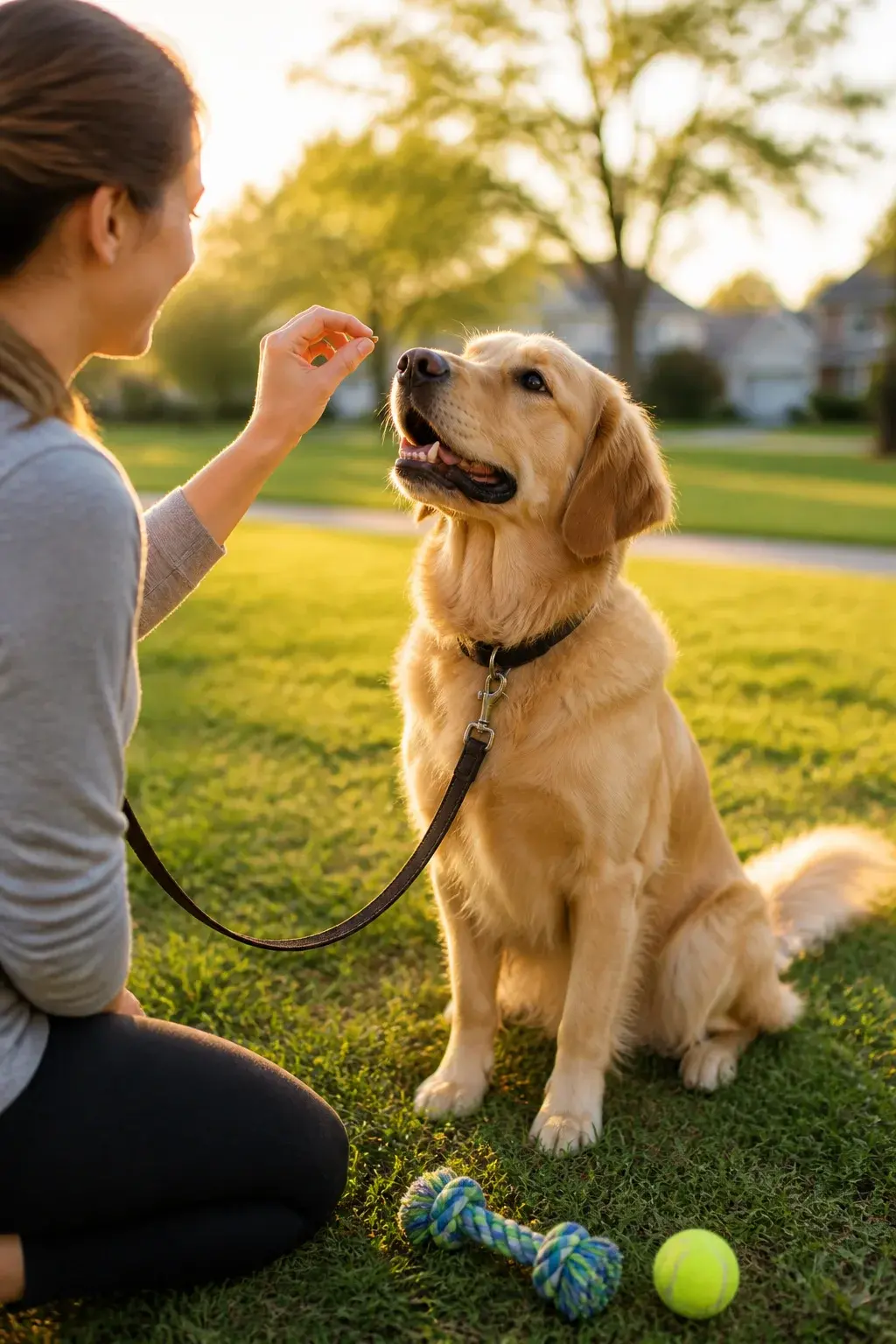
Goldens love everyone. We just need to add a little chill.
Polite Greetings
– Ask for a sit before anyone says hi. No sit, no pet.
– Cue “go say hi” for a brief greeting, then call back and reward.
– Coach friends to pet low and calm. No squealing, no hyping. You’re training the humans too, FYI.
Dog-Dog Etiquette
– Short, on-leash parallel walks beat face-to-face lunges.
– Reward check-ins with you during playdates. Your dog learns you’re more fun than chaos.
– If your Golden gets sticky or rowdy, call for a quick “come,” ask for a down, then release. Control without killing the vibe.
Fixing Common Golden Problems (Fast)
Let’s tackle the big annoyances with simple tactics.
Jumping On People
– Remove the payoff. Turn away, no eye contact.
– Reward four-on-the-floor or a sit instantly.
– Teach an incompatible behavior: Hold a toy when greeting. Hard to jump when you’re busy bragging about your squeaky.
Counter Surfing
– Manage first: Clear counters, use baby gates, and teach “place” during cooking.
– Pay for parking: Mat beside the kitchen gets steady treats for staying put.
– If they approach the counter, redirect to “place,” then reward. No scolding. Curiosity pays zero, obedience pays big.
Mouthiness and Nibbling
– Offer toys proactively during play.
– If teeth touch skin, say “ouch,” pause play for 3 seconds, then resume with a toy.
– Reward gentle mouths. Goldens love rules they can understand.
Zoomies and Overarousal
– Preempt with earlier exercise.
– Install an off switch: “Go to mat,” then scatter-feed calmly.
– Keep greetings low-key. Your energy sets the temperature.
Make Training Stick In Real Life
You don’t need longer sessions. You need more reps in different places.
- Change locations: Living room, yard, sidewalk, park. Dogs don’t generalize well.
- Change distractions: Kids playing, bikes, squirrels. Start easy, level up slowly.
- Change rewards: Food, toys, permission to sniff, access to the lake.
- Track progress: Jot down 3 wins per day. Momentum matters, IMO.
Use Life Rewards
– Sit to clip the leash.
– Wait at the curb before crossing.
– Check in with eye contact to earn off-leash time in safe areas.
– Door opens only when paws stay grounded. Your house, your rules.
When To Call In a Pro
Some Goldens need extra guidance. No shame in getting help.
- Red flags: Resource guarding, reactivity, separation distress, or bite risk.
- What to look for: Certified positive-reinforcement trainers who use evidence-based methods.
- Bonus: Group classes boost obedience and social skills while you learn clean handling.
FAQ
How long does it take to make a Golden Retriever more obedient?
You’ll see small wins in a week if you train daily, but solid reliability takes 6 to 12 weeks of consistent, short sessions. Think reps, not marathons. Keep it fun and your dog learns faster.
What treats work best for training?
Use tiny, soft bites your dog can swallow fast. Boiled chicken, turkey, low-fat cheese bits, or store-bought training treats work great. Save the top-tier stuff for recalls and tough distractions.
Can I train my Golden without treats?
Yes, but treats speed things up. You can mix in toys, praise, and life rewards like sniff time. Over time, shift to variable reinforcement so your dog works happily even when food isn’t visible.
How much exercise does a Golden need for good behavior?
Most adult Goldens do best with 60 to 90 minutes daily, split into two or three sessions. Include mental work like scent games or puzzle feeders. A tired brain behaves better than a tired body alone.
Why does my Golden listen at home but not outside?
Distractions crush focus. Dogs don’t generalize cues well. Re-teach each behavior in new places, start easier, and pay better. Use a long line for safety while you build reliability.
Are e-collars or prong collars a good idea?
For most Goldens, no. They’re sensitive, people-pleasing dogs who learn fast with positive methods. A well-fitted flat collar or harness, smart reinforcement, and good timing beat aversive tools, FYI.
Conclusion
You don’t need to out-muscle a Golden Retriever. You need to outsmart that big golden heart with clear rules, quick rewards, and a daily rhythm that meets their needs. Keep sessions short, keep rewards exciting, and fold training into real life. Do that, and you’ll get the obedient companion you want without losing the goofy best friend you adore.
About the Author

David
Blogger/YouTuber
A guitar nerd, the myth, the legend.