
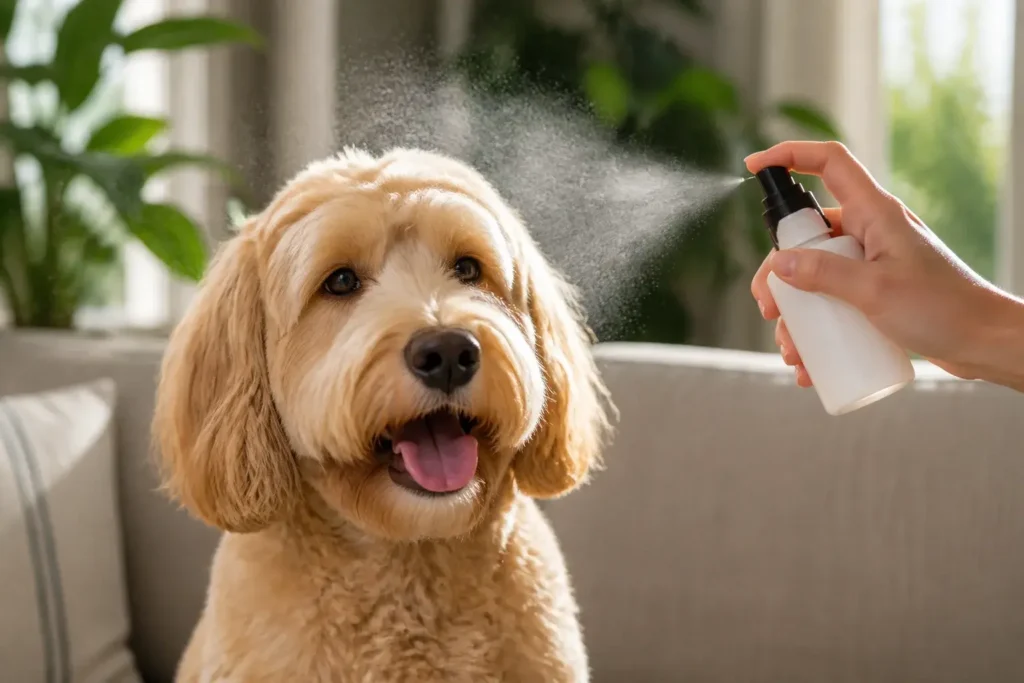
You love your dog. You don’t always love that mysterious “after-walk aroma.”
Good news: dog perfume spray exists, and it actually works when you pick the right one.
Let’s talk about how to choose it, use it, and avoid turning your pup into a walking cloud of artificial flowers.
Why Dog Perfume Spray Isn’t Just Fancy Fluff
Dog perfume spray isn’t about turning your lab into a runway model. It’s about freshening up between baths, neutralizing that wet-dog smell, and making cuddle time way more pleasant.
The best sprays do more than mask odors. They break down stink molecules and condition the coat, so your dog smells clean and feels soft. Think of it as dry shampoo’s cool, canine cousin.
Also, IMO, if you enjoy sofa snuggles, a spritz after a muddy adventure makes everyone happier. FYI, your guests will appreciate it too.
What Makes a Great Dog Perfume Spray
Not all spritzes are equal. Here’s what separates the winners from the gimmicks:
- Alcohol-free base: Prevents dryness and skin irritation.
- pH-balanced for dogs: Dog skin sits around pH 6.5 to 7.5, so products should match that.
- Light, pet-safe fragrance: Natural, IFRA-compliant scents or mild synthetic notes work best.
- Odor neutralizers: Look for zinc salts, baking soda alternatives, or enzymatic technology.
- Conditioners: Ingredients like aloe, panthenol, or coconut-derived conditioners help detangle and add shine.
- No parabens, phthalates, or formaldehyde donors: Skip the questionable stuff. Your dog can’t read labels, so you have to.
Ingredients to Love
- Aloe vera for soothing skin
- Oat extract for gentle conditioning
- Vegetable glycerin to lock in moisture
- Cyclodextrins to trap odors instead of just covering them
Ingredients to Skip
- High alcohol content that dries skin
- Strong essential oils like tea tree or clove in high concentrations
- Heavy musk that lingers like a bad decision
How to Apply Without Annoying Your Dog
You’ve got the bottle. Now what? Technique matters more than you think.
- Brush first. Remove loose hair and dirt so the spray does more than perfume the dust bunnies.
- Spritz the coat lightly. Hold the bottle 8–10 inches away. Two to four sprays for a small dog, five to eight for a big fluffball.
- Avoid face, ears, and private zones. Spritz your hands, then lightly wipe the chest or neck if needed.
- Ruffle and brush again. Spread the product evenly so the scent isn’t concentrated in one spot.
- Let it settle. Give it a minute before hugging like there’s no tomorrow.
Pro Tips for Sensitive Noses
- Start with one spritz and see how your dog reacts.
- Choose fragrance-free neutralizers if your dog sneezes or scratches after scented products.
- Test on a small patch first to rule out irritation.
Choosing a Scent: Fresh, Floral, or Foodie?
Scented dog sprays land in a few camps. Your dog won’t care which one you pick, but you will.
- Fresh and Clean: Light “just bathed” vibes with notes like cotton, rain, or aloe. Safe for daily use.
- Herbal and Green: Subtle hints of rosemary, mint, or cedar. Great for active dogs, but avoid strong essential oils.
- Fruity: Apple, pear, or coconut. Fun and playful without smelling like a teenager’s body spray.
- Warm and Cozy: Vanilla or oatmeal blends. Sweet but can feel heavy in hot weather.
IMO, fresh-and-clean wins for most homes. Save gourmand scents for colder months when cozy vibes feel right.
Match the Scent to the Season
- Spring/Summer: Crisp, airy scents that don’t overwhelm in heat.
- Fall/Winter: Slightly richer blends with vanilla or soft woods.
- Year-Round: Light aloe or oatmeal formulas that never clash.
Dog Perfume vs. Deodorizing Spray vs. Cologne
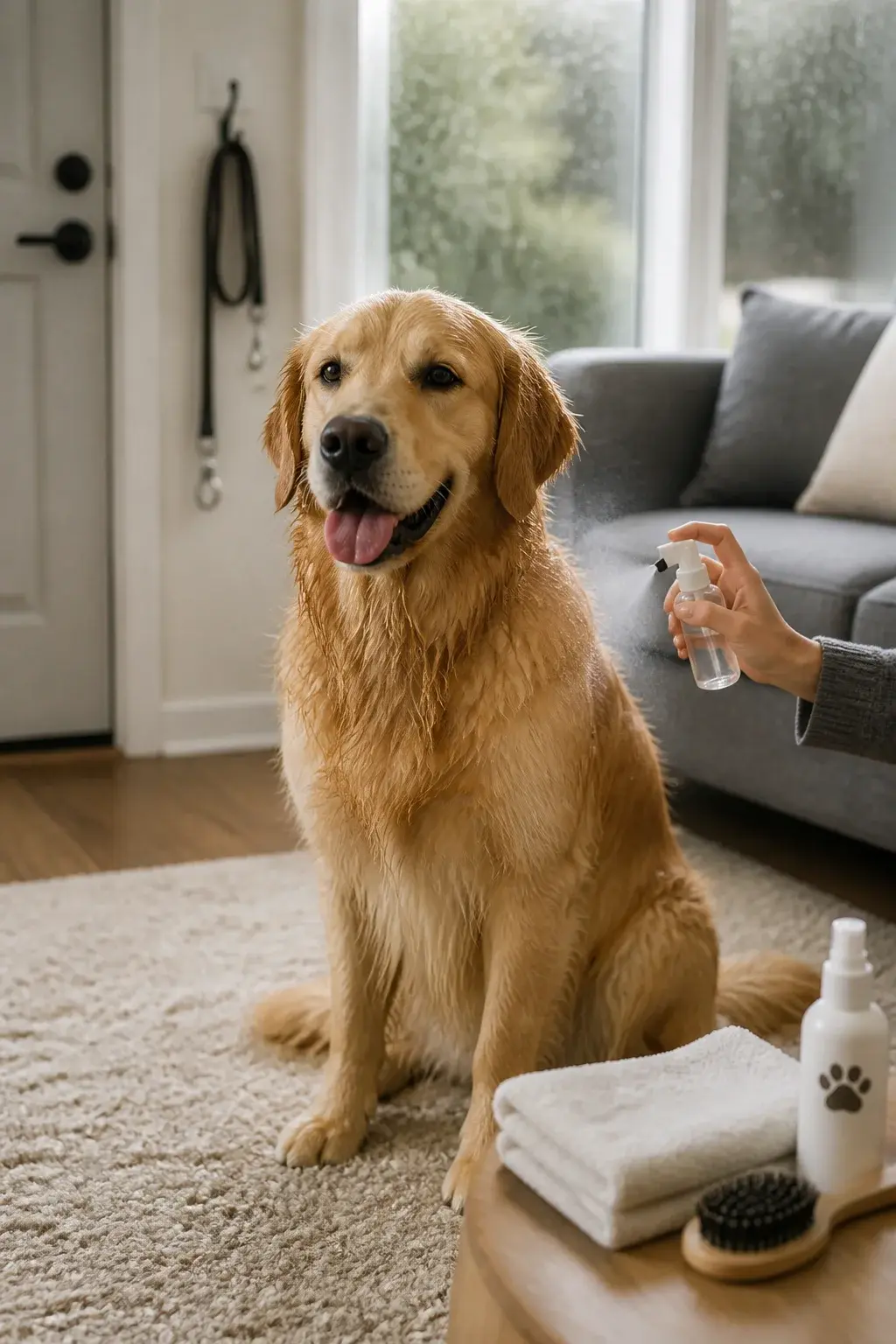
All sprays aren’t the same. Here’s the quick translation guide:
- Deodorizing Spray: Focuses on neutralizing odors with minimal scent. Best for sensitive pups and frequent use.
- Dog Perfume/Body Mist: Adds a noticeable but light fragrance. Great between baths and for social outings.
- Cologne: Stronger, longer-lasting. Use sparingly and only on dogs that tolerate scent well.
If you’re unsure, start with a deodorizing spray and layer a gentle perfume for special occasions. Think park date or meeting the in-laws.
Timing, Frequency, and Safety
How often can you spritz? More isn’t better. It’s just… more.
- Frequency: 2–4 times a week for perfume sprays, daily for mild deodorizing sprays.
- After Bath: Use a light mist post-towel-dry for that just-groomed feel.
- Before Guests Arrive: A quick refresh avoids the “what’s that smell?” moment.
- Hot Weather Caution: Strong scents intensify with heat. Go lighter in summer.
Safety Musts
- Keep sprays away from eyes, ears, and mouth.
- Don’t apply to broken or irritated skin.
- Store out of reach. Dogs lick. That’s their whole thing.
- If you see redness, itching, or coughing, stop and rinse with lukewarm water.
DIY Dog Perfume Spray: Should You Try It?
Short answer: yes, but do it right. Essential oils can be risky for dogs if used undiluted or in high amounts.
Simple, Safer DIY Option
Mix the following in a spray bottle:
- 1 cup distilled water
- 1 teaspoon vegetable glycerin
- 1 teaspoon aloe vera juice
- Optional: 1–2 drops of dog-safe hydrosol like lavender hydrosol, not essential oil
Shake, spritz on a brush, then run through the coat. Keep it in the fridge and use within two weeks.
DIY Rules You Shouldn’t Break
- Avoid undiluted essential oils, especially tea tree, citrus peels, clove, and cinnamon.
- Never exceed 0.25 percent total fragrance in leave-on products for dogs.
- Patch test every new formula.
Best Times to Use Dog Perfume Spray
You don’t need a strict schedule. Just be strategic.
- After rainy walks: Neutralize the damp dog smell before it moves into your sofa.
- Post-grooming: Stretch the fresh feeling until the next bath.
- Before travel: Small spaces magnify odors. Your car will thank you.
- Photoshoots and meetups: Yes, your dog is already perfect. The nice scent is just a bonus.
Signs Your Dog Perfume Spray Works
You’ll know quickly if you picked a winner.
- Your dog doesn’t scratch or sneeze right after application.
- The scent fades gracefully in a few hours, not in an overpowering poof.
- The coat feels soft and brushable, not tacky.
- People comment that your dog smells clean, not “perfumey.”
FAQ
Can I use human perfume on my dog?
No. Human perfume usually contains alcohol, strong solvents, and higher fragrance levels that can irritate your dog’s skin and overwhelm their senses. Choose a product formulated for dogs with a gentle, pH-appropriate base.
How long does dog perfume spray last?
Most sprays last from a few hours up to a day, depending on the formula and your dog’s activity level. Stronger colognes last longer, but I recommend light, buildable sprays for everyday use.
Is dog perfume safe for puppies?
Use extreme caution. For puppies under 12 weeks, skip fragrance and stick to gentle, fragrance-free grooming wipes or water-only rinses. After that, choose a mild, puppy-specific spray and test on a small area first.
What if my dog hates being sprayed?
No problem. Spritz the product on your brush or your hands, then massage it through the coat. Reward with treats so your dog forms a positive association. The bottle doesn’t need to go near their face.
Will the spray replace baths?
Nope. Think of it as a freshener between baths, not a substitute for proper grooming and skin care. Regular bathing with a dog-safe shampoo keeps the skin healthy and the coat clean.
Can dog perfume trigger allergies in humans?
Sometimes. If you or a family member has fragrance sensitivities, pick a hypoallergenic or fragrance-free deodorizing spray. Also apply lightly and keep the product off shared textiles like pillows.
Conclusion
Dog perfume spray gives you a quick, easy way to keep your pup smelling fresh between baths. Pick an alcohol-free, pH-balanced formula with gentle scent and real deodorizing power. Apply lightly, avoid the face, and brush it through for even coverage.
Do that, and your dog will smell like a dream without turning your living room into a department store fragrance counter. And yes, you’ll enjoy those cuddles a whole lot more.
About the Author

David
Blogger/YouTuber
A guitar nerd, the myth, the legend.