
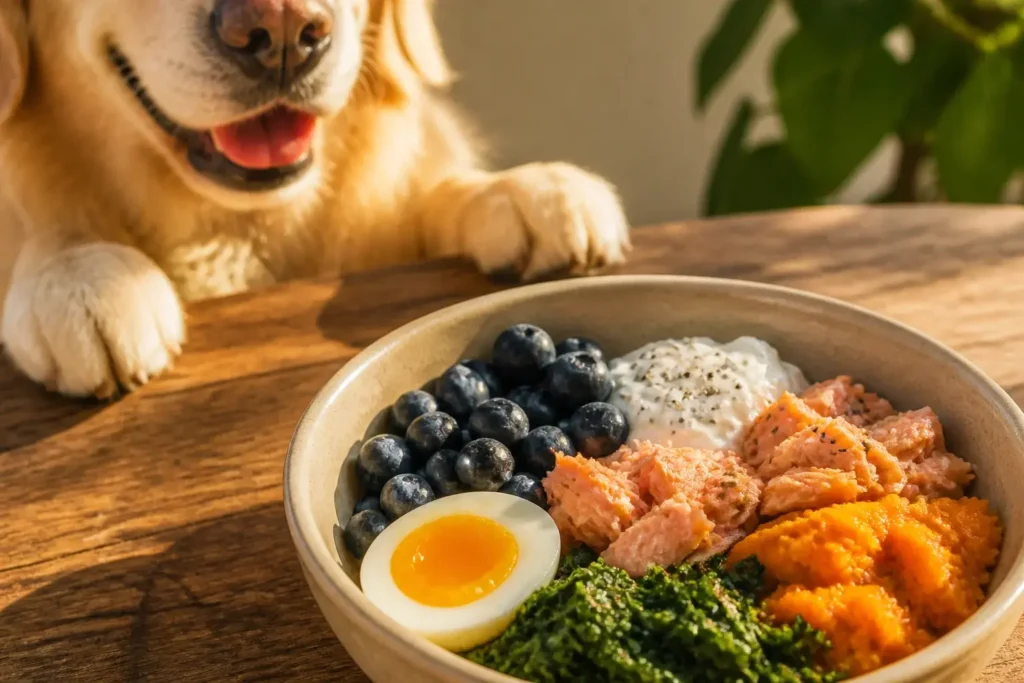
Your dog deserves more than boring kibble. They deserve meals that fuel zoomies, shiny coats, and epic naps.
Superfood dog meals do exactly that. They load up each bowl with real, nutrient-dense ingredients that actually help your dog thrive.
Ready to step up your pup’s menu without going full MasterChef? Let’s make it simple, tasty, and vet-approved.
What Counts as a “Superfood” for Dogs?
“Superfood” isn’t a formal label. It’s a nickname for ingredients that deliver a ton of nutrition per bite. For dogs, that means foods rich in protein, omega-3s, antioxidants, fiber, and minerals. You know, the good stuff.
Dog-friendly superfood MVPs:
- Blueberries and strawberries for antioxidants
- Salmon and sardines for omega-3s
- Pumpkin and sweet potatoes for fiber and beta-carotene
- Spinach and kale for iron, folate, and vitamins A, C, and K
- Eggs for complete protein and choline
- Turmeric and ginger for anti-inflammatory perks
- Plain kefir or yogurt for probiotics
- Chia or flax seeds for fiber and healthy fats
Quick Safety Notes
- Avoid onions, garlic, grapes, raisins, xylitol, macadamia nuts, and alcohol. Hard no.
- Go easy with new foods. Start with tiny amounts to avoid stomach drama.
- When in doubt, ask your vet. Especially if your dog has allergies or a medical condition.
Building a Balanced Superfood Bowl
Great news: you don’t need a lab coat or food scale. Just follow a simple formula that keeps meals balanced and delicious.
Easy bowl blueprint:
- 40 to 60% lean protein: chicken, turkey, salmon, lean beef, eggs
- 20 to 30% complex carbs: sweet potatoes, brown rice, quinoa, oats
- 20 to 30% veggies and add-ins: spinach, broccoli, pumpkin, blueberries
- Healthy fat topper: fish oil, olive oil, or flaxseed
Portioning Without Guesswork
- Small dogs (10–20 lb): 1 to 1.5 cups per day split into two meals
- Medium dogs (20–50 lb): 2 to 3 cups per day split into two meals
- Large dogs (50–90 lb): 3 to 5 cups per day split into two meals
FYI: Activity level, age, and metabolism change everything. Adjust if your dog gains or loses weight.
5 Superfood Dog Meal Ideas You Can Make Tonight
You don’t need fancy tools. A pot, a pan, and your dog’s enthusiastic supervision will do.
1) Salmon, Sweet Potato, and Blueberry Power Bowl
- Protein: Baked salmon, flaked and cooled
- Carb: Mashed sweet potato
- Veg + Fruit: Chopped spinach and a handful of blueberries
- Topper: 1 tsp flax or fish oil per cup of food
Why it rocks: Omega-3s support joints and skin. Antioxidants help with inflammation and brain health.
2) Turkey, Quinoa, and Turmeric Gut-Soother
- Protein: Ground turkey cooked in water, drained
- Carb: Cooked quinoa
- Veg: Diced carrots and peas
- Topper: A pinch of turmeric with a drizzle of olive oil
Bonus: Turmeric pairs with fat for better absorption. Keep servings small, like a sprinkle.
3) Chicken, Pumpkin, and Kefir Chill Bowl
- Protein: Shredded chicken breast
- Carb: Brown rice
- Veg: Plain pumpkin puree (not pie filling)
- Topper: Spoon of plain kefir or unsweetened yogurt
Great for: Sensitive tummies and anxious days. Pumpkin fiber steadies the gut, probiotics support digestion.
4) Beef, Oats, and Berry Breakfast Hash
- Protein: Lean ground beef cooked and drained
- Carb: Rolled oats cooked in water
- Veg + Fruit: Chopped kale and a few crushed strawberries
- Topper: Chia seeds
Heads-up: Go light on chia. A small sprinkle expands in liquid and adds fiber.
5) Sardine and Rice Skin-Glow Bowl
- Protein: Sardines in water, drained
- Carb: White rice for easy digestibility
- Veg: Steamed green beans
- Topper: Tiny squeeze of lemon for you, not your dog. For your dog: a little fish oil.
Why it’s clutch: Budget-friendly omega-3s with minimal prep. Your dog won’t mind the fish breath. You might.
Smart Shortcuts for Busy Humans
You’re not auditioning for a cooking show. Use hacks.
- Batch cook proteins on Sunday. Freeze in single-meal portions.
- Microwave frozen veggies. Zero shame, all convenience.
- Keep canned pumpkin, sardines, and salmon in the pantry. Lifesavers.
- Use a multivitamin powder for dogs if you cook most meals at home.
- Rotate proteins each week to cover more nutrients without spreadsheets.
Store-Bought With Superfood Vibes
Check labels for:
- Named proteins first (chicken, salmon), not “meat by-product.”
- Whole ingredients like sweet potato, pumpkin, blueberries, spinach.
- AAFCO statement that it meets complete and balanced nutrition for your dog’s life stage.
- No mystery fillers and minimal additives.
IMO, combine quality kibble with fresh toppers for the best of both worlds: convenience and freshness.
Common Mistakes People Make With Superfood Meals
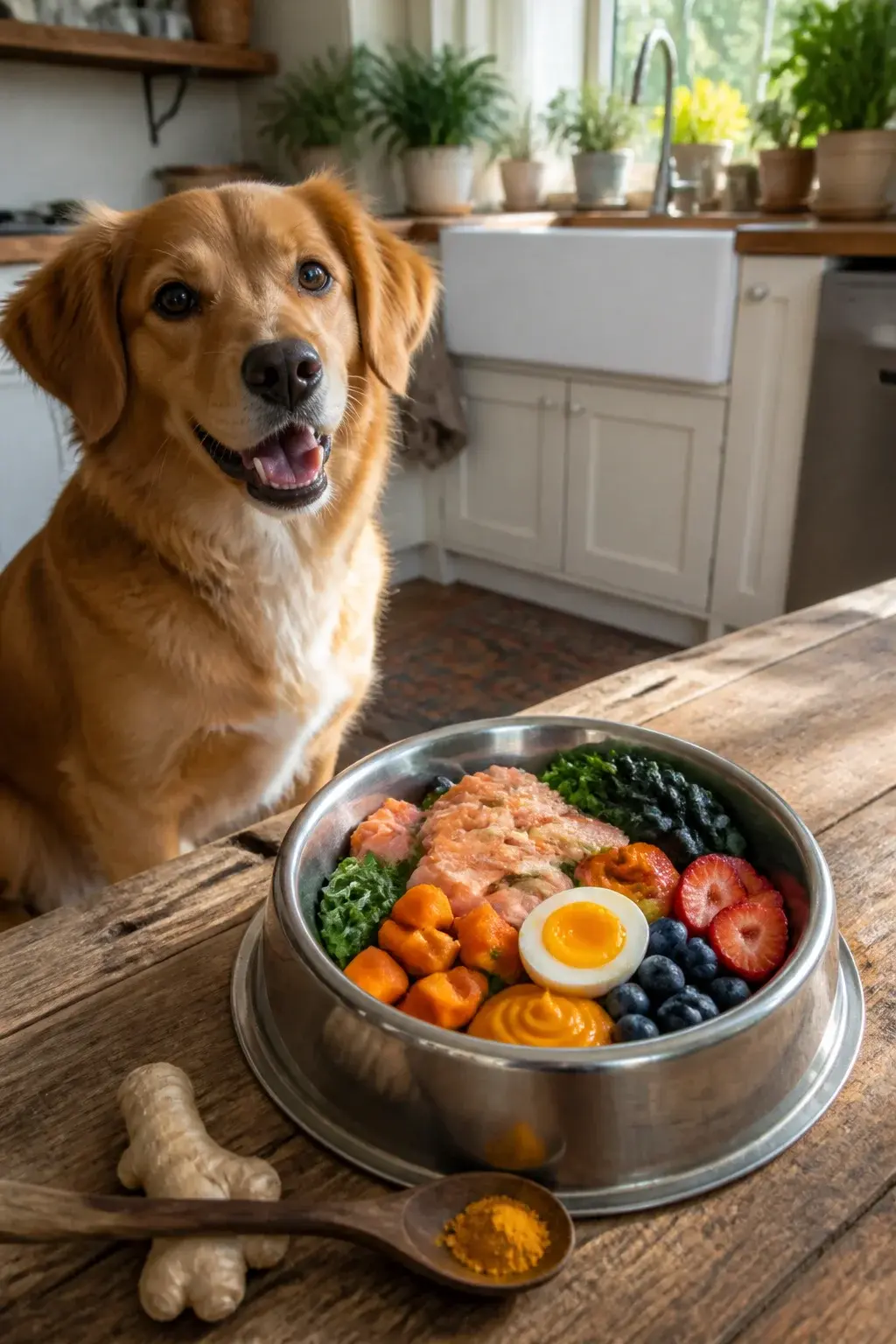
Let’s keep it real. Good intentions sometimes cause tummy trouble.
- Overloading fiber. Too much pumpkin, chia, or greens can cause gas and loose stools.
- Skipping calcium when fully home-cooking. Dogs need calcium. Use a vet-approved supplement or ground eggshell powder.
- Seasoning like a human. No salt, no onion, no garlic. Your dog didn’t ask for a bistro menu.
- Random portion sizes. Eyeballing can lead to weight gain. Watch the waistline, not the begging eyes.
How to Add Calcium Safely
If you cook most meals, add a calcium source:
- Commercial canine multivitamin with calcium
- Ground eggshell powder, about 1 teaspoon per pound of food
- BalanceIt or other vet-formulated supplement blends
Consult your vet for exact dosing if your dog has kidney or urinary issues.
Tiny Dogs, Big Dogs, Seniors, and Puppies
Different dogs, different needs. Shocking, I know.
- Puppies: Higher protein and fat. Choose large-breed puppy formulas for big pups to avoid rapid growth.
- Seniors: Gentle proteins like turkey or eggs. Add omega-3s and joint-supporting ingredients like sardines.
- Toy breeds: Smaller, more frequent meals. They burn fast and can get hypoglycemic.
- Active dogs: More calories and fat. Think salmon, beef, and extra carbs like oats or rice.
FYI, medical conditions beat every general rule. Your vet’s guidance always wins.
Snackable Superfood Toppers
Don’t want to overhaul every meal? Add quick boosts.
- Blueberries or crushed strawberries on kibble
- 1 tablespoon pumpkin puree per cup of food
- Sprinkle of flax or chia seeds
- Drizzle of fish oil for skin and coat
- Small spoon of kefir for probiotics
Keep total toppers under 10 to 15% of daily calories if you feed complete commercial food.
Superfood Meal Prep: A One-Pot Template
Here’s a plug-and-play method that keeps things balanced and repeatable.
- Choose your protein: 2 lb ground turkey, chicken, or lean beef.
- Add a carb: 2 cups cooked brown rice or quinoa.
- Veggies: 2 cups mixed spinach, carrots, and green beans, chopped.
- Extras: 1 cup pumpkin puree, 1 tablespoon turmeric, 2 tablespoons olive or fish oil.
- Cook protein in water, add veggies, stir in carb and extras. Cool completely.
- Portion into freezer containers. Thaw as needed and serve warm, not hot.
Pro tip: Mix in fresh blueberries or kefir right before serving, not during cooking.
FAQ
Can I switch my dog to homemade superfood meals overnight?
Transition slowly over 7 to 10 days. Start with 25% new food and 75% current food, then increase the new portion every couple of days. Quick switches can cause diarrhea, and nobody wants that cleanup.
Do dogs actually need fruits and veggies?
They don’t need them the way humans do, but they benefit from them. Antioxidants, fiber, and phytonutrients support digestion, immune function, and longevity. Think of produce as the supporting cast that makes the star protein perform better.
Are raw superfood meals better than cooked?
It depends on your dog and your risk tolerance. Raw keeps some nutrients intact but increases the risk of harmful bacteria. Lightly cooked meals deliver great nutrition with fewer safety concerns, IMO the best middle ground for most homes.
How much fish oil should I add?
For general skin and coat support, aim for about 20 to 55 mg combined EPA and DHA per pound of body weight per day. Use a pet-formulated fish oil and follow the label for your dog’s size. Too much can cause stomach upset or affect clotting.
What if my dog has allergies?
Stick with single-protein recipes and introduce ingredients one at a time. Novel proteins like duck or lamb can help. Keep a simple food diary to track reactions, and loop in your vet if symptoms persist.
Can I just add superfoods to kibble?
Yes, and it works great. Add a protein boost, a colorful veg or fruit, and a healthy fat like fish oil. Keep portions small so you don’t unbalance the complete nutrition of your dog’s regular food.
Conclusion: Make Every Bowl Count
Superfood dog meals don’t need to be complicated or pricey. Use a simple protein-carb-veggie formula, rotate ingredients, and lean on smart toppers. Your dog gets better energy, a happier gut, and a shinier coat. You get tail wags, fewer vet visits, and the smug joy of being your pup’s favorite chef. Win-win.
About the Author

David
Blogger/YouTuber
A guitar nerd, the myth, the legend.