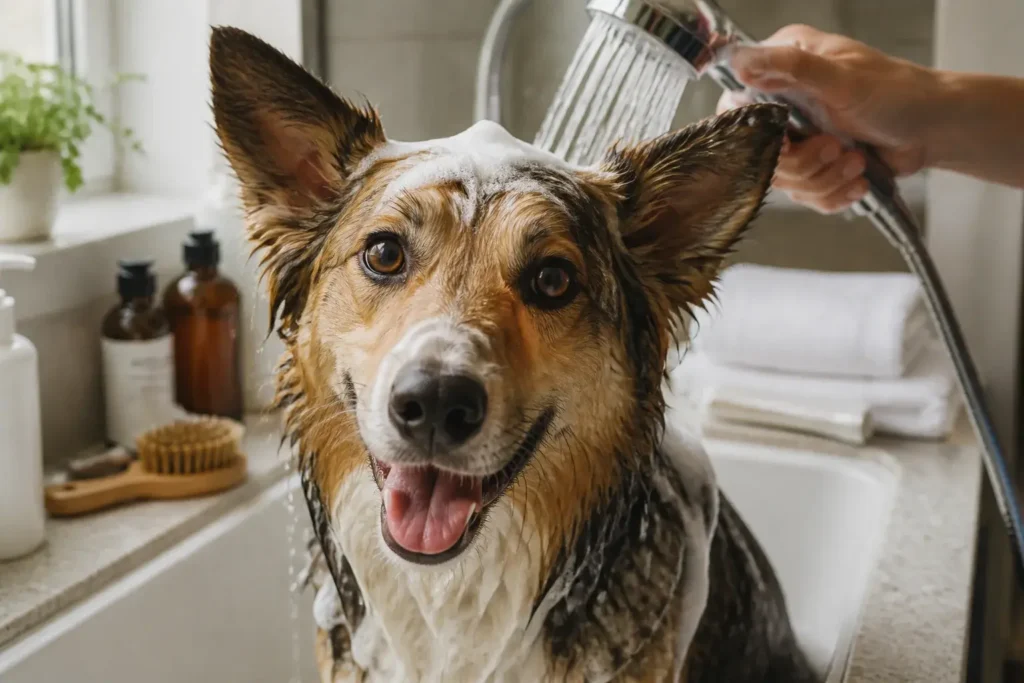
Bath time can feel like a splashy circus act. You want a clean, fresh pup, but your dog seems convinced the tub is lava.
Good news: with the right setup and a few smart tricks, bath time gets easier, faster, and way less soggy.
Let’s turn your dog from muddy gremlin to shiny marshmallow without drama or tears.
Know Your Dog’s Bathing Schedule
How often should you bathe your dog? It depends on coat type, lifestyle, and skin health. Most dogs do great with a bath every 4 to 8 weeks. Very active, outdoorsy pups might need more frequent rinses.
Rule of thumb:
- Short, smooth coats: Every 6–8 weeks, plus wipe-downs after messy adventures.
- Double coats (like Labs, Huskies): Every 4–8 weeks, with solid brushing weekly.
- Curlies and doodles: Every 3–6 weeks, because oils get trapped in curls.
- Dogs with skin issues: Follow your vet’s plan, not the internet’s.
Signs You’re Washing Too Often
If you notice more itching, dull coat, or flakes, you might be stripping natural oils. Scale back and add regular brushing between baths.
Prep Like A Pro: Tools, Space, And Dog
A smooth bath starts before any water hits fur. Gather everything within reach so you never abandon a soapy dog to sprint for a towel.
Bath toolkit:
- Dog-specific shampoo and optional conditioner. Human shampoo can mess with skin pH.
- Detangling spray for long or curly coats.
- Non-slip mat for the tub or shower floor.
- Large absorbent towels or a dog-safe blow dryer with cool/warm settings.
- Brush and comb suited to your dog’s coat type.
- Shower sprayer or pitcher for thorough rinsing.
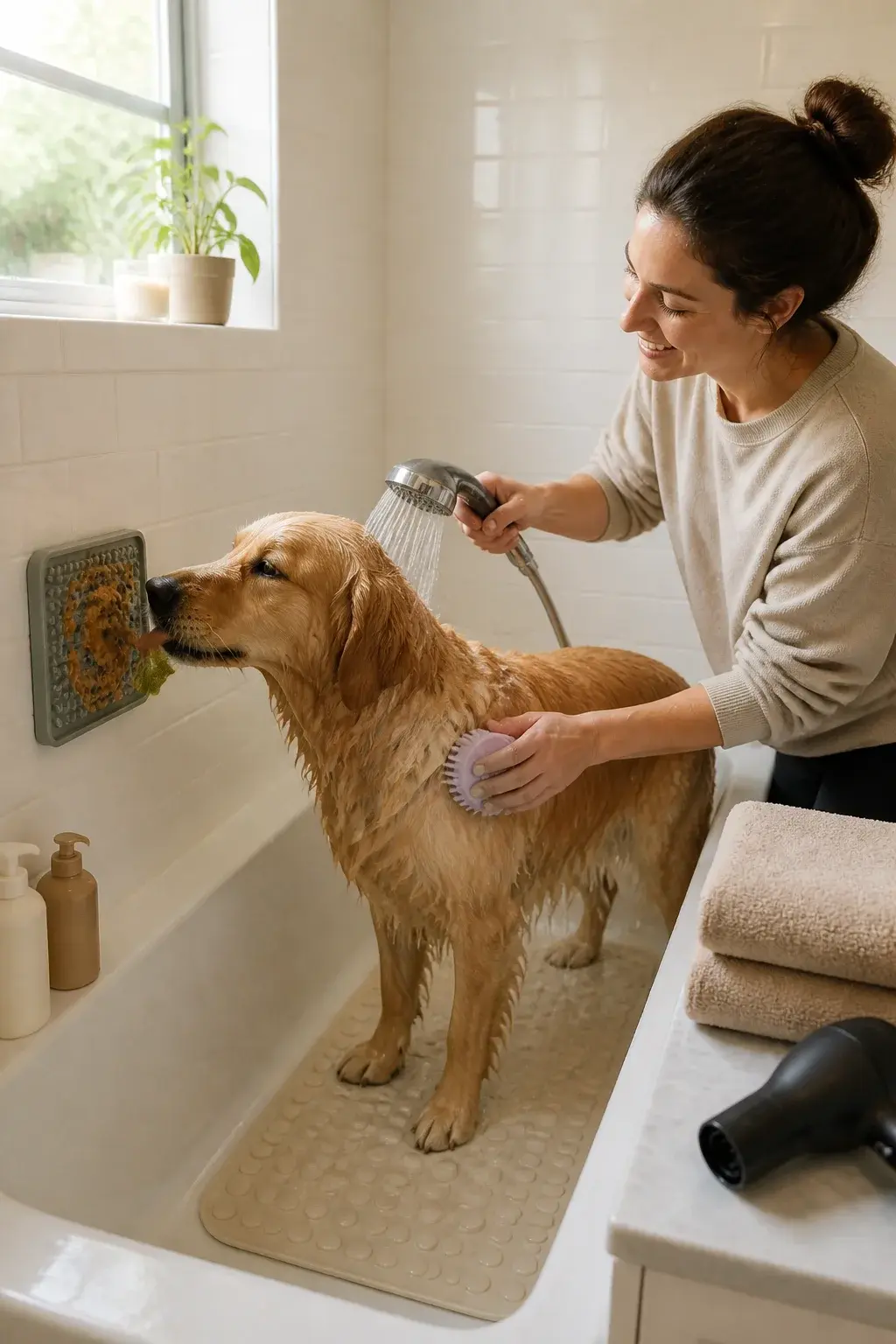
- Treats or lick mat to keep your dog occupied and happy.
Pre-Bath Brushing Matters
Brush out knots before water hits them. Water tightens mats and turns mild tangles into felt. For thick coats, use an undercoat rake first, then a slicker brush.
Water Temp, Pressure, And Calm Vibes
Water should feel like a warm bath for a baby. Too hot irritates skin. Too cold triggers zoomies and drama. Keep the sprayer pressure gentle and introduce water slowly, starting at the shoulders and back rather than the face.
Calm bath hacks:
- Spread peanut butter (xylitol-free) on a lick mat at dog head height.
- Talk softly, keep movements slow, and keep sessions short.
- Close doors to prevent mid-bath jailbreaks.
Face and Ears: Handle With Care
Skip blasting water at the face. Use a damp cloth for the muzzle and around the eyes. Place cotton balls gently in ears to block splashes, and remove them right after the bath. Never stick swabs in ear canals.
Shampoo Like You Mean It
You don’t need to drown your dog in suds. Use enough shampoo to coat the fur, then add a splash of water to help it spread. Work in sections for even coverage.
Technique tips:
- Thoroughly wet the coat down to the skin. Don’t rush this step.
- Apply shampoo along the back, chest, and legs, then massage to the skin. This is a bath, not a surface shine.
- Let it sit for 2–3 minutes. Medicated shampoos often need 5–10 minutes. Read the label, FYI.
- Rinse until the water runs totally clear. Then rinse again. Residue causes itchiness.
Conditioner: When And Why
Conditioner helps prevent mats and static, especially for long or curly coats. Apply after rinsing shampoo, let it sit briefly, and rinse well. If your dog tends to get itchy, try a gentle, fragrance-free formula.
Drying Without The Dread
Towel-dry first and let your dog do their signature full-body shake. Press towels into the coat rather than rubbing like you’re starting a campfire. For thick or curly coats, plan on more than one towel.
Blow-drying basics:
- Use a dryer made for pets or a human dryer on cool or warm, never hot.
- Keep the nozzle moving and hold it a few inches away to protect skin.
- Brush while you dry to prevent tangles and speed things up.
Air-Drying: Pros And Cons
Air-drying works for short coats on warm days. For dense or curly coats, air-drying can trap moisture near the skin and lead to musty smells or irritation. When in doubt, partial blow-dry is your friend.
Paw, Ear, And Tail TLC
You can turn bath time into total-body maintenance with a few quick add-ons.
Don’t skip:
- Paws: Check between toes for debris. Dry well to prevent yeast growth.
- Ears: After the bath, use a vet-approved ear cleaner. Fill the canal until it rises, massage the base, and let your dog shake. Wipe only the outer ear.
- Tail and rear: Rinse extra thoroughly here. Residue likes to hide where fluff lives.
De-Shedding During The Bath
Use a rubber curry brush in the bath to lift loose undercoat. After rinsing, apply conditioner and brush again. You’ll catch mountains of hair before it hits your sofa. You’re welcome.
Special Cases: Puppies, Seniors, And Sensitive Skin
Not every dog needs the same plan. A little customization goes a long way.
Puppies:
- Use puppy-safe, tear-free shampoo.
- Keep sessions under 10 minutes. Reward constantly.
- Introduce the sprayer slowly. Start with a cup or pitcher if the sprayer spooks them.
Seniors:
- Use lukewarm water and non-slip surfaces. Joint comfort matters.
- Dry thoroughly to keep them warm and comfy.
- Short, low-stress sessions beat marathon scrubs.
Sensitive or allergy-prone skin:
- Pick fragrance-free, hypoallergenic formulas.
- Rinse like a pro. Leftover shampoo = itch city.
- IMO, add fish oil or vet-approved supplements if skin stays dry, but ask your vet first.
When A Pro Groomer Makes Sense
If your dog mats easily, hates baths, or has a thick double coat, a groomer can save your sanity. They have high-velocity dryers, specialized tools, and the patience of saints. Rotate home baths with professional grooming for the best of both worlds.
Make Bath Time Positive Every Single Time
Training beats wrestling. Pair the bath with rewards and calm energy. You set the vibe.
Habit-building ideas:
- Practice “get in the tub” with treats on dry days.
- Smear a lick mat with xylitol-free peanut butter, banana, or plain yogurt.
- End on a high note with a favorite toy or a short walk.
- Keep your voice upbeat. No scolding. Your dog will remember the mood next time.
Quick Bath Alternatives Between Full Washes
Try waterless shampoos, deodorizing sprays, or a damp cloth for spot cleaning. Brush daily or every other day to distribute oils and keep the coat fresh. Paw wipes after walks keep mud and allergens from spreading.
Common Mistakes To Avoid
A little prevention saves you and your dog from itchy aftermath and chaos.
- Using human shampoo: Different pH, different needs. Stick to dog formulas.
- Skipping the pre-bath brush: Traps mats and makes drying a nightmare.
- Hot water or high dryer heat: Irritates skin fast.
- Not rinsing enough: Residue causes flakes, odor, and scratching.
- Forcing it: Fear grows when you rush or restrain too hard. Slow and steady wins.
- Ignoring ears and paws: Moisture here equals problems later.
FAQ
How often should I bathe my dog?
Most dogs do well every 4 to 8 weeks, but adjust for activity level and coat type. If your dog rolls in mystery goo or smells like a swamp, go ahead and bathe sooner. If your dog has skin issues, follow your vet’s schedule.
Can I use my shampoo on my dog?
No. Human shampoos can disrupt your dog’s skin barrier and lead to dryness or irritation. Use a dog-specific product that matches your pup’s skin and coat needs.
What temperature should the water be?
Aim for lukewarm. If it feels comfortable on the inside of your wrist, you’re good. Too hot or too cold makes your dog anxious and dries out skin.
How do I prevent that “wet dog” smell?
Rinse thoroughly, then dry completely. Trapped moisture and leftover shampoo create that classic funk. A light dog-safe deodorizing spray afterward helps too.
My dog hates baths. Any tips?
Keep sessions short, use a lick mat, and practice positive associations on non-bath days. Reward like crazy for calm behavior. If anxiety runs high, ask your vet about desensitization strategies or a trainer’s help.
Do I need conditioner?
Not always, but it helps with long, curly, or dry coats. It reduces tangles and keeps hair soft. Rinse well to avoid residue.
Conclusion
You don’t need a grooming van or magic powers to nail bath time. With the right prep, gentle technique, and a few smart habits, your dog stays clean, comfy, and camera-ready. Keep it positive, rinse like a champ, and toss in a treat or two. FYI, a happy bath today means an easier bath tomorrow. IMO, that’s a win for both of you.
About the Author

David
Blogger/YouTuber
A guitar nerd, the myth, the legend.