

Pomeranians bring big-dog energy in a tiny, fuzzy body. They’ll run your house if you let them, but they’ll also fill it with ridiculous joy.
Want fewer mats, less barking, and more cuddles? You’re in the right place.
Let’s dive into the practical stuff every Pom parent needs to know, minus the fluff you don’t.
Know Your Puff: Temperament, Energy, and Quirks
Pomeranians act like they own the block, even if the block is your living room rug. They’re alert, confident, and way smarter than they look. That’s adorable until they train you instead of the other way around.
They bond hard with their people and can get vocal about anything that moves. Think doorbells, squirrels, and rogue leaves. Set expectations early so your pint-sized pal doesn’t become a four-pound dictator.
Core Personality Traits
- Smart and eager: They pick up cues fast, which means great potential and sneaky habits if you slack.
- Vocal watchdog: Barking comes naturally. Channel it with structure.
- Velcro tendencies: They love sticking close. Teach independence to avoid clinginess.
Grooming the Floof: Keep That Coat Happy
That glorious double coat needs regular TLC. Skip it and you get mats, skin issues, and a dog that looks like it lost an argument with a tumbleweed.
Brush 2–3 times per week with a slicker brush and a stainless-steel comb. Part the coat and work from the skin outward. Short, gentle strokes keep it pain-free and effective.
Bathing and Blow-Drying
- Bath every 4–6 weeks using a gentle, dog-safe shampoo and conditioner.
- Rinse like your life depends on it. Leftover product equals itchy skin.
- Blow-dry on low or cool while brushing to prevent post-bath matting.
Trimming Without Ruining the Coat
Avoid shaving. You can permanently damage the double coat. Ask groomers for a neaten and tidy:
- Trim feet, hocks, sanitary area, and a tiny bit around ears.
- Keep nails short; trim every 2–3 weeks to protect joints and posture.
- Clean ears and brush teeth at least 3–4 times per week. Yes, really.
Feeding Your Pom: Nutrition for Tiny Tornadoes
Small dogs burn hot. Feed a balanced, complete diet formulated for small breeds. Kibble size matters because tiny mouths deserve easy chewing and less risk of gulping.
Portion control is everything. Extra weight stresses their knees and trachea. Use a kitchen scale for accuracy and eyeball nothing.
Daily Feeding Tips
- 2 meals per day for adults; 3–4 smaller meals for puppies to prevent hypoglycemia.
- Watch calories from treats. Keep them under 10% of daily intake.
- Choose treats that are soft or small, like single-ingredient freeze-dried proteins.
Simple DIY Dog-Friendly Topper
Try this safe, easy topper for picky eaters:
- 1 tbsp plain cooked pumpkin or mashed steamed carrot
- 1 tsp plain cooked chicken breast, finely shredded
- 1 tsp water or low-sodium bone broth (no onions, no garlic, no seasonings)
Mix and spoon over regular food. Keep portions tiny and adjust meal calories accordingly.
Training: Small Dog, Big Standards
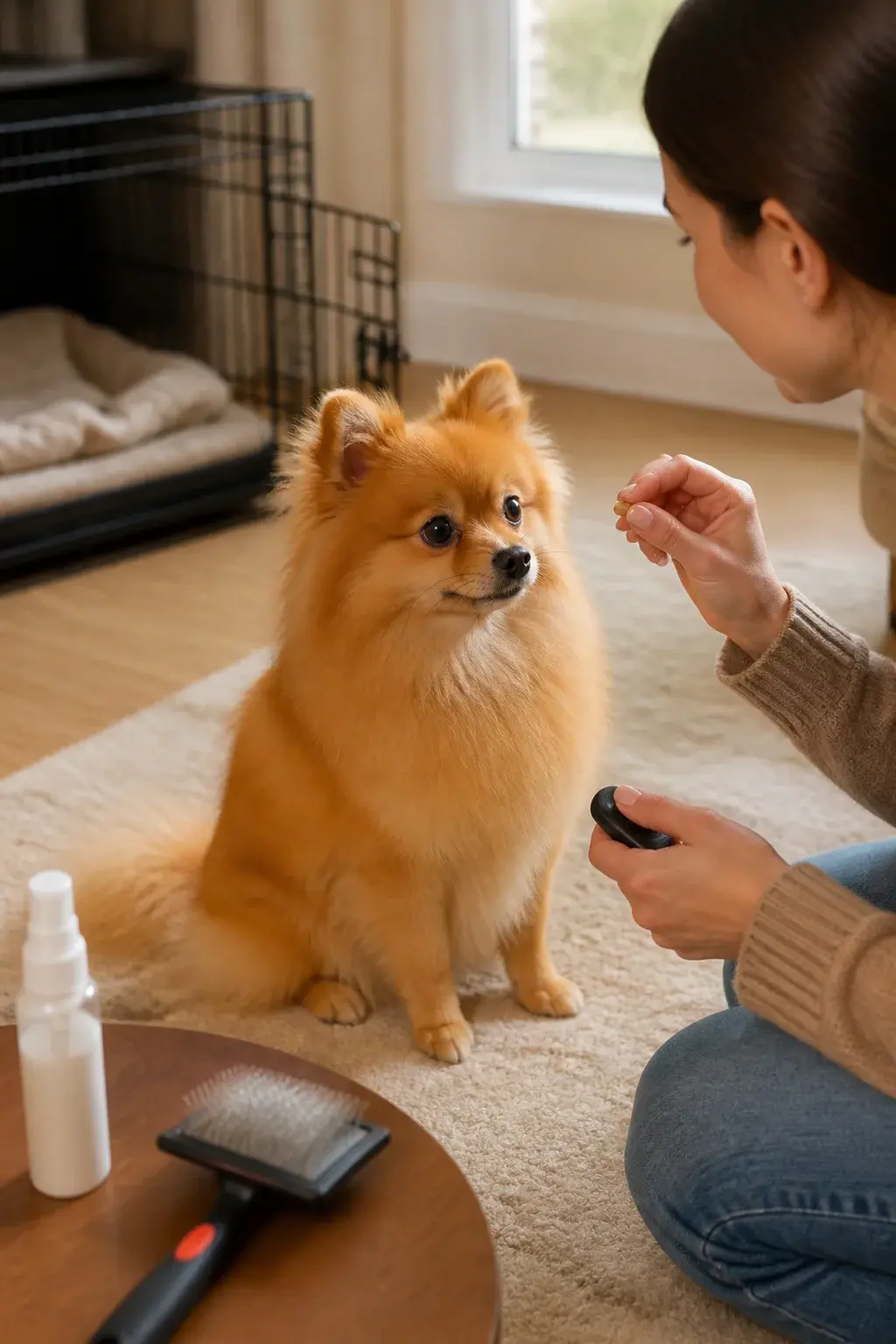
Poms love to learn. Start early, keep sessions short, and pay with tiny treats and loads of praise. You’ll get better manners and a calmer dog.
Teach the essentials first: name recognition, sit, down, stay, come, leave it, and place. Practice daily for 3–5 minutes per session. End on a win so your Pom feels like a genius.
Potty Training That Actually Works
- Pick a bathroom spot outside or a designated indoor potty area if needed.
- Use a consistent schedule: after waking, after meals, after play, and every 2–3 hours.
- Celebrate success like it’s the Super Bowl. Ignore accidents and clean with an enzyme remover.
Barking: From Alarm System to Good Citizen
Teach “quiet”:
- Say “speak” and reward one bark. Name it.
- Then say “quiet,” present a treat to the nose, wait for silence, reward. Build duration.
- Rehearse with doorbell sounds at low volume and increase gradually.
Also give a job when guests arrive: “place” on a mat with treats. Busy mouths bark less. IMO, structure beats shushing.
Exercise: Enough to Tire the Brain and Body
They don’t need marathon runs, but they do need daily action. Aim for 45–60 minutes total split into short walks and play, plus mental enrichment.
Rotate activities so they don’t get bored. A tired Pom equals a quiet Pom. Shocking, I know.
Easy Enrichment Ideas
- Snuffle mat with part of their meal.
- Hide-and-seek around the house. Call, reward when they find you.
- Soft fetch indoors. Keep jumps low to protect joints.
- Food puzzles or lick mats for rainy-day sanity.
Health Must-Knows: Little Dogs, Specific Risks
Your Pom may act invincible, but a few health quirks deserve attention. Regular vet checkups matter more than your dog’s opinion of the carrier.
Common watch-outs:
- Tracheal collapse: Use a harness, not a collar. Keep weight down.
- Luxating patellas: Keep nails short, avoid slippery floors, manage weight, and build muscle with controlled walks.
- Dental disease: Brush teeth often and consider professional cleanings as advised.
- Hypoglycemia in puppies: Feed frequent small meals and watch for lethargy or wobbliness.
- Coat and skin issues: Regular grooming and a balanced diet help. See a vet for sudden shedding or bald spots.
Red Flags You Shouldn’t Ignore
- Honking cough or breathing strain
- Sudden limping or skipping steps
- Bad breath with drooling or pawing at the mouth
- Lethargy, tremors, or refusal to eat (especially in puppies)
If you see these, call the vet. FYI, fast action prevents bigger problems.
Socializing and Confidence Building
Poms love attention, but that doesn’t mean they automatically love everything. Proper socialization creates a confident, friendly dog instead of a pocket rocket with opinions.
Expose them to new people, gentle dogs, sounds, and surfaces. Keep sessions short and positive. Reward curiosity and end before they feel overwhelmed.
Safe Social Moments
- Puppy classes with size-appropriate friends.
- Calm, dog-friendly stores. Skip chaotic dog parks.
- Controlled greetings: your Pom sits, gets a treat while a person says hi.
Home Setup: Small Space, Big Comfort
Your Pom doesn’t need a castle, just smart zones. Set up a comfy crate or pen as a safe retreat. Add a washable bed, water, and a chew.
Use baby gates to manage access and protect your pup from stairs or slippery areas. A few well-placed rugs help tiny knees and boost confidence. Also stash grooming tools where you’ll actually use them. Out of sight equals out of mind, and mats are sneaky.
Must-Have Gear
- Y-shaped harness that doesn’t press on the throat.
- 4–6 foot leash for control. Save long lines for safe areas.
- ID tags and microchip because Poms are curious and doors are tricky.
- Slicker brush + comb and dog-safe toothpaste.
Fun and Enrichment You Can Start Today
Let’s keep it light and practical. Try one of these tonight:
- Ten-treat recall game: Toss a treat, say “come,” reward. Repeat. Fast reps build strong recall.
- Two-minute trick: Teach “spin,” “touch,” or “bow.” Quick wins boost confidence.
- DIY snuffle box: Crumpled paper in a shallow box with kibble scattered inside.
- Calm cuddle ritual: Gentle brushing while you stream your show. End with a tiny treat so grooming predicts good vibes.
FAQ
How often should I groom my Pomeranian?
Brush 2–3 times per week and plan a full bath and tidy every 4–6 weeks. Keep nails short with trims every 2–3 weeks. Brush teeth several times weekly to avoid dental drama.
Do Pomeranians bark a lot?
They alert-bark by nature, but you can manage it. Teach “quiet,” give structured jobs like “place,” and meet their exercise and enrichment needs. Consistency beats yelling, IMO.
What is the best harness for a Pomeranian?
Choose a lightweight, Y-shaped harness that avoids pressure on the trachea. It should fit snugly without rubbing. Always clip the leash to the harness, not a collar.
How much exercise does a Pom need?
Aim for 45–60 minutes daily split into short walks, play, and mental work. Mix in enrichment like snuffle mats to tire the brain. Watch for overexertion in heat due to their dense coat.
Are Pomeranians good with kids and other pets?
Yes, with training and supervision. Teach kids gentle handling and give the Pom safe zones. Introduce other pets gradually with parallel walks and controlled greetings.
Can I shave my Pomeranian for summer?
No. Shaving can damage the double coat and worsen heat issues. Instead, brush thoroughly to remove dead undercoat, provide shade and water, and exercise during cooler hours.
Conclusion
Pomeranians shine when you pair structure with fun. A little training, smart grooming, and daily enrichment turn that fluffy energy into pure gold. Keep it consistent, keep it positive, and your tiny lion will live large in the best way. And yes, you’ll still get sassy side-eye. That’s part of the charm.
About the Author

David
Blogger/YouTuber
A guitar nerd, the myth, the legend.